


A plantation that size needed a town, and from 1923 Dole laid out Lānaʻi City — a planned company town of tidy cottages on a cool central plateau, gathered around the green rectangle of Dole Park. Workers came from the Philippines, Japan, China, Korea, Portugal, and Puerto Rico, and out of that mix grew the close, multicultural community that still defines the island. The fruit rolled down to Kaumalapaʻu Harbor, built in the 1920s, and shipped to the Honolulu canneries. Castle & Cooke took over in 1961, but cheaper pineapple from overseas slowly undercut the island; the last big harvest came in 1992, and the fields went quiet.
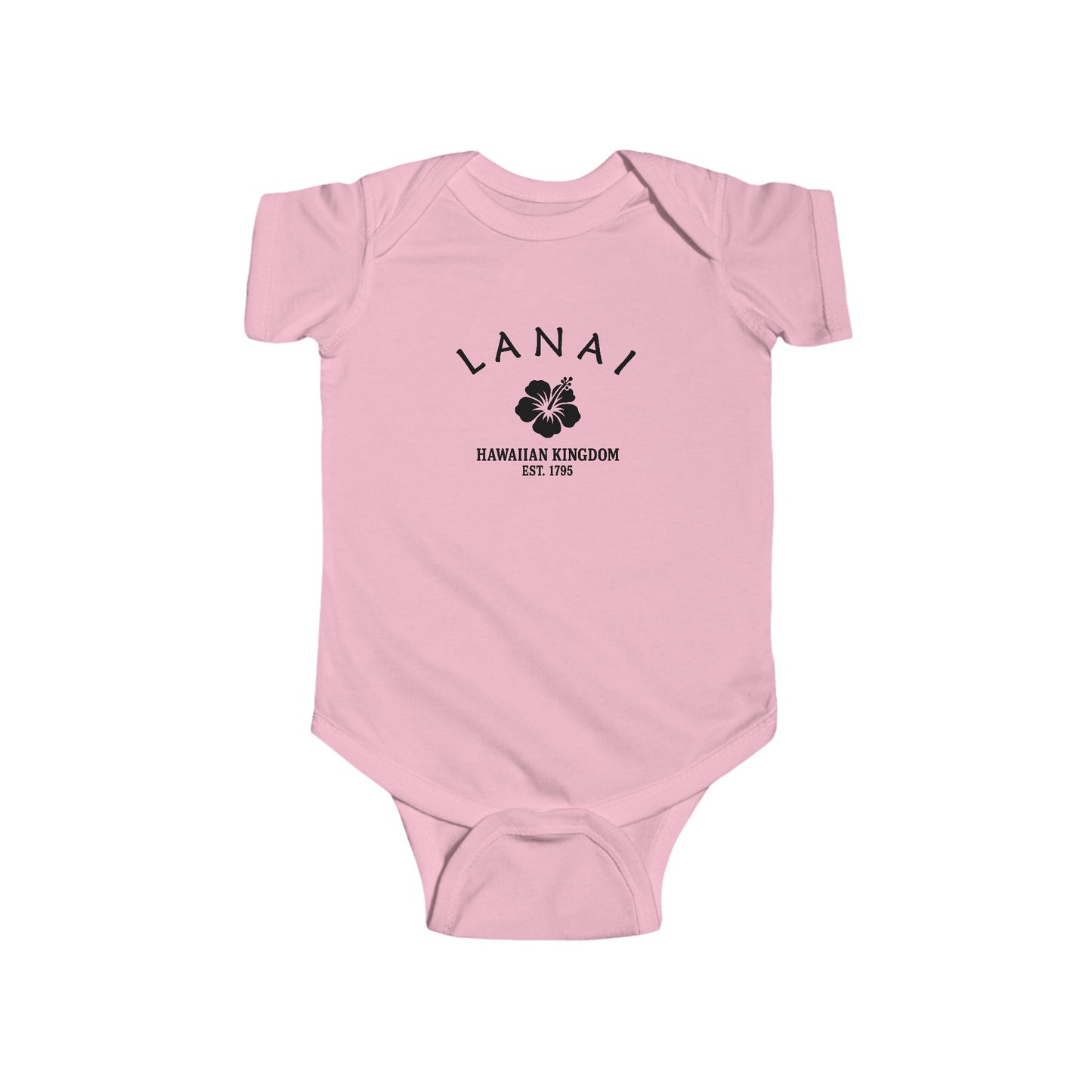
Our Lānaʻi logo carries the Hawaiian hibiscus over "Hawaiian Kingdom · Est. 1795," the shared emblem of every Merlin Classics Hawaiʻi place, marking the 1795 unification of the islands under Kamehameha. Printed in clean retro black-and-white like an old crate label, the hibiscus stands for the islands as a whole; what makes this one Lānaʻi is everything around it — the golden pineapple past and the old Lānaʻi City storefronts, the Cook-pine ridge, and the red rock of the Garden of the Gods.
Why People Visit Lānaʻi
Lānaʻi offers the rarest thing in Hawaiʻi: an island that still feels empty. It pairs a deep heritage — ancient fishing villages, a storied red-rock landscape, and the golden plantation past — with near-solitary beaches, pine-shaded uplands, and a single small town. It is quiet, scenic, and unhurried, made for travelers who want an island to themselves.
