Skip to product information
1 of 6

Kona Hawaii Vintage Retro Embroidered Cotton Cap - Black Logo

Kona Hawaii Vintage Retro Embroidered Cotton Cap - Black Logo

Regular price $32.00 USD
Regular price Sale price $32.00 USD
Sale
Free U.S. Shipping
Color
Size
Quantity


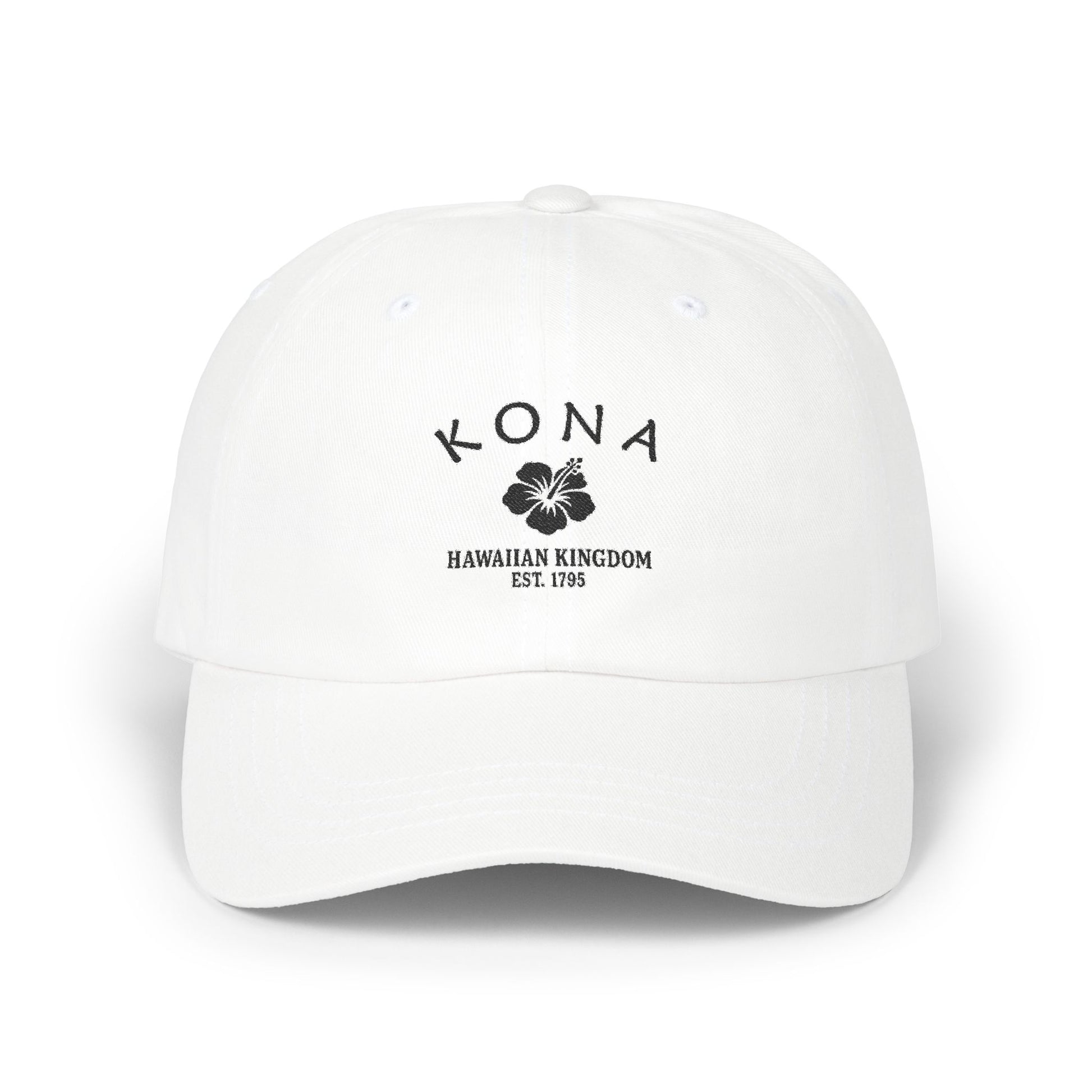
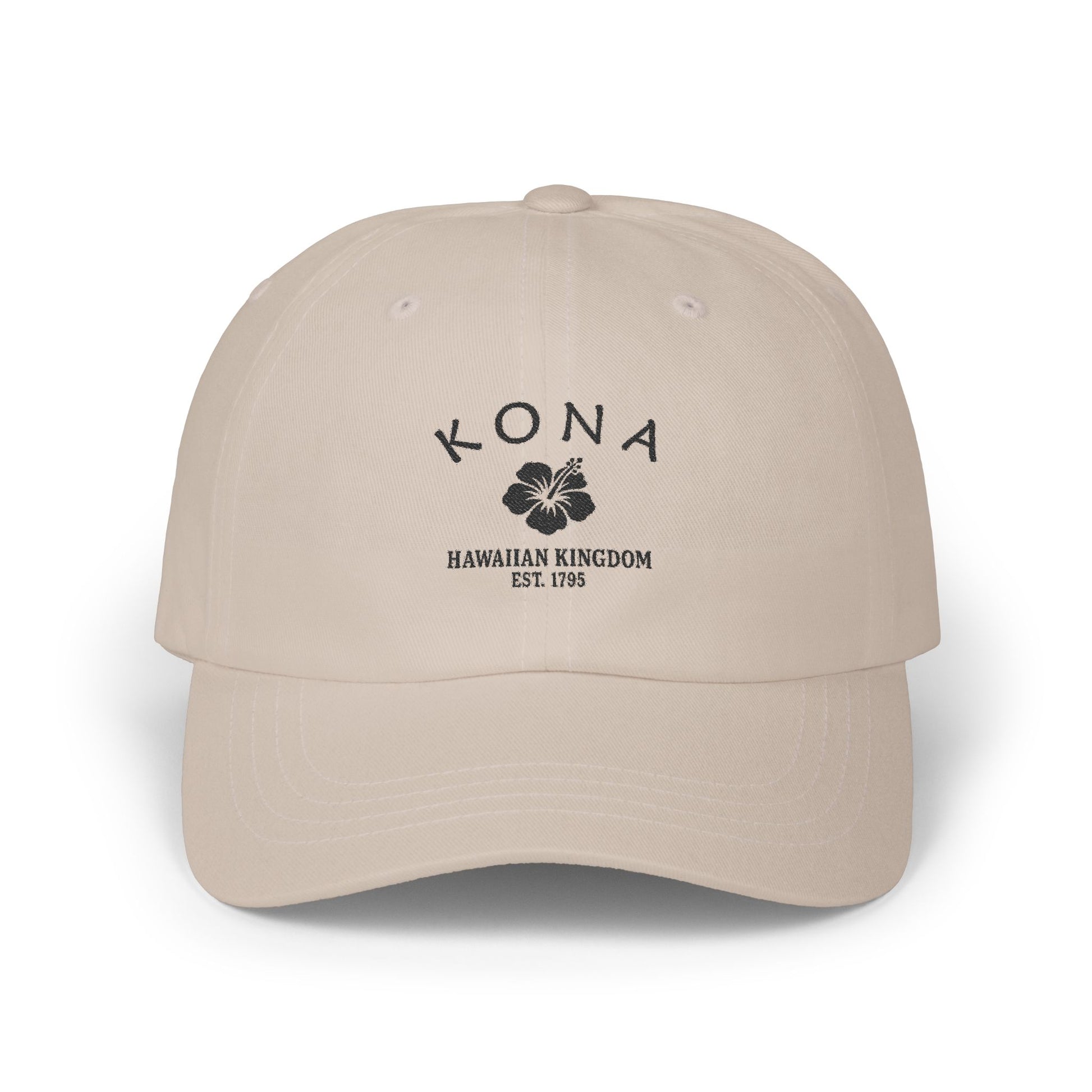
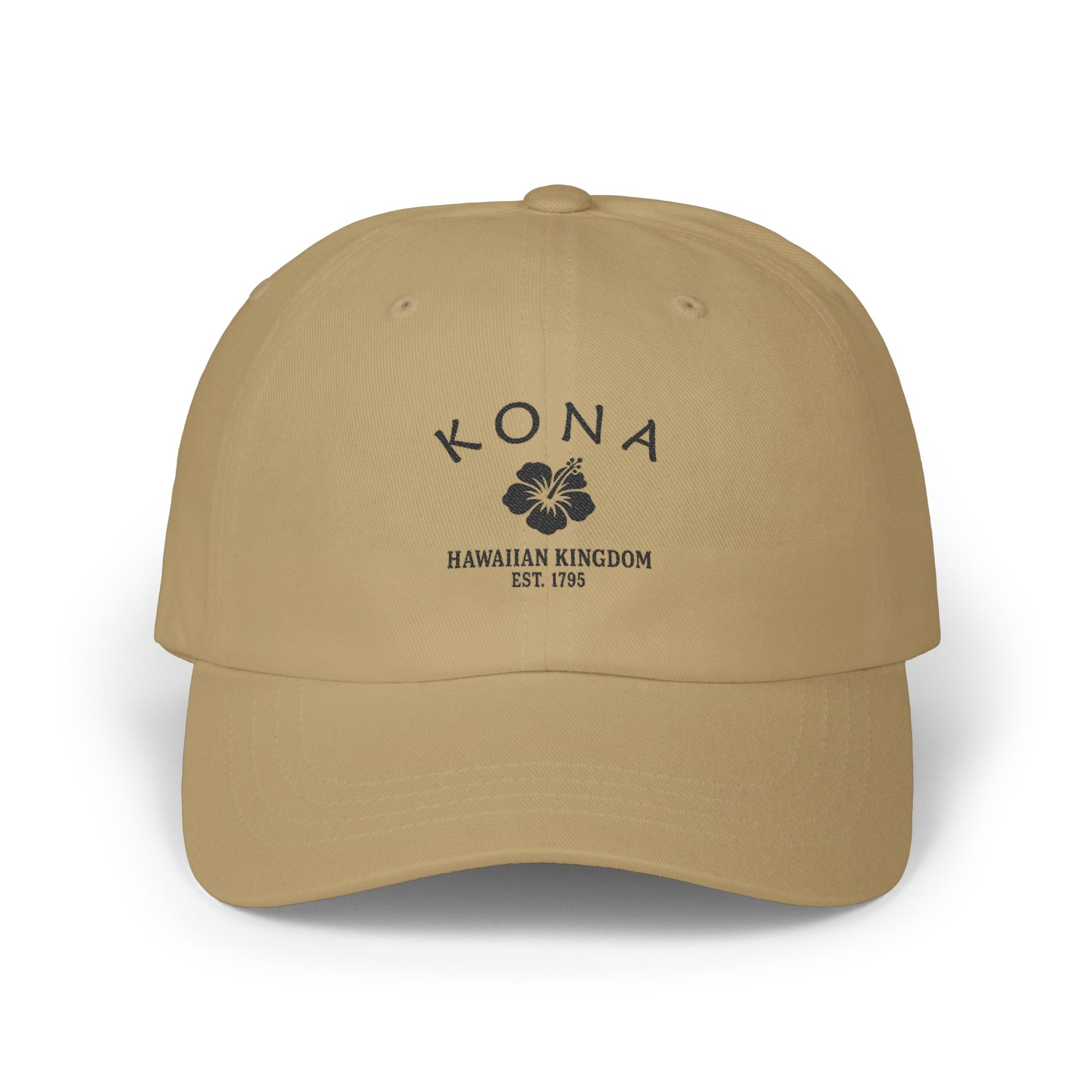
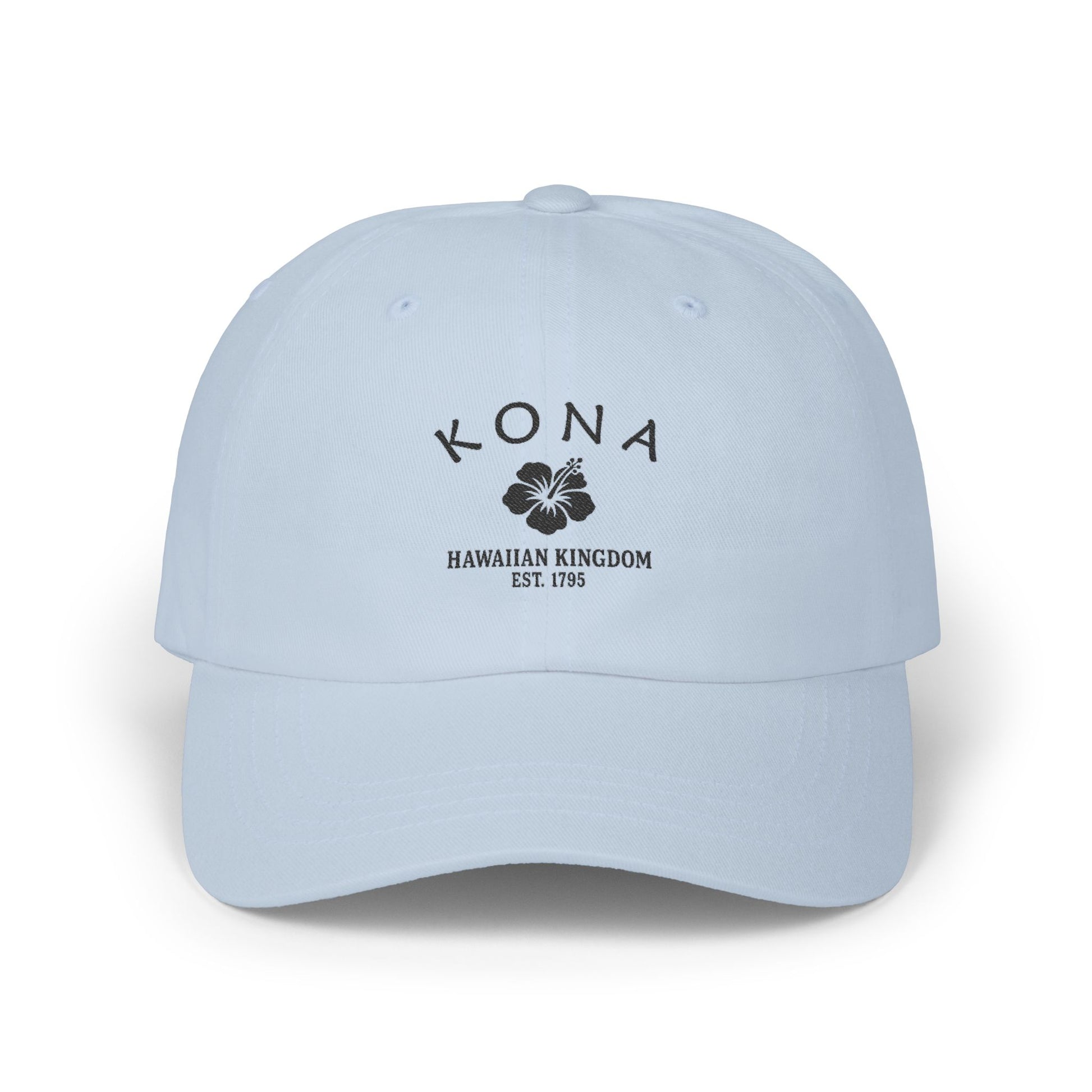
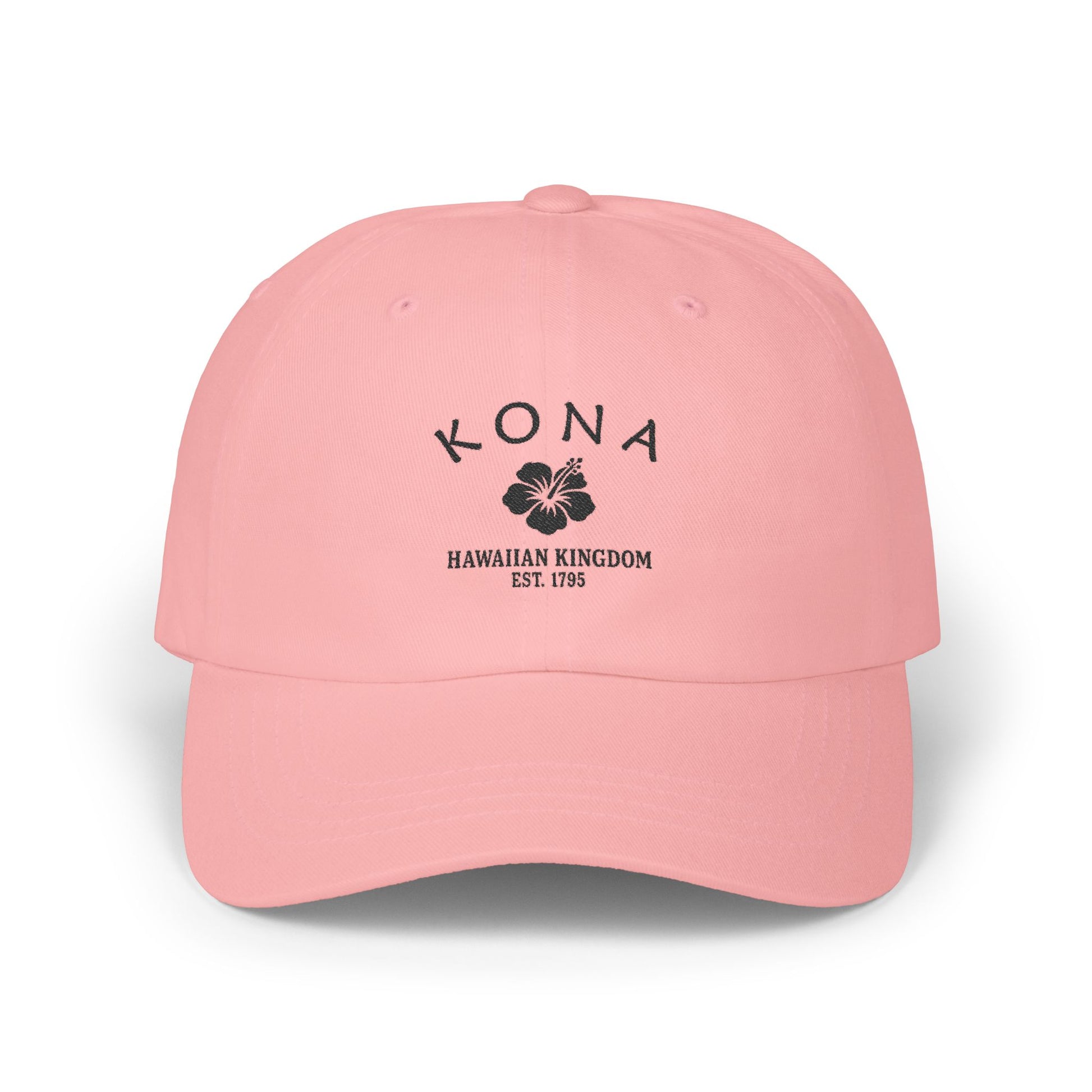
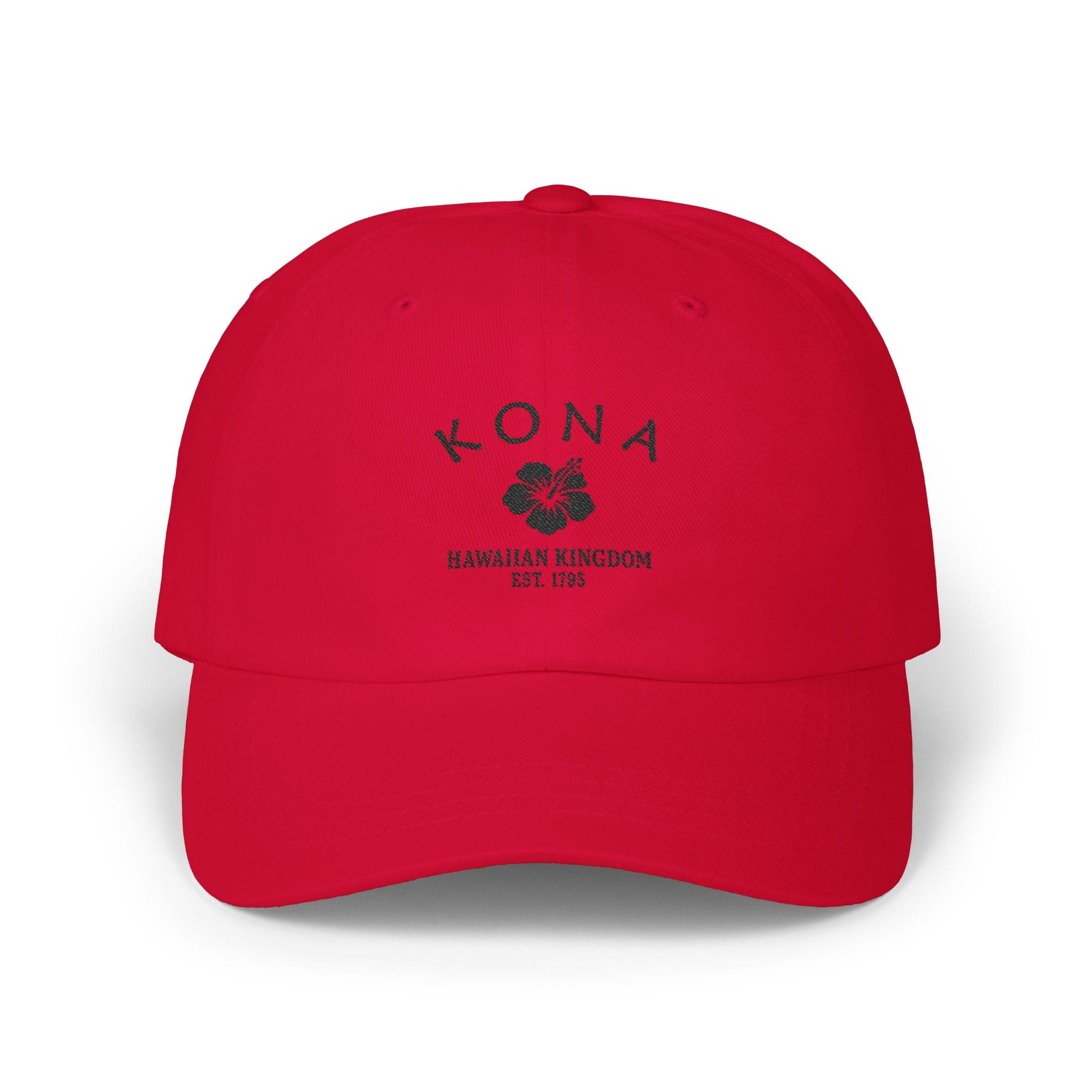
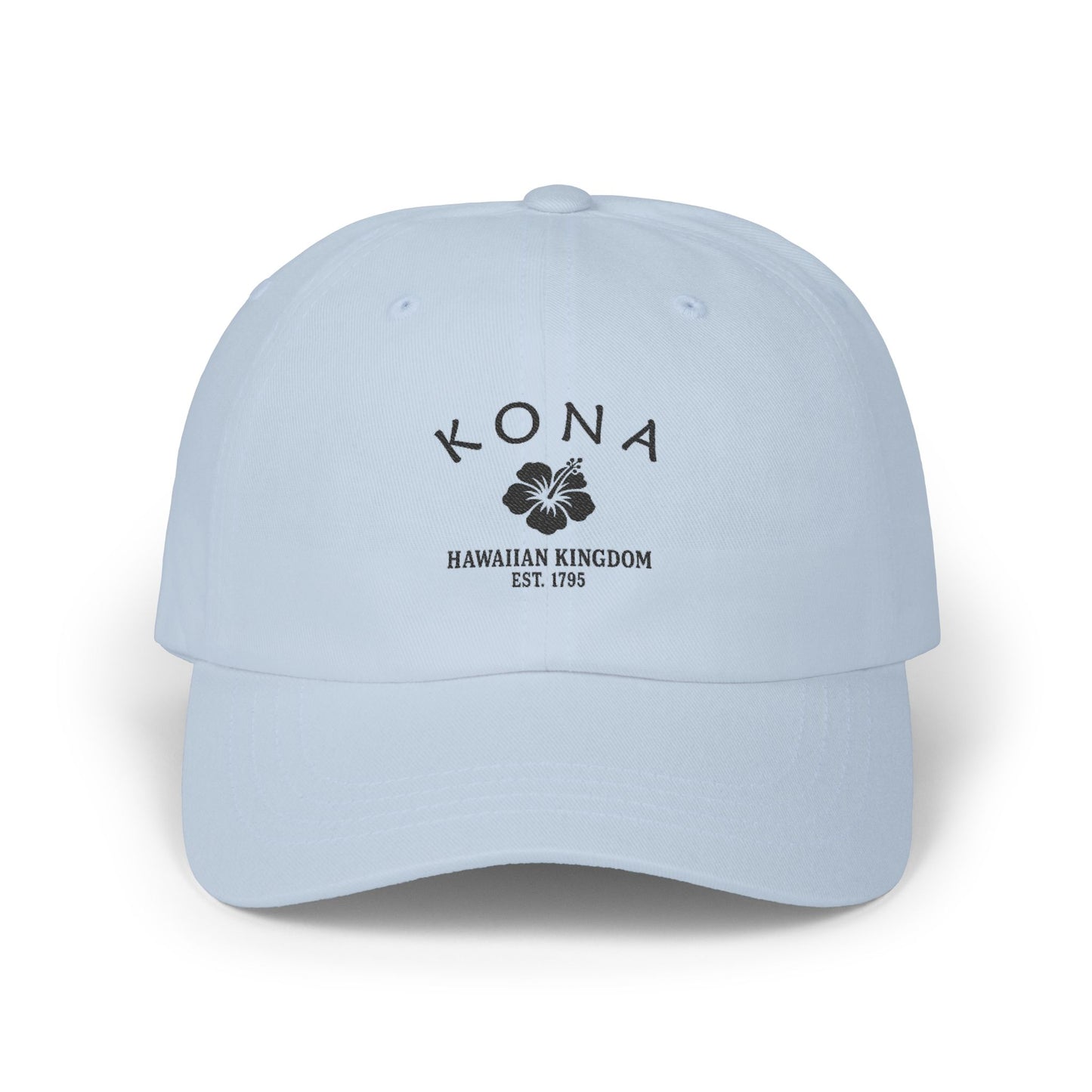
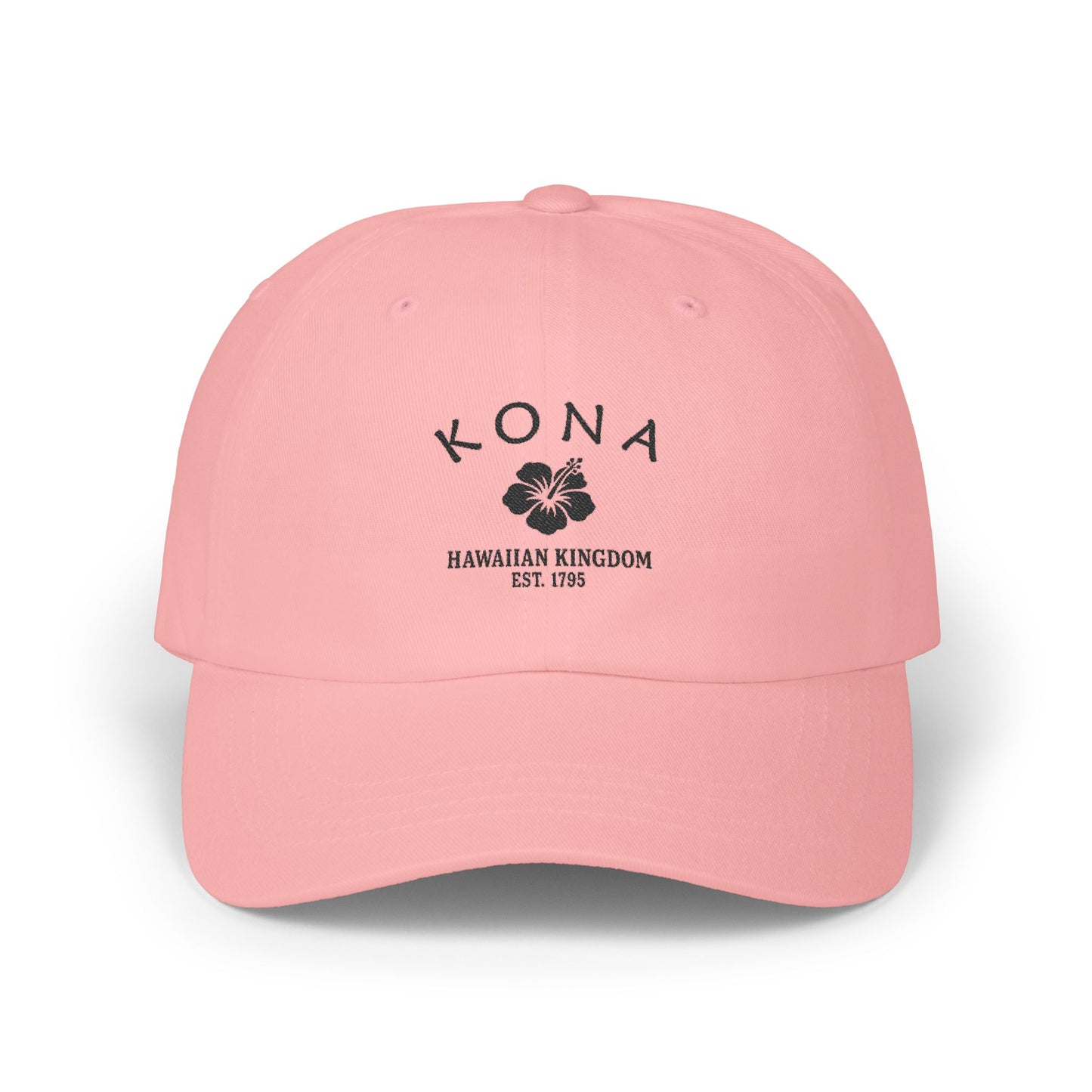
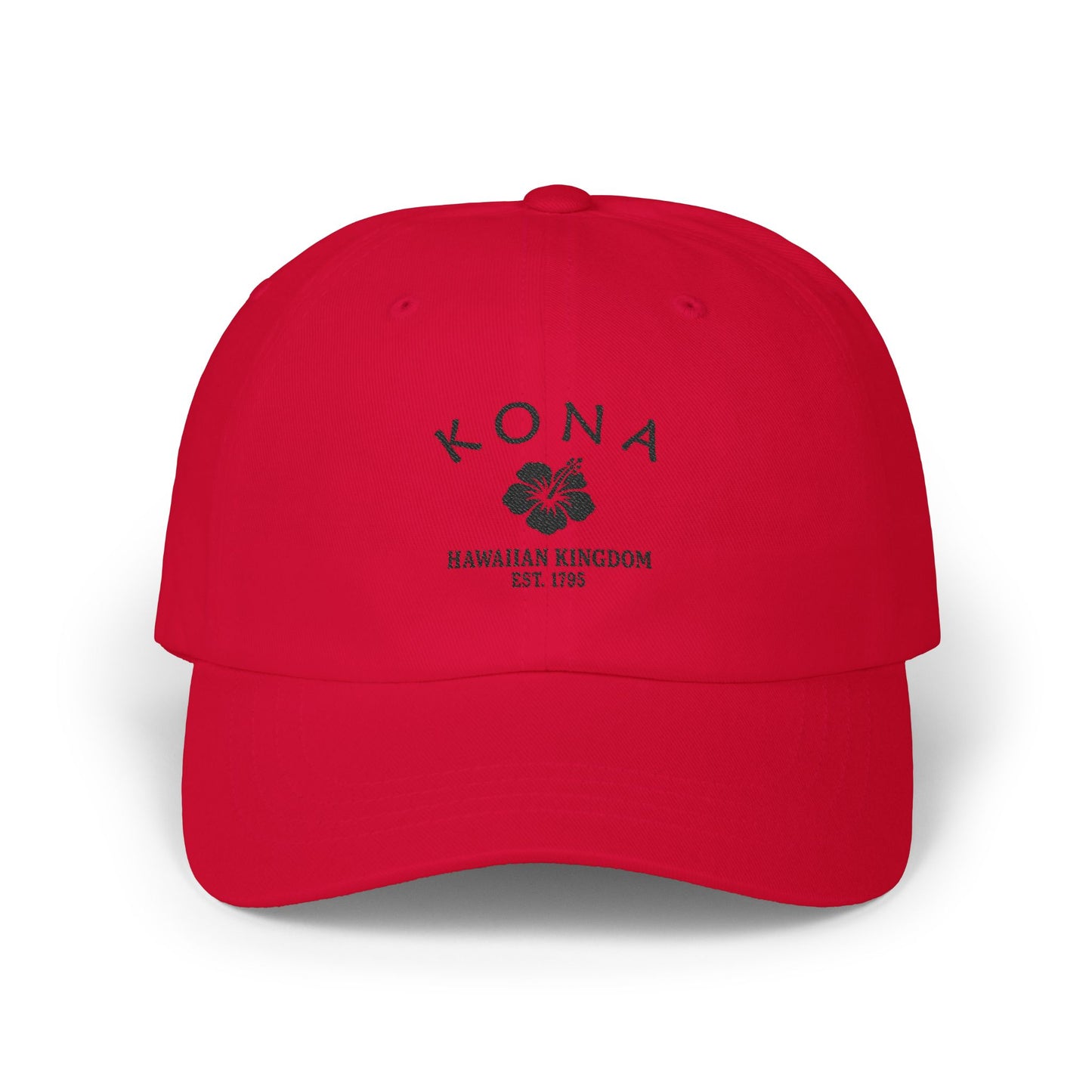
The Kailua-Kona cap, for the town that was the last home of King Kamehameha I. An unstructured cotton dad cap with the Kailua-Kona vintage retro logo embroidered on the front in black thread.

The cap is the easiest Kailua-Kona piece to wear every day and the easiest to give: one size, breathable cotton, a curved visor and an antique-brass buckle. It softens with wear and stays on the hook by the door. Order one for the beach bag and one for the glovebox.

Low-profile and unstructured, this 6-panel embroidered dad cap has a Permacurv visor, a self-fabric hideaway strap with antique-brass buckle, a matching undervisor, and four-row visor stitching for durability. Breathable 100% cotton in every color except the camo variation, which is 65% polyester / 35% cotton. The classic embroidered finish is durable and vintage-inspired. Embroidery is thread, not ink, so slight differences from the digital product image are normal; full details are explained in our Embroidery footer.

Kamehameha I, who united the Hawaiian Islands by 1810, moved his capital to Kailua-Kona in 1812 and died at Kamakahonu on May 8, 1819. The first American missionaries landed here aboard the brig Thaddeus on March 30, 1820; Mokuʻaikaua Church, the oldest Christian church in Hawaiʻi, was rebuilt in stone in 1837, and Huliheʻe Palace, one of only three royal palaces in the United States, followed in 1838.

The palace on Aliʻi Drive is built of lava rock and coral mortar with koa and ʻōhiʻa inside, and has been a museum since 1927. Hualālai rises 8,271 feet directly above the town, the airport sits on its 1801 lava flow, and the Kona Coffee Belt grows on its slopes. On the Kona Coast since Kamehameha is the mark on this piece.


QUICK FACTS — KAILUA-KONA HI EMBROIDERED COTTON CAP

Town: Kailua-Kona, Hawaiʻi

Founded: Royal capital 1812–19

Known for: Kamehameha I’s last royal residence; Huliheʻe Palace (1838); Mokuʻaikaua Church, the oldest in Hawaiʻi; the Kona Coffee Belt

Art: Kailua-Kona vintage retro logo, black (embroidered)

Blank: Unstructured 6-panel low-profile dad cap, Permacurv visor

Fabric: 100% cotton (camo variation 65% polyester / 35% cotton)

Decoration: Front embroidery, black thread; four-row visor stitching, matching undervisor

Closure: Self-fabric hideaway strap, antique-brass buckle

Made to order in the USA


Made to order and shipped free in the U.S. More Kailua-Kona pieces, and the rest of Hawaii, are one button away.


View full details

Wear Local. Feed Local. Stay Classic.

Product FAQs

How does your sizing work?

Every item is made to order, so please check the size chart on this page before you buy. Women's fitted tees run small; size up for a looser fit. Caps are one size with an adjustable strap.

How are items made and when will they arrive?

We make each item to order using premium blanks, embroidery and soft-hand prints. Production takes 2-5 business days (weekends and holidays excluded), then 4-10 days in transit via USPS, UPS or FedEx to U.S. addresses; most orders arrive within 6-15 business days. You'll get a tracking link the moment it ships. Any current shipping offer is shown in the bar at the top of every page and applies automatically at checkout, no code needed.

How do I send a gift?

Enter the recipient's address as the shipping address and your own as the billing address at checkout. Nothing ships with a price; the package includes a plain packing slip. Tracking goes to your email, not theirs. For birthdays and holidays, order two weeks ahead to be safe.

What's the return policy?

Made-to-order items can't be returned or exchanged for size or color, so please use the size chart and photos before ordering. If anything arrives defective, misprinted or damaged, send a photo and your order number within 30 days and we'll replace it or refund you.

How do I care for my item?

Apparel: wash cold, inside out, with like colors; no bleach; tumble dry low or hang dry. Embroidered pieces: iron inside out to protect the stitching. Caps: spot clean. Printed glasses and water bottles: hand wash only, no dishwasher, so the artwork lasts. Mugs and engraved glasses are dishwasher safe. Any item-specific care notes are in the description above.

Who makes this?

Merlin Classics is a small Connecticut brand making original retro designs for the towns people love. Every piece is printed, embroidered or engraved to order in the USA, and the business supports hunger relief in the communities our collections celebrate.

Kona holds the hinge of Hawaiian history in a single mile of shoreline: the heiau where a kingdom's founder died, the church where a new era began, the palace the royals kept coming back to, and the pier where the world now gathers. Our Kona designs gather that identity — the hibiscus, the coffee, the black-rock coast — into wearable form. On the Kona Coast since Kamehameha.

Where Kamehameha I lived and died — the Hawaiian Kingdom capital, 1812-1819. By 1810, King Kamehameha I had united the Hawaiian Islands under one rule for the first time in their history. In 1812, with the kingdom consolidated, he came home to Kona. He settled at Kamakahonu beside Ahuʻena Heiau at the north end of Kailua Bay — a royal compound on the shoreline he had known since boyhood — and ruled the unified Kingdom of Hawaiʻi from there for the next seven years. He died at Kamakahonu on May 8, 1819. By traditional Hawaiian custom, his bones were hidden in the cliffs of Kona by trusted attendants so that no enemy could ever claim his mana. They were never recovered. Six months later, his son Kamehameha II — Liholiho — and his stepmother Queen Kaʻahumanu broke the ancient ʻai kapu by sitting and eating with women at a feast in Kailua-Kona. The act ended the traditional Hawaiian religion overnight. In March 1820, when the first American missionaries arrived aboard the brig Thaddeus after a 163-day voyage from Boston, they stepped ashore into a kingdom that had just dismantled its own ancient order. They were led by Asa and Lucy Thurston and accompanied by Henry ʻŌpūkahaʻia's translation work. The congregation they founded that summer at Kailua-Kona — Mokuʻaikaua — is the oldest Christian church in Hawaiʻi; the stone-and-coral-mortar building still standing on Aliʻi Drive was completed in 1837. The next year, Governor John Adams Kuakini — half-brother to Kaʻahumanu — finished Huliheʻe Palace next door. In 1874, King David Kalākaua bought Huliheʻe and made it a royal retreat. Queen Kapiʻolani was the last royal resident before the palace was sold in 1914 and saved by the Daughters of Hawaiʻi in 1927 as a museum. Today Huliheʻe is one of only three royal palaces in the United States — the other two are ʻIolani and Queen Emma's Summer Palace, both on Oʻahu. The capital moved to Honolulu in 1845. But the first decades of unified Hawaiʻi were governed from this stretch of black-rock coast under Hualālai, and the buildings that anchored that era — the church on the hill, the palace by the pier, the heiau at Kamakahonu — are all still here.

Why People Visit Kailua-Kona Hawaiʻi

  • Tour Puuhonua o Honaunau, sacred refuge with temples and coastal lava platforms.
  • Walk Kaloko Honokohau paths, fishponds, petroglyphs, and quiet shoreline coves.
  • Visit Hulihee Palace, seaside residence with artifacts and galleries.
  • Stroll Alii Drive, palms, seawalls, and ocean viewpoints along the strip.
  • Stand by the Kailua Pier, boats and breezes over the turquoise bay.

Kona Hawaii Merlin Classics retro vintage logo featuring hibiscus motif