Skip to product information
1 of 4

Kona Hawaii Holiday Ornament - Coffee Cherry Branch

Kona Hawaii Holiday Ornament - Coffee Cherry Branch

Regular price $24.00 USD
Regular price Sale price $24.00 USD
Sale
Free U.S. shipping.
Size
Shape
Quantity

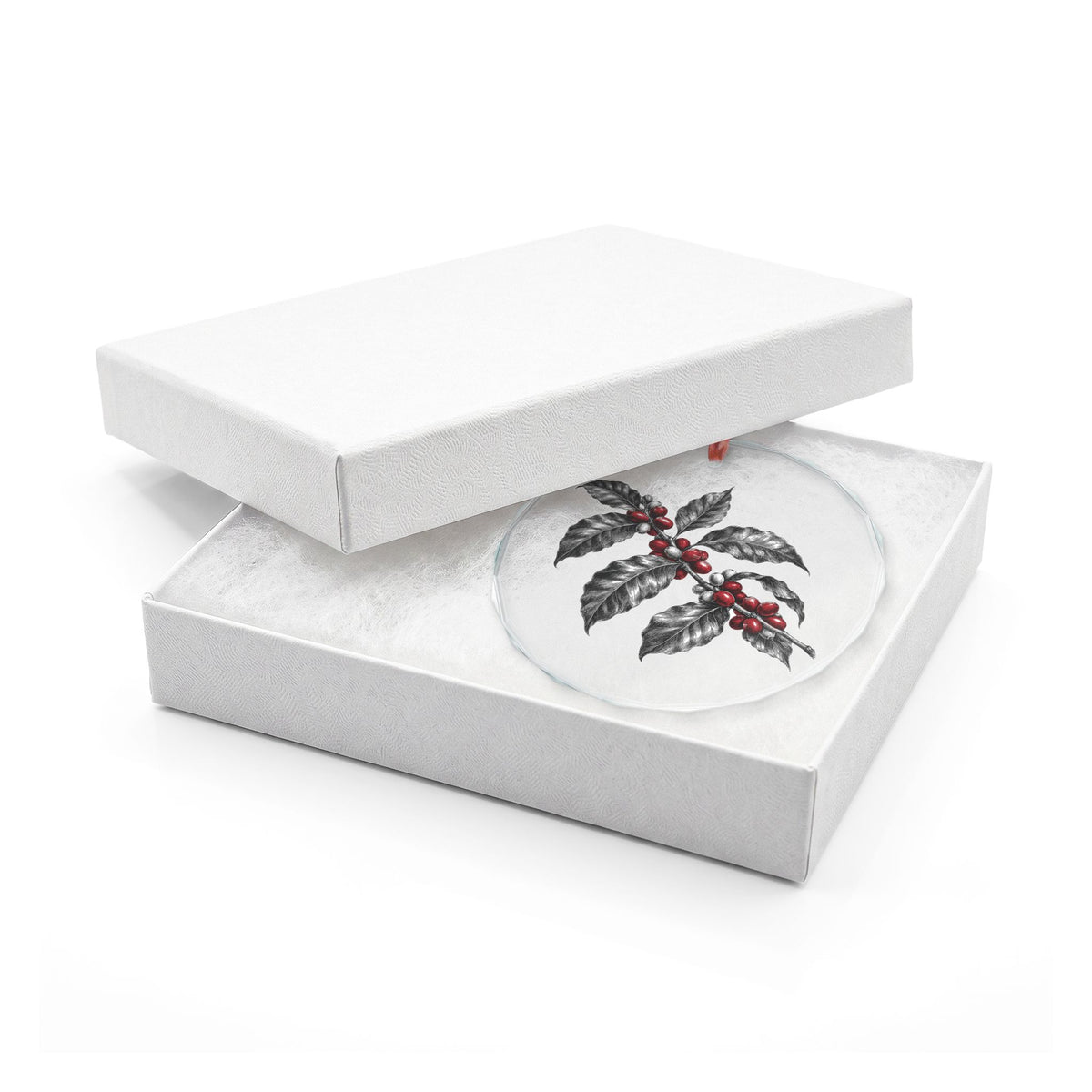
Red berries, glossy dark leaves — it looks like holly. Look again: those are ripe coffee cherries on a Kona coffee branch, and in Kona they really are red at Christmas.

Coffee came to Kona in 1828, when the missionary Samuel Ruggles carried cuttings of the arabica coffee plant over from Oʻahu and planted them in South Kona. The upland slopes — sunny mornings, cloudy afternoons, volcanic soil — suited it better than anywhere else in the islands. The trees bloom in early spring, and by late August the first cherries turn red. Each tree is hand-picked several times between August and January, which puts the harvest squarely across the holidays. In 1873 the Kona merchant Henry Nicholas Greenwell took the district's coffee to the Vienna World's Fair and came home with a diploma.

The harvest mattered so much that from 1932 until 1969, Kona's public schools held their long vacation from August through November so children could help their families pick. The branch on this ornament is the reason for all of it.

A three-inch faceted crystal ornament, the art printed on a white backing so the line work stays crisp and the facets catch the light. It comes in a white or gold gift box, ready to give, and is printed to order in the USA. Drawn as an 1880s-style botanical engraving; the ripe cherries are the only color.

For coffee lovers and baristas, Kona coffee farm families and anyone who has driven the Kona coffee belt. Profits support hunger relief.

3-inch faceted crystal glass · white-backed print · white or gold gift box · printed to order in the USA

More Kona Items Other Town & Animal Ornaments
View full details

The coffee belt. On the slopes of Hualālai above the town, at 800 to 2,500 feet where morning sun gives way to afternoon cloud, lies the Kona Coffee Belt — the only place in the United States where coffee has been grown at commercial scale for more than a century. The belt was built largely by Japanese immigrant families who came to Hawaiʻi's plantations in the late 1800s and took up coffee land around Hōlualoa and the upland villages; many of those farms are still worked by their third- and fourth-generation descendants, alongside Filipino, Portuguese, and Native Hawaiian farming families. The November coffee festival that fills the town each year is the oldest food festival in Hawaiʻi — a harvest celebration for a crop that made Kona's name known on every café menu in the world.

Today Kailua-Kona is the Big Island's western front door: flights land at Kona International Airport on Hualālai's 1801 lava flow, Aliʻi Drive runs its bayfront mile of shops and restaurants between the palace and the pier, coffee-farm tours climb into the belt, and the calm leeward water that made Kailua Bay a royal anchorage now fills with snorkelers, paddlers, and — every October — the finish line of the Ironman World Championship at Kailua Pier. The town has never incorporated; like every Hawaiian community it is governed at the county level, a census-designated place of about 20,000 that serves as capital of the Kona coast in everything but paperwork.

Why People Visit Kailua-Kona Hawaiʻi

  • Tour Puuhonua o Honaunau, sacred refuge with temples and coastal lava platforms.
  • Walk Kaloko Honokohau paths, fishponds, petroglyphs, and quiet shoreline coves.
  • Visit Hulihee Palace, seaside residence with artifacts and galleries.
  • Stroll Alii Drive, palms, seawalls, and ocean viewpoints along the strip.
  • Stand by the Kailua Pier, boats and breezes over the turquoise bay.

Kona Hawaii Merlin Classics retro vintage logo featuring hibiscus motif

Wear Local. Feed Local. Stay Classic.

Product FAQs

How does your sizing work?

Because items are made to order, we can’t accept returns for sizing or color choices. We do accept returns for defects, misprints, or shipping damage. Please review the detailed photos and descriptions before purchasing. Women’s fitted tees run small; if you prefer a looser fit, consider sizing up.

How do I send gifts?

All items ship without prices and include a simple packing slip for easy gifting. Enter the recipient’s shipping address and your billing address at checkout. Use your contact info to receive tracking updates. Orders typically arrive within 6–11 business days—please allow extra time for time-sensitive gifts.

How do I care for my item?

For apparel: wash cold, inside-out, with like colors; avoid bleach and high heat; tumble dry low or hang dry. For embroidery, iron inside-out to protect the stitching. See specific care instructions in product descriptions and also follow general best practices in caring for your items for long term enjoyment.

How are items made and when will they arrive?

We make each item on demand using premium blanks, embroidery, and soft-hand prints. Production usually takes 2–5 business days (excluding weekends and holidays). You’ll receive tracking once shipped. We currently ship to U.S. addresses via USPS, UPS, or FedEx. Most orders arrive within 6-12 business days.

What’s the return/exchange policy?

We accept returns for defects, misprints, or damage on arrival. Report issues within 30 days with photos and your order number, and we’ll replace or refund. Size or color changes aren’t supported after purchase, so please consult size charts before ordering if you are at all unsure.

Who are we?

Merlin Classics is a volunteer-run, AI-assisted apparel project celebrating timeless local style. Every item is made to order, and profits (revenue minus external product/marketing cost) support hunger-relief programs in the communities our collections spotlight. Classic looks, real local impact—every purchase helps.