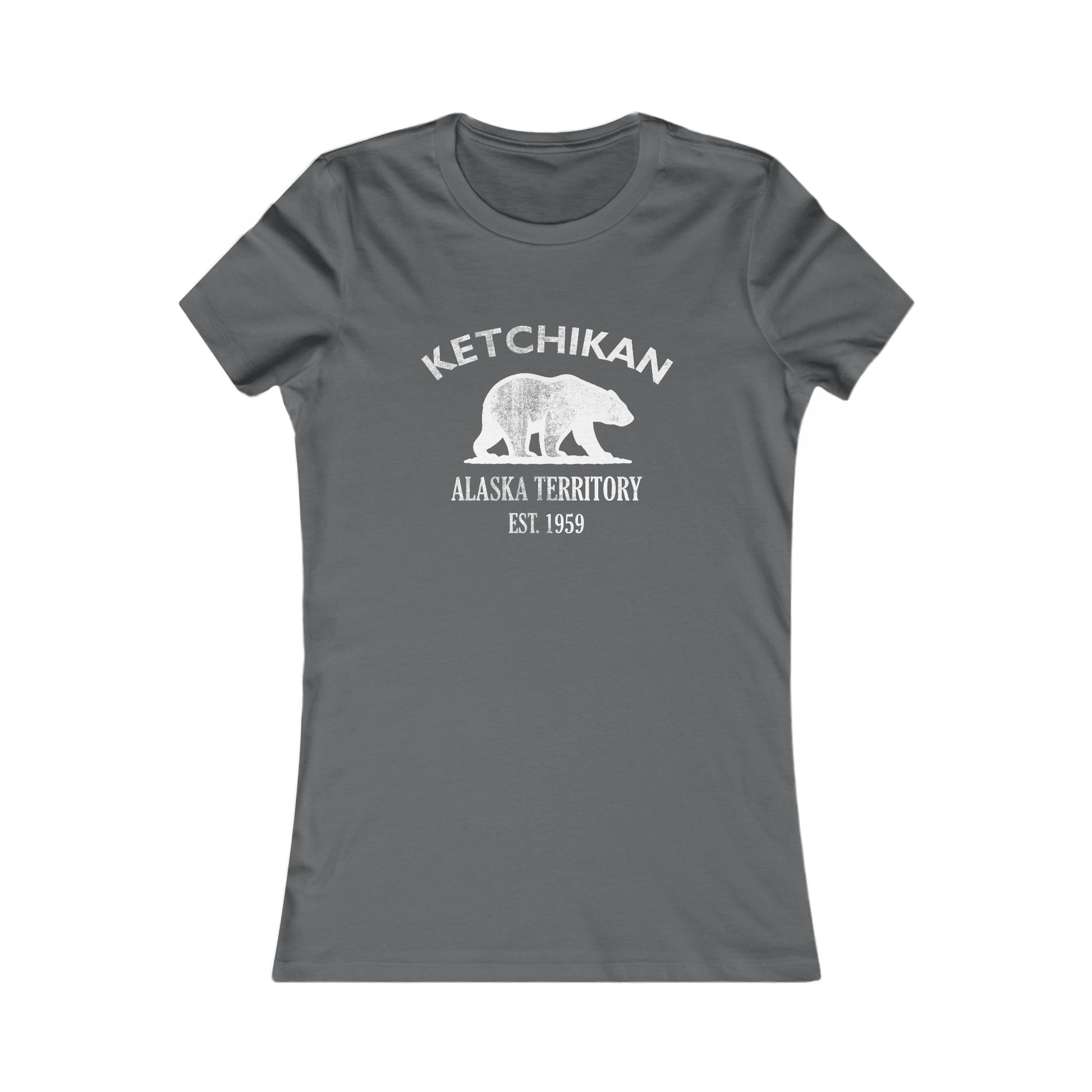
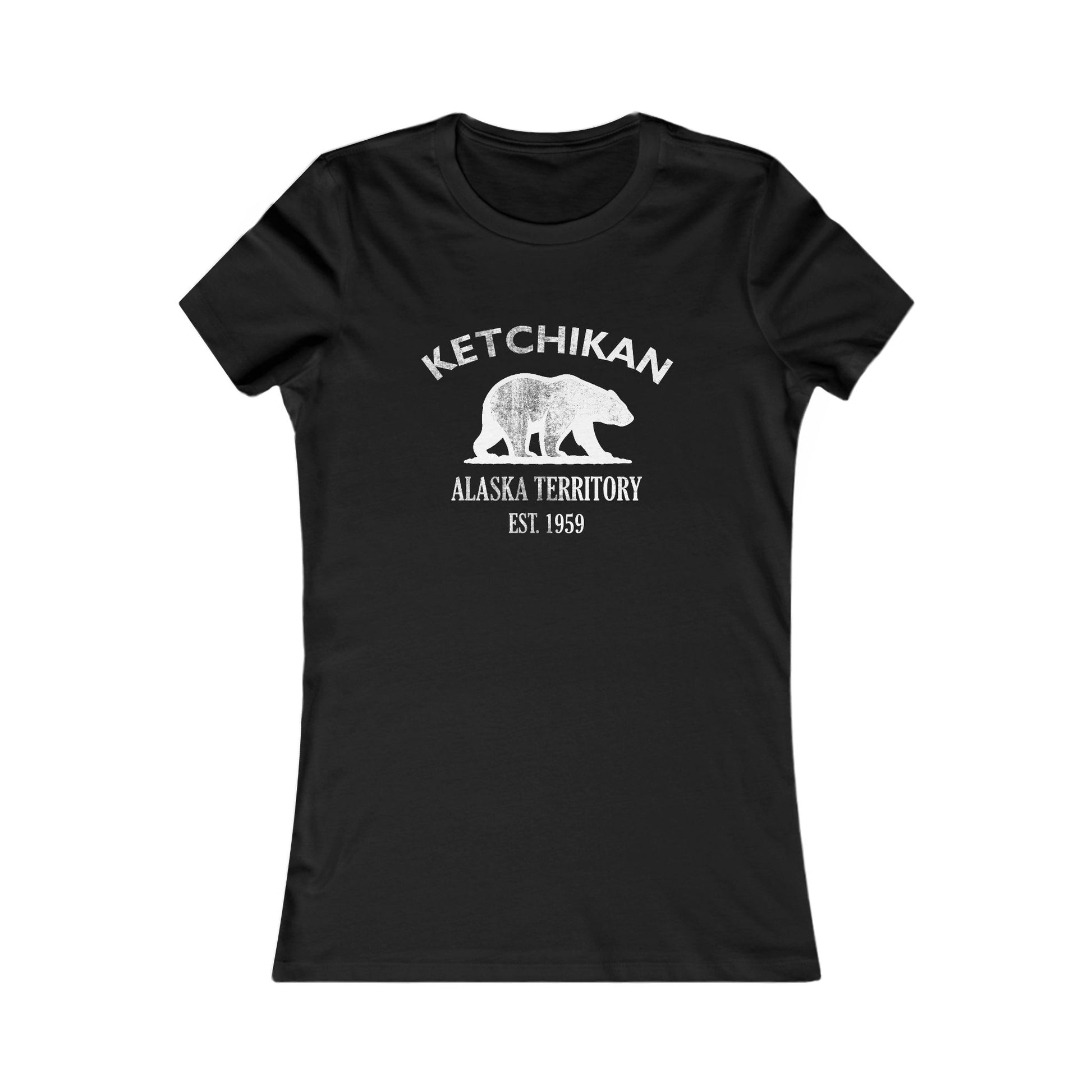
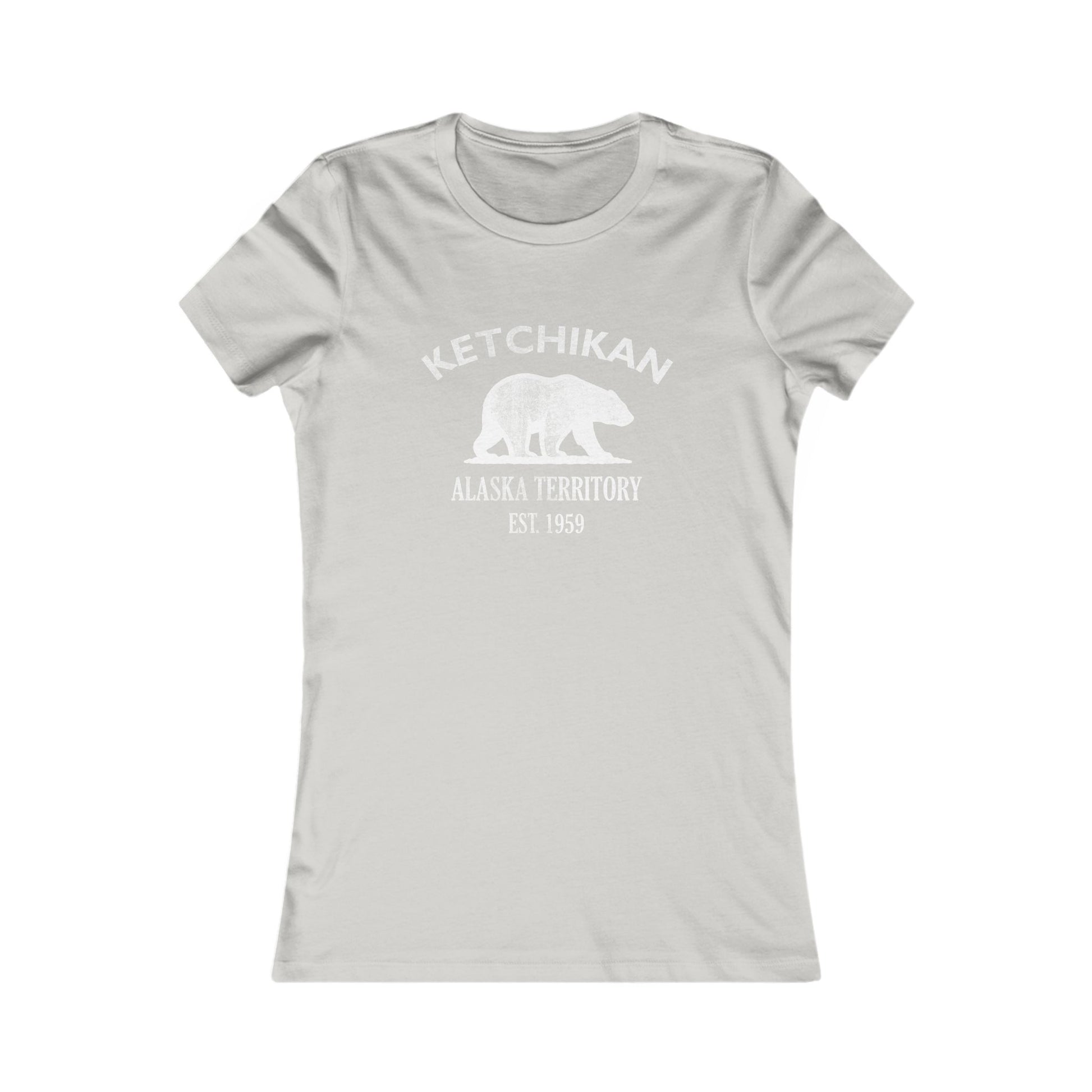
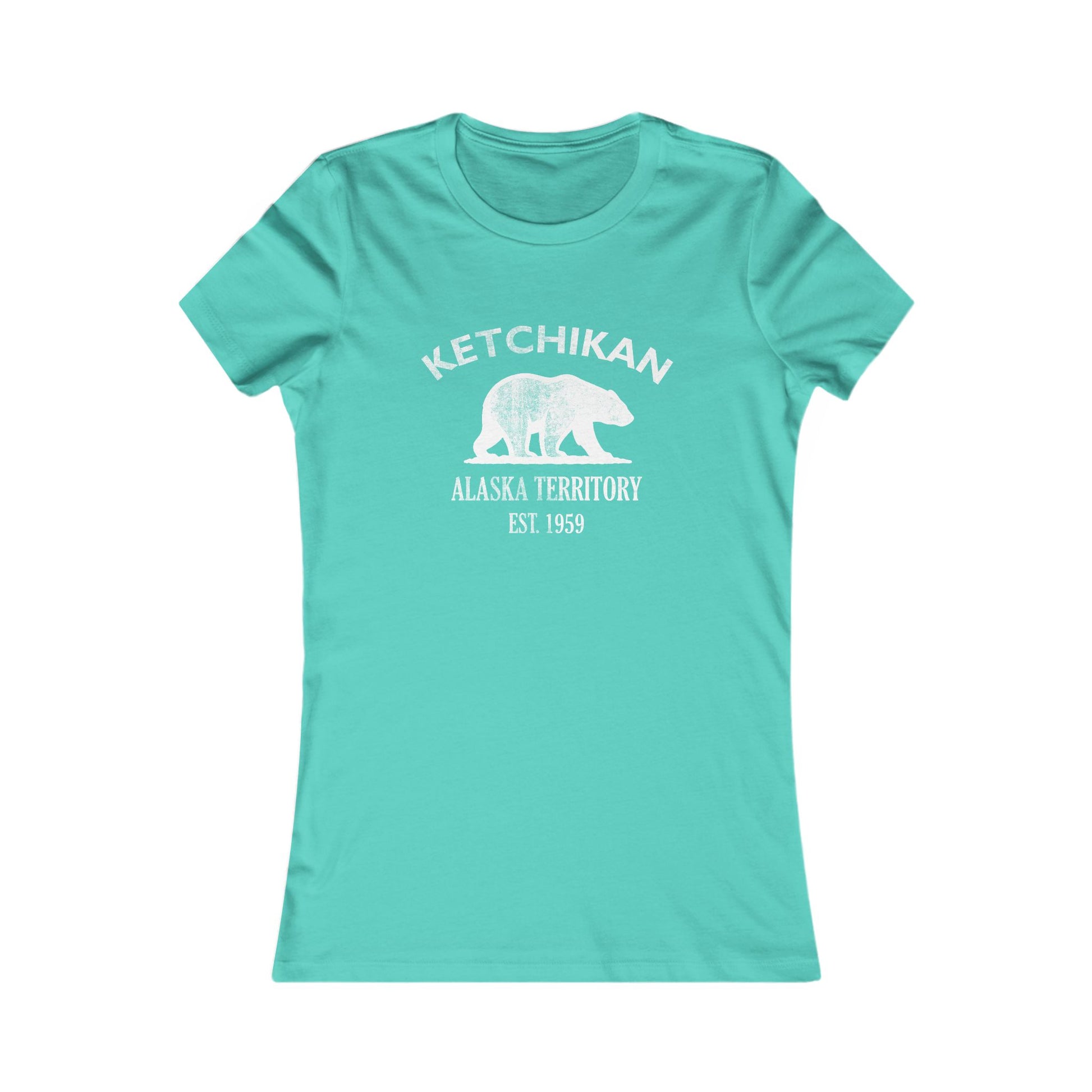
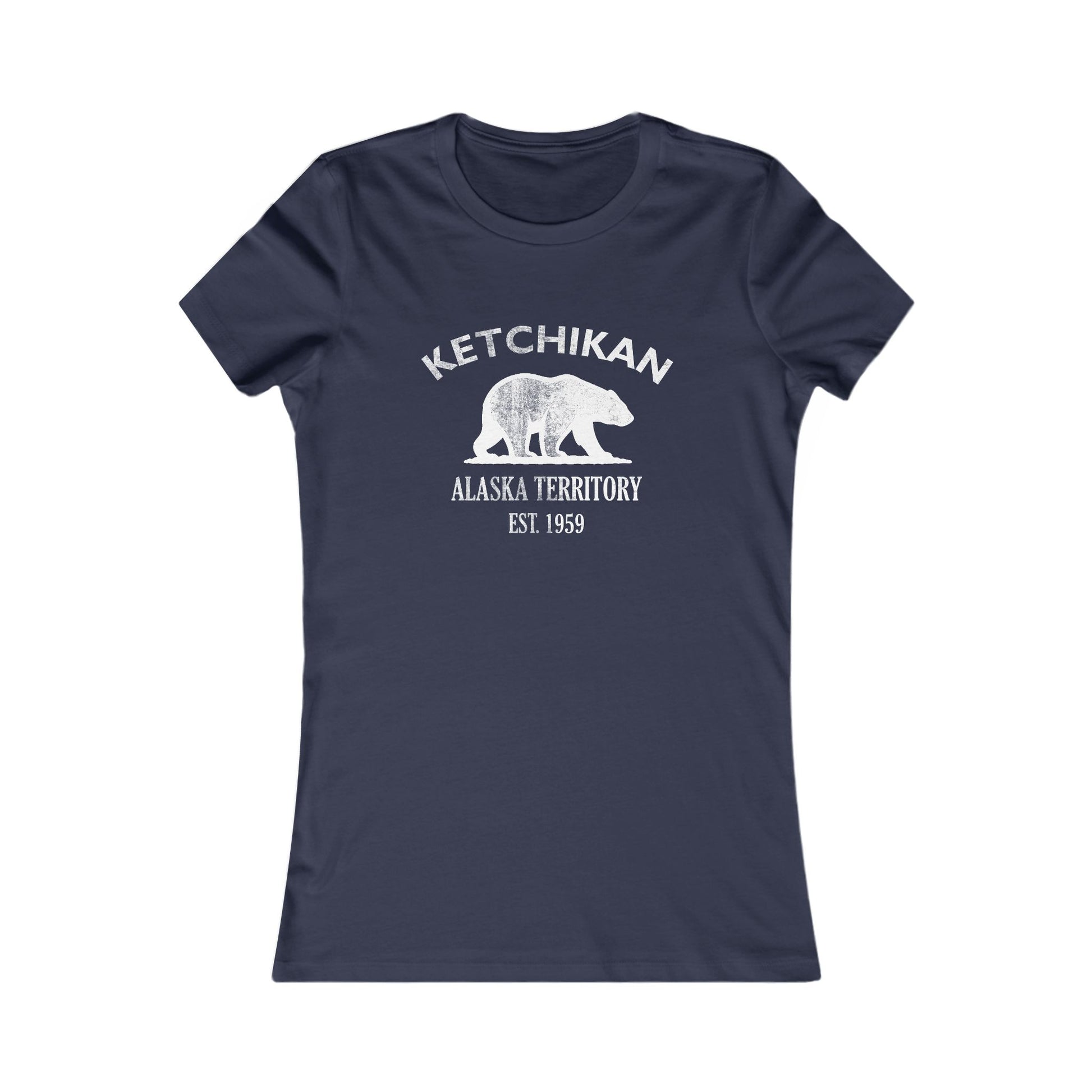
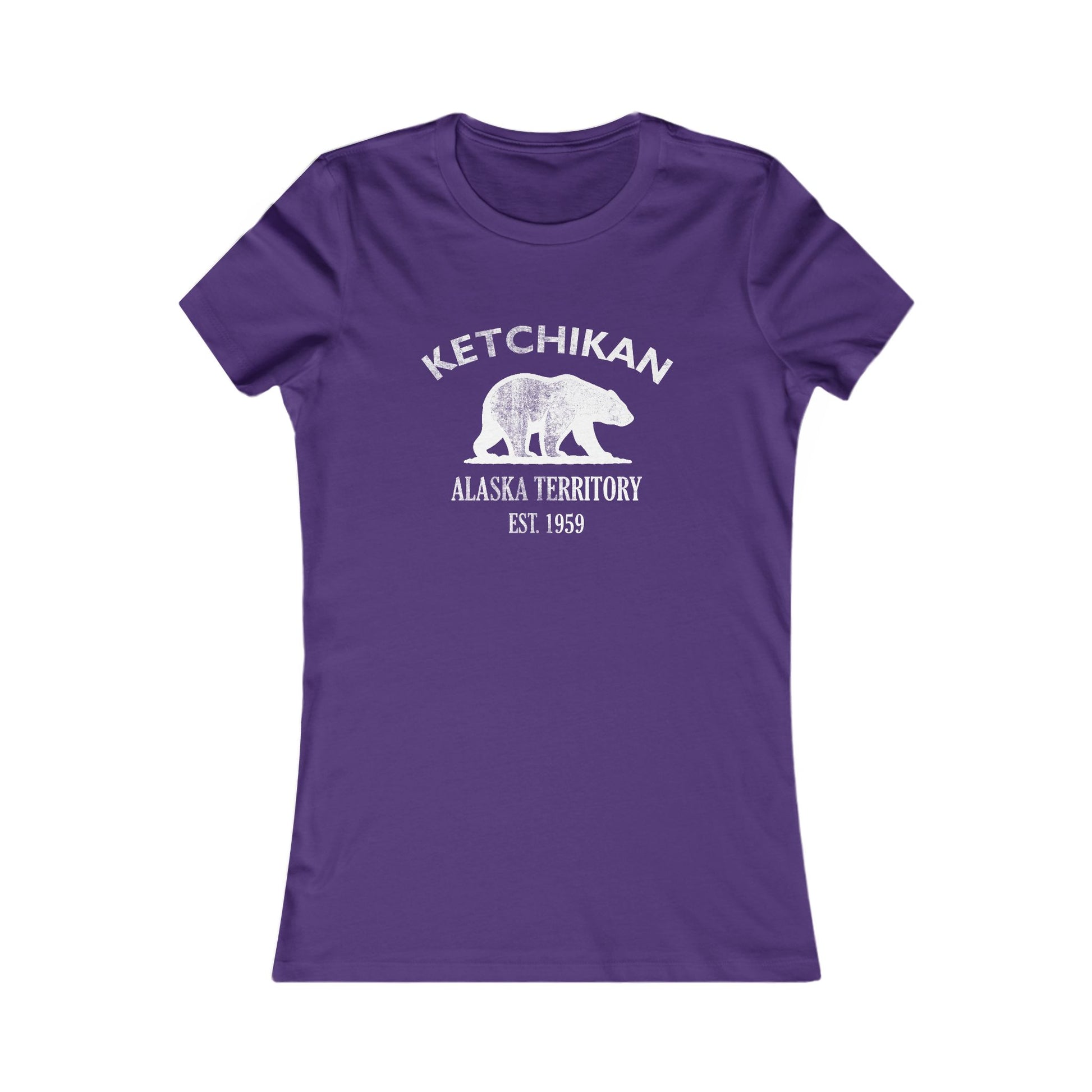
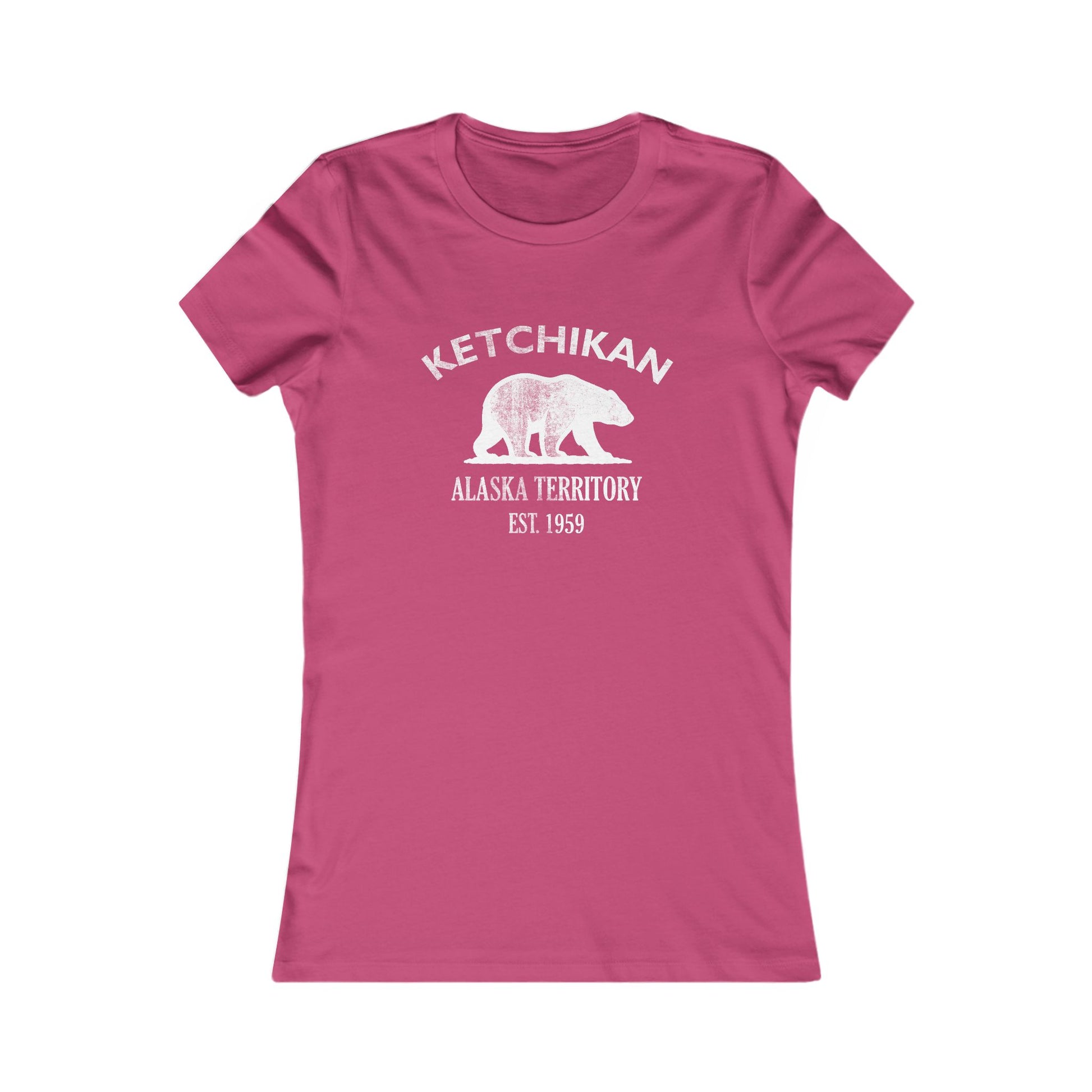
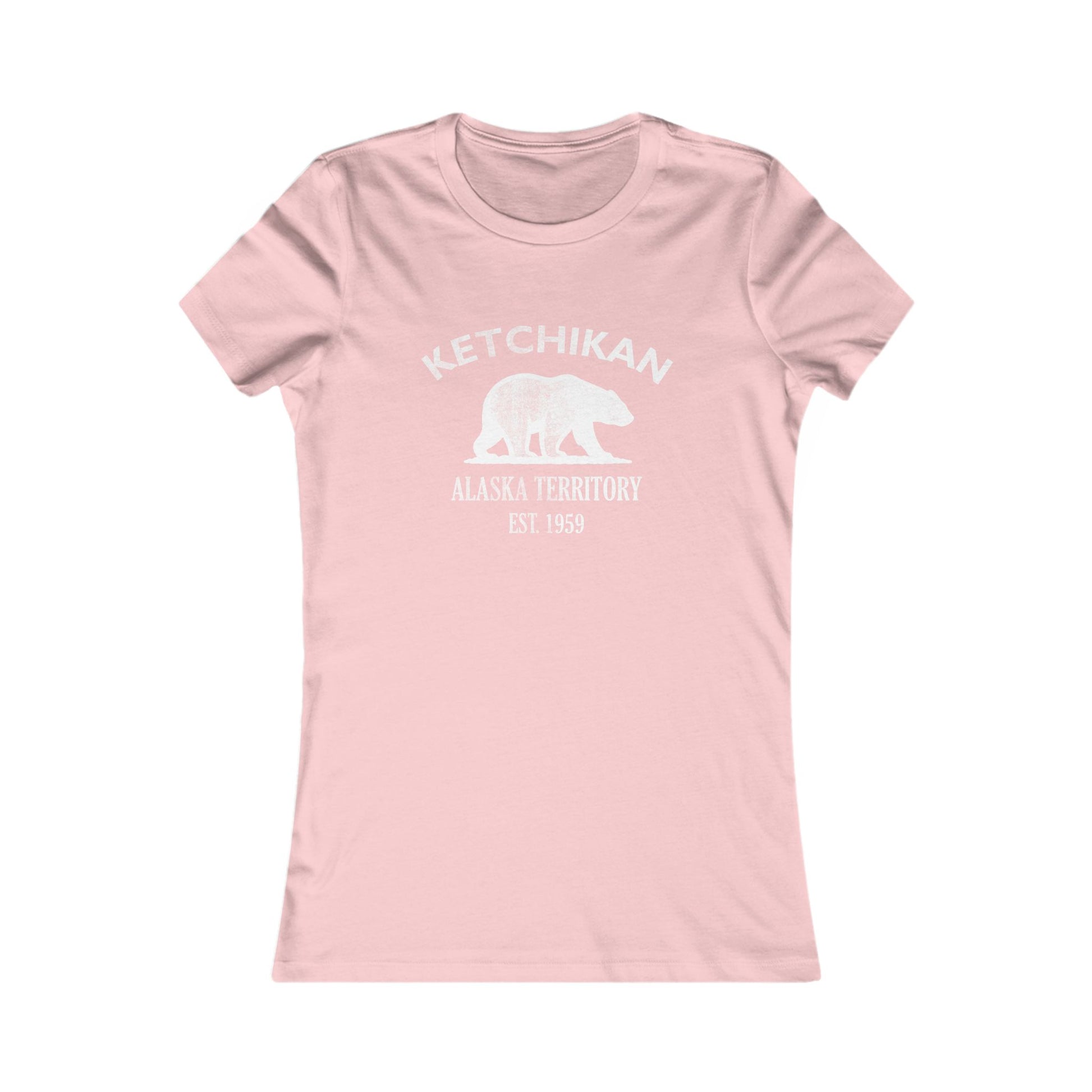
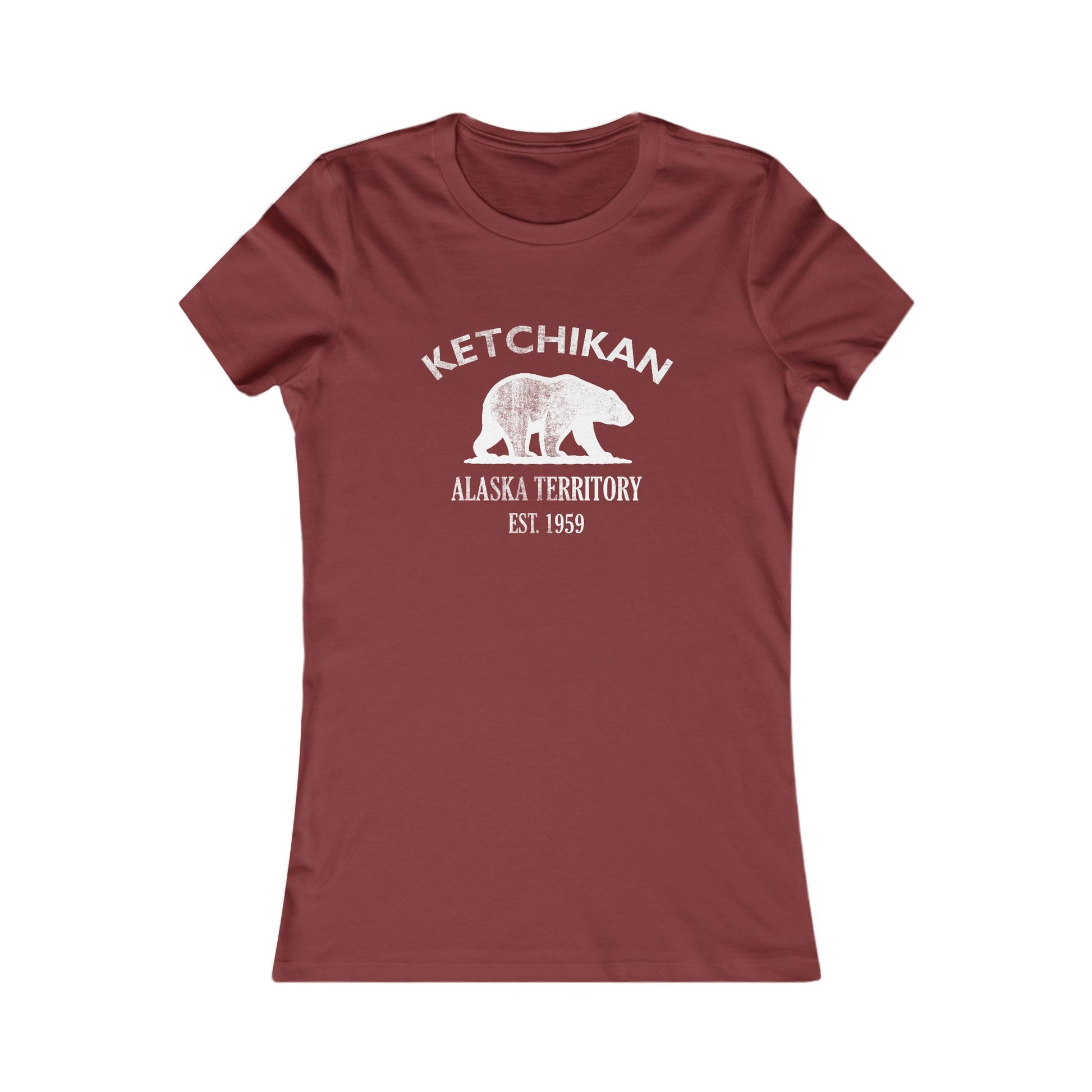
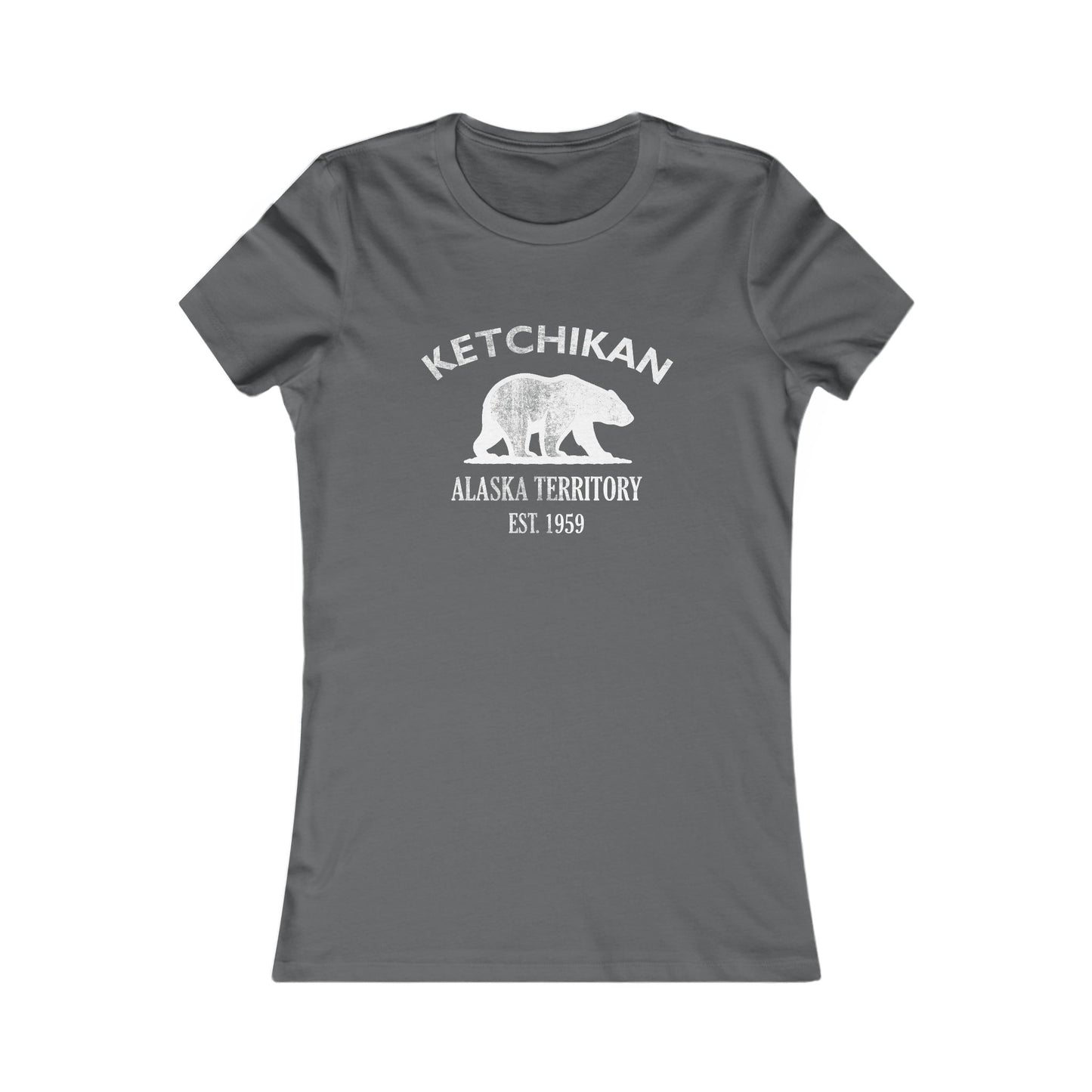
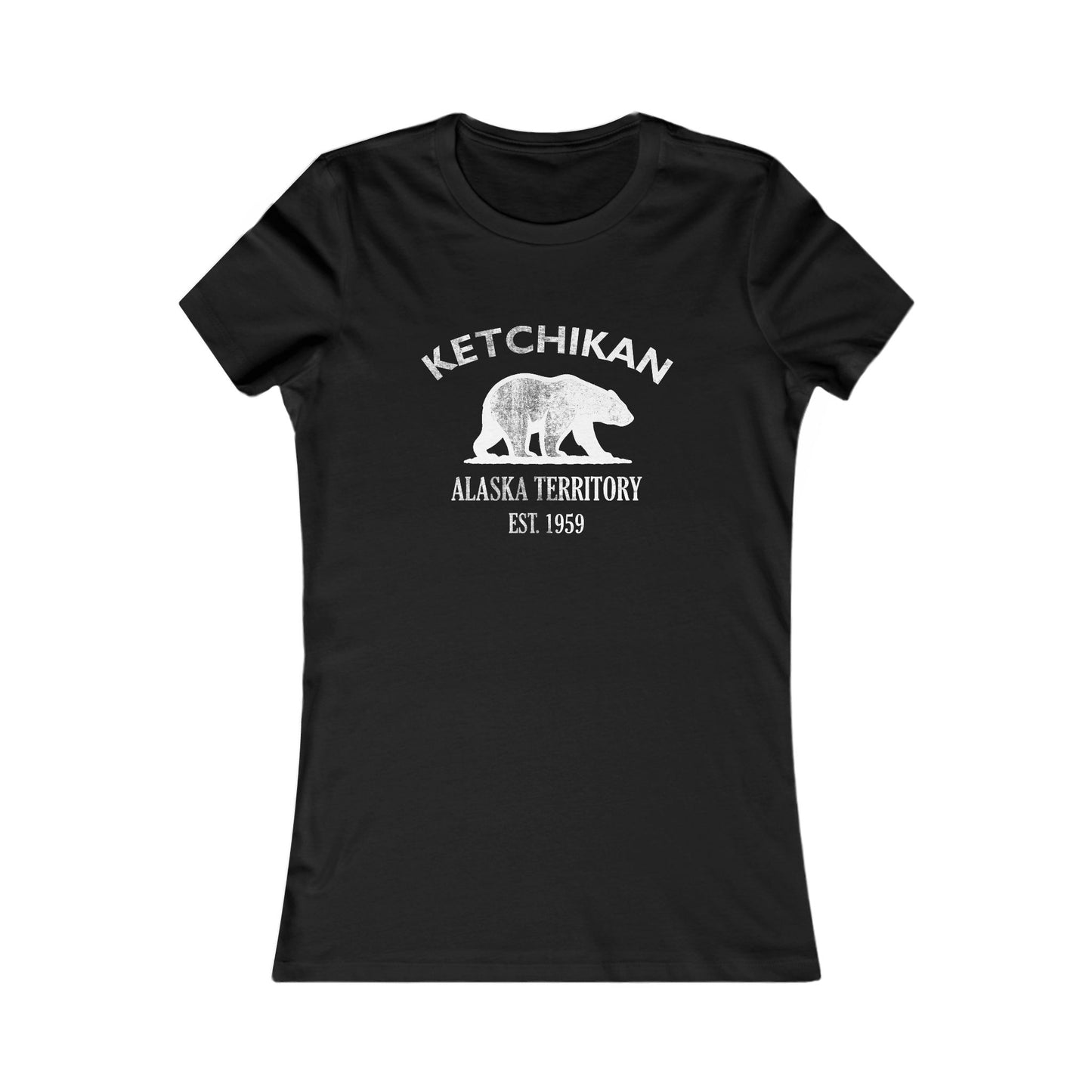
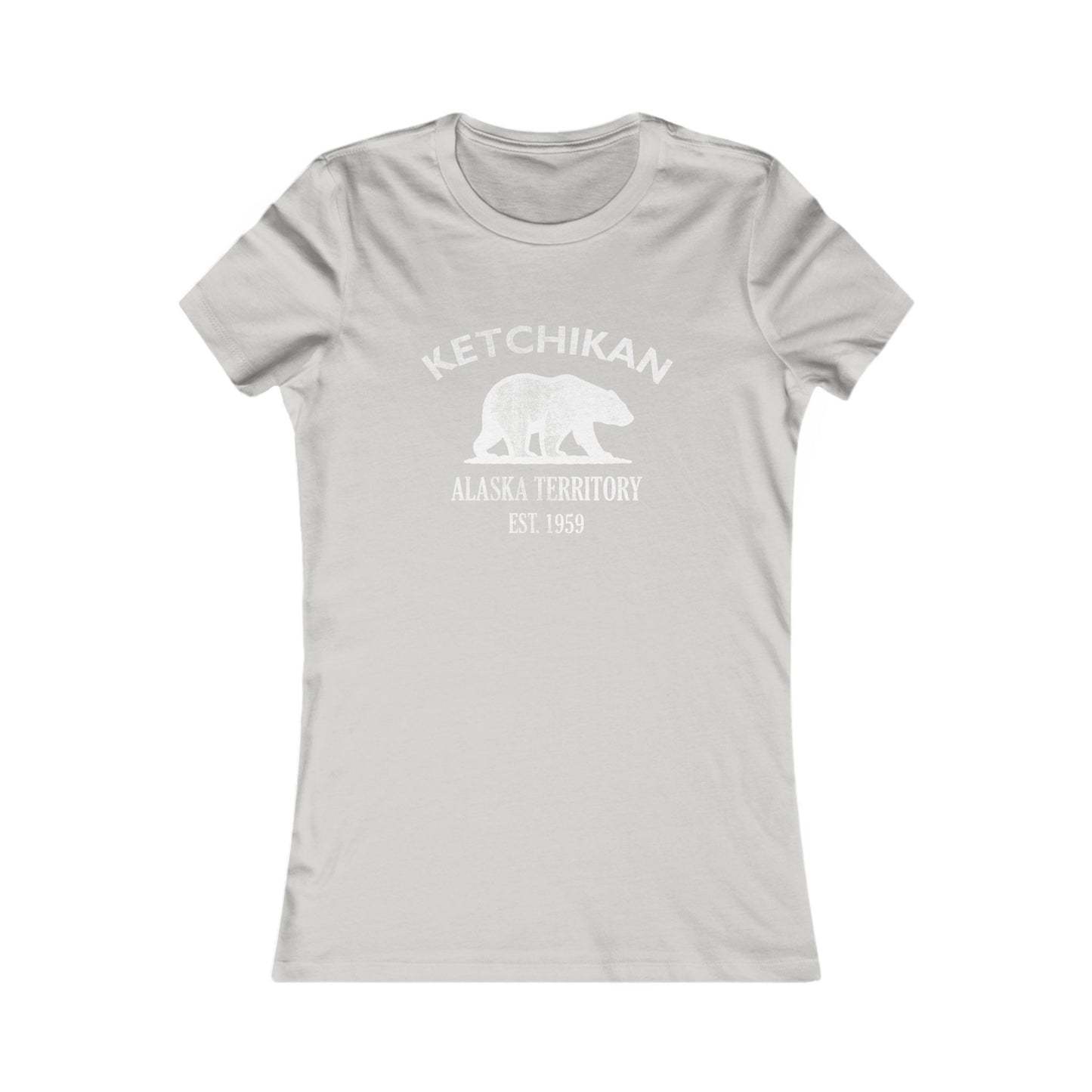
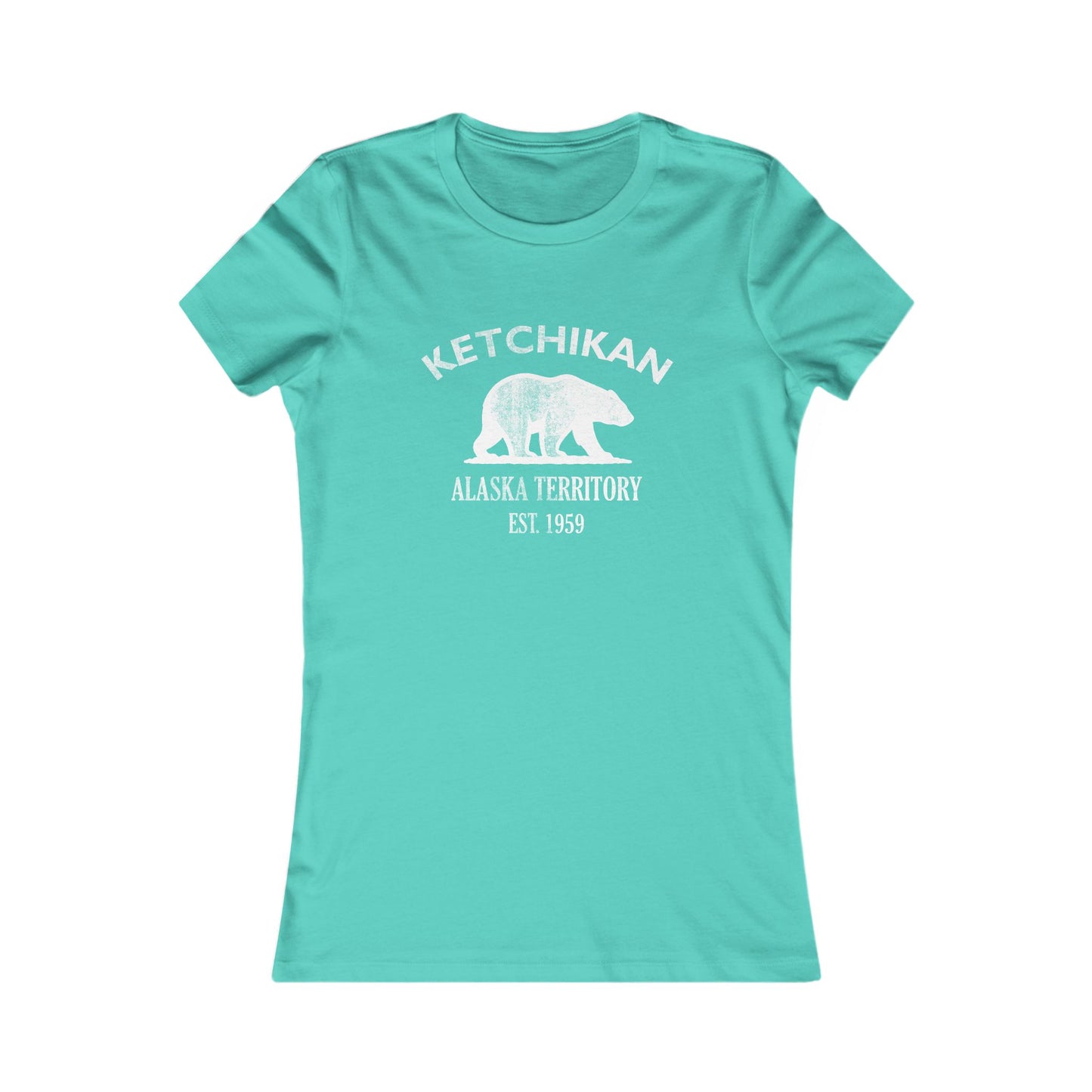
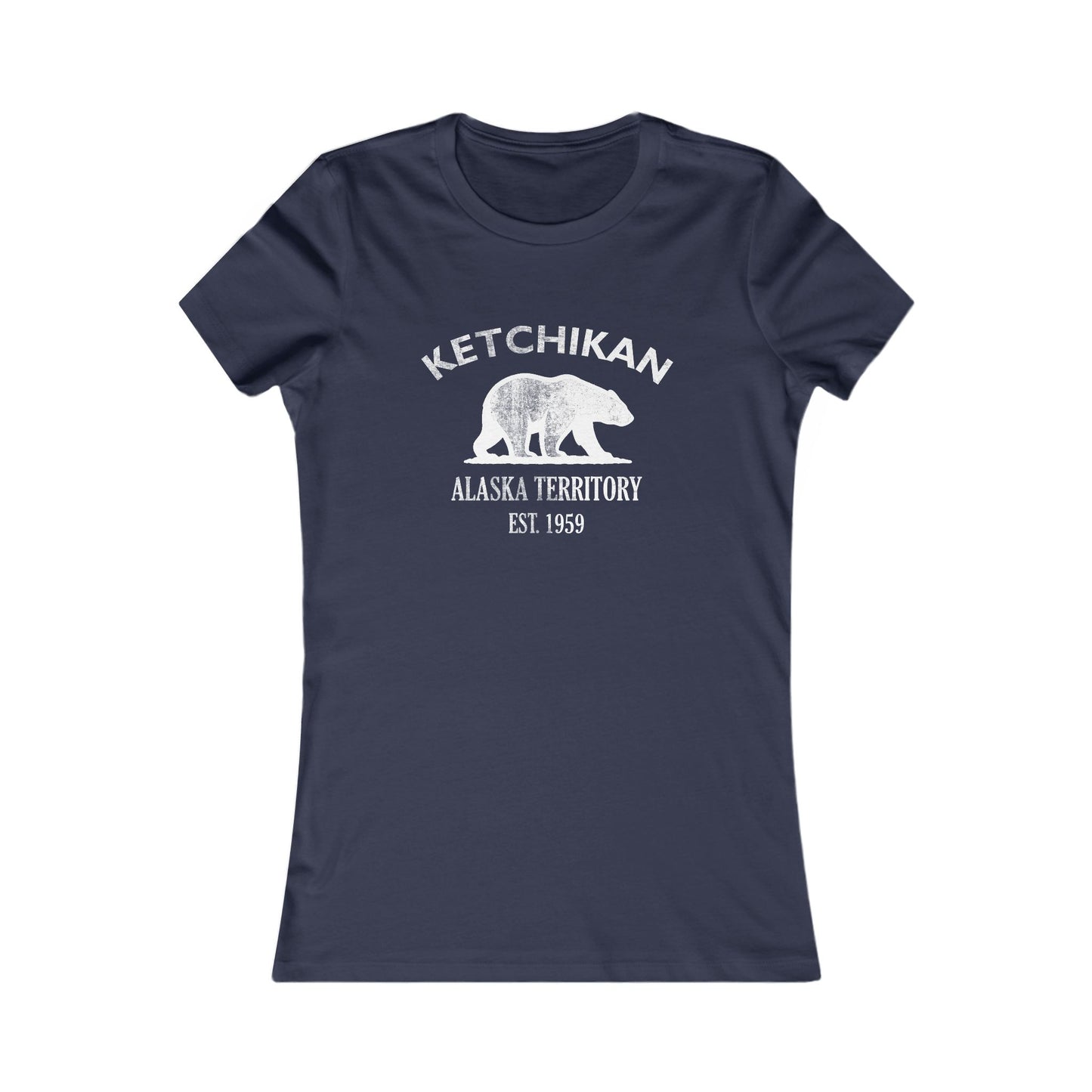
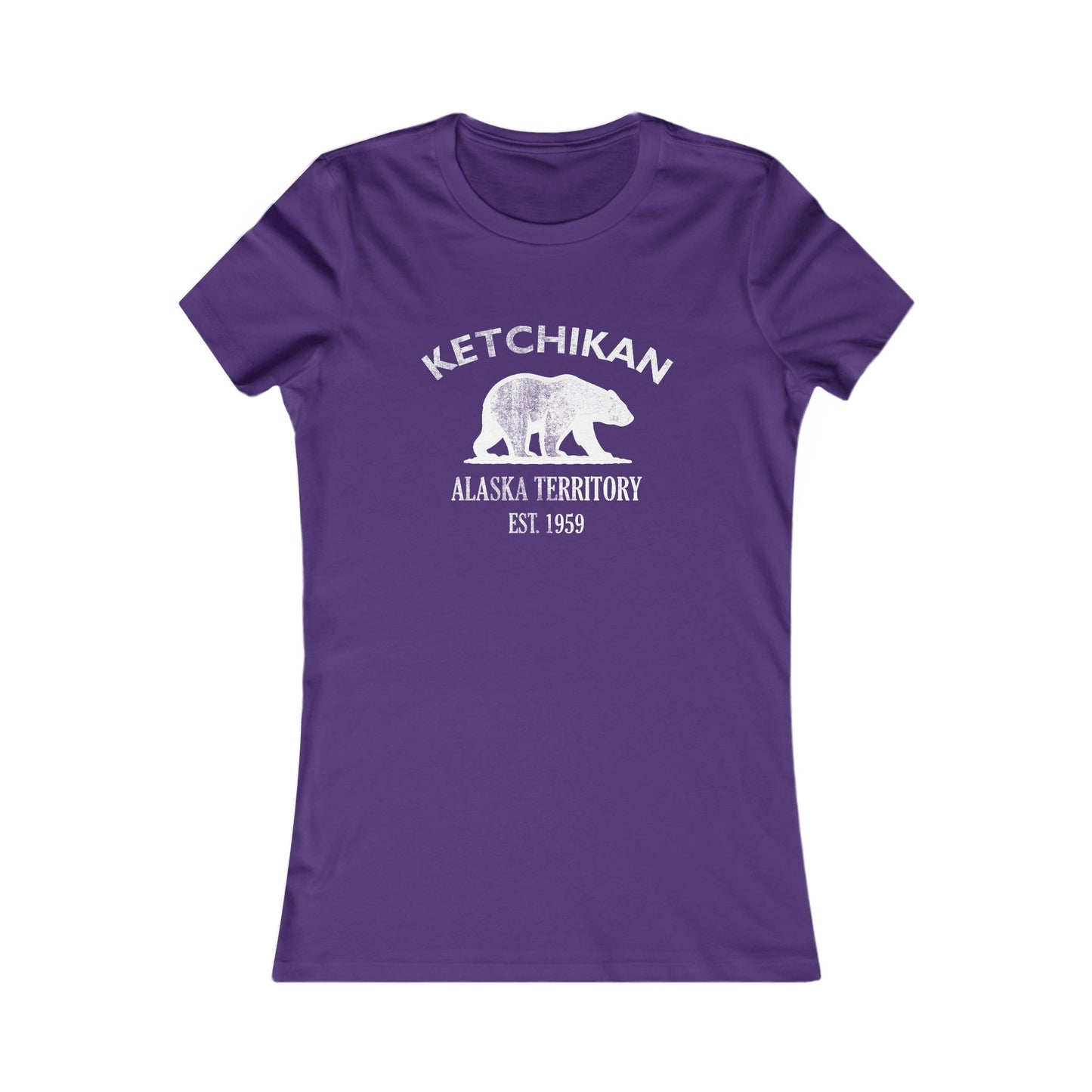
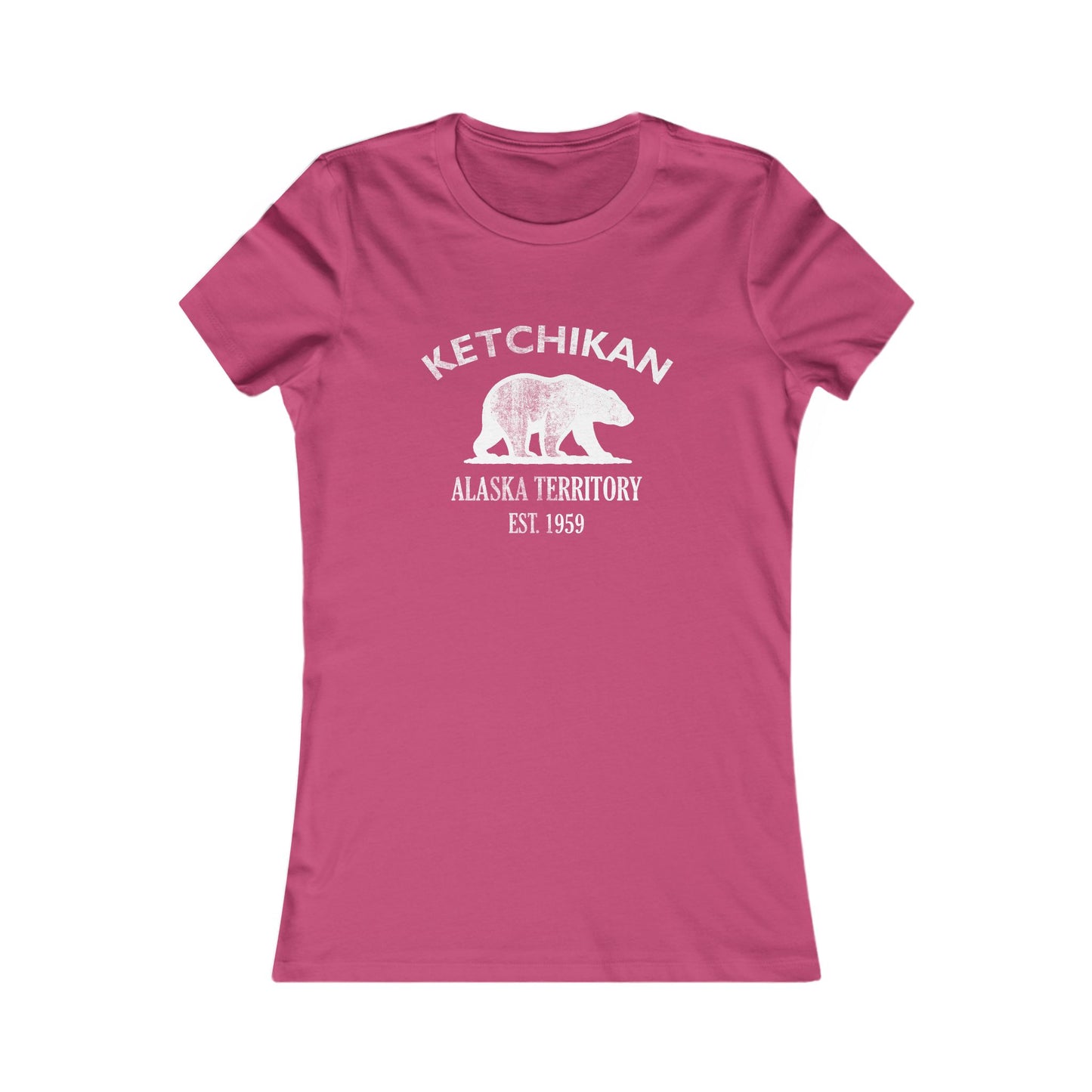
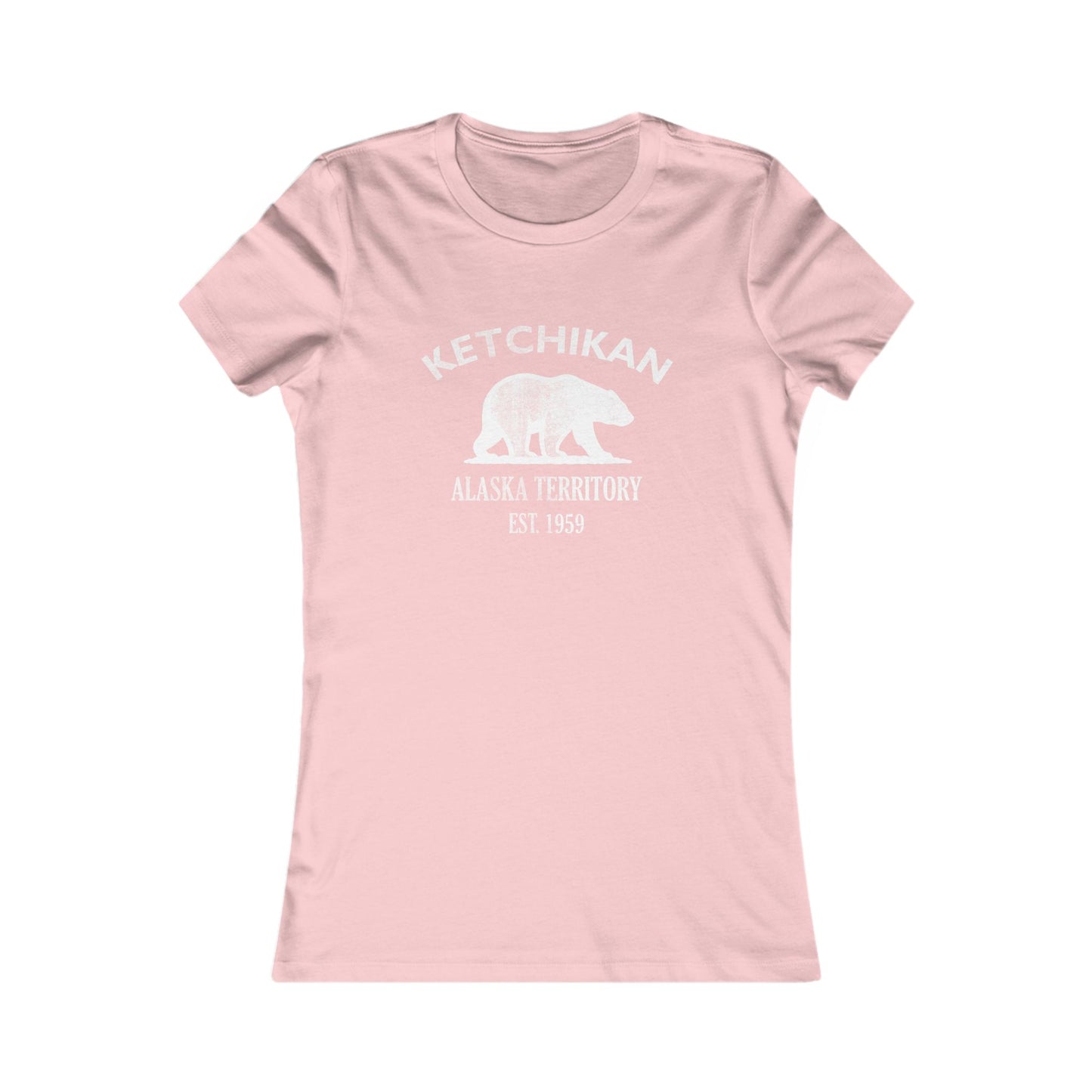
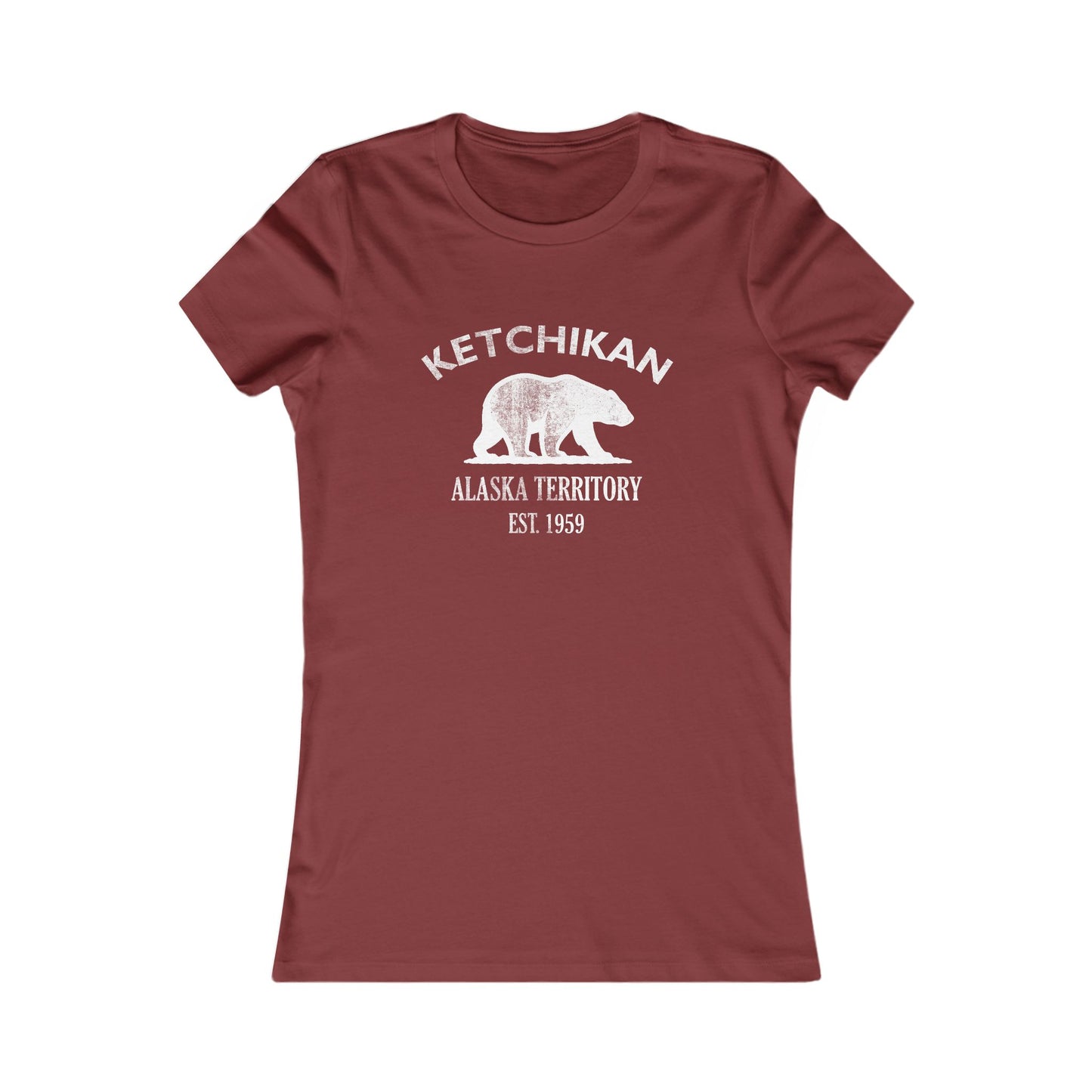
Our Ketchikan designs carry Alaska's distressed bear over the town name and Est. 1959, the statehood year — crate-label and outfitter-stamp styling for the town that canned the world's salmon and carved its tallest stories in cedar. Wear the First City — the boardwalks, the totems, the rain, and all five salmon of the thundering-wings creek.
The nickname, though, came from the map, not the paperwork: northbound ships entering Alaska from Puget Sound make Ketchikan their first port of call, and "Alaska's First City" stuck. What the ships found was a salmon empire. By 1936 seven canneries were packing roughly 1.5 million cases a year, and Ketchikan wore the title Salmon Capital of the World. All five Pacific salmon — king, sockeye, coho, pink, and chum — still run the local waters, and every August you can watch them climb the fish ladder on Ketchikan Creek in the middle of downtown.
Why People Visit Ketchikan Alaska
- Creek Street — the boardwalk on pilings, Dolly's House Museum, the salmon ladder, and Married Man's Trail over the hill.
- The totem circuit — Saxman Totem Park, Totem Bight State Park, Potlatch Totem Park, and the Totem Heritage Center's unrestored 19th-century poles.
- Misty Fjords National Monument — granite fjords, waterfalls, and New Eddystone Rock by floatplane or boat up Behm Canal.
- The Tongass — rainforest trails from Rainbird to the Deer Mountain climb; bears at Herring Cove in late summer; eagles everywhere.
- Town life — the Great Alaskan Lumberjack Show, waterfront seafood, Cape Fox Lodge above downtown, and the summer salmon derby.
