


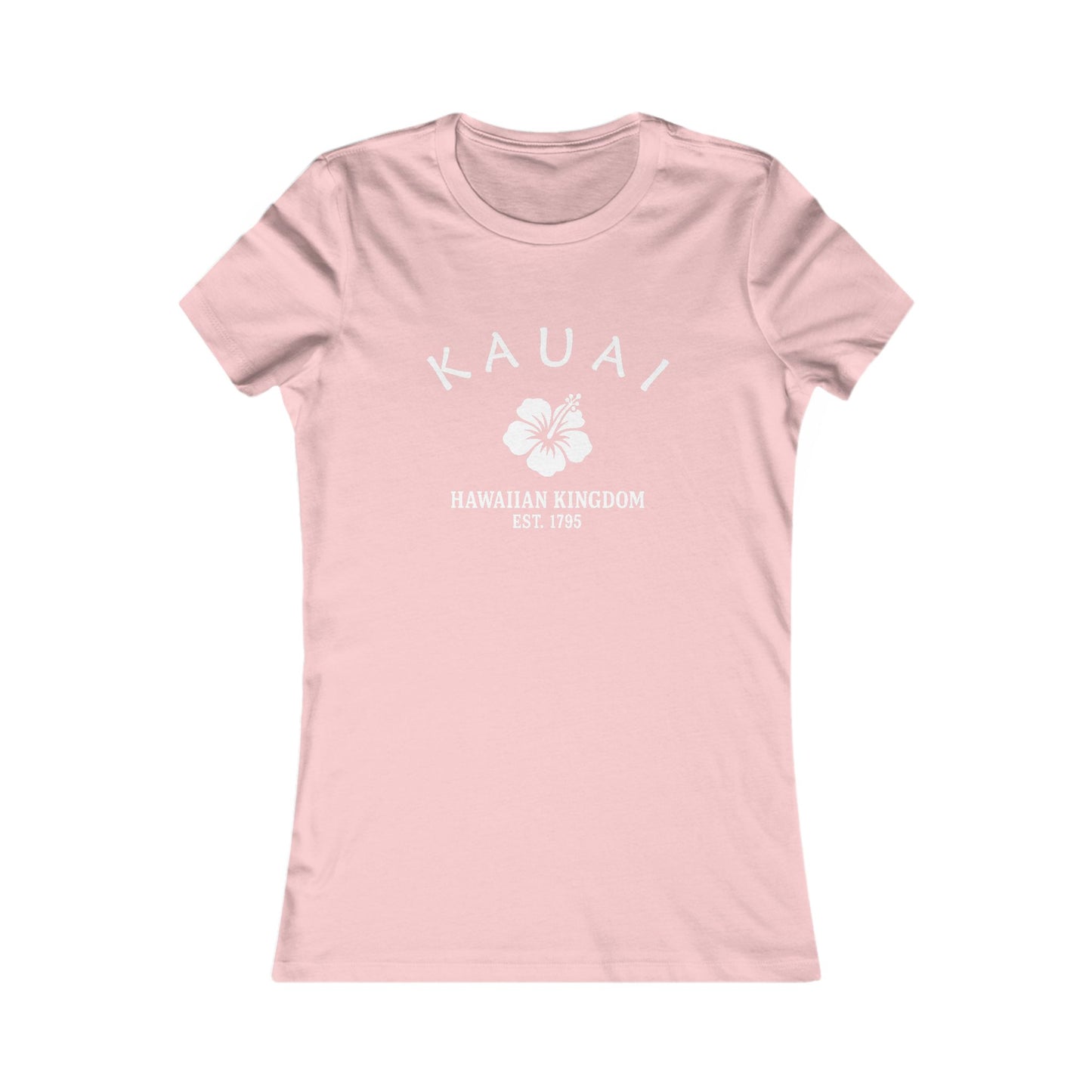
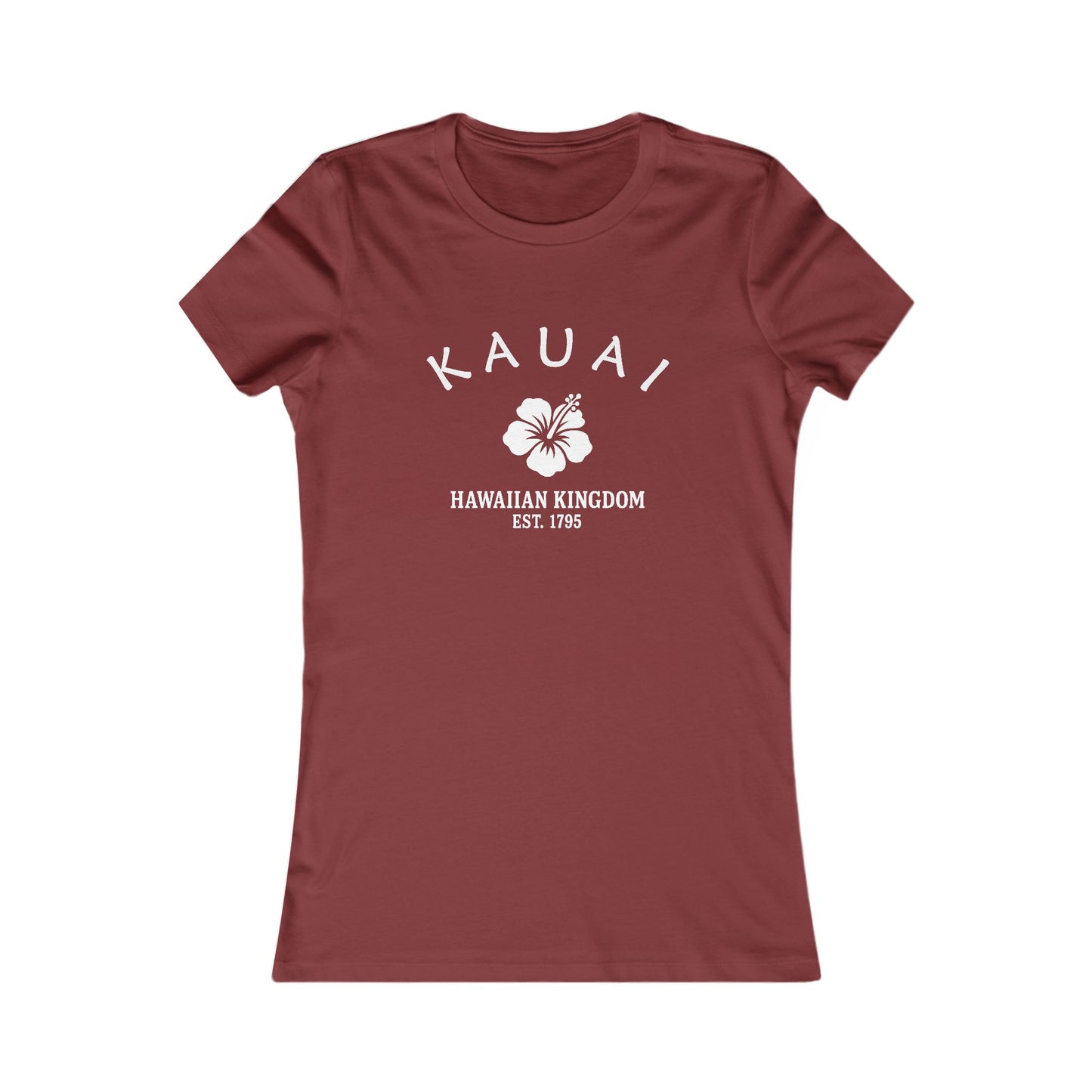
Our Kauaʻi logo carries the hibiscus and the "Hawaiian Kingdom — Est. 1795" banner, the shared retro emblem of our Hawaiʻi towns; 1795 marks the founding of the Kingdom under Kamehameha — the Kingdom's birthday, not Kauaʻi's, since the island famously joined later, by agreement, in 1810. Rendered in worn black-and-white, like an old travel decal or crate label, it ties Kauaʻi to every other Hawaiian place we make. The hibiscus is island bloom and pure aloha. What makes this one Kauaʻi is the story behind it — the Garden Isle, the canyon and the cliffs, and the island that was never conquered.
So Kauaʻi gathers the oldest Hawaiian island, the deepest green in the chain, a canyon and a coastline carved by rain, and the proud history of a kingdom joined but never taken. Our Kauaʻi designs gather that into wearable form. Wear the history. Kauaʻi — the Garden Isle, where the oldest Hawaiian island wears its green like a crown.
Why People Visit Kauaʻi
People come to Kauaʻi for the oldest, greenest island in the chain and the quieter pace that comes with it. It rewards travelers who would rather hike a canyon rim or paddle a north-shore bay than chase a crowd — a place of waterfalls, taro valleys, and emerald cliffs, with a deep Hawaiian history and a slower, garden kind of aloha.
