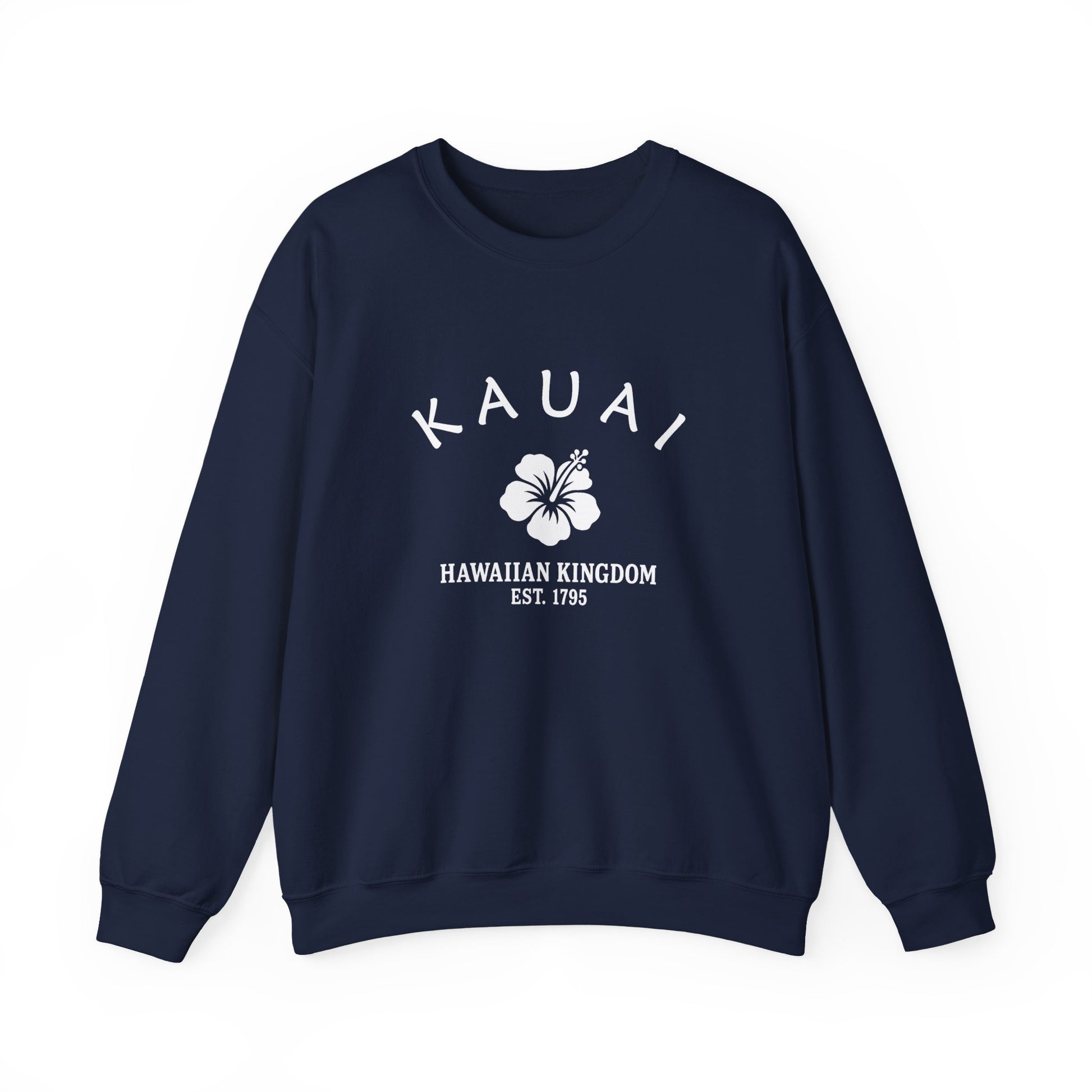

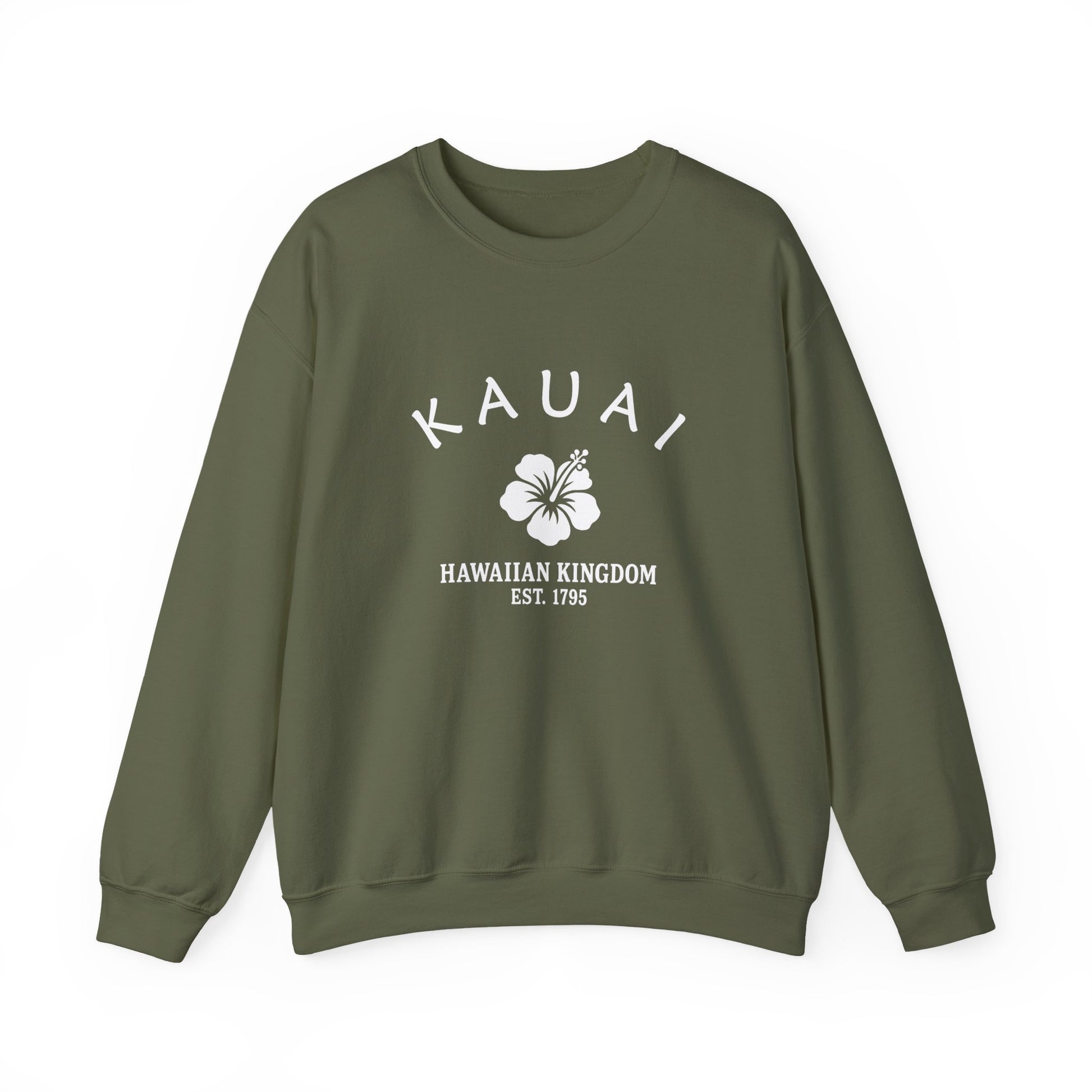
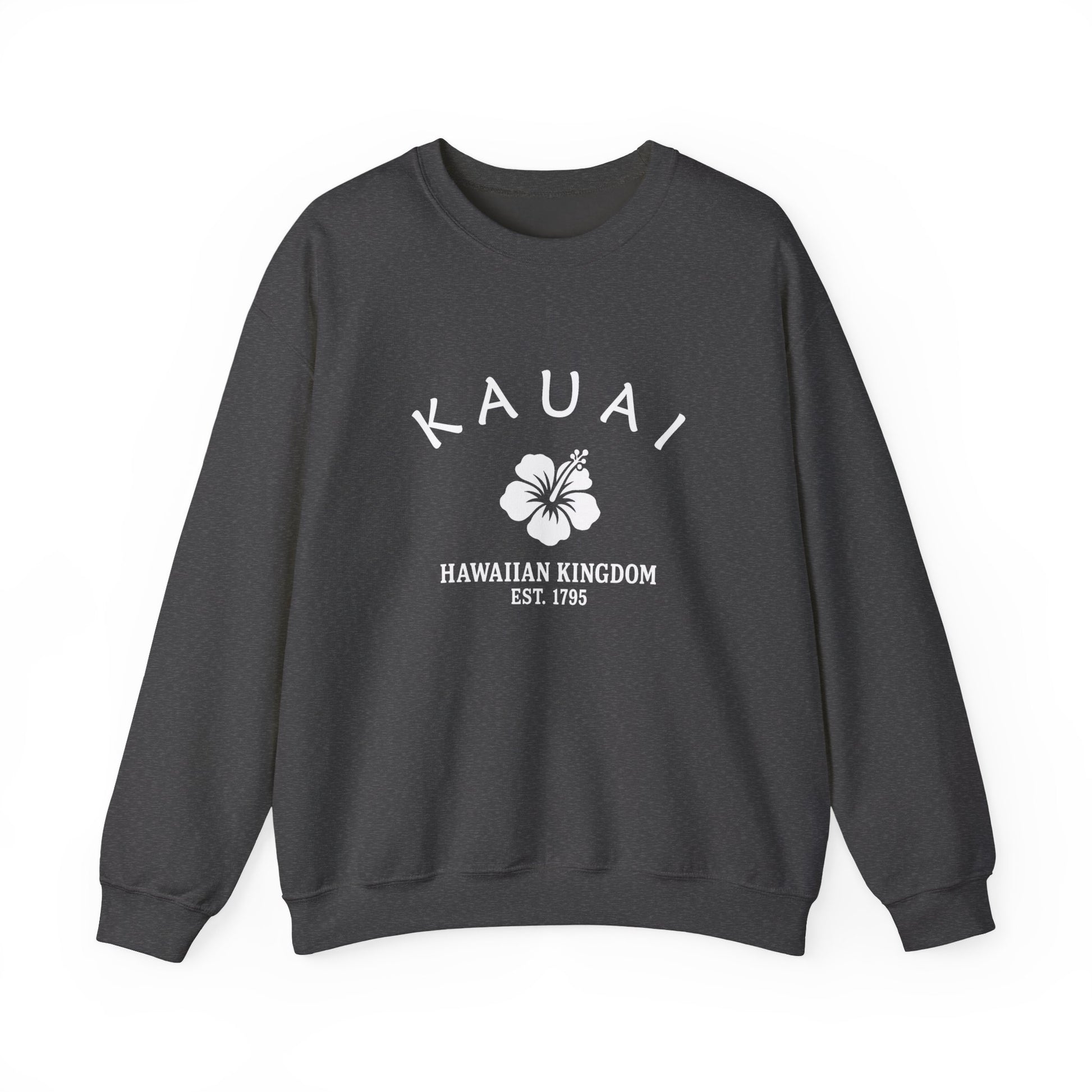
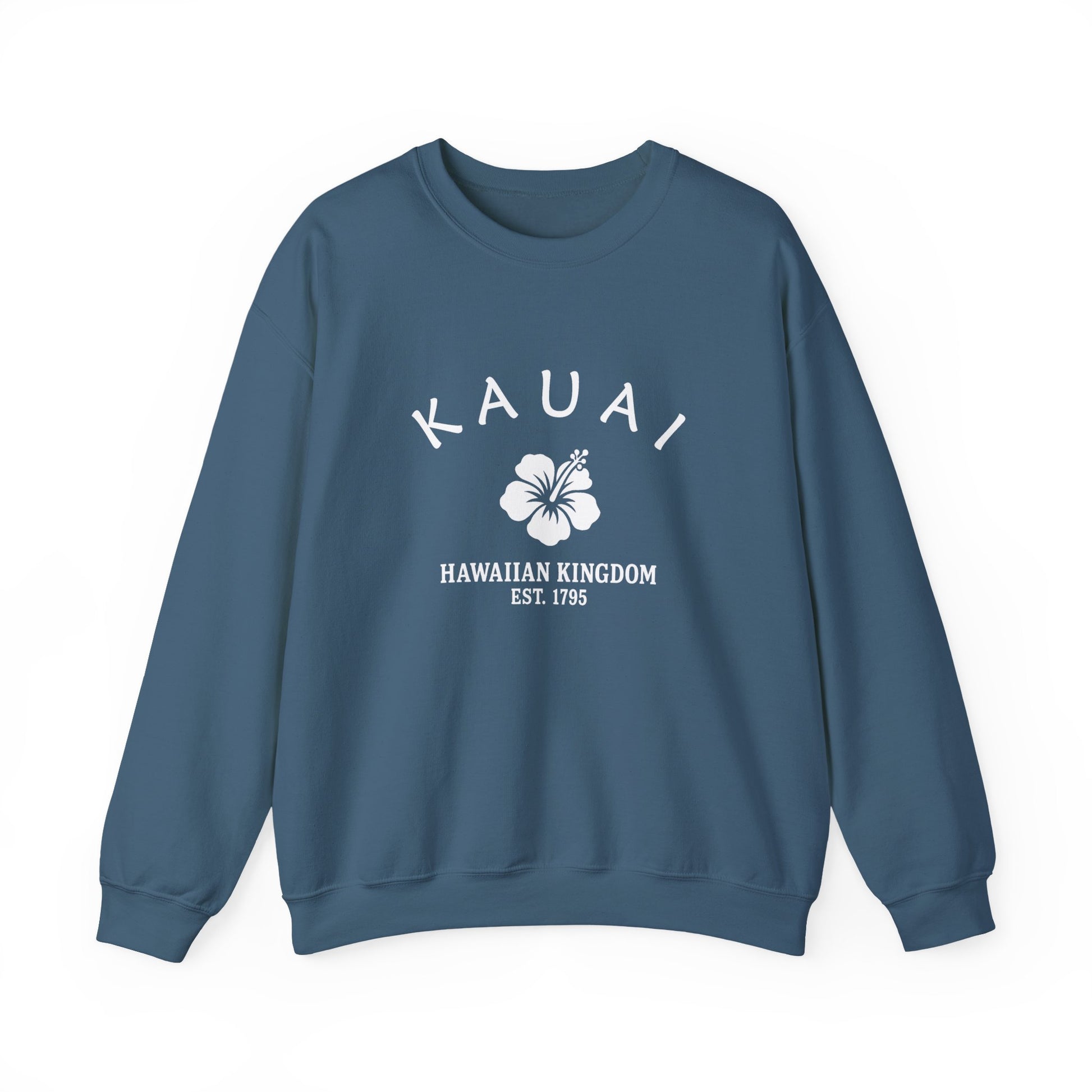
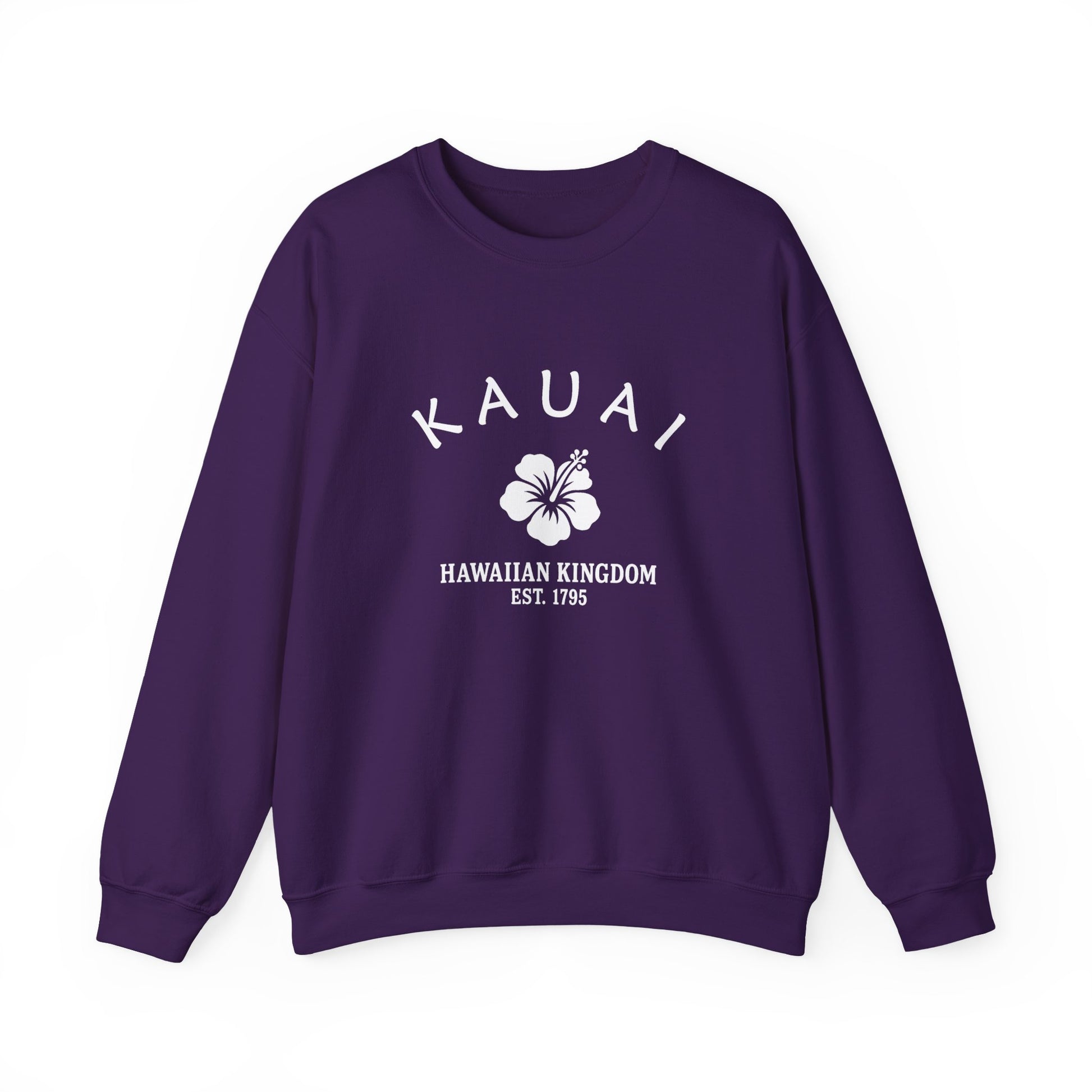
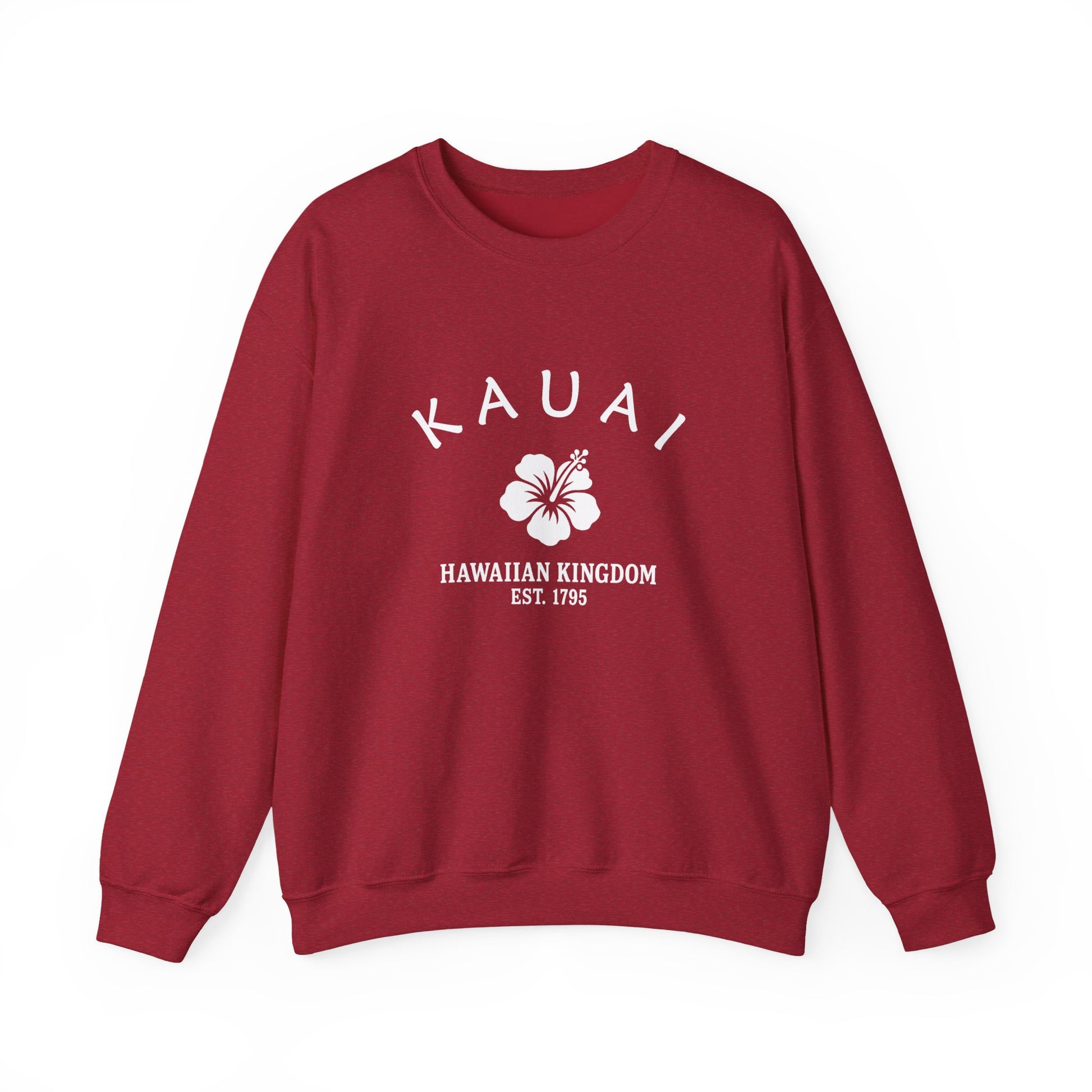
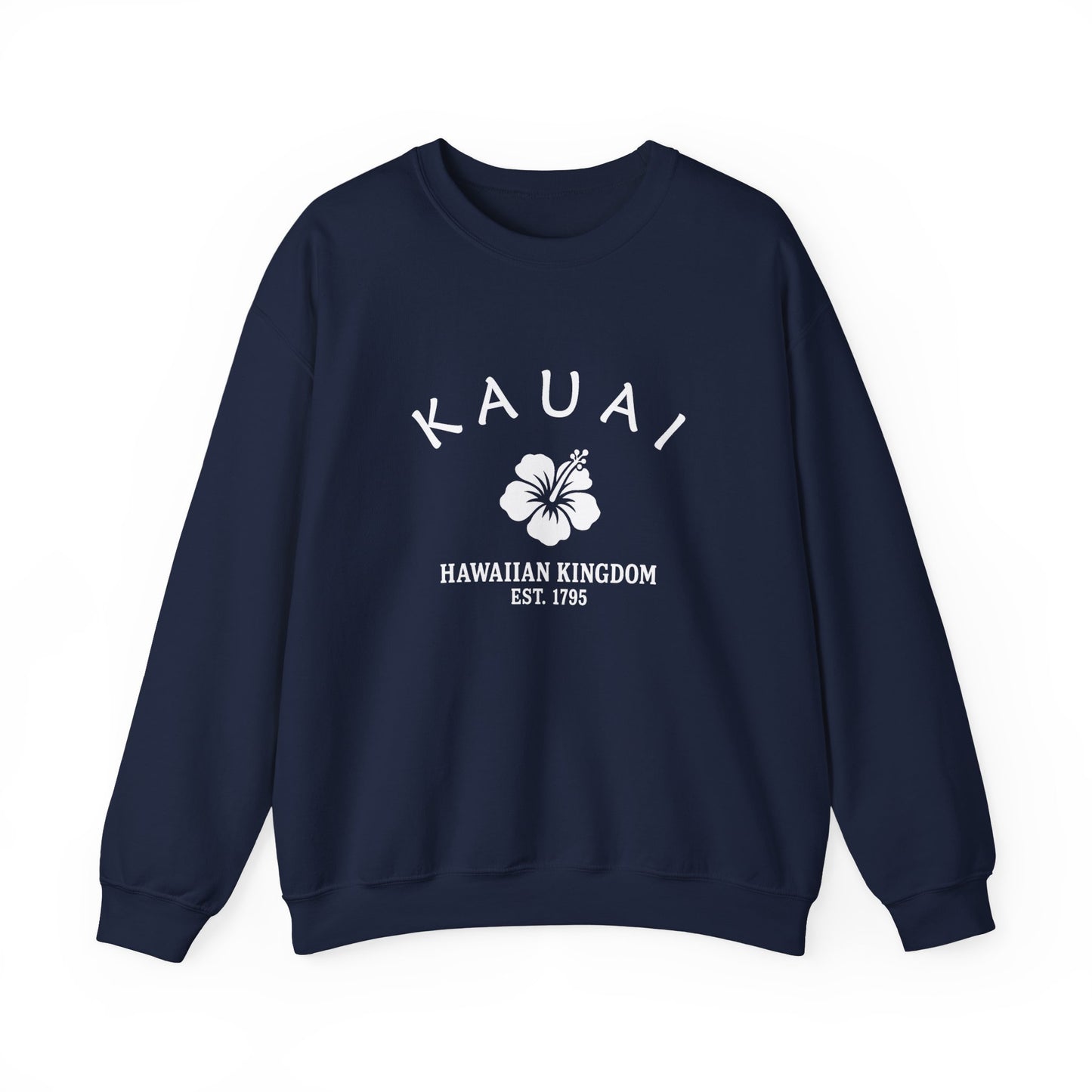

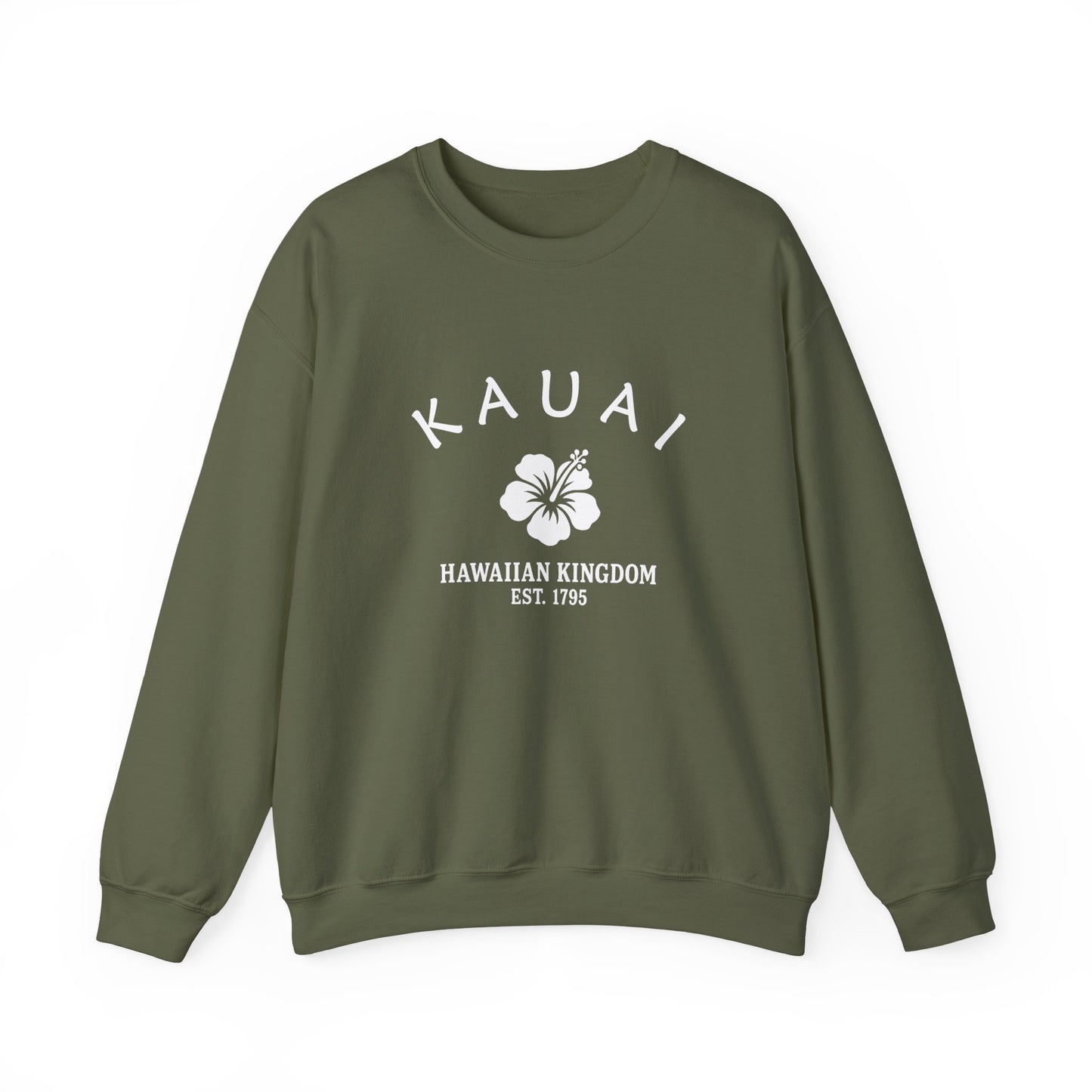
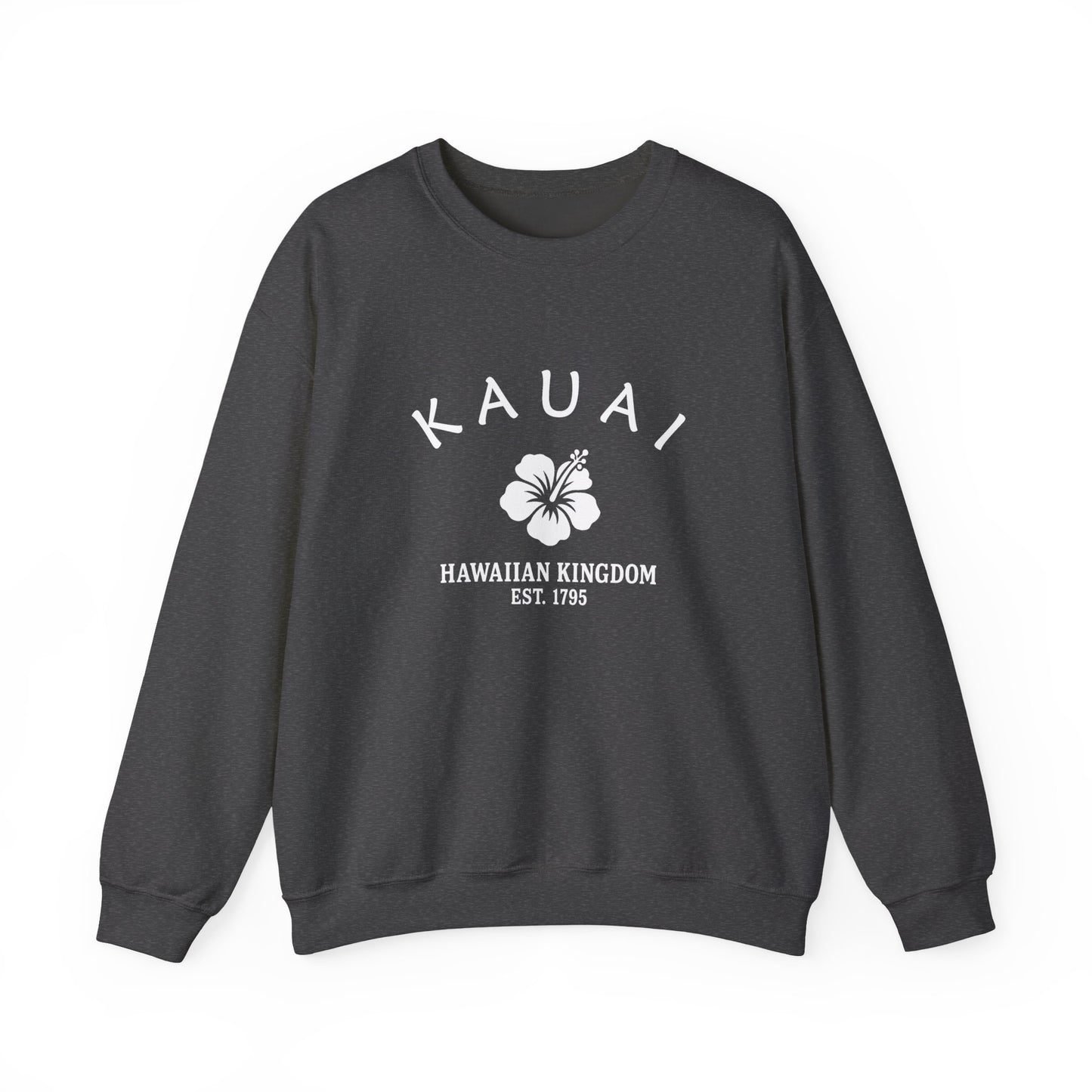
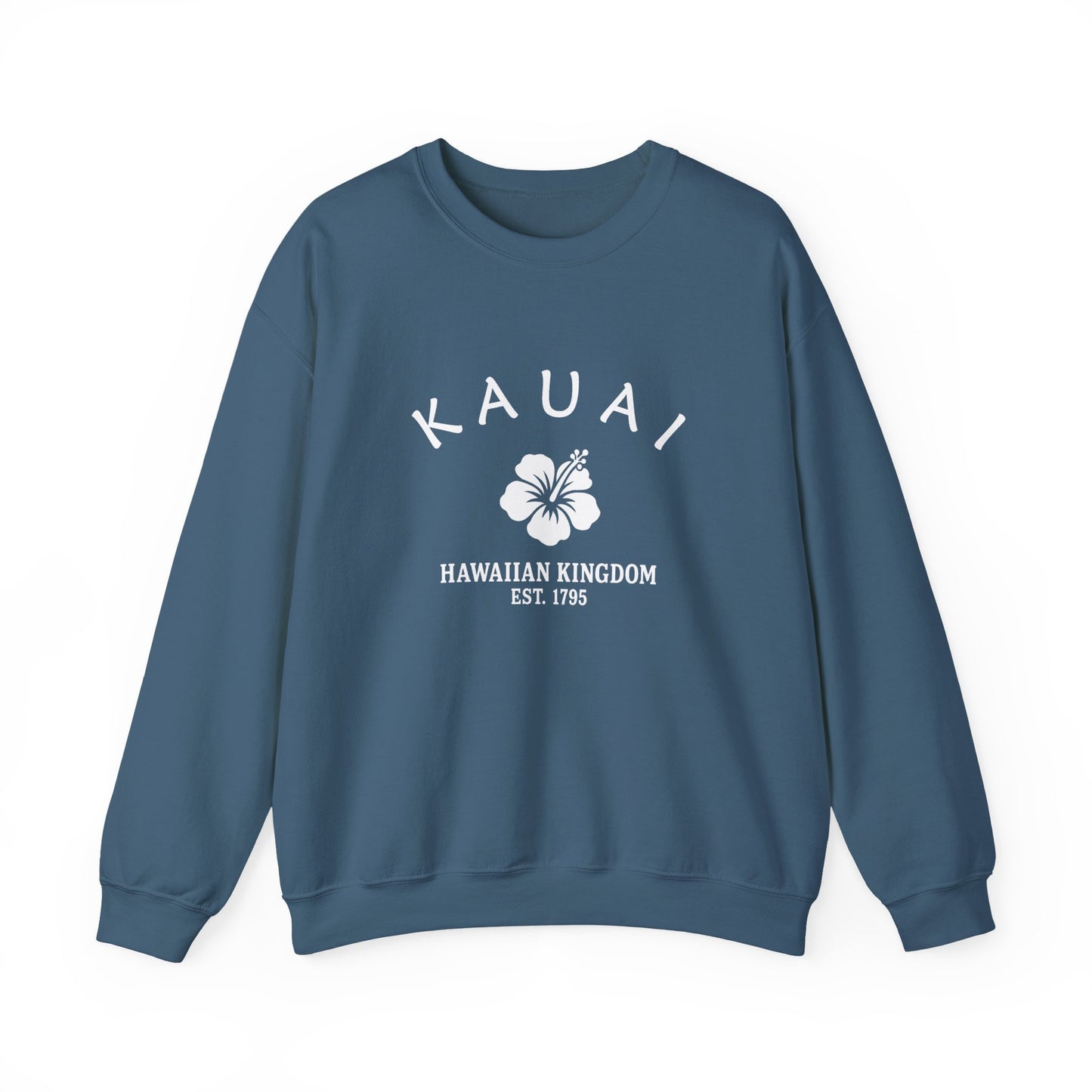
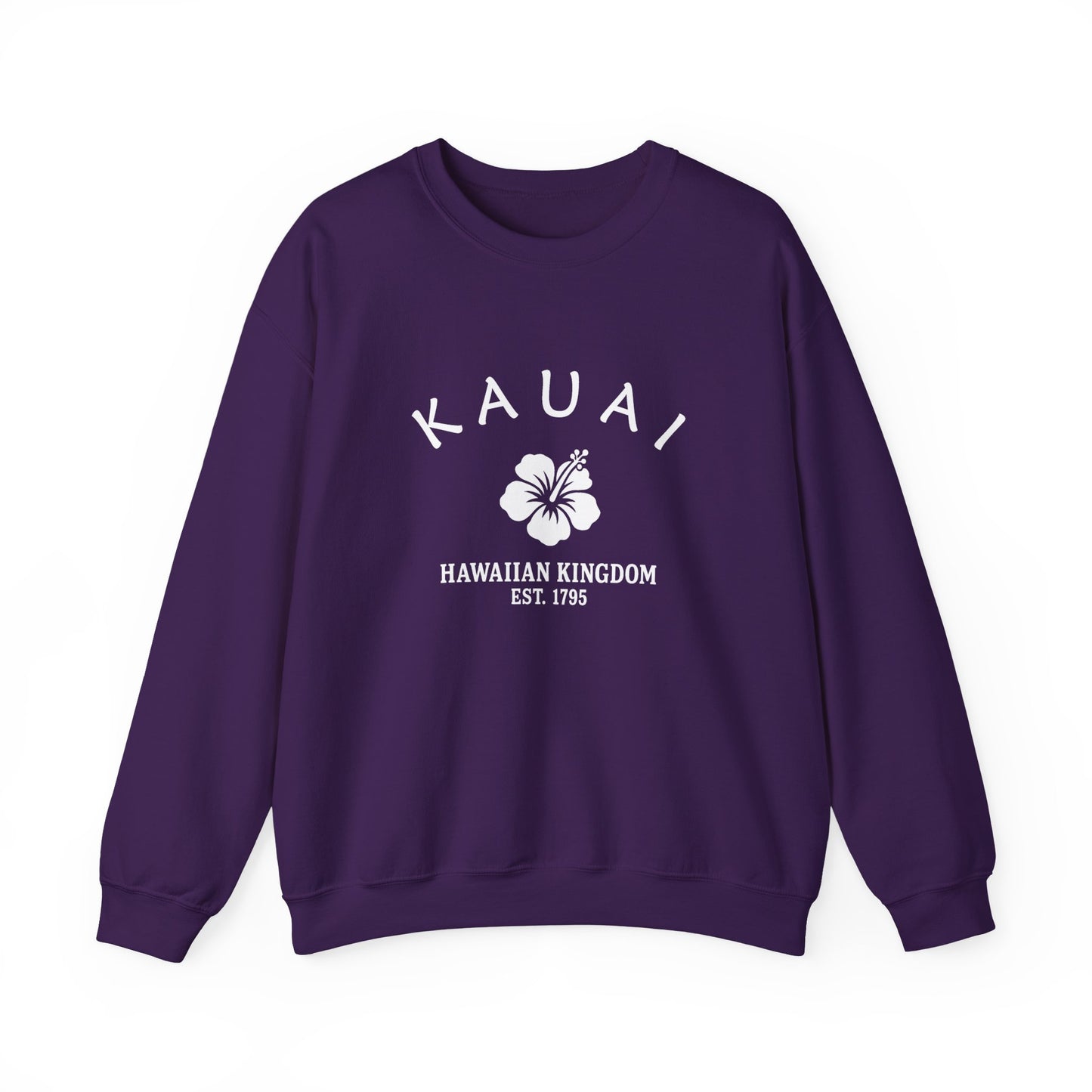
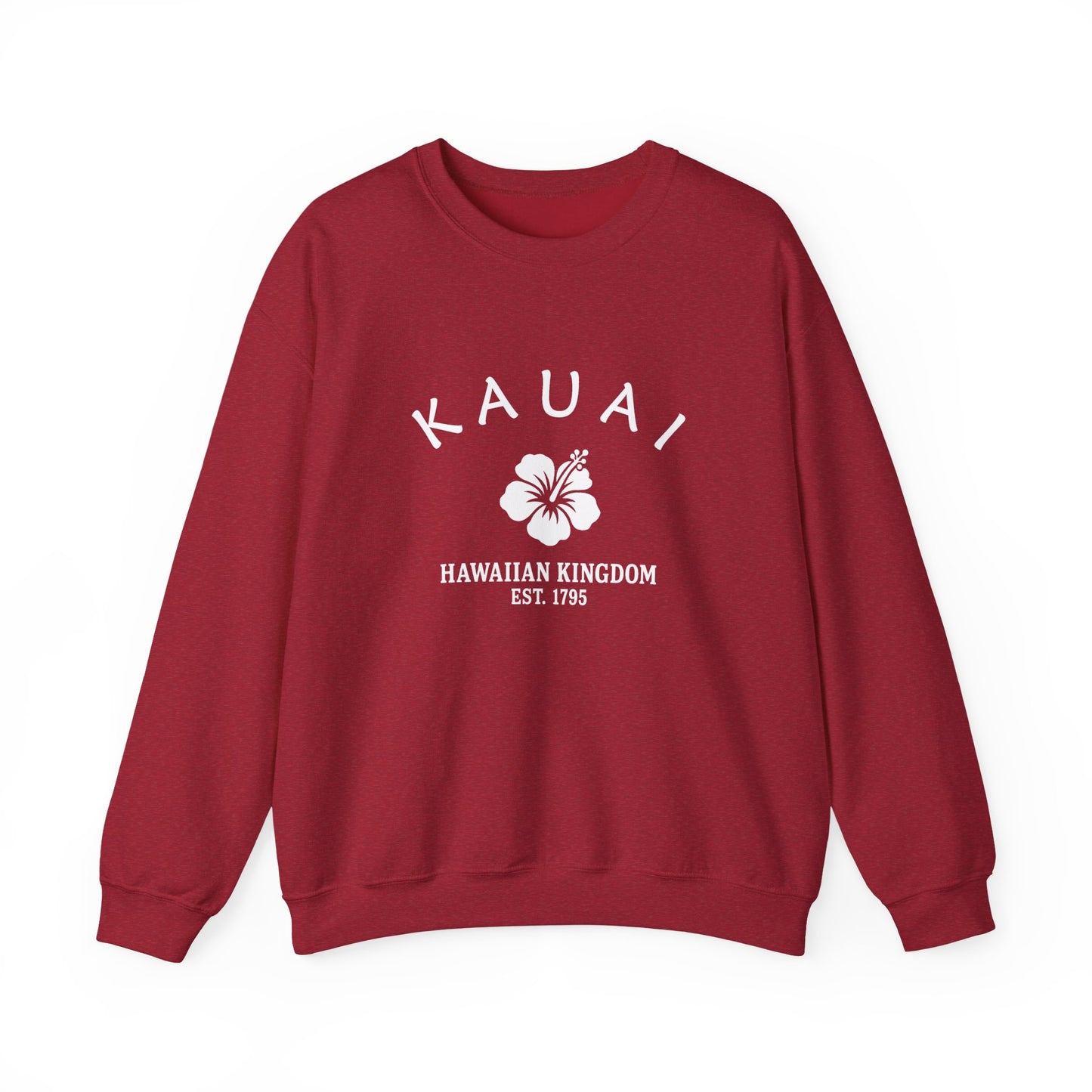
Our Kauaʻi logo carries the hibiscus and the "Hawaiian Kingdom — Est. 1795" banner, the shared retro emblem of our Hawaiʻi towns; 1795 marks the founding of the Kingdom under Kamehameha — the Kingdom's birthday, not Kauaʻi's, since the island famously joined later, by agreement, in 1810. Rendered in worn black-and-white, like an old travel decal or crate label, it ties Kauaʻi to every other Hawaiian place we make. The hibiscus is island bloom and pure aloha. What makes this one Kauaʻi is the story behind it — the Garden Isle, the canyon and the cliffs, and the island that was never conquered.
The wider world arrived early here. In January 1778 the ships of Captain James Cook made the first European landfall in all of Hawaiʻi at Waimea, on Kauaʻi's west side — a meeting that opened the islands to trade and, with it, to introduced diseases that would devastate the Hawaiian population in the generations that followed. A brief Russian trading venture left the star-shaped lava-rock walls of Fort Elizabeth at Waimea in 1816, and Protestant missionaries came ashore at the same town in 1820. Each left a mark, but none unseated the Hawaiian world that had been here for centuries.
Why People Visit Kauaʻi
People come to Kauaʻi for the oldest, greenest island in the chain and the quieter pace that comes with it. It rewards travelers who would rather hike a canyon rim or paddle a north-shore bay than chase a crowd — a place of waterfalls, taro valleys, and emerald cliffs, with a deep Hawaiian history and a slower, garden kind of aloha.
