

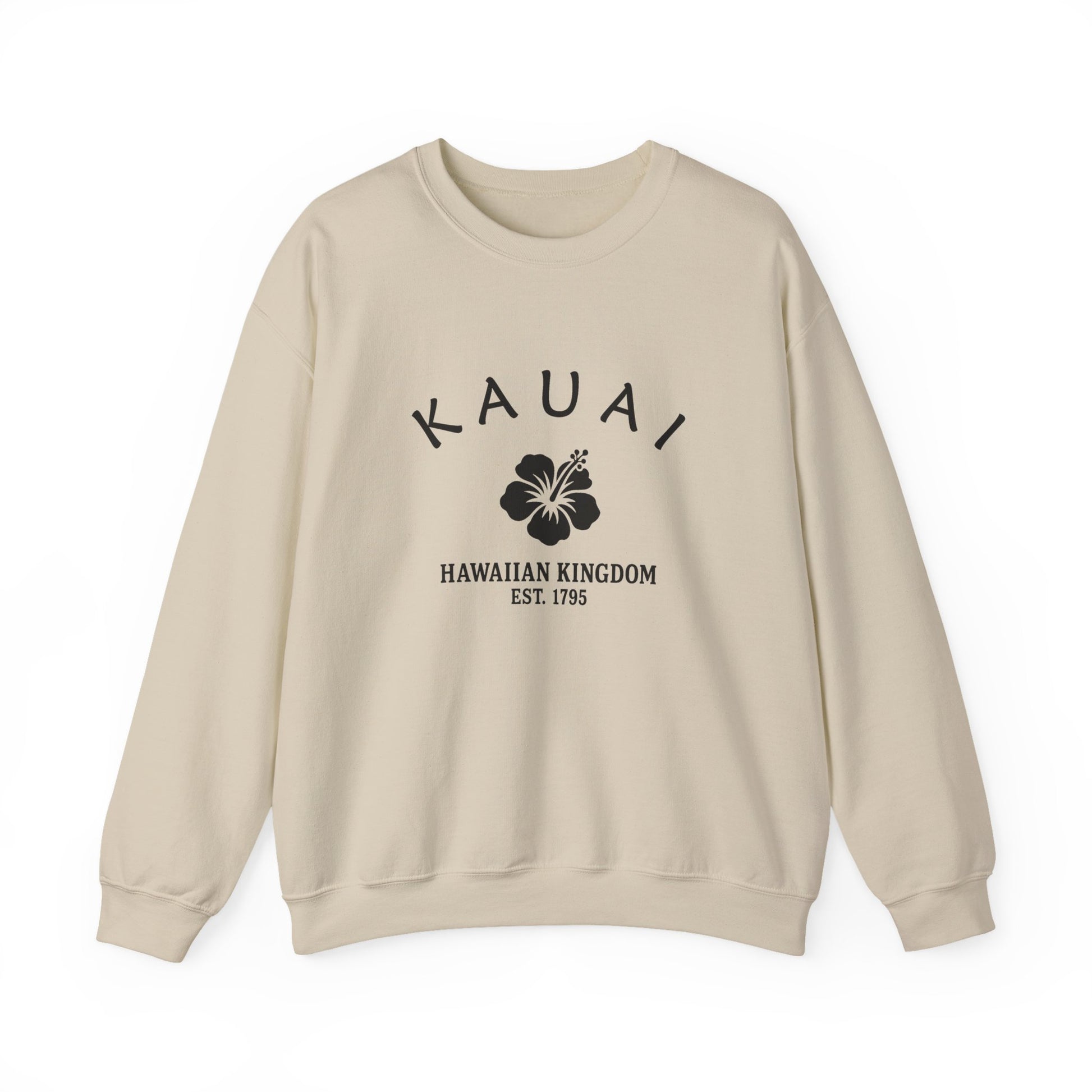








Roughly circular and about 552 square miles, Kauaʻi is the fourth-largest Hawaiian island and home to some 73,000 people, sitting at the northwest end of the main chain — far enough out that no road can circle it, since the Nā Pali cliffs see to that. Its summit, Kawaikini, rises above 5,200 feet near the rain-soaked center. Polynesian voyagers settled here more than a thousand years ago and built a society around the sea and the taro terrace; the Wailua river valley held one of the islands' great royal and sacred centers, a birthplace of chiefs, and Kauaʻi keeps its own folklore of the Menehune, the legendary builders said to have raised a stone ditch and fishpond that still stand today. Long before it was anyone's vacation, this was deeply settled, deeply storied Hawaiian ground.
Sugar is gone now, and tourism has taken its place, but Kauaʻi wears it more lightly than its neighbors. It stayed the green, quiet island — slower than Oʻahu, less built than Maui — and when Hurricane Iniki, a Category 4 storm, tore across it in September 1992, the island rebuilt and stayed itself. Today its economy runs on nature travel, diversified farms, taro, and coffee — Kauaʻi is home to the largest coffee farm in the United States — along with a film industry drawn by the same scenery everyone else comes for: the canyon, the cliffs, the waterfalls, and the green. The Garden Isle has changed hands and changed crops, but never its character.
Why People Visit Kauaʻi
People come to Kauaʻi for the oldest, greenest island in the chain and the quieter pace that comes with it. It rewards travelers who would rather hike a canyon rim or paddle a north-shore bay than chase a crowd — a place of waterfalls, taro valleys, and emerald cliffs, with a deep Hawaiian history and a slower, garden kind of aloha.
