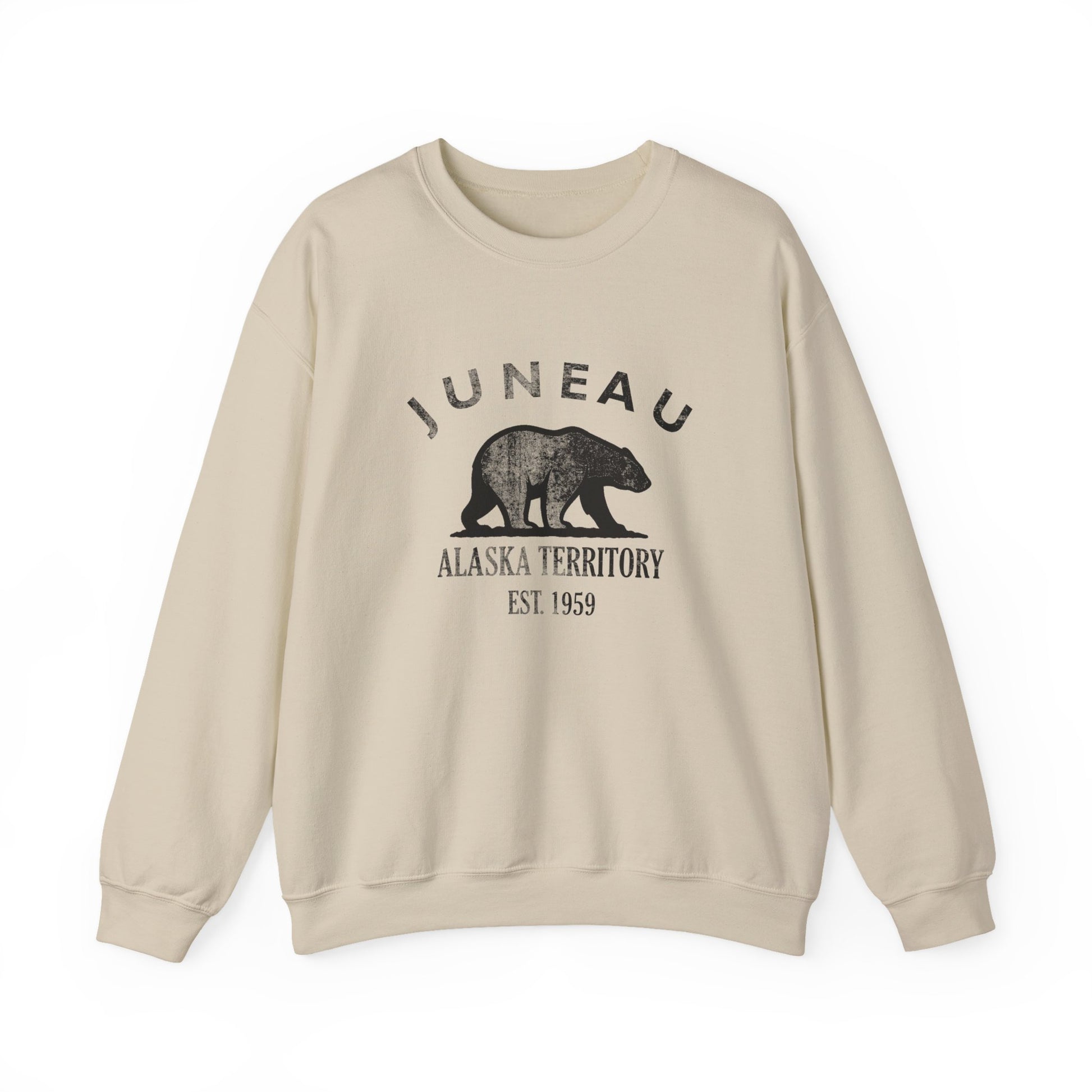
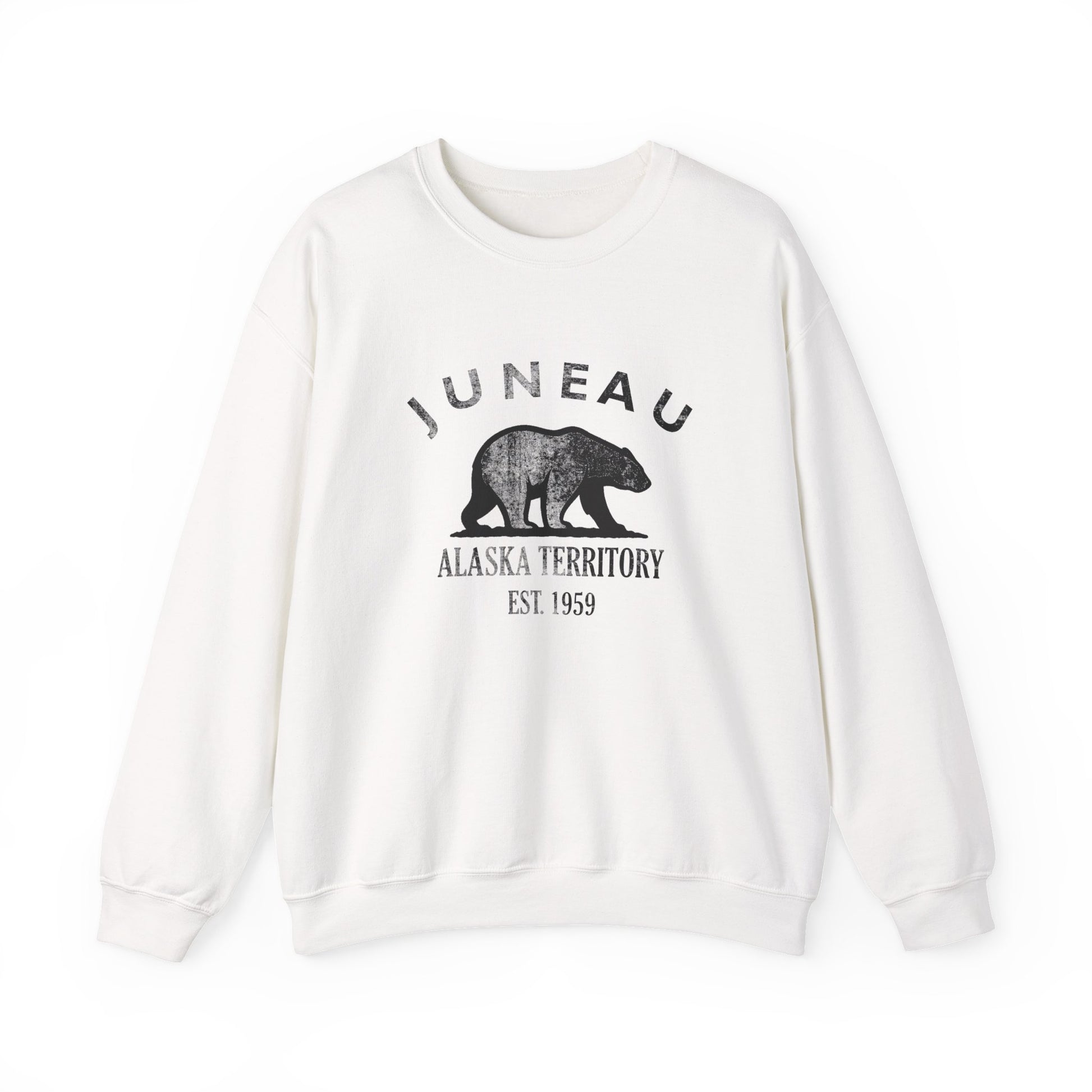
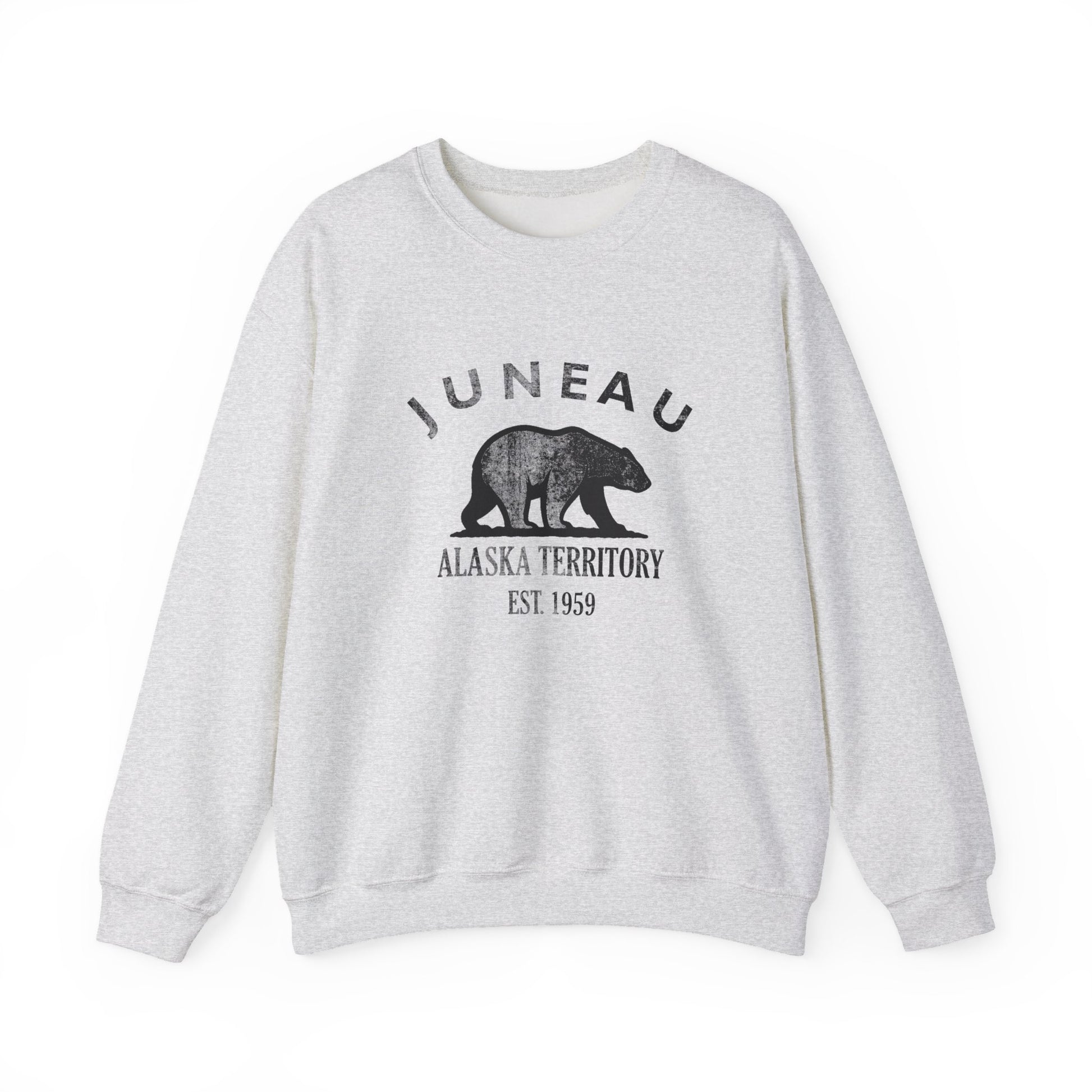
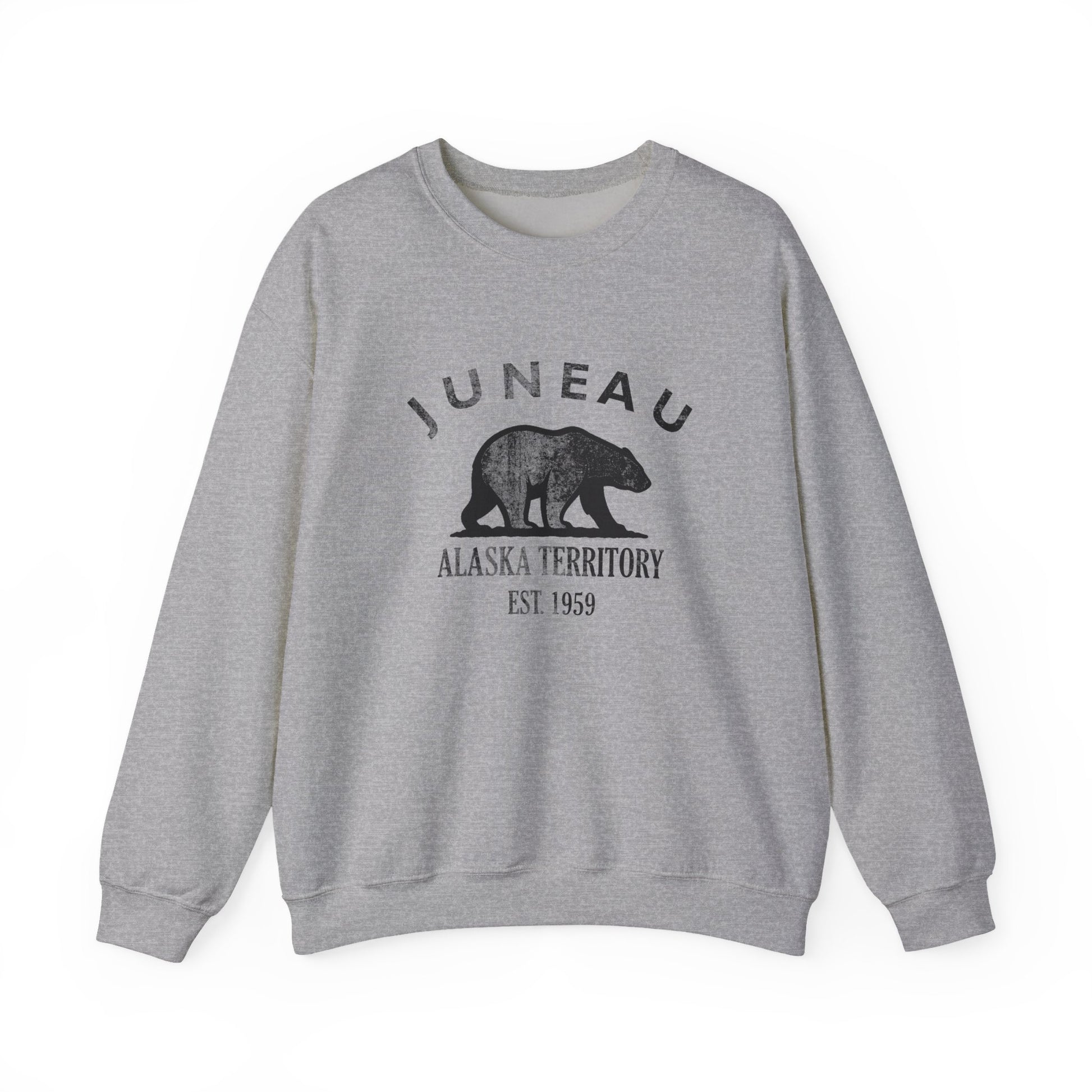
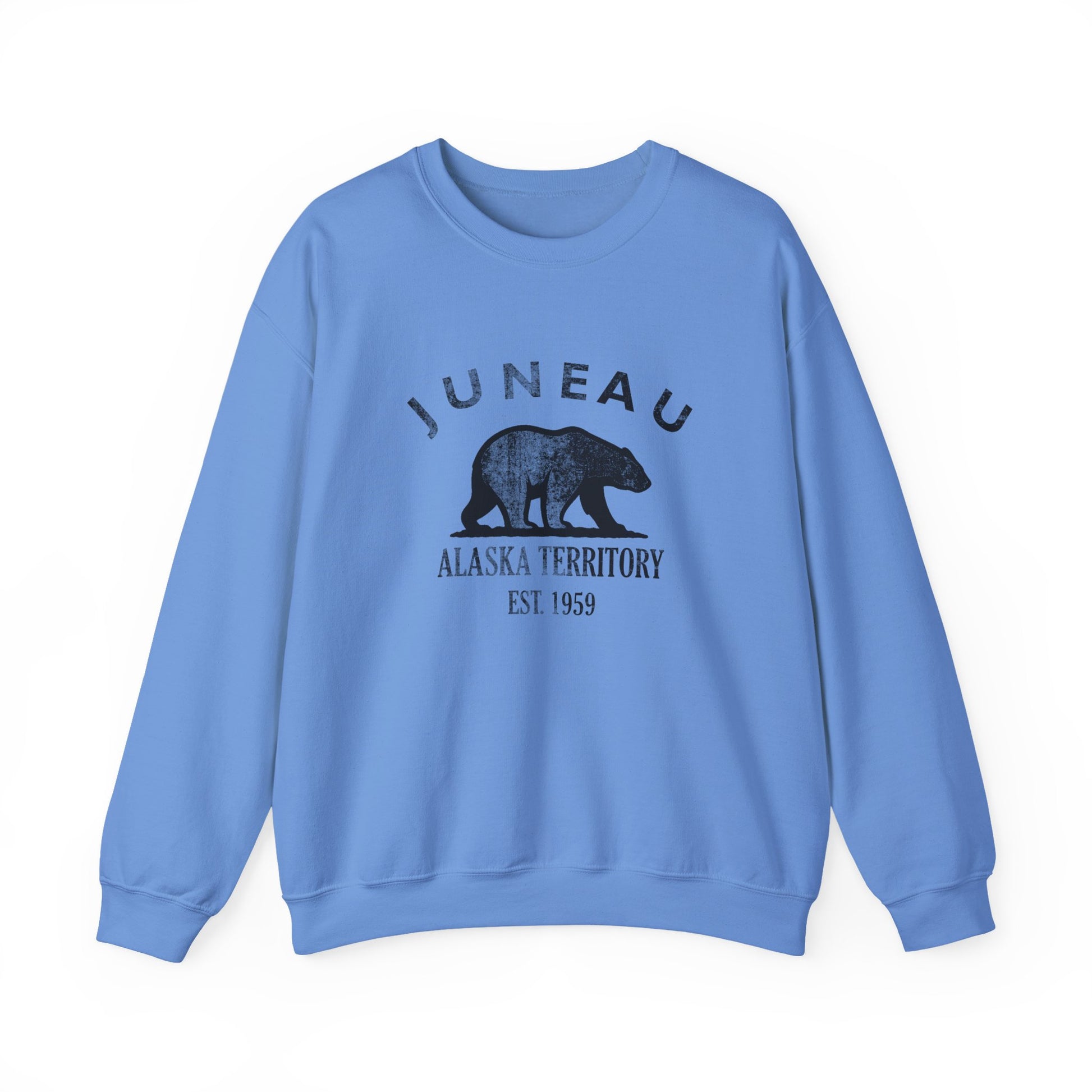
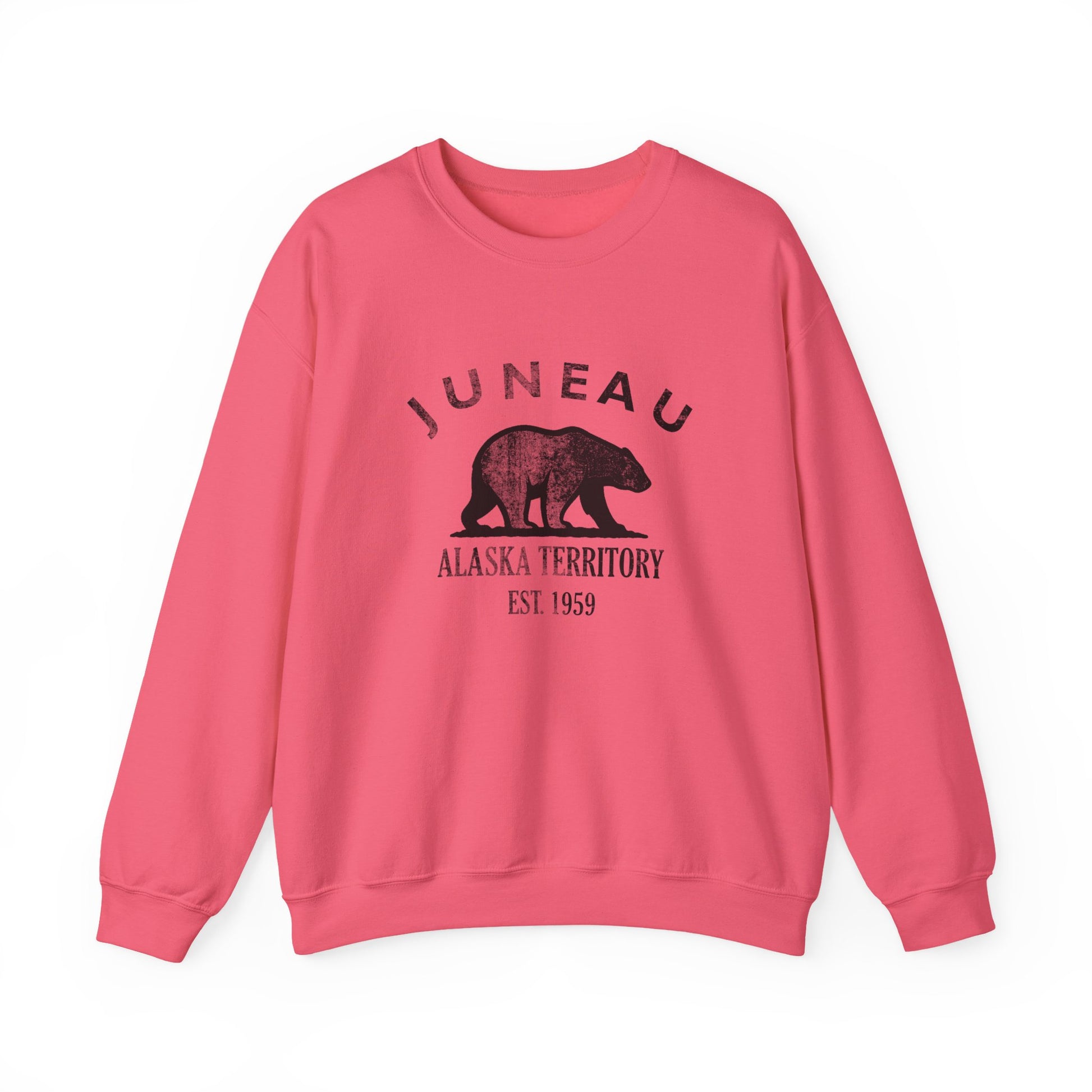
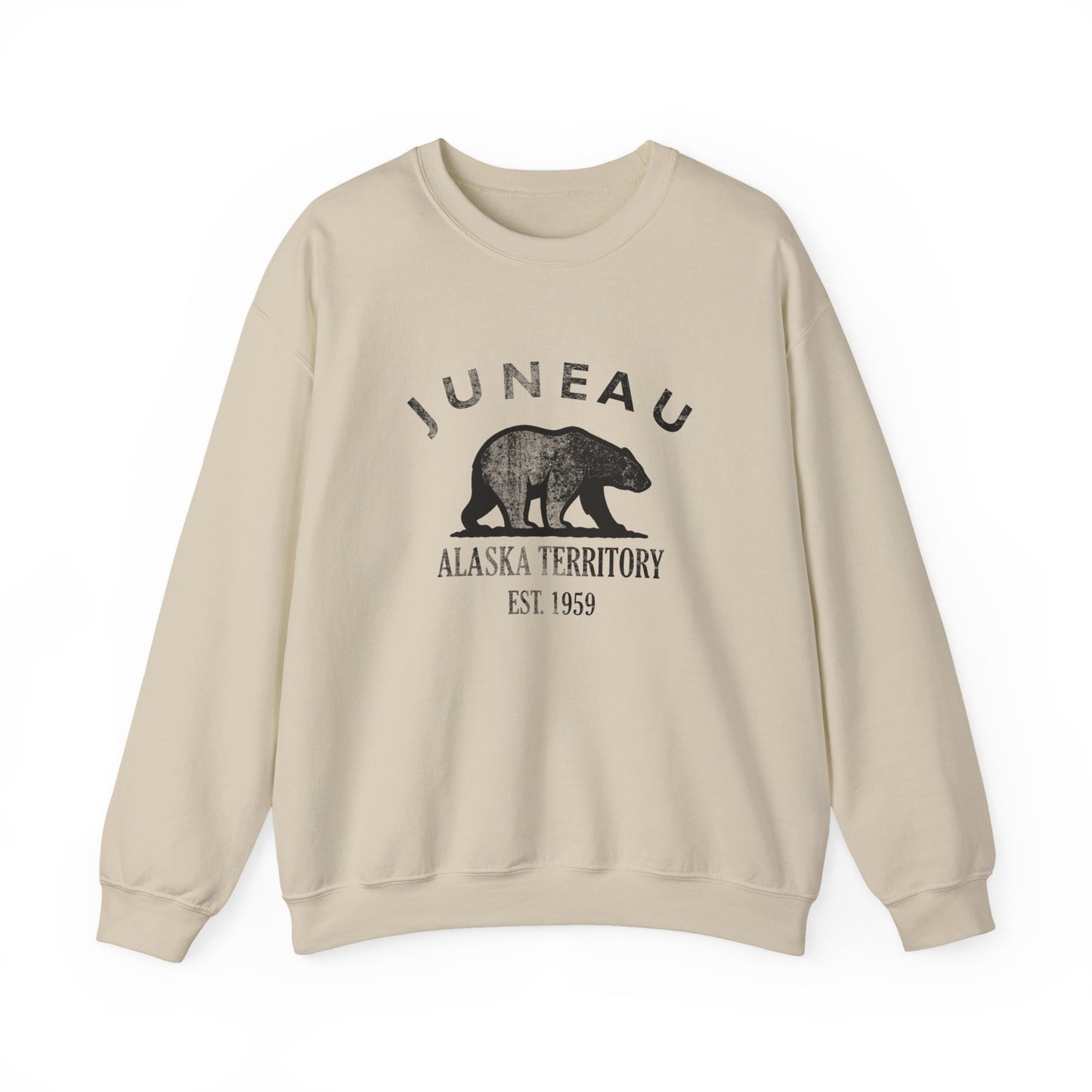
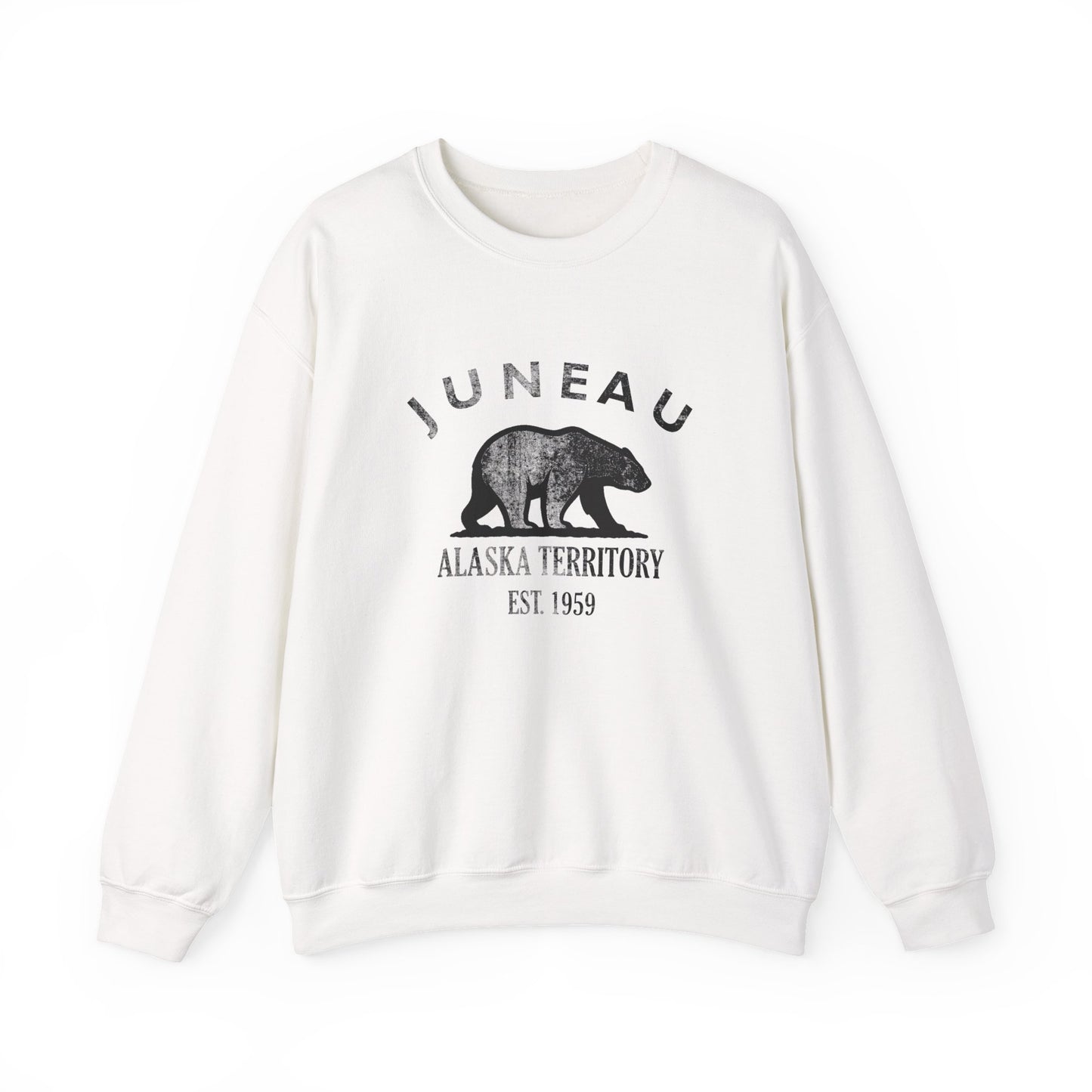
Our Juneau retro logo uses Alaska's distressed bear motif, symbolizing toughness, wilderness, and pride. The bear reflects Indigenous reverence and frontier ambition, while "1959" ties the design to statehood. Its black-and-white styling is rugged, retro, and authentic, resembling crate labels or outfitter branding. The motif bridges Juneau's dual identity: Native traditions and capital city. On merchandise, it conveys toughness and cultural pride, retro vintage in tone. The bear emblem honors Juneau's layered identity, making it a vintage symbol of Alaska's resilience. Retro in style, it reflects endurance and pride, perfectly suited for cultural strength.
By the late nineteenth century, Juneau thrived on gold mining and trade. In 1906, it replaced Sitka as Alaska's capital. The twentieth century brought fishing, government, and tourism. By the 1950s and 1960s, Juneau grew with schools, neighborhoods, and cultural pride. Without road connections, it remained accessible only by sea and air, reinforcing isolation. Its timeline reflects Alaska's adaptability: mining camp to political capital. Juneau's mid-century decades highlighted resilience, cultural continuity, and government identity, balancing tradition with suburban growth. Its story emphasizes continuity and pride in Alaska's political, Indigenous, and frontier character.
Why People Visit Juneau Alaska
Juneau offers the capital of Alaska as a civic destination, the only U.S. state capital with no road access to the rest of the continent, the 1931 State Capitol, the 1912 Governor's Mansion, the 1894 St. Nicholas Russian Orthodox Church, the 1880 founding-story landscape of Silver Bow Basin and Gold Creek and Snow Slide Gulch, the Treadwell Mine ruins on Douglas Island, the A-J Mine industrial archaeology at the Last Chance Mining Museum, the Mendenhall Glacier and the Juneau Icefield, the Mt. Roberts Tramway, the eleven-mile Gastineau Channel waterfront beneath Mount Juneau and Mount Roberts, and the Inside Passage cruise-port identity that makes Juneau a principal stop on every northbound Alaska itinerary. It is the capital of Alaska — and the one most visitors find they could have given another day.
