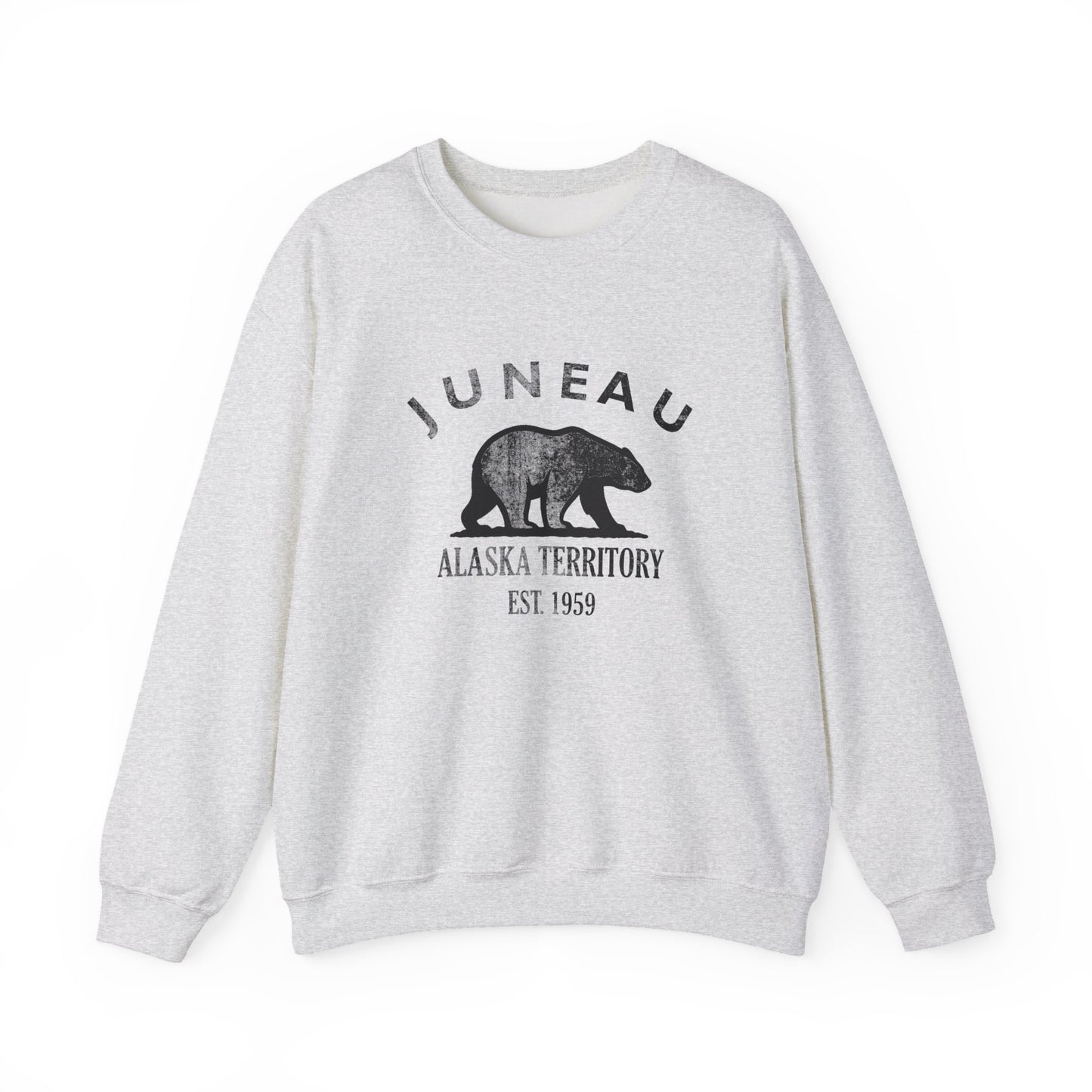
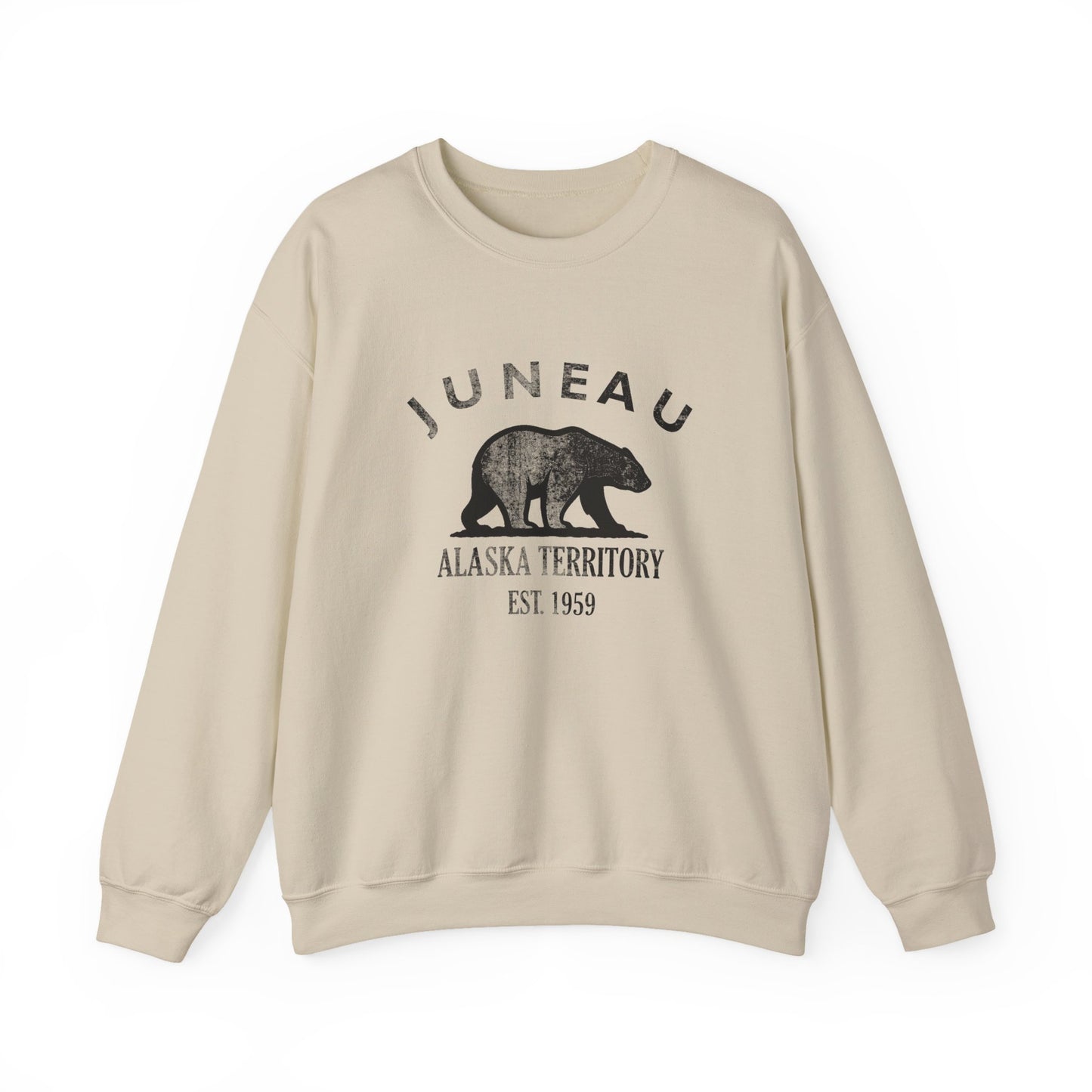
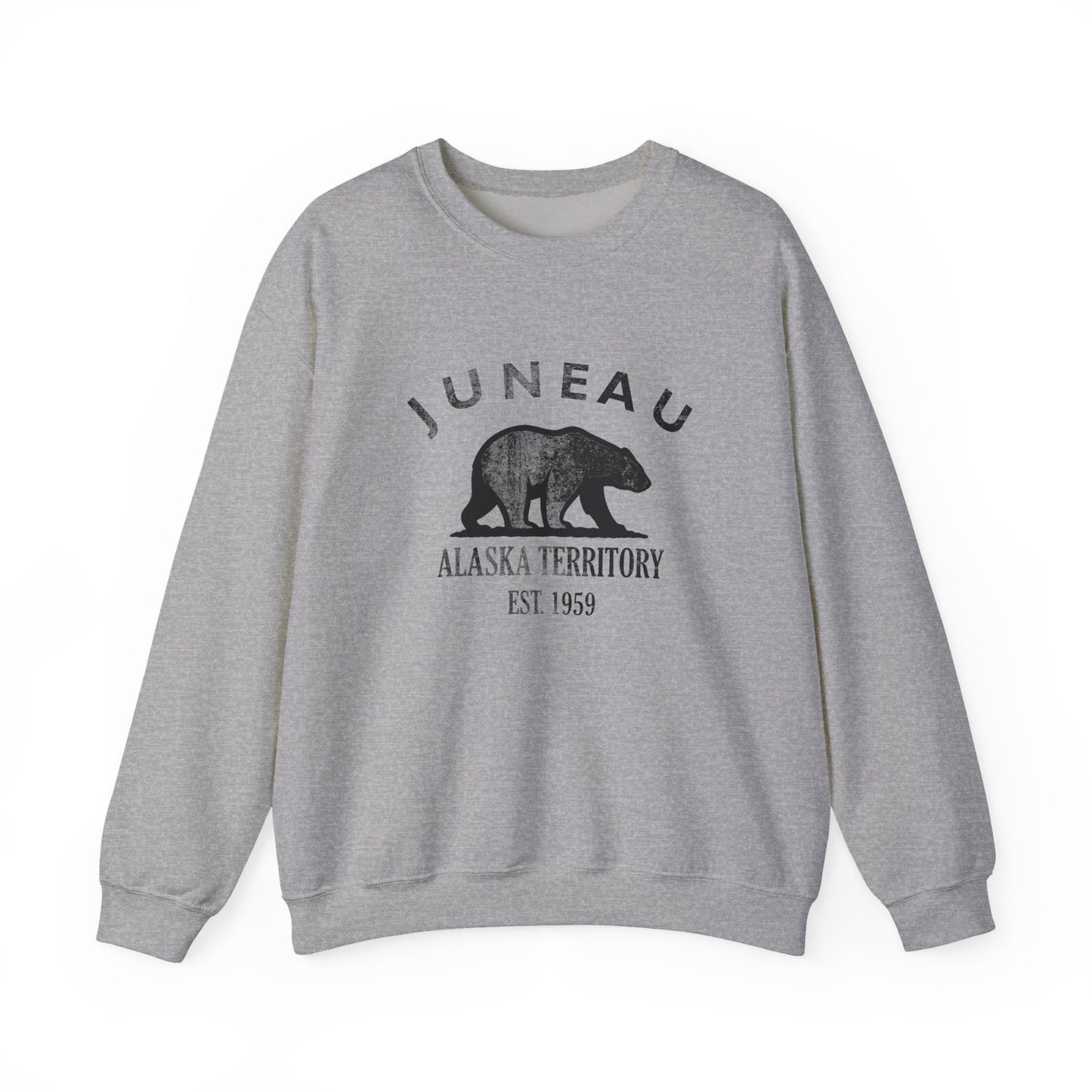
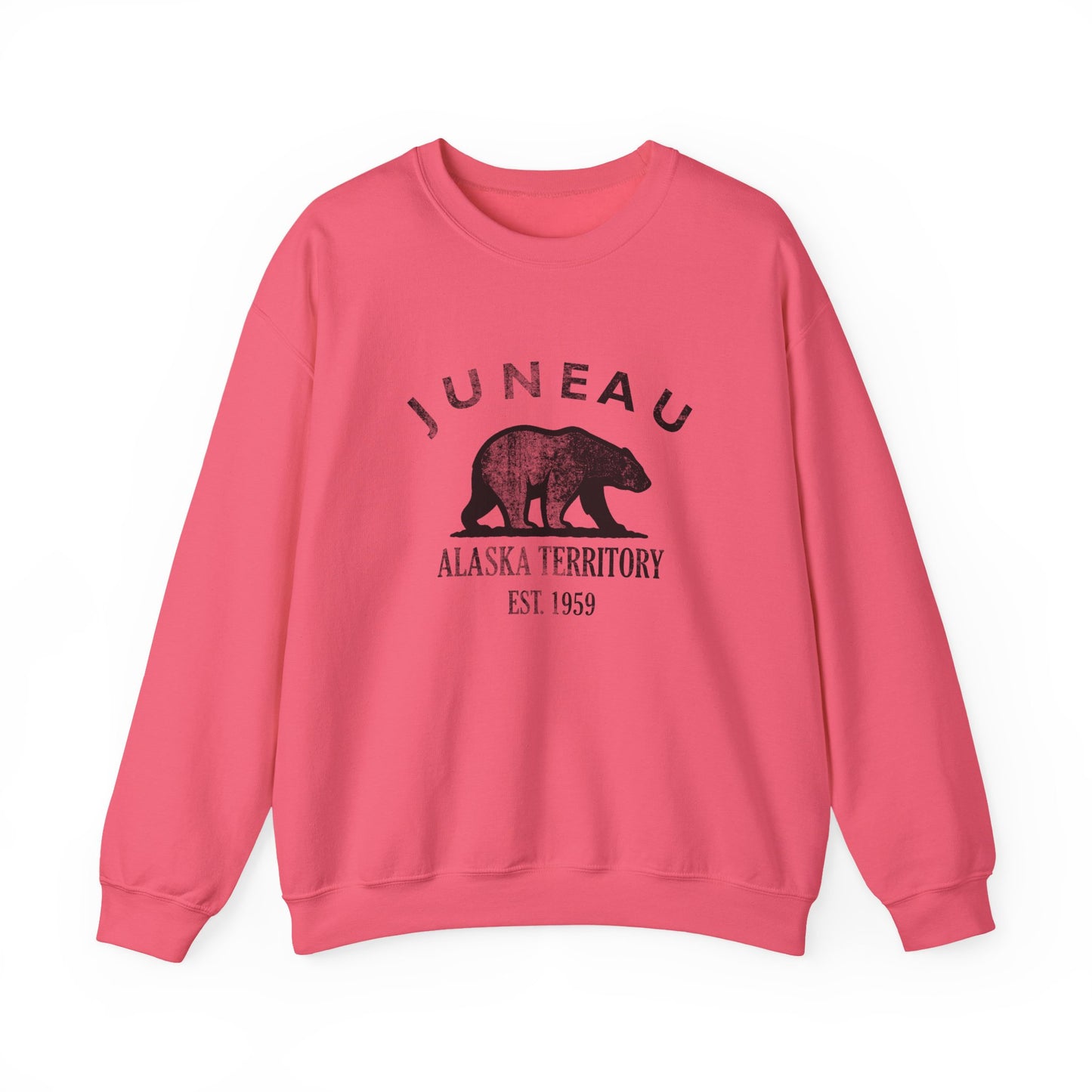
Juneau today is a capital of about thirty-two thousand that hosts well over a million cruise visitors a summer, a government town and a Tlingit cultural center at once — every two years, Celebration fills the streets with Tlingit, Haida, and Tsimshian dance in one of the largest Native gatherings in Alaska. The borough sprawls over three thousand square miles of ice, forest, and channel; the town itself is a few steep blocks you can walk in an afternoon.
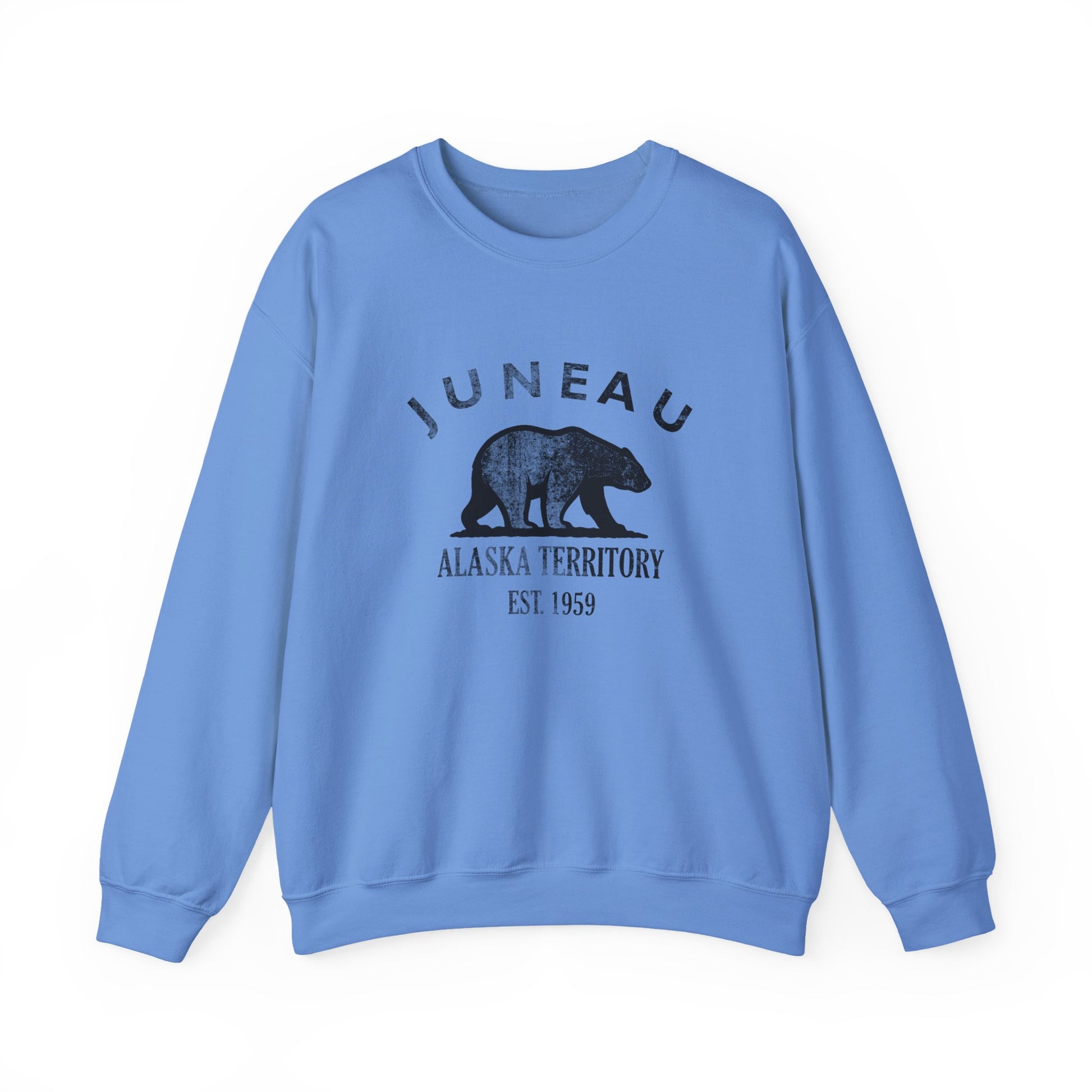
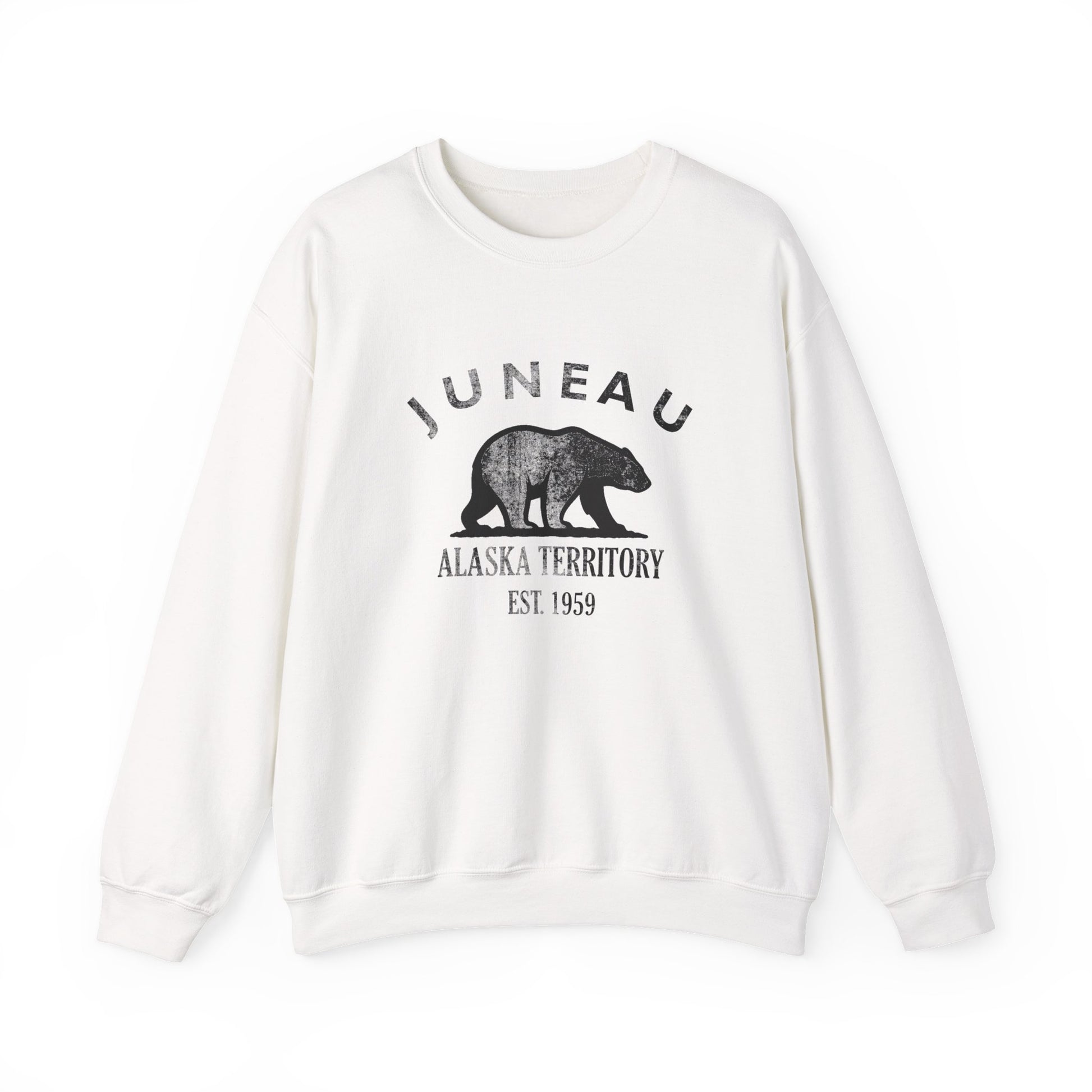
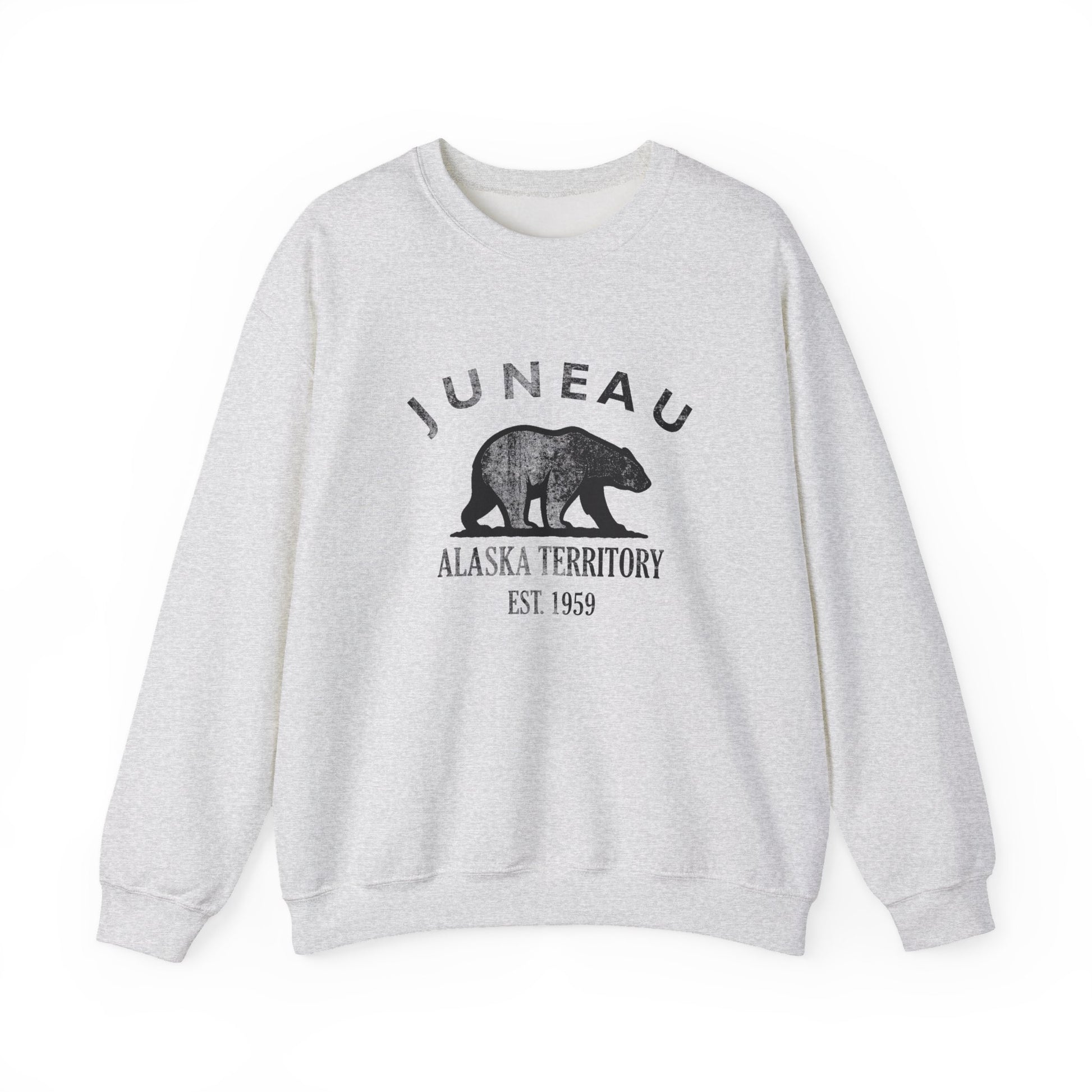
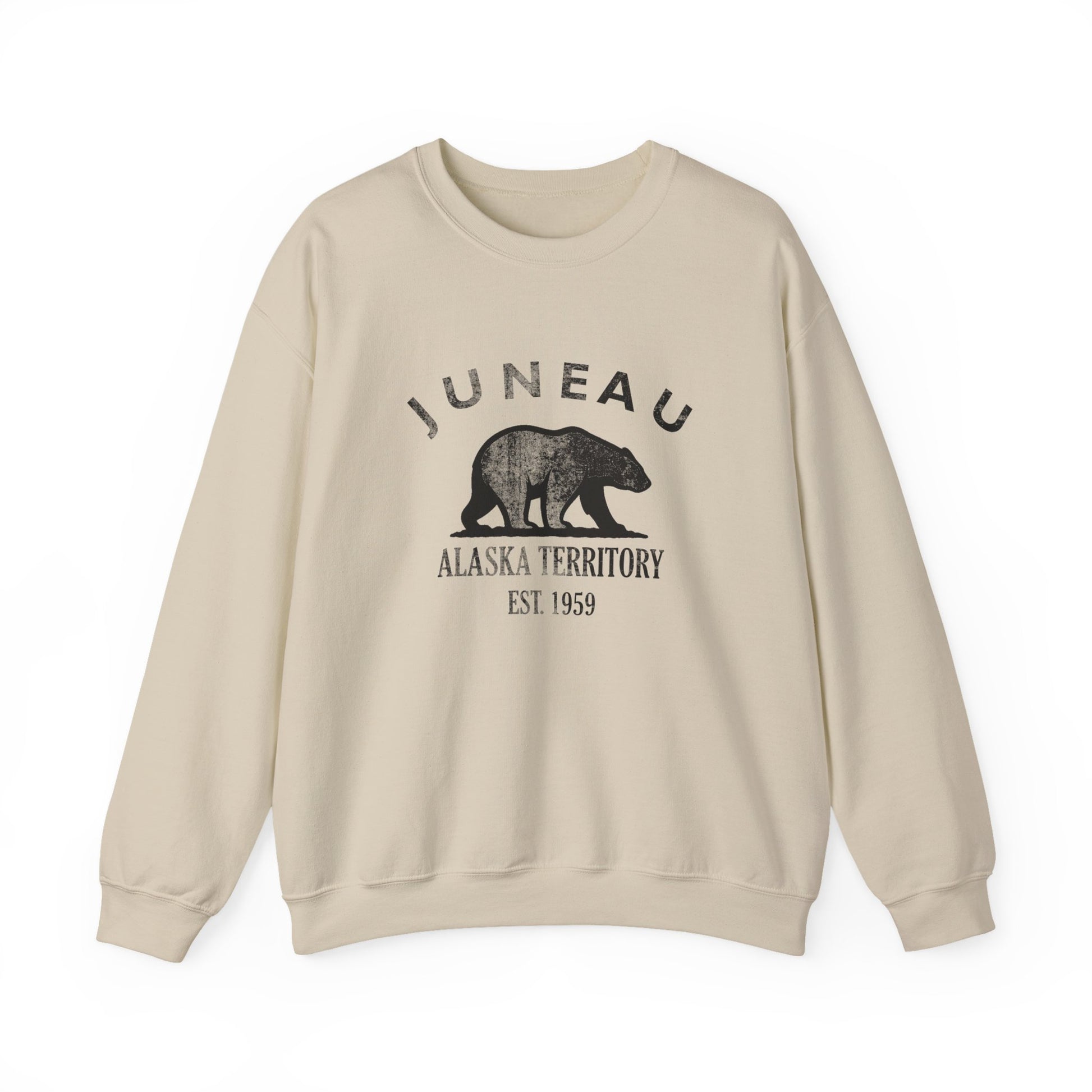
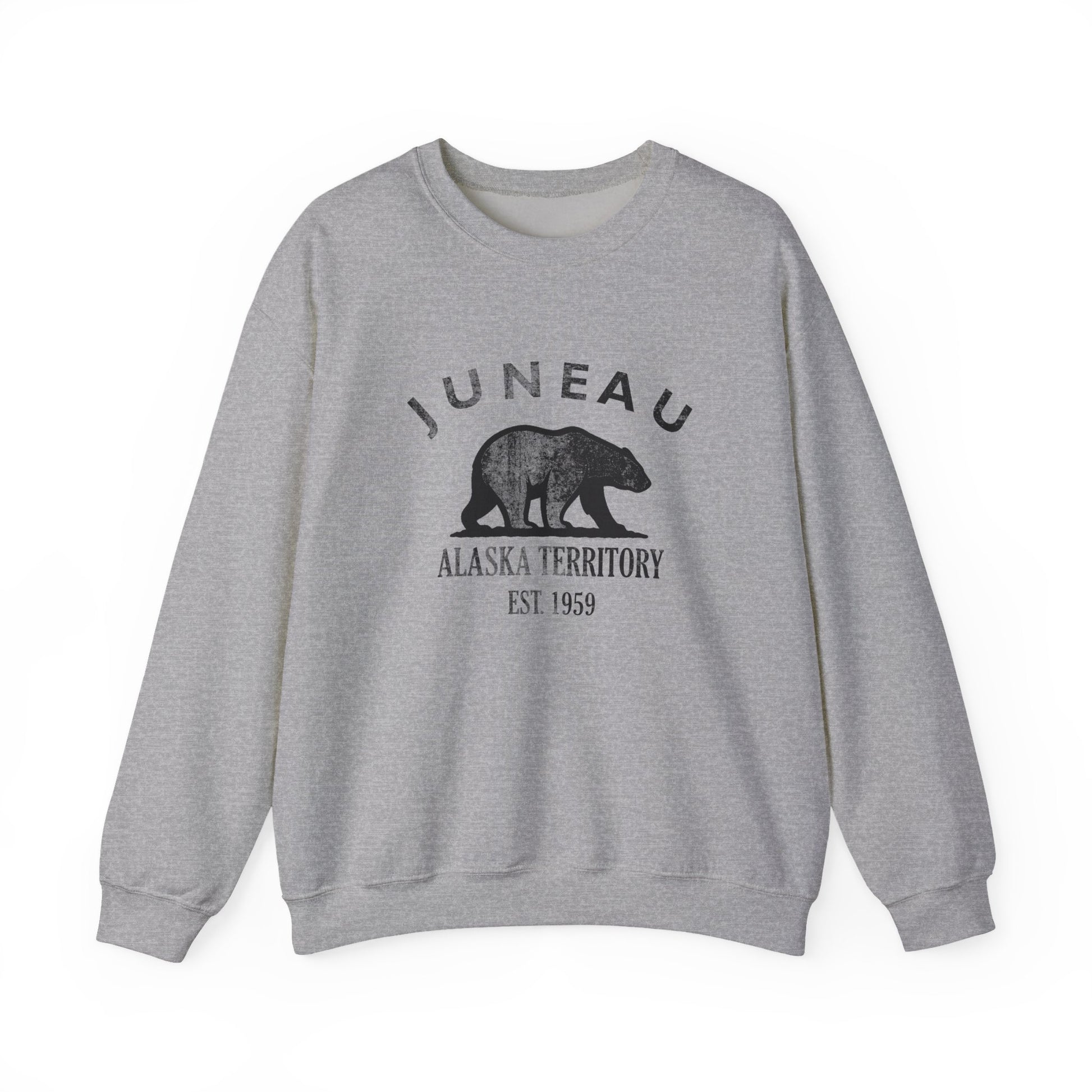
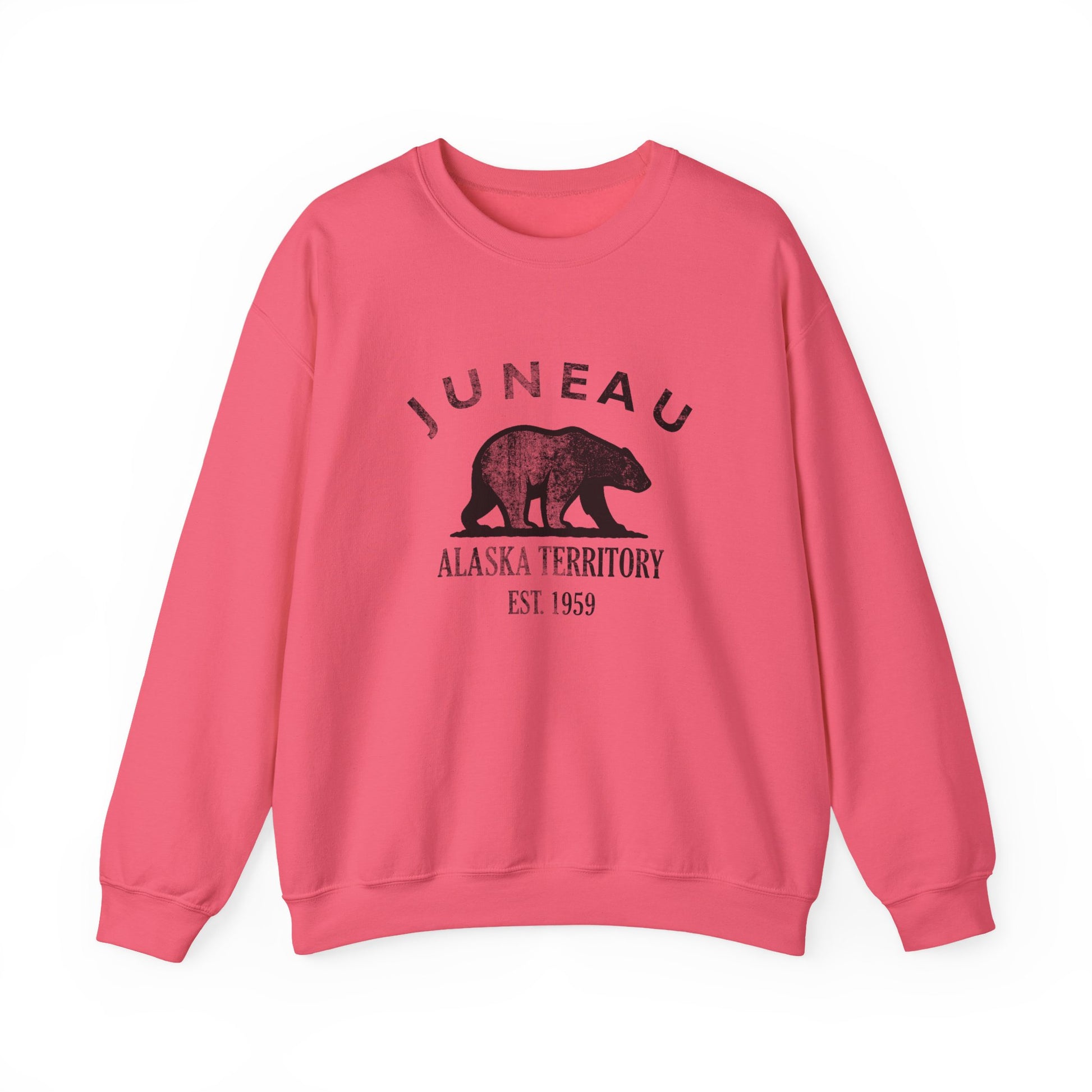
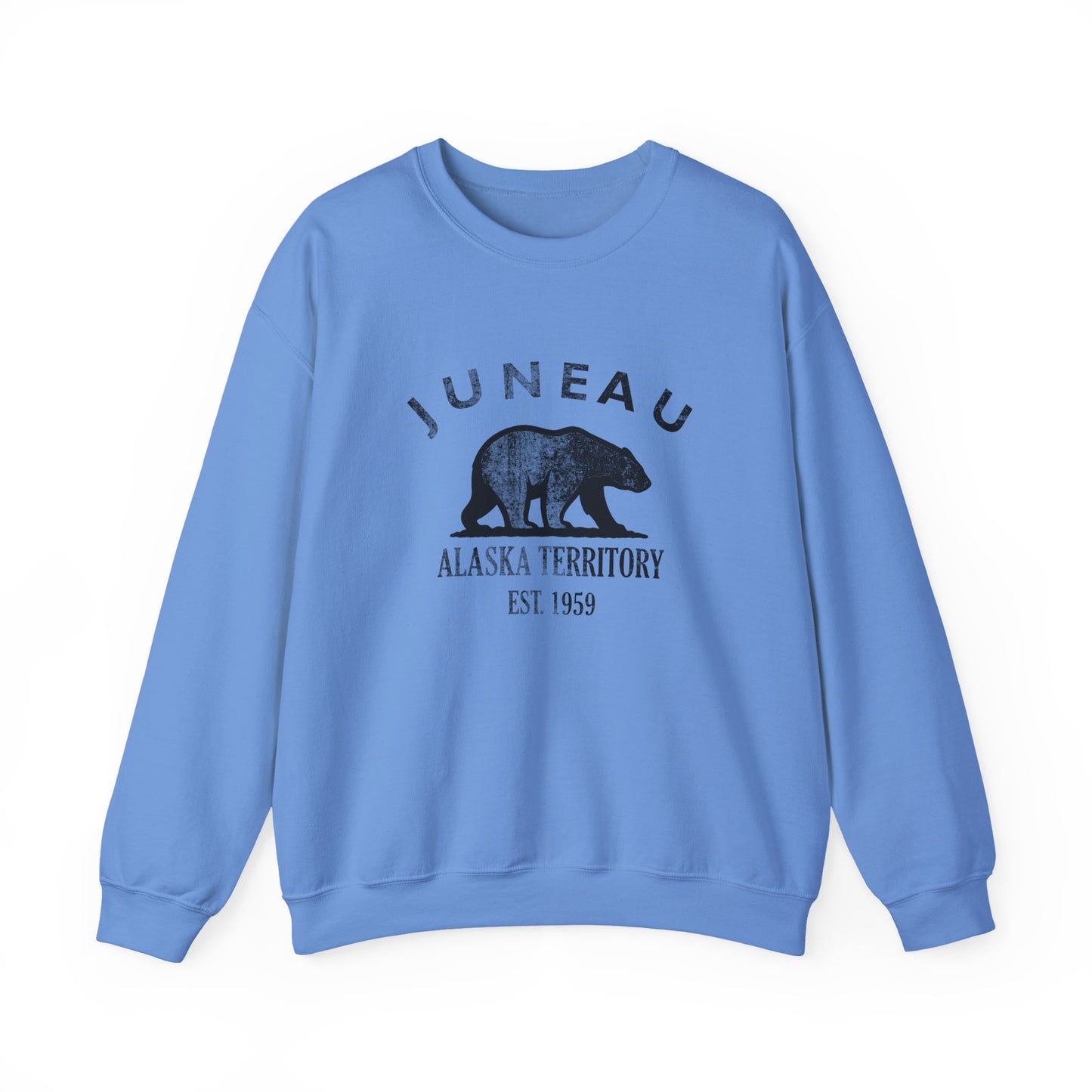
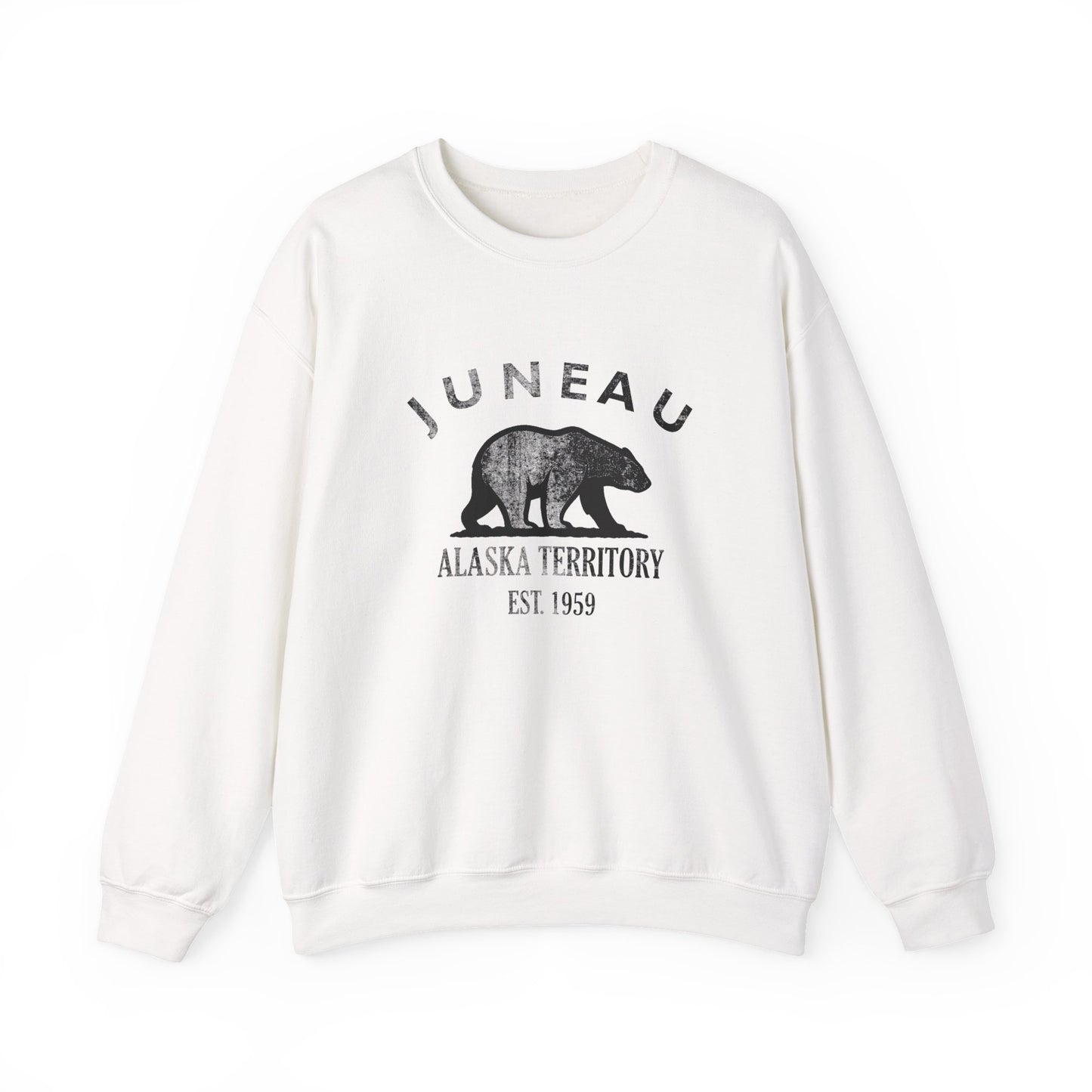
Our Juneau logo carries Alaska's distressed bear above "Est. 1959," the year of statehood — the shared retro emblem of our Alaska places, drawn in worn black-and-white like an old cannery crate stamp. The bear is the through-line that links Juneau to every other Alaska town we make; what makes this one Juneau is everything around it — the roadless capital, Kowee's creek, the drowned mine, and the ice.
Why People Visit Juneau Alaska
Juneau is the capital of Alaska as a civic destination and a wilderness port in one — the only U.S. state capital with no road access, the 1931 Capitol, a walk-to glacier, whales in the channel, and gold-rush ruins on the mountainside. People come by ship and plane for the ice and the whales, and find a small stubborn capital that likes being hard to reach.
