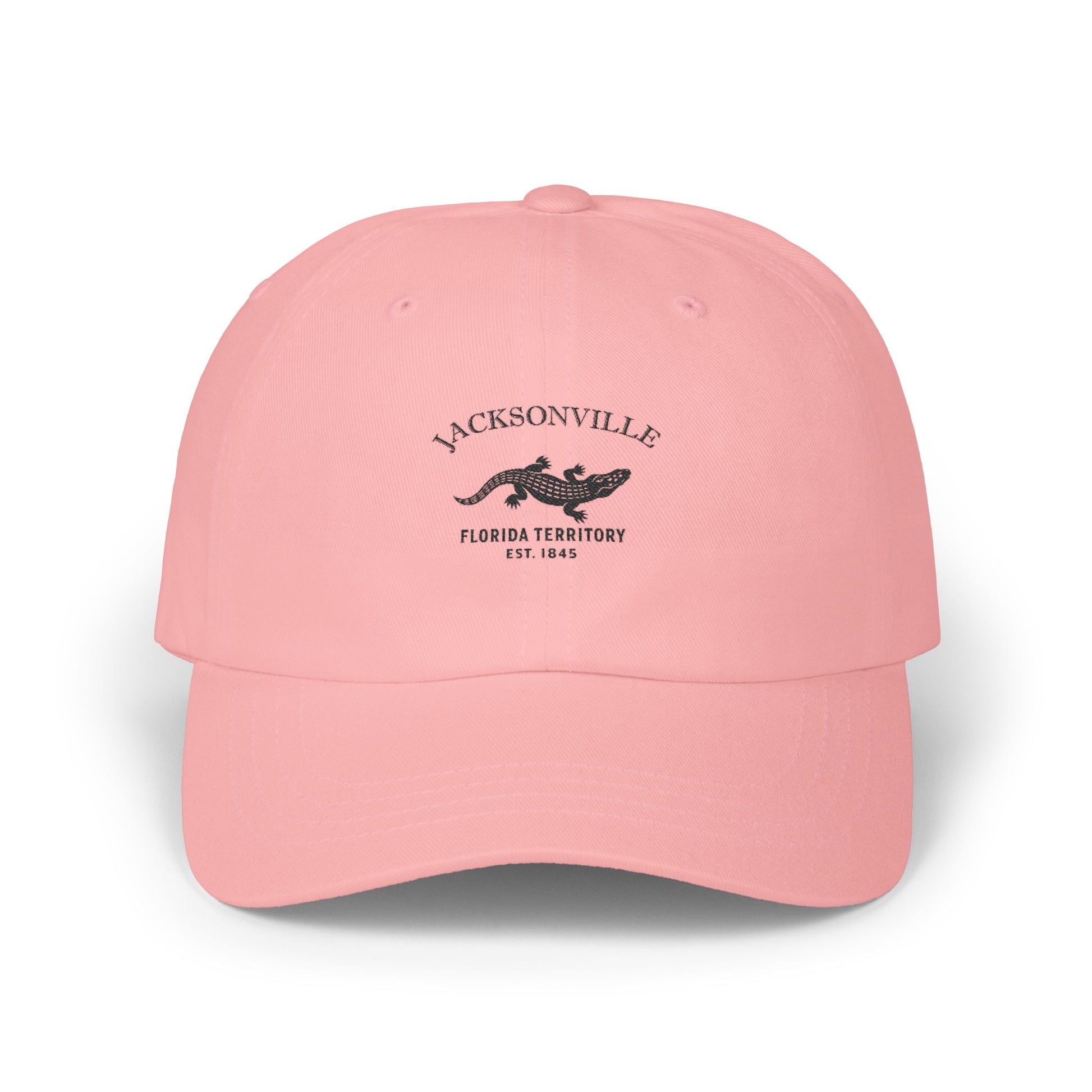
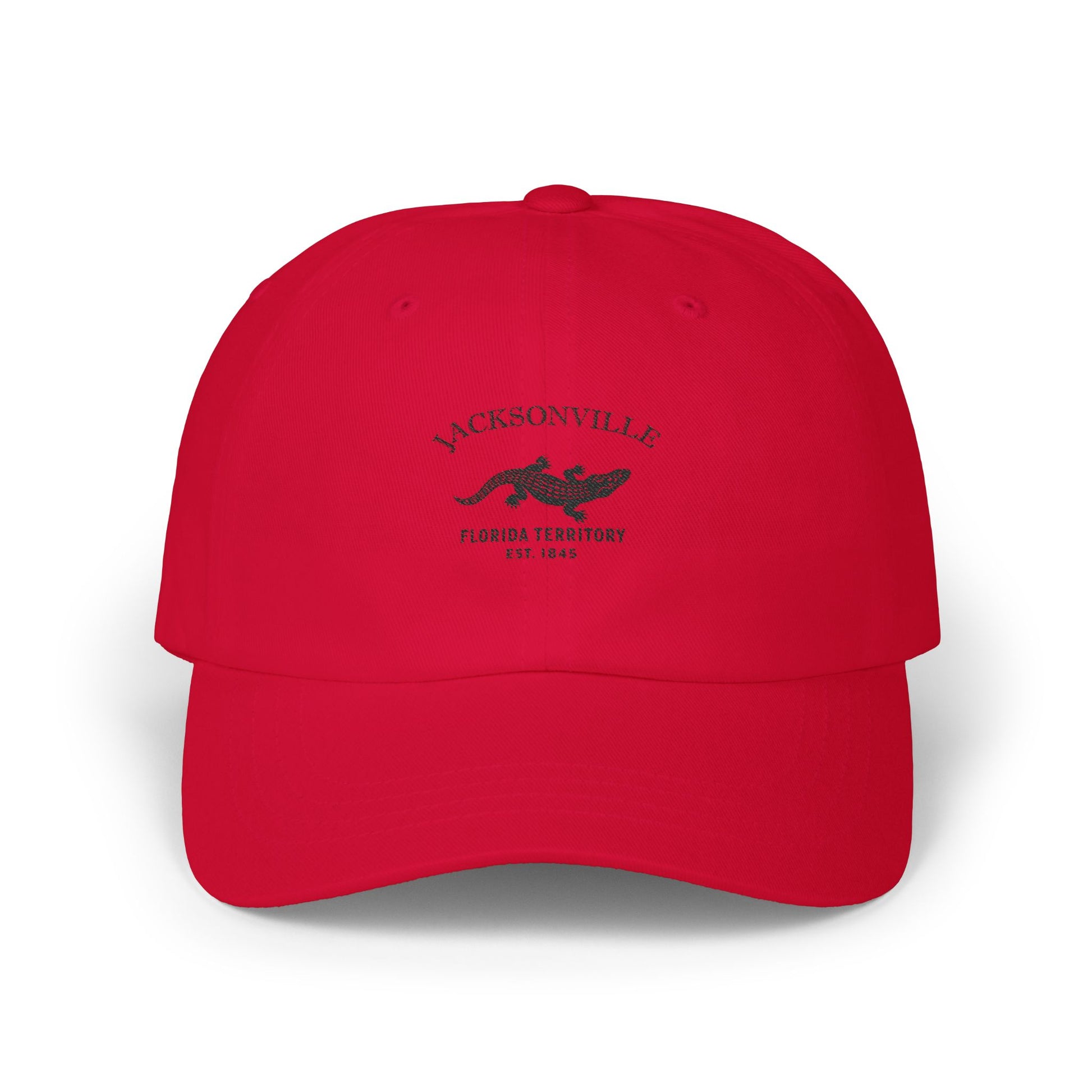
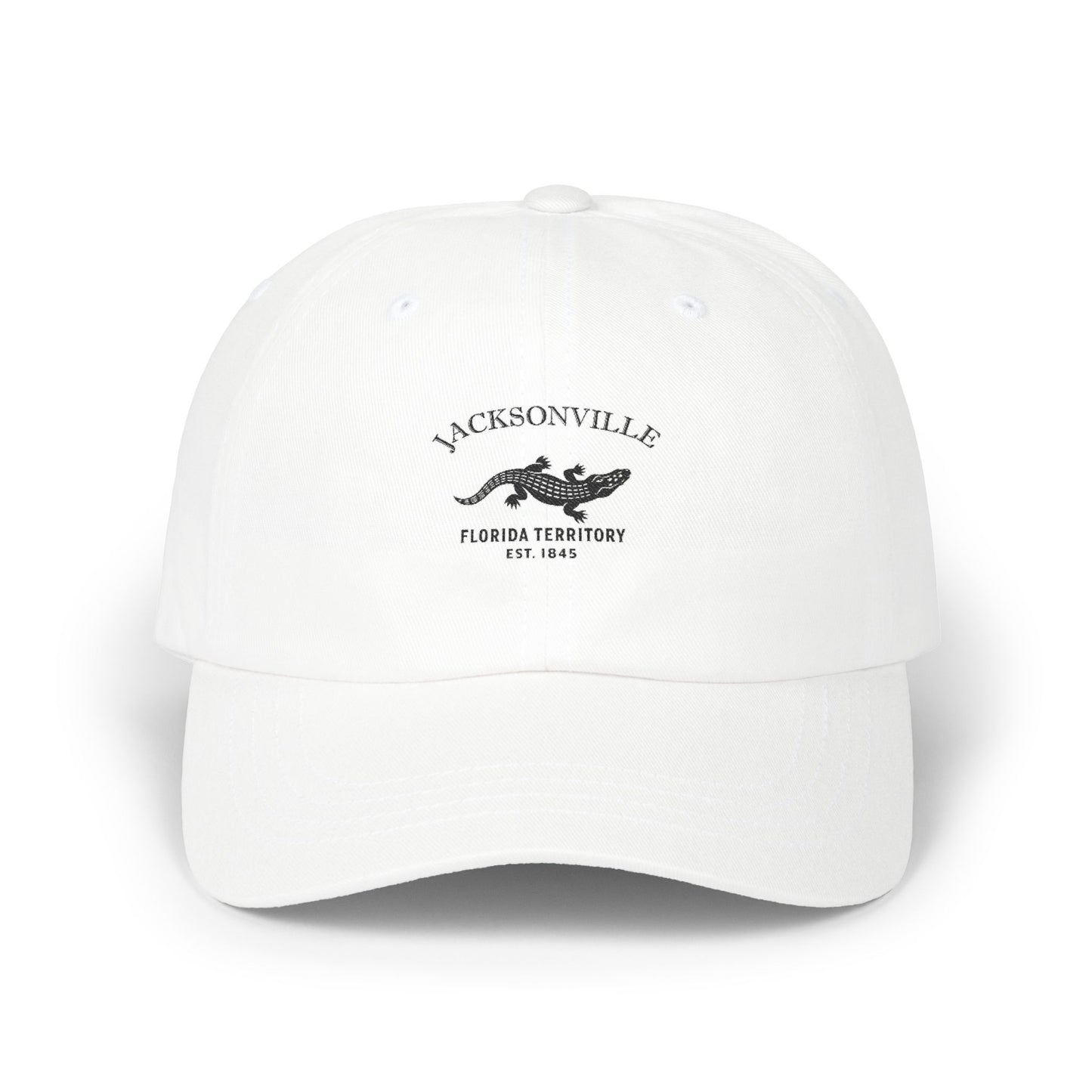
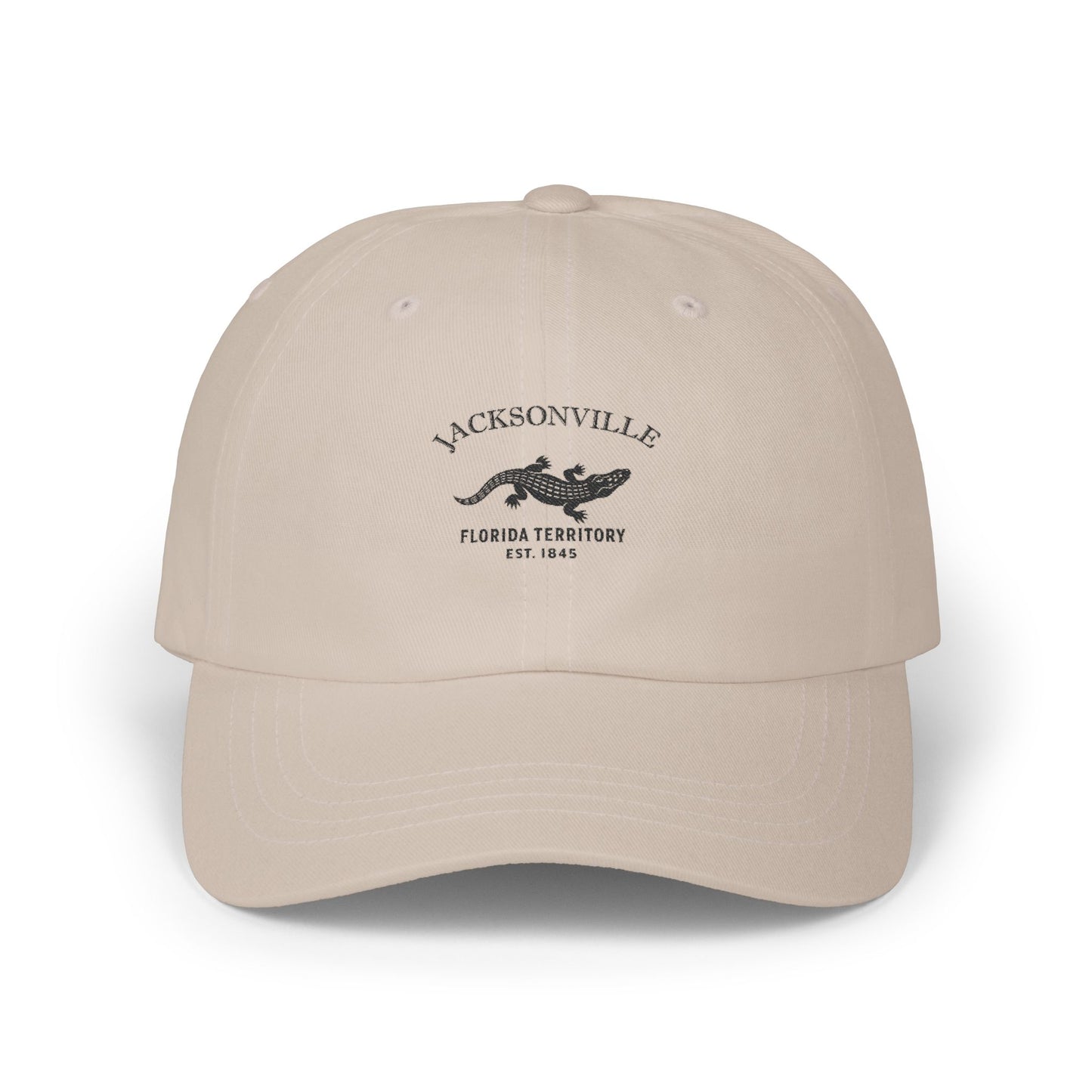
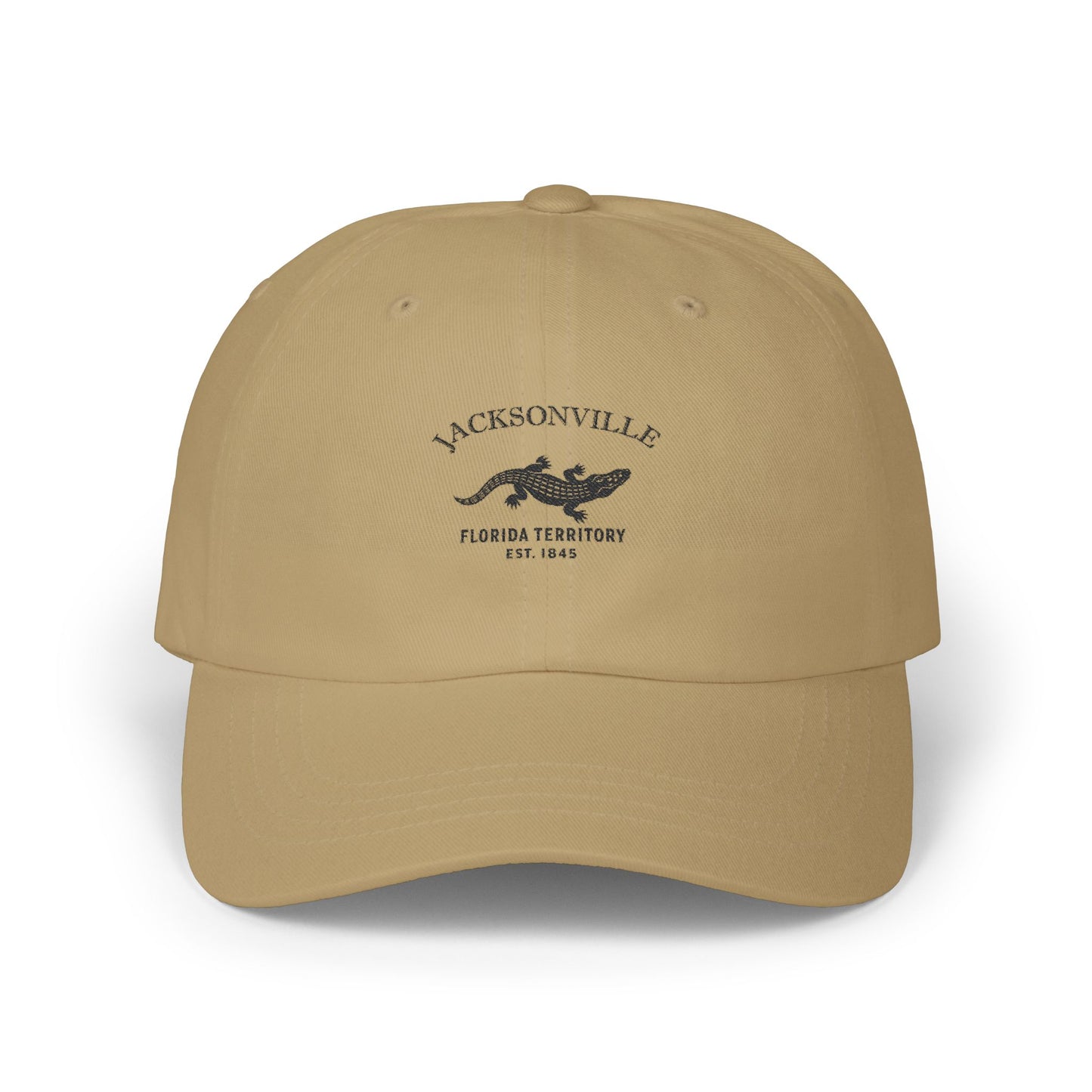
So Jacksonville gathers a French fort and a cow ford, a great fire and a Prairie School phoenix, a film capital and a jazz district, a Navy river and a city the size of a county onto one north-flowing waterway — and our Jacksonville designs gather that into wearable form. Whether Jacksonville is your hometown, your river, your beach, or the city you still mean to know, wear the history. On the St. Johns since 1822.
What’s with the Prairie School? Jacksonville holds one of the largest collections of Prairie School buildings anywhere outside the Midwest — and the reason is fire. Walk through downtown and you find something that shouldn’t be here: the clean horizontal lines, deep eaves, and art-glass of the Prairie School — the Midwest’s modern architecture, the style of the Chicago avant-garde — transplanted onto a north-flowing Southern river. On May 3, 1901, nearly the entire downtown burned — 146 blocks, more than 2,300 buildings, the glow visible in Savannah — the largest urban fire in the southeastern United States. Into the ashes came a young New York architect named Henry John Klutho, who rebuilt the city in straight modern lines: the Laura Street Trio, the Dyal-Upchurch Building, and the St. James Building of 1912 — now City Hall — which stands among the largest Prairie School buildings in the world. River City is the modern Southern city nobody expects.
Why People Visit Jacksonville Florida
- Look up at the Laura Street Trio and the St. James Building downtown — the Prairie School rebuild of 1901 standing in straight modern lines.
- Walk both Riverwalks past Friendship Fountain, with the skyline across the north-flowing St. Johns.
- Stand under the Treaty Oak on the Southbank — a live oak centuries older than the city around it.
- Spend a beach day at Jacksonville Beach, Neptune Beach, or Atlantic Beach — the barrier islands are inside the city limits.
- Visit Fort Caroline National Memorial and the Timucuan Preserve for the French colony of 1564, the river marshes the Timucua knew, and the preserved, sobering history at Kingsley Plantation.
- Photograph the fallen giants of Boneyard Beach on Big Talbot Island, and swim at Little Talbot or Hanna Park.
- Ride the tiny St. Johns River Ferry at Mayport and eat local shrimp where the boats come in.
- Browse the historic districts — San Marco’s 1920s square, Five Points, Riverside-Avondale’s leafy streets, Springfield’s restored blocks, and Mandarin on the river — where Harriet Beecher Stowe wintered and wrote.
- Catch the LaVilla story downtown, where the Harlem of the South once rang with jazz and blues.