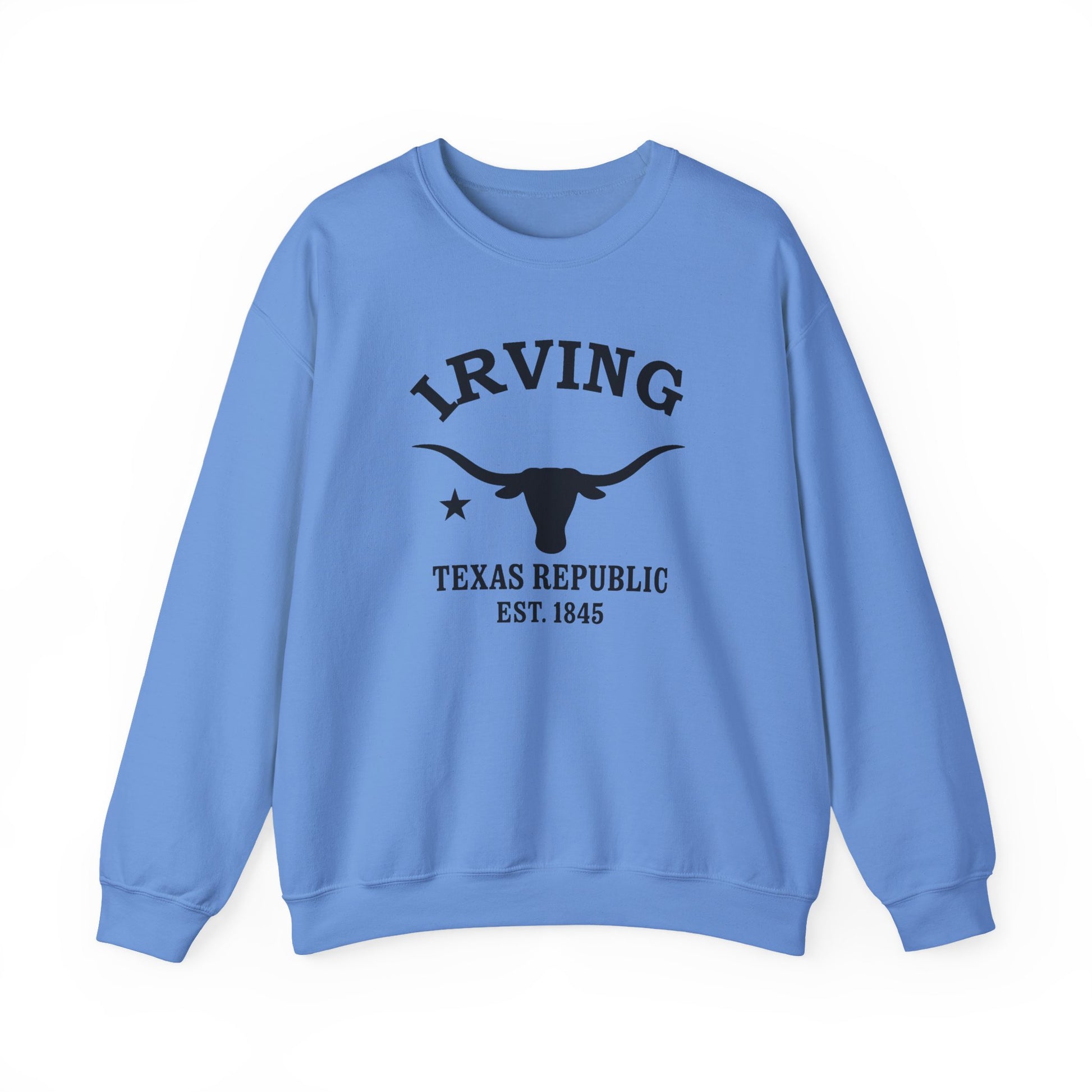
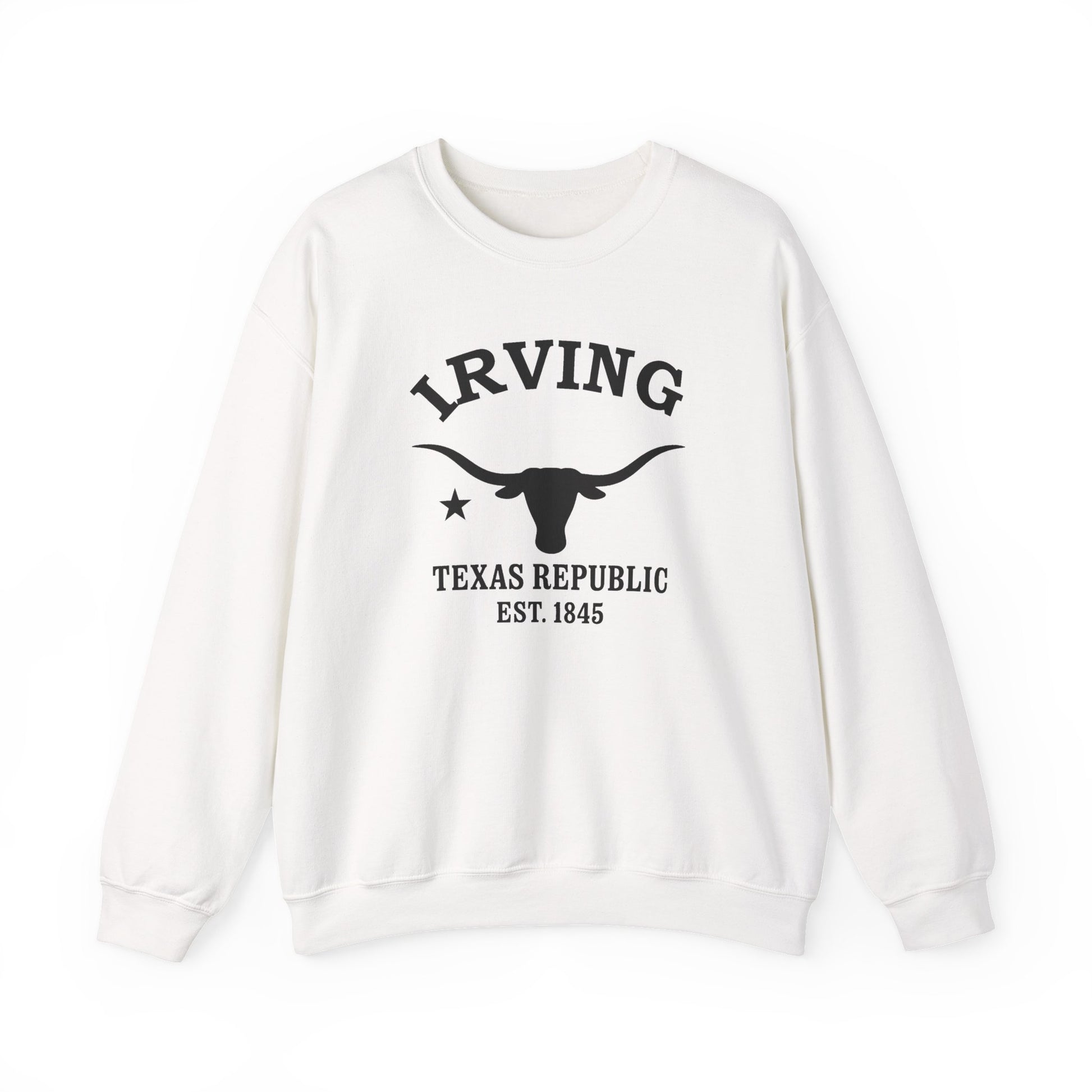
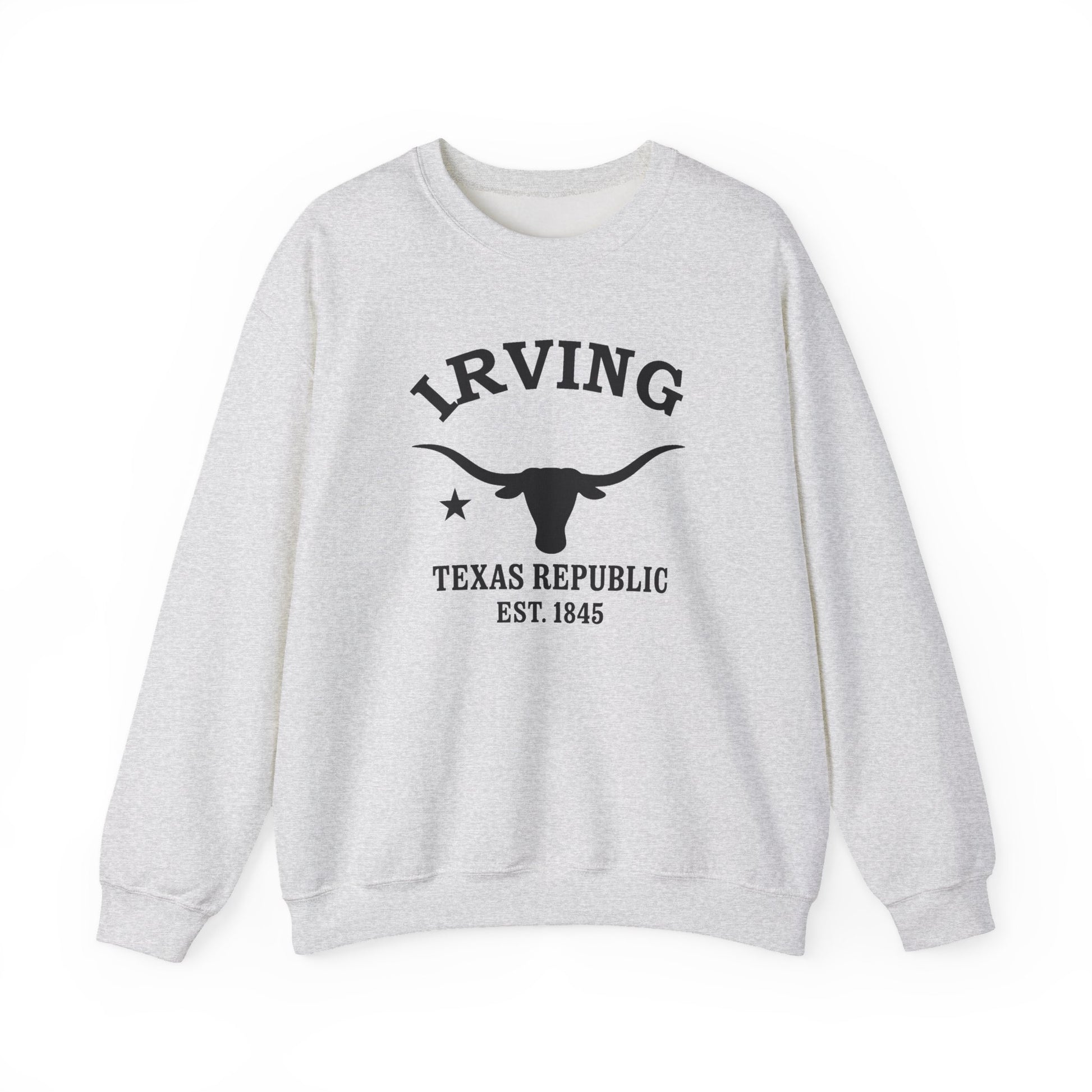
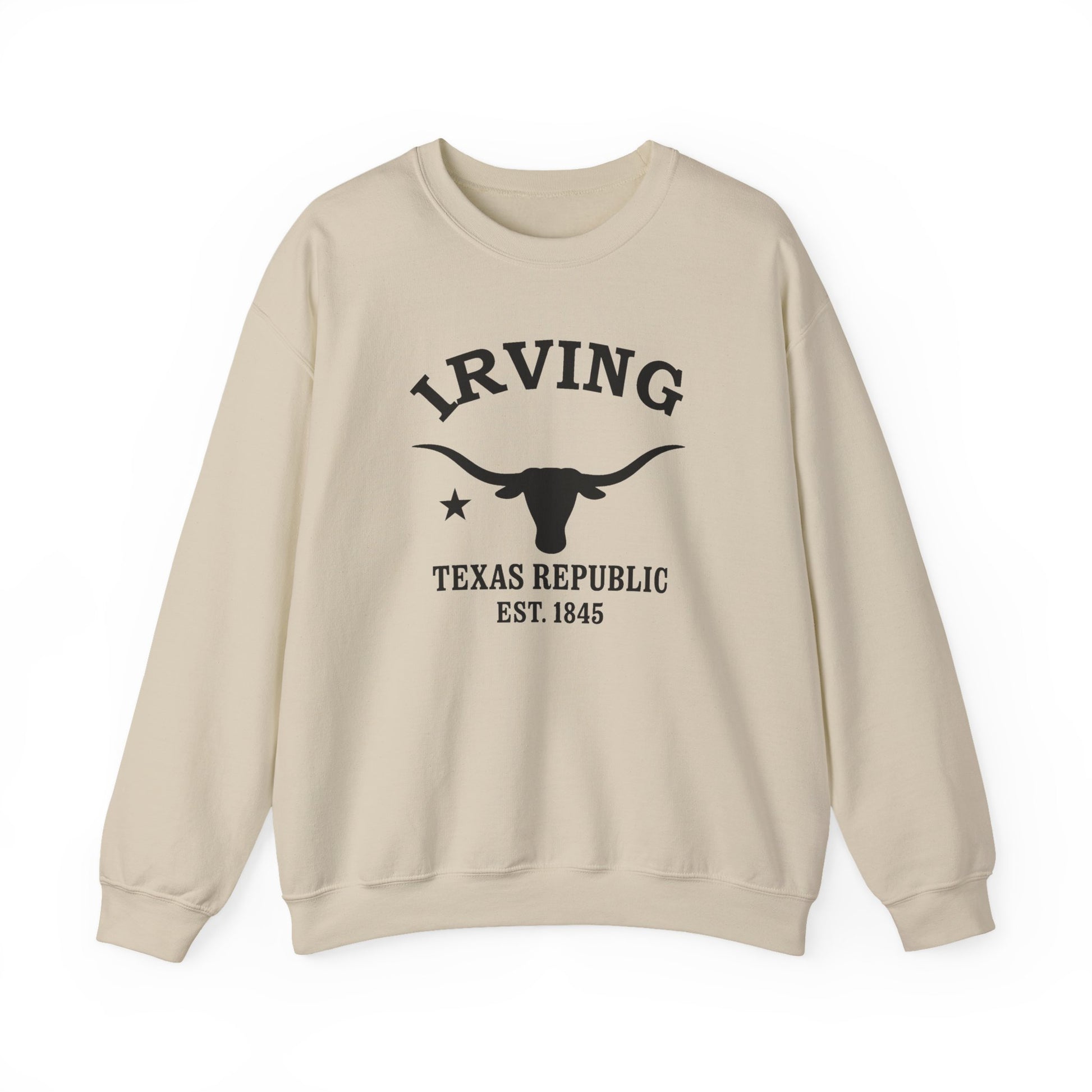
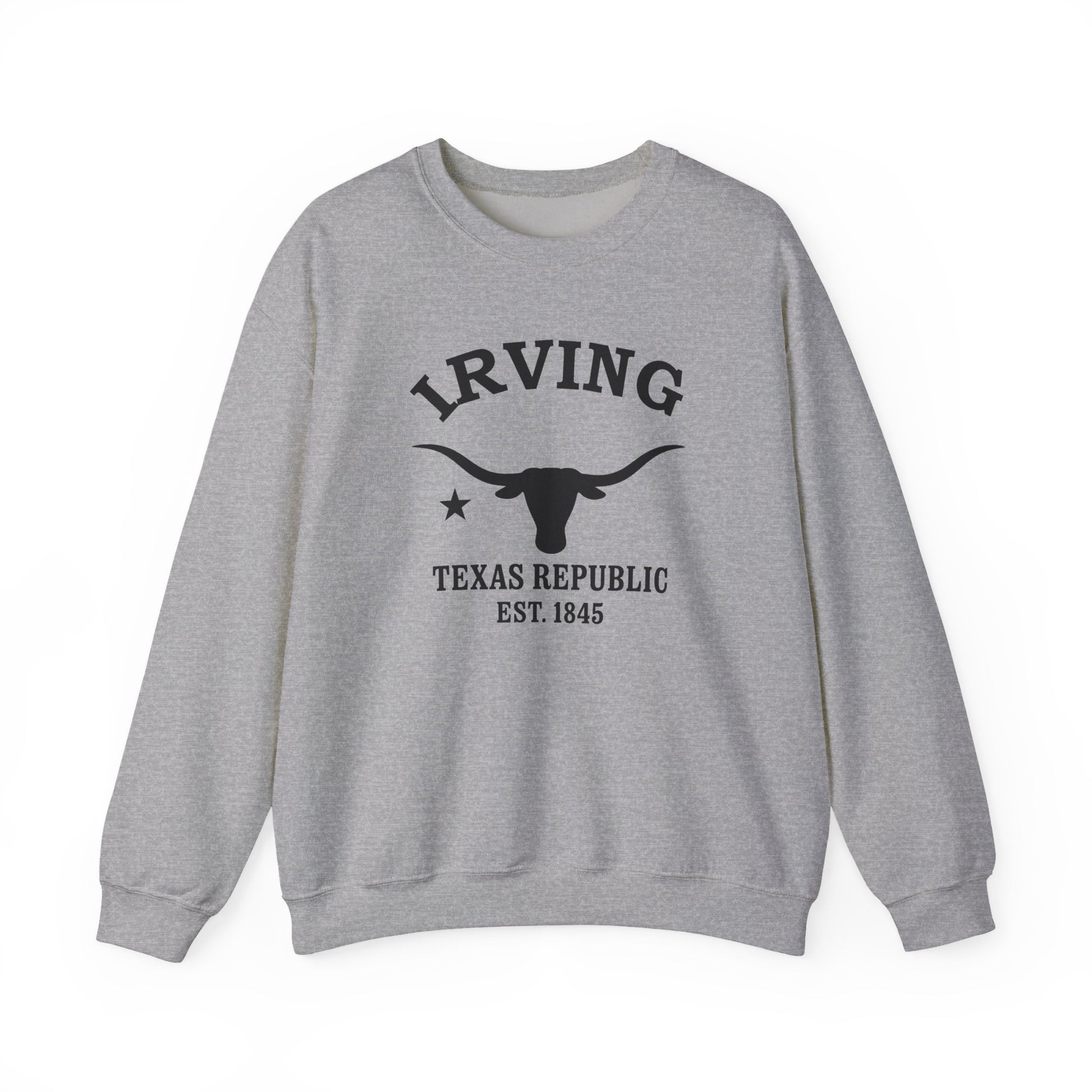
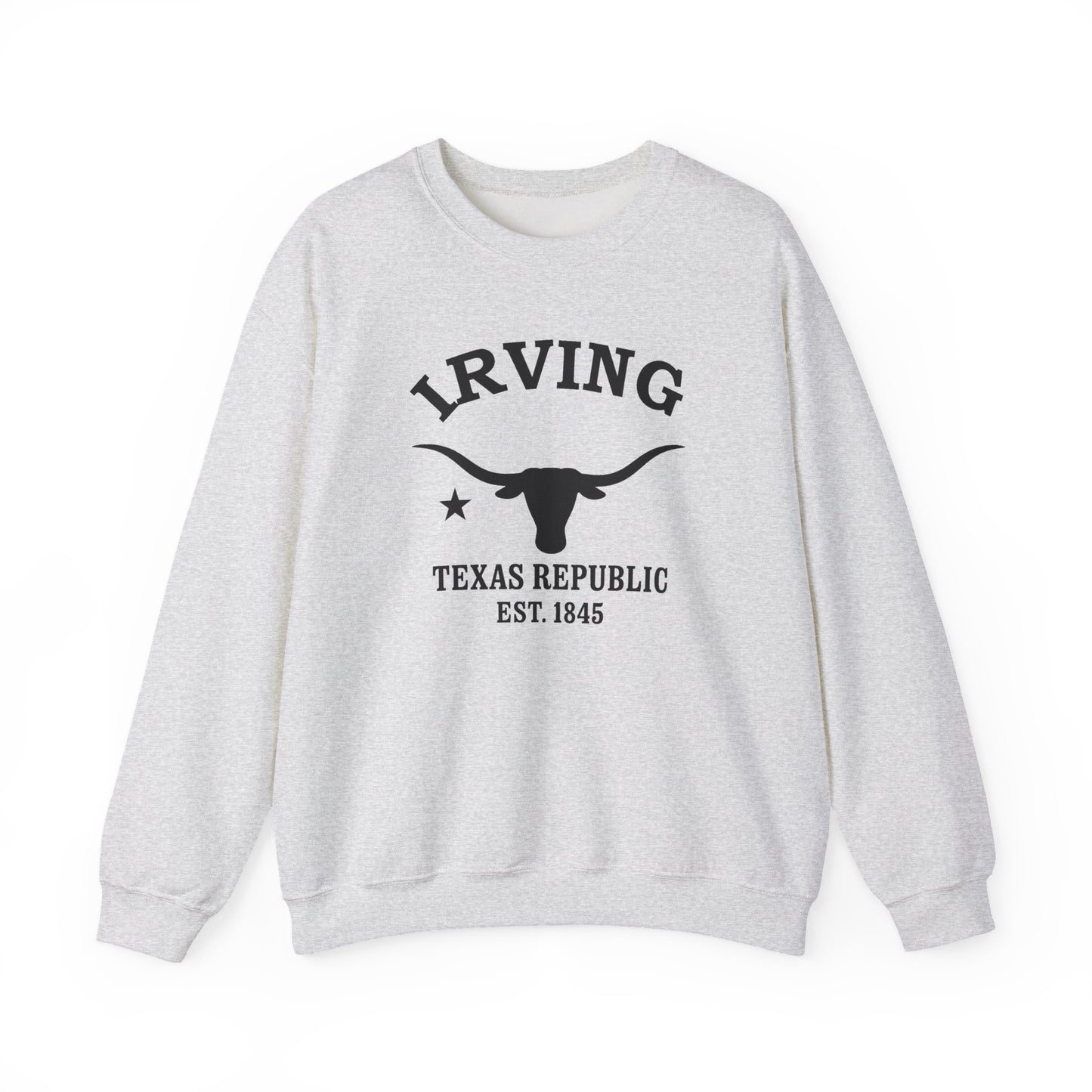
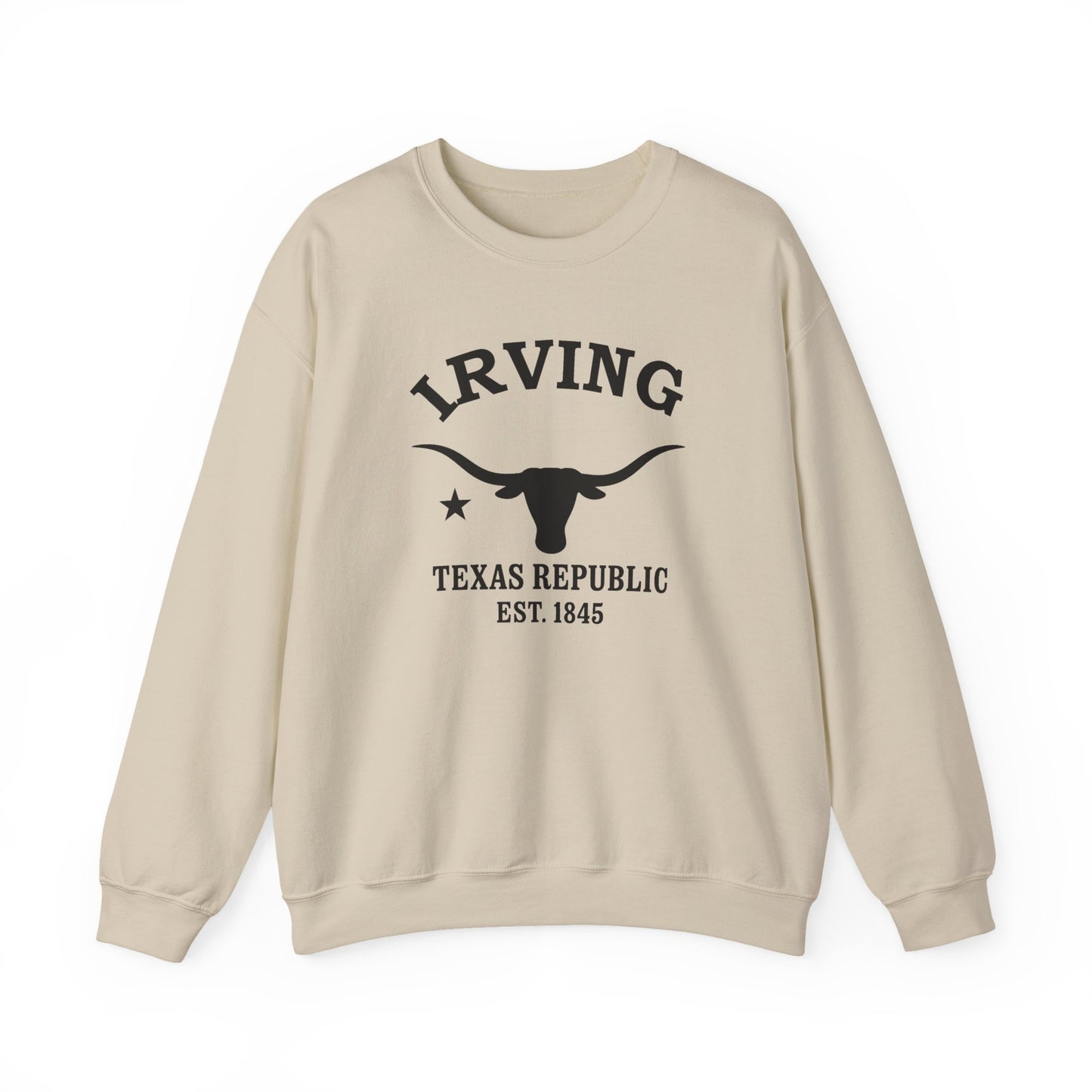
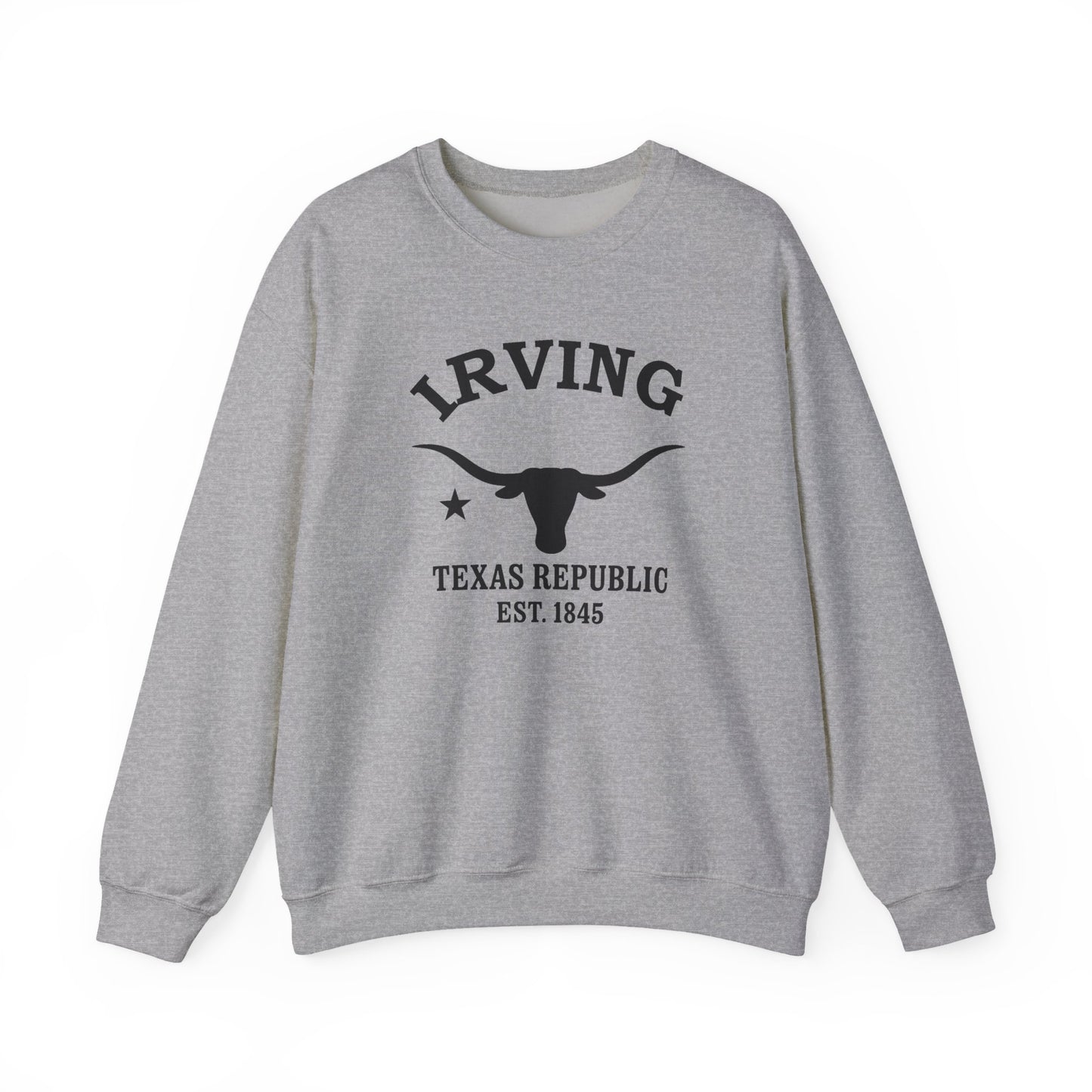
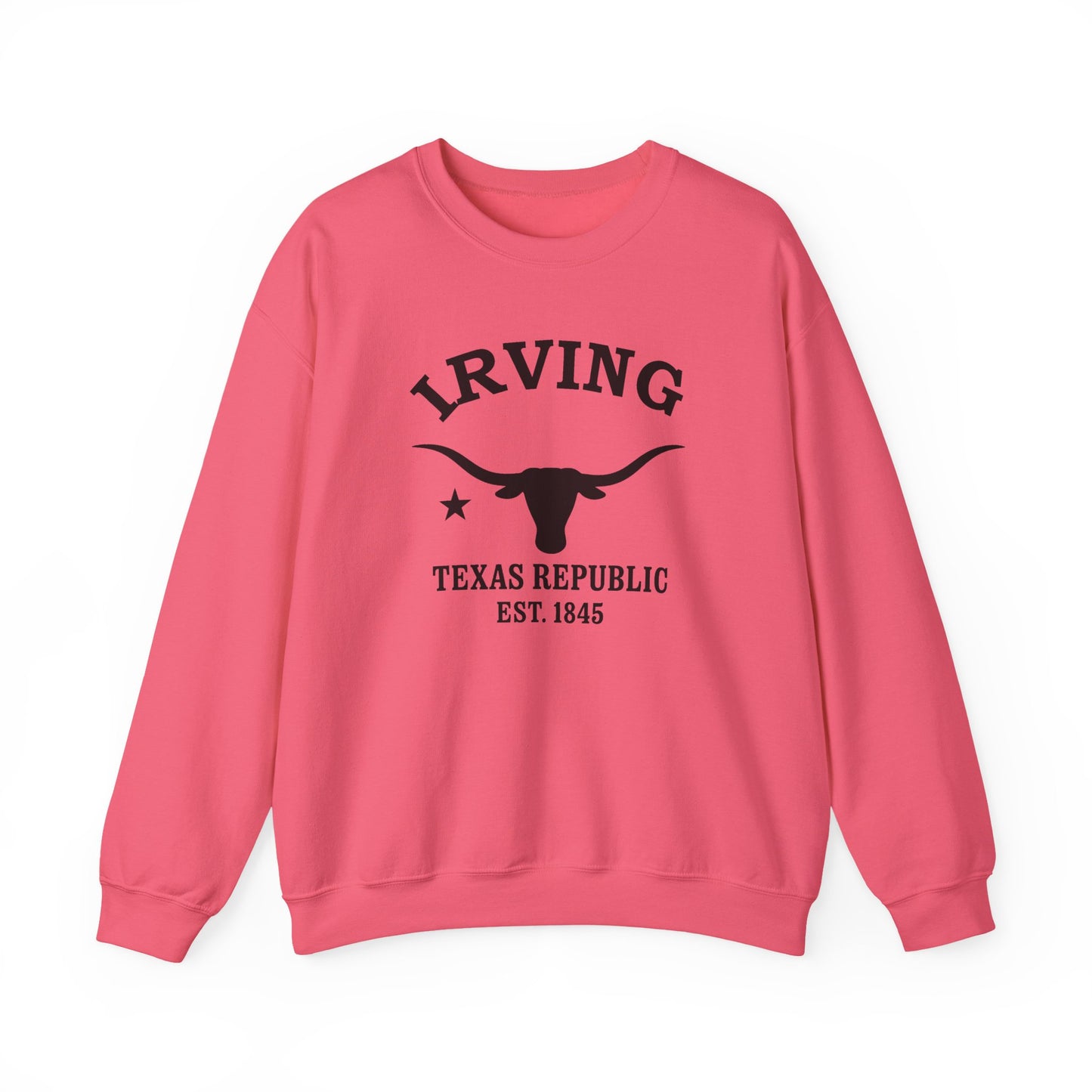
Our Irving logo carries Texas's longhorn and Lone Star, drawn in worn black and white above ‘Texas Republic — Est. 1845,’ the shared retro emblem of our Texas towns. The longhorn stands for ranching toughness and the star for the Lone Star State, and the 1845 date marks Texas statehood; the emblem is the through-line that links Irving to every other Texas town we make. What makes this one Irving is everything around it — the mustangs, the canals of Las Colinas, and a farm town that became a city of the world.
Irving itself is younger than the herd it honors. In 1903 two promoters, Otis Brown and J.O. Schulze, platted a townsite on the prairie between Dallas and Fort Worth, along the rail line that ran between them, and named it for the author Washington Irving — the New Yorker who gave the world Rip Van Winkle and the Headless Horseman. The young town farmed corn, wheat, and cotton and shipped its harvest down the rails to the two cities on either side; it incorporated in 1914. The literary name was a flourish for a dusty prairie townsite, but it stuck, and Irving has carried an author's name ever since. From the start, Irving's whole position was its in-between place: close to everything, beholden to neither neighbor.
Why People Visit Irving
Irving offers art, water, and wild bronze horses in the middle of the Metroplex. Visitors come for the Mustangs, the canals, and the music, and stay for a central, easygoing base beside DFW with museums, sculpture plazas, and trails close at hand. It is both a cultural stop and a convenient home base, with year-round appeal in its parks, paths, and public spaces.
