


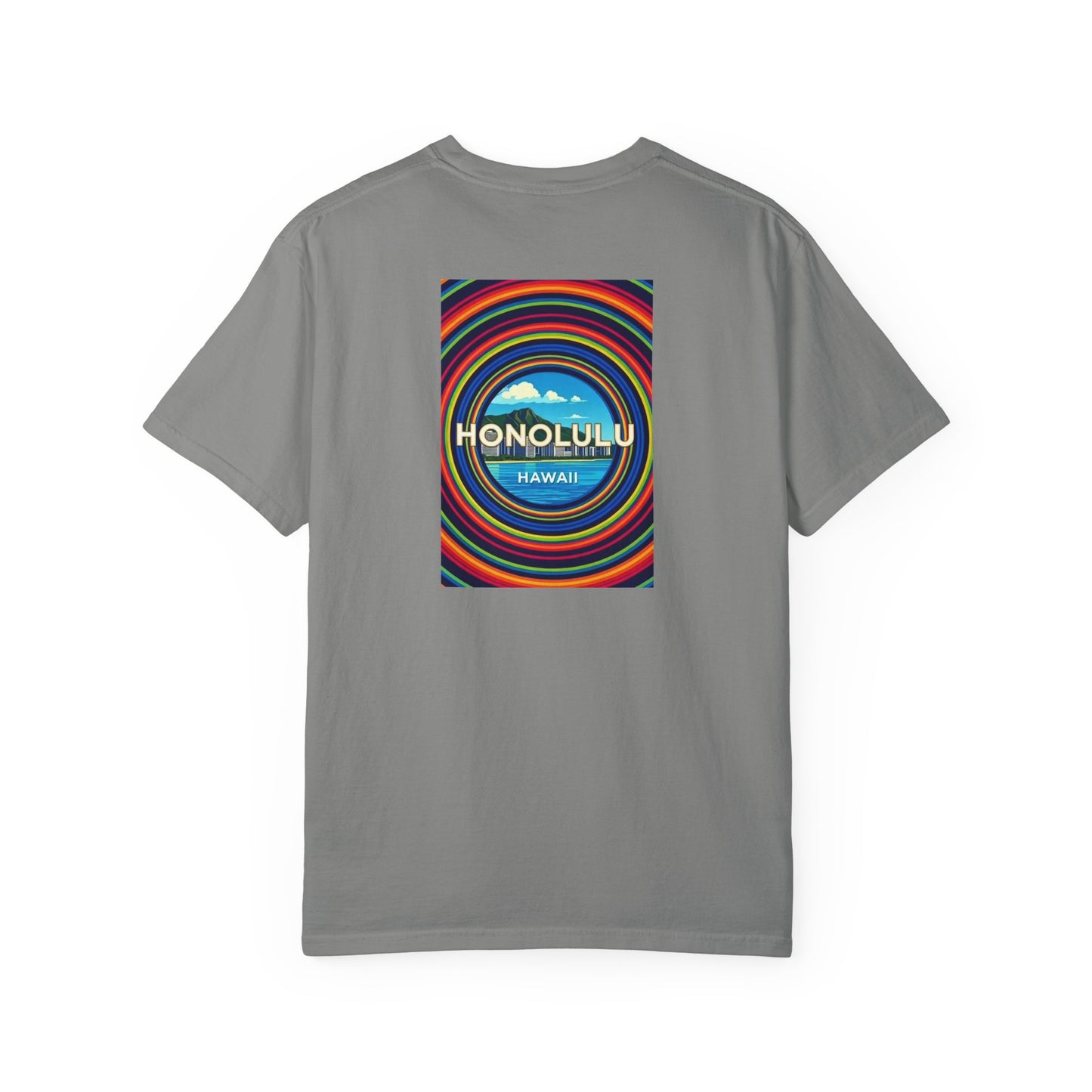
What's with Diamond Head? Rising at the edge of the south shore is a worn volcanic crater the whole world recognizes — Diamond Head. Hawaiians named it Lēʻahi, often read as "brow of the tuna" for the ridgeline's shape, but nineteenth-century British sailors thought the calcite crystals glinting on its slopes were diamonds, and the English name stuck. No diamonds, of course — but climb the old military trail to the rim and the payoff is real: the city, the reef, and the long curve of the shoreline laid out far below. It is the most familiar profile in all of Hawaiʻi, and the unmistakable backdrop to Honolulu.
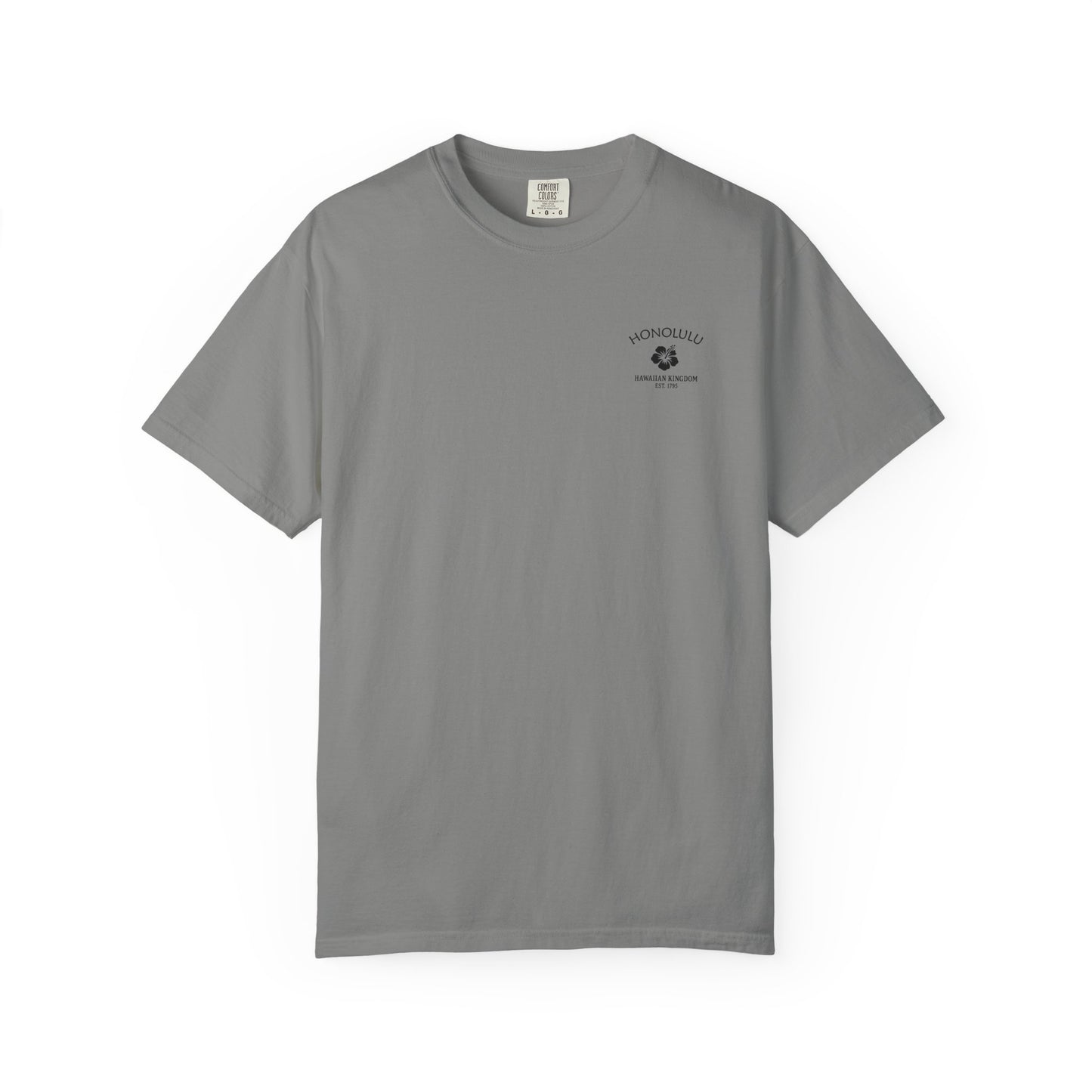
Our Honolulu logo carries the same emblem every Merlin Classics Hawaiʻi place wears — the hibiscus, above "Hawaiian Kingdom · Est. 1795," the year of unification under Kamehameha, printed in a worn, hand-pressed black and white. The hibiscus is the islands' mark, the through-line that ties Honolulu to every other Hawaiʻi place we make — a nod to the aloha that defines them. What makes this one Honolulu is everything around it: the harbor, the capital downtown, and Diamond Head standing over the shore.
Why People Visit Honolulu
Honolulu offers the full range of Hawaiʻi in one place — royal and wartime history, world-class museums, and a famous shoreline, all in a walkable, welcoming capital city. Visitors come for Diamond Head, the beaches, and the heritage downtown, and stay for the food, the culture, and the easy access to the rest of Oʻahu. From the palace to the crater to the harbor, it rewards both a quick visit and a long stay. It is historic, cosmopolitan, and unmistakably Hawaiian.
