


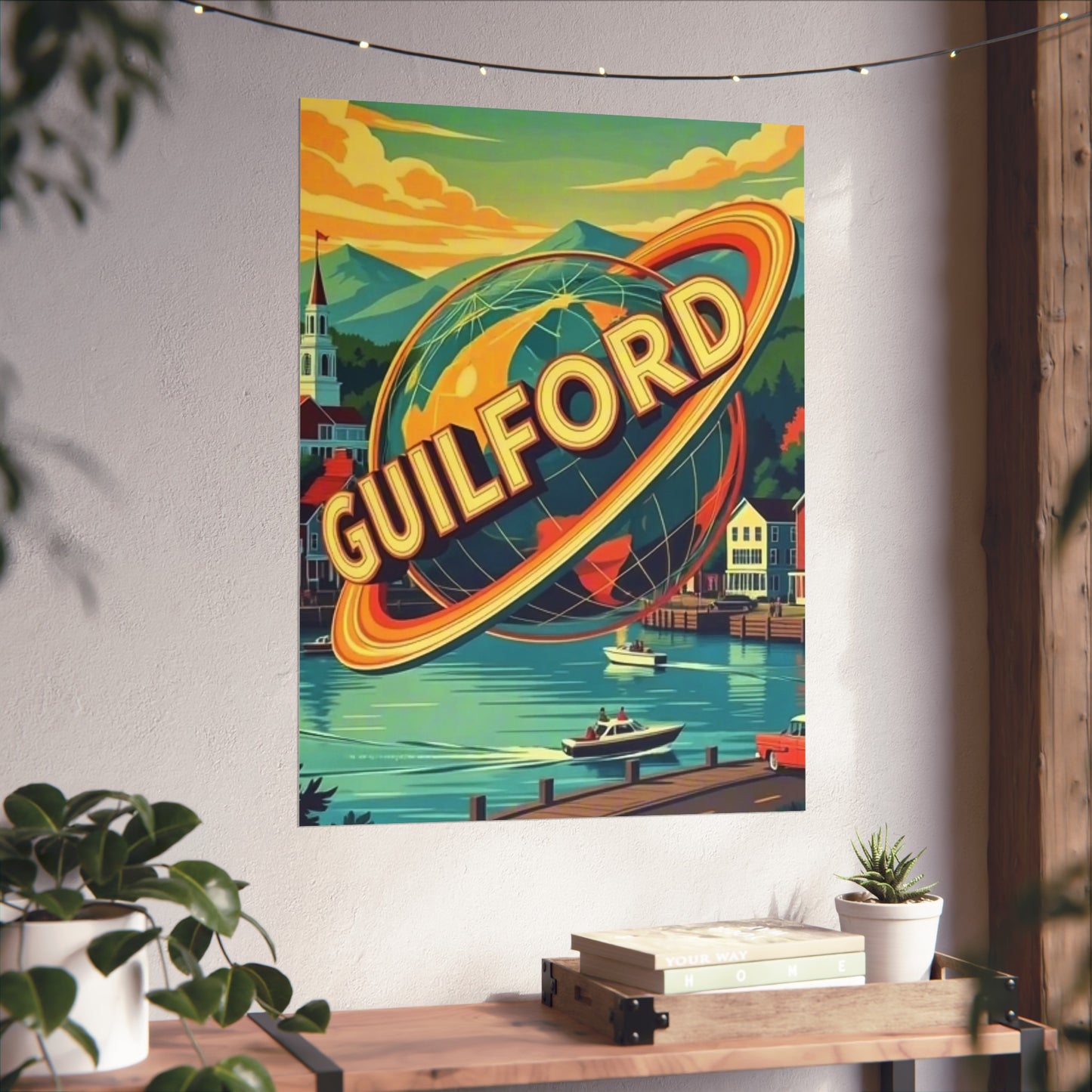
Guilford grew as an agricultural town — crops, timber, livestock, and orchards on the inland slopes from the very beginning — with shipbuilding on the tidal rivers in the eighteenth and nineteenth centuries and granite quarried along the Guilford–Branford line late in the 1800s, pink-grey stone from the shoreline ledges shipping out to building projects far beyond Connecticut. The Guilford Fair has run every September since 1859 — one of the oldest agricultural fairs in the state.
So Guilford gathers a covenant signed at sea, a purchase from a woman sachem whose people came first, the oldest stone house in New England, a green that has held its shape for nearly four hundred years, an 1802 island light, and a fair that never stopped running — and our Guilford designs gather that into wearable form. Whether Guilford is your hometown, your green, your shoreline summers, or the town you still measure others against, wear the history. On the Green since 1639.
Why People Visit Guilford Connecticut
Guilford offers the oldest stone house in New England, one of the largest village greens in the country, four historic-house museums in walking distance of each other, an offshore lighthouse, forty miles of inland hiking, century-and-a-half-old family orchards, and a continuously running September fair. Visitors come for the Whitfield House, the green, the Hyland and Griswold houses, the granite shoreline, the apple and peach seasons at the orchards, the fair, and the simple shoreline pleasure of a village that has been holding its center since 1639. It is old, intact, and very Connecticut.
