


The city proper was a railroad decision. When the Florida Railroad plotted its line from Fernandina to Cedar Key, Alachua County's seat sat at Newnansville — off the route. At an 1853 picnic gathering at Boulware Springs, county voters chose to move the courthouse to a new town on the line, and by 1854 Gainesville existed, named for General Edmund P. Gaines of the Seminole Wars, with Major James B. Bailey furnishing the founding land. The rails arrived in 1859, cotton and vegetables moved out by the carload, and the town incorporated on April 14, 1869.
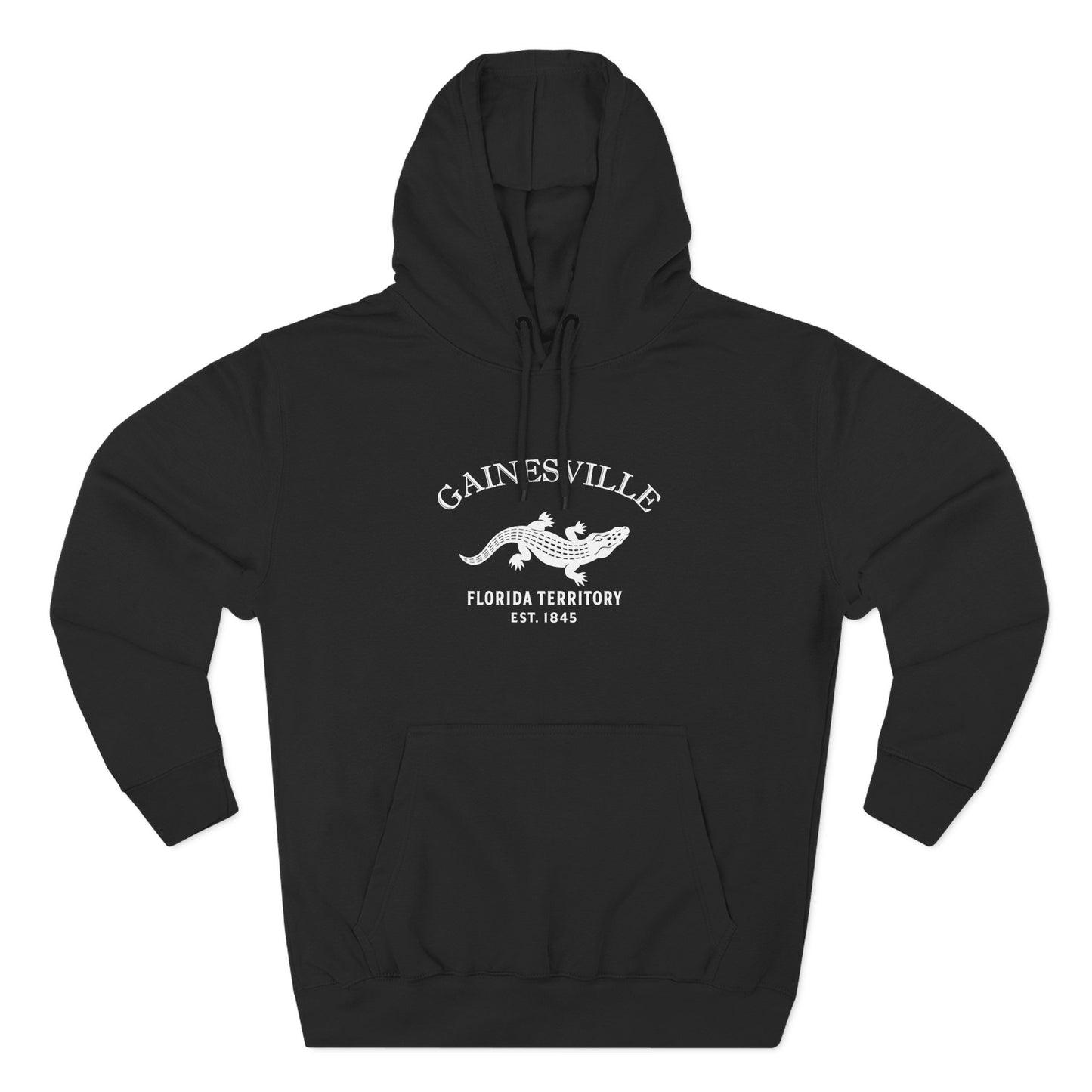
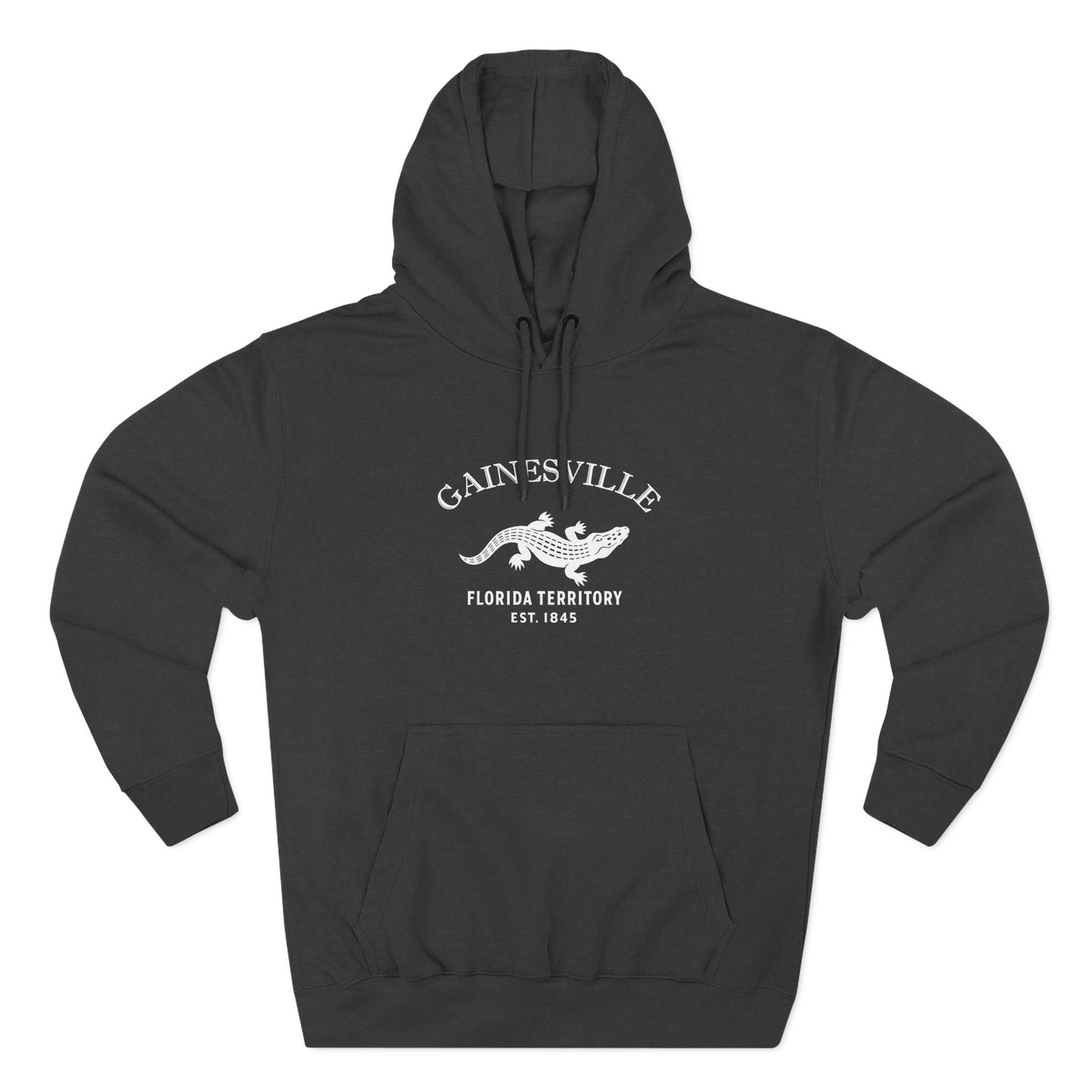
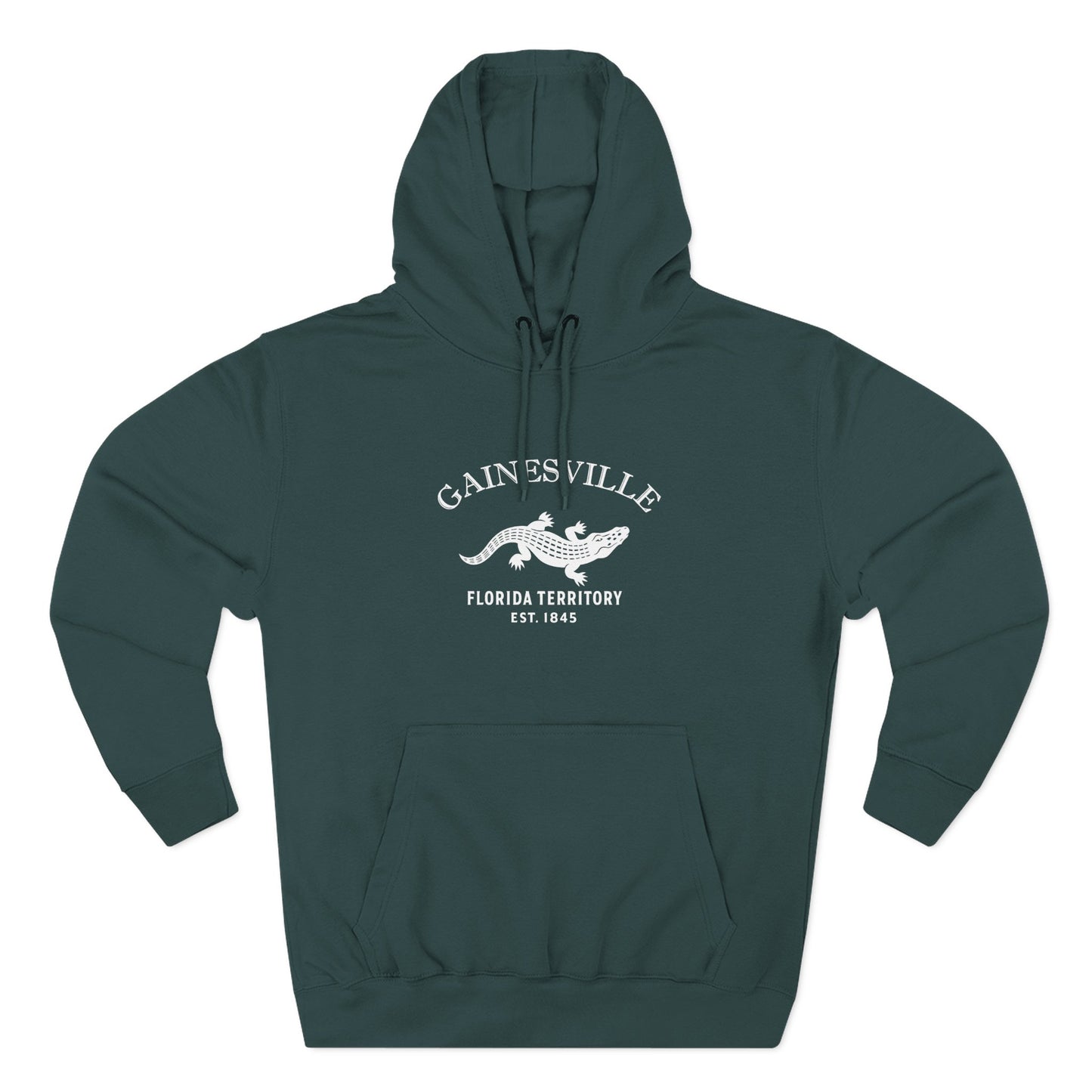
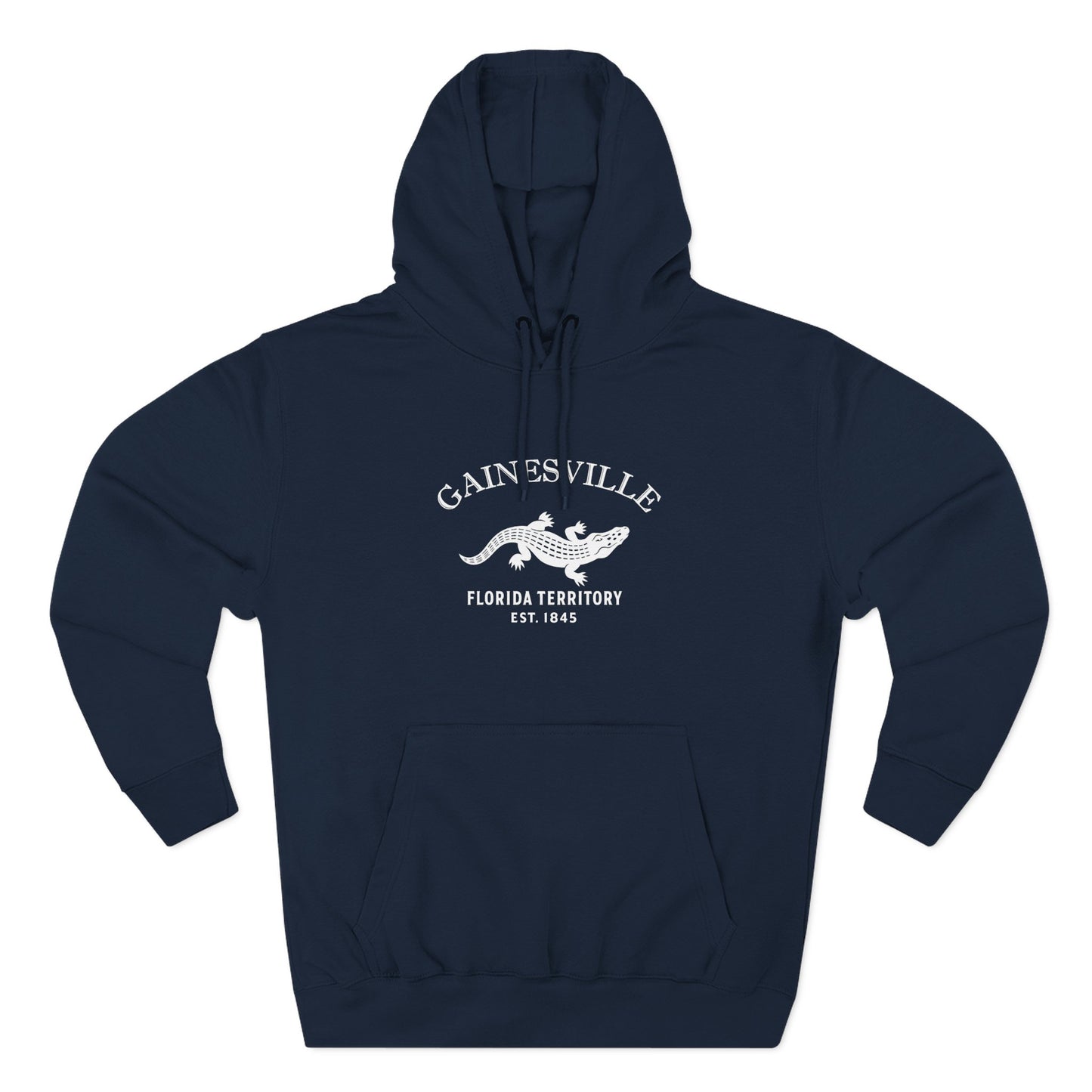
Our retro Gainesville designs draw on all of it — the prairie's bison and wide horizons, steamboats on a lake that vanished, live oaks and Spanish moss, the Duckpond's gables and Depot Park's rails, and the springs-and-sinkhole country of real North Florida. Each piece is rendered in the vintage travel style we build for every American town we love — made to feel like a postcard from the trailhead you can wear.
Why People Visit Gainesville Florida
Gainesville blends wild Florida and a working college town. Visitors come for the prairie and the springs, the sinkhole country, the historic district's porches and oaks, and a downtown anchored by the Hippodrome's marquee. It is shaded, walkable, and rooted in place — North-Central Florida at its most genuine, with the real Florida outside the city limits and a century of college-town culture inside them.
