

People read this land the same way for thousands of years. The Potano lived and farmed here; the word Alachua likely comes from their word for the great sink — "jug." By the late 1600s the Spanish ran La Chua, the largest cattle ranch in Spanish Florida, on the prairie's rim, and in the 1770s the Seminole leader Ahaya the Cowkeeper grazed thousands of head on the savanna that would later take the name of King Payne. Bartram walked it in 1774 and filled his Travels with it. The American settlement that followed grew up nearby as Hogtown, a trading-post village on the creek that still carries the name through the middle of the city.
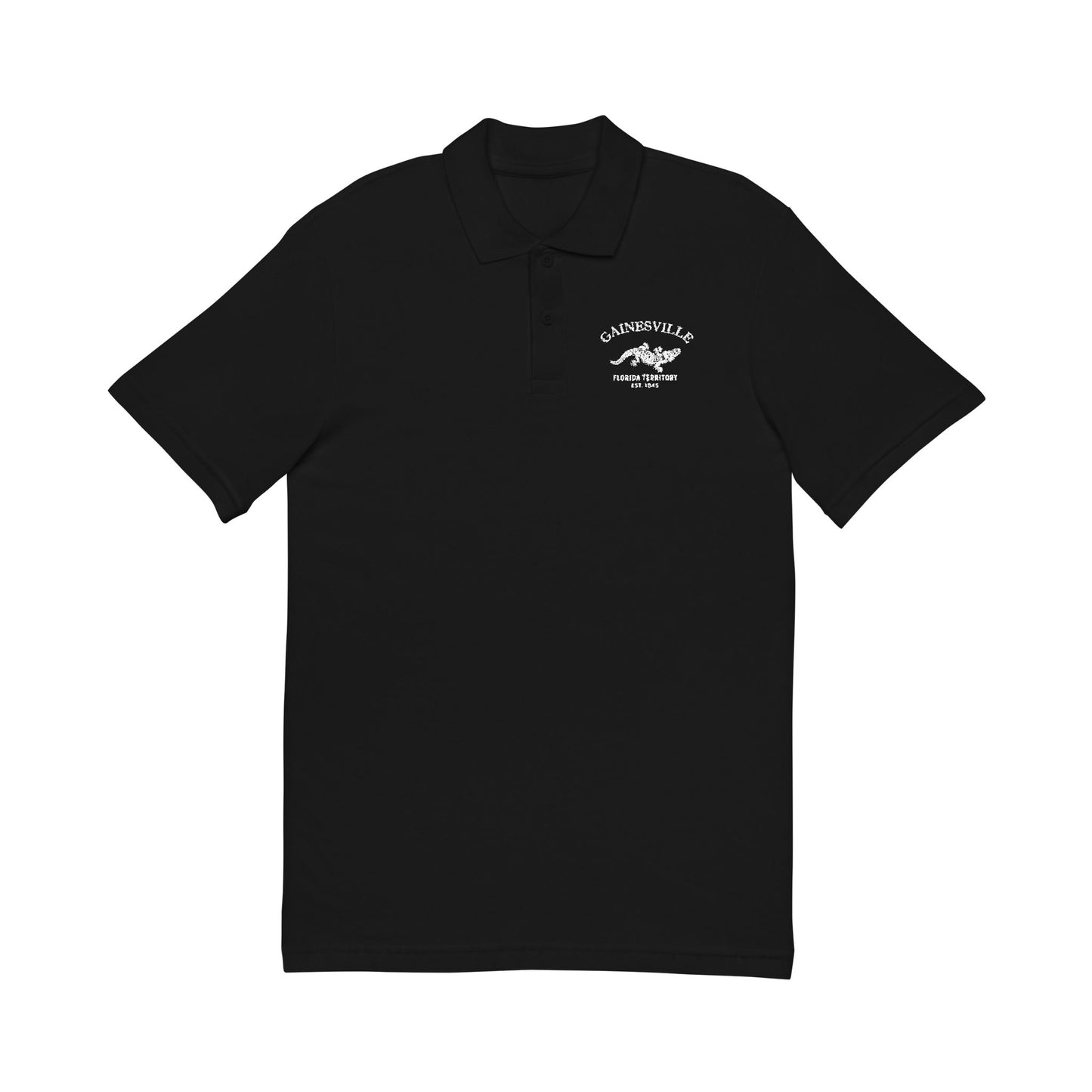
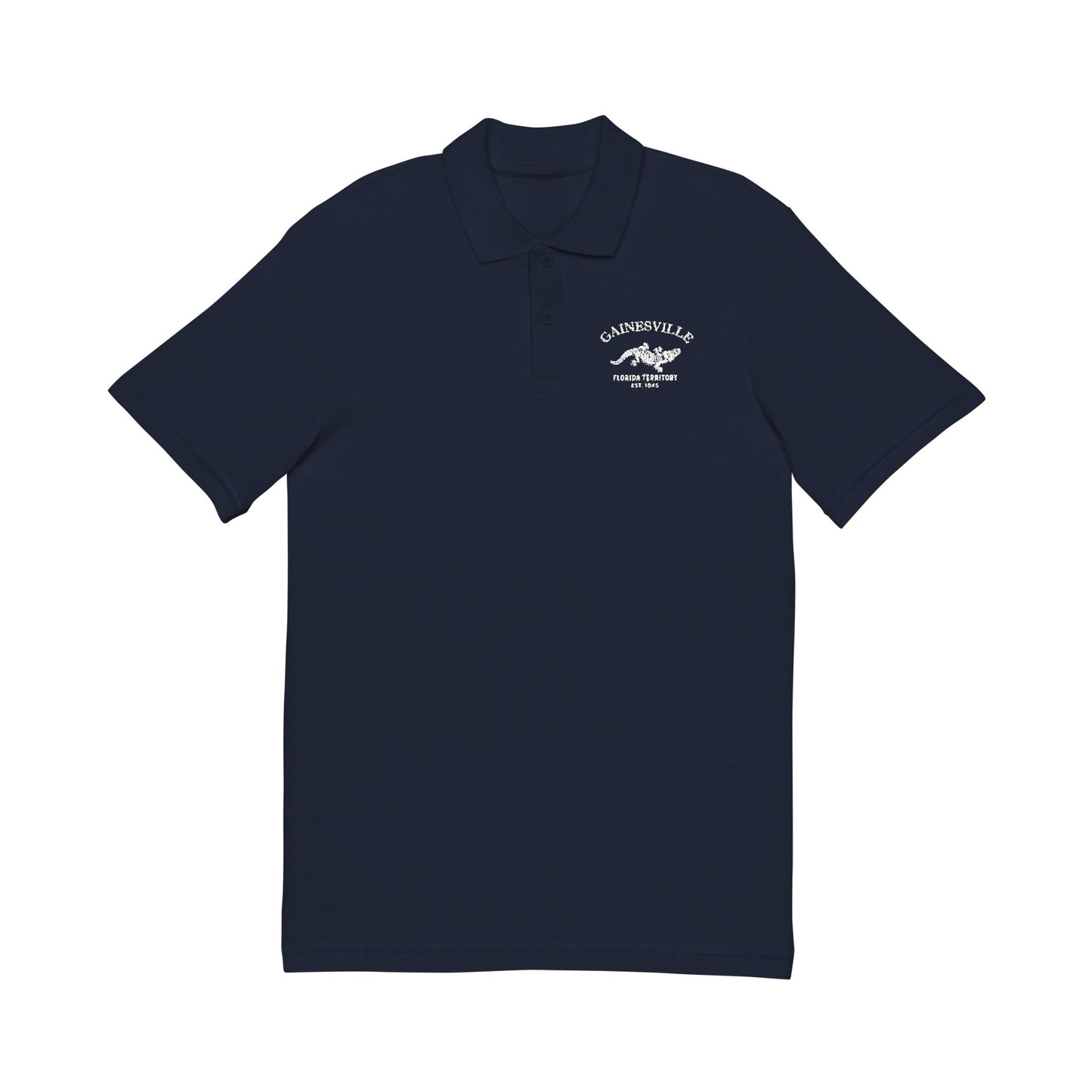
Our retro Gainesville designs draw on all of it — the prairie's bison and wide horizons, steamboats on a lake that vanished, live oaks and Spanish moss, the Duckpond's gables and Depot Park's rails, and the springs-and-sinkhole country of real North Florida. Each piece is rendered in the vintage travel style we build for every American town we love — made to feel like a postcard from the trailhead you can wear.
Why People Visit Gainesville Florida
- Hike Paynes Prairie Preserve State Park, Florida's first state preserve and a National Natural Landmark, with chances to spot wild bison, free-roaming horses, and alligators from the La Chua Trail and Alachua Sink overlook.
- Walk into Devil's Millhopper Geological State Park, a 120-foot, 500-foot-wide sinkhole with a rainforest microclimate and a chain of small waterfalls.
- Follow the Bartram Trail through the Alachua savanna country described by William Bartram in 1774, the canonical Western account of Paynes Prairie and the surrounding springs.
- Stroll the Duckpond / NE Gainesville Residential District, with its wide porches, live oaks, and late-19th and early-20th-century homes.
- Catch a show or tour the 1911 Hippodrome downtown, a Beaux-Arts former Federal Building now the city's anchor theatre and architectural landmark.
- Wander Sweetwater Wetlands Park for boardwalk views of alligators, wading birds, and the headwaters that drain into Paynes Prairie.
- Day-trip to nearby Micanopy, Cedar Key, and the Santa Fe and Ichetucknee springs region for spring runs, antique shops, and Gulf-coast back roads.
