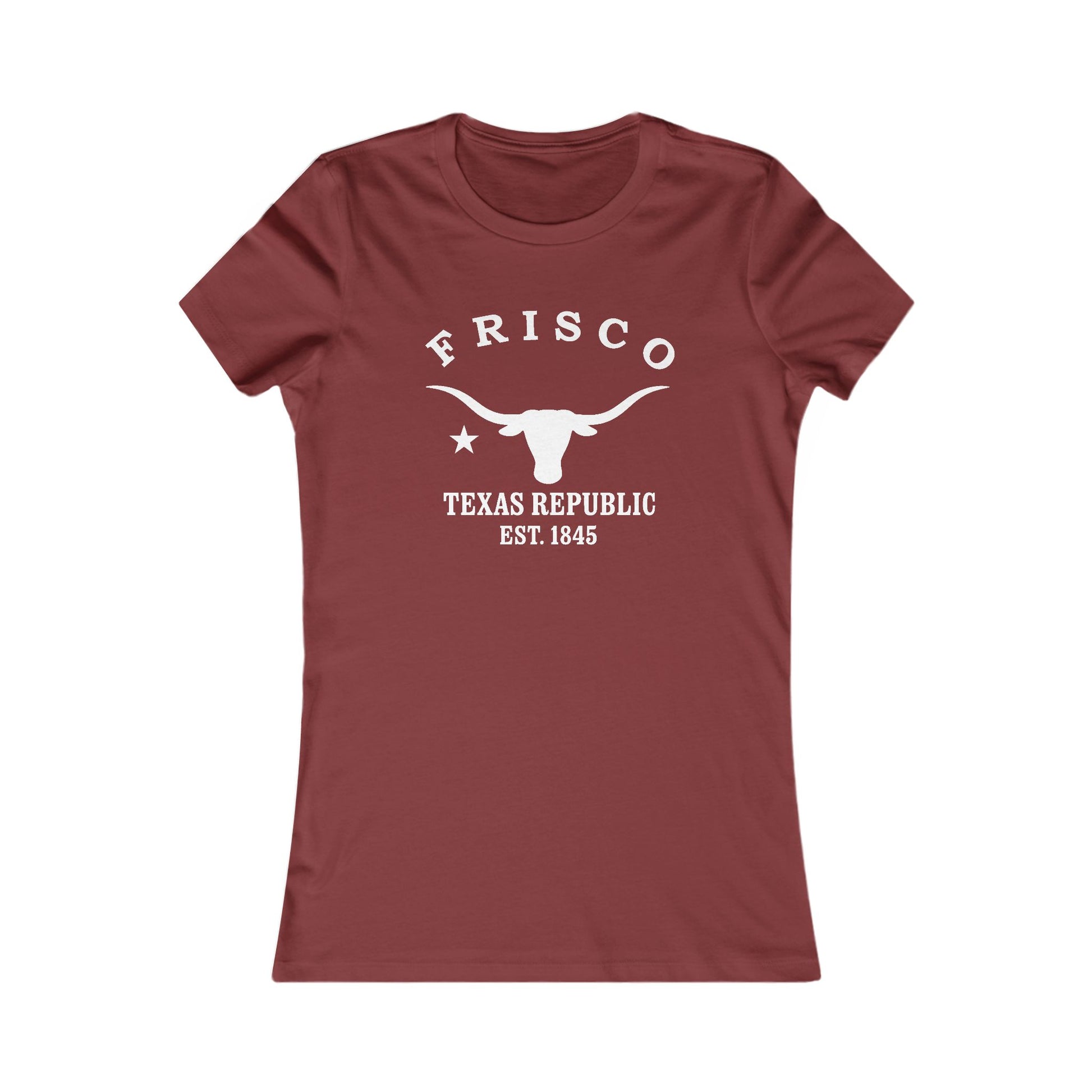
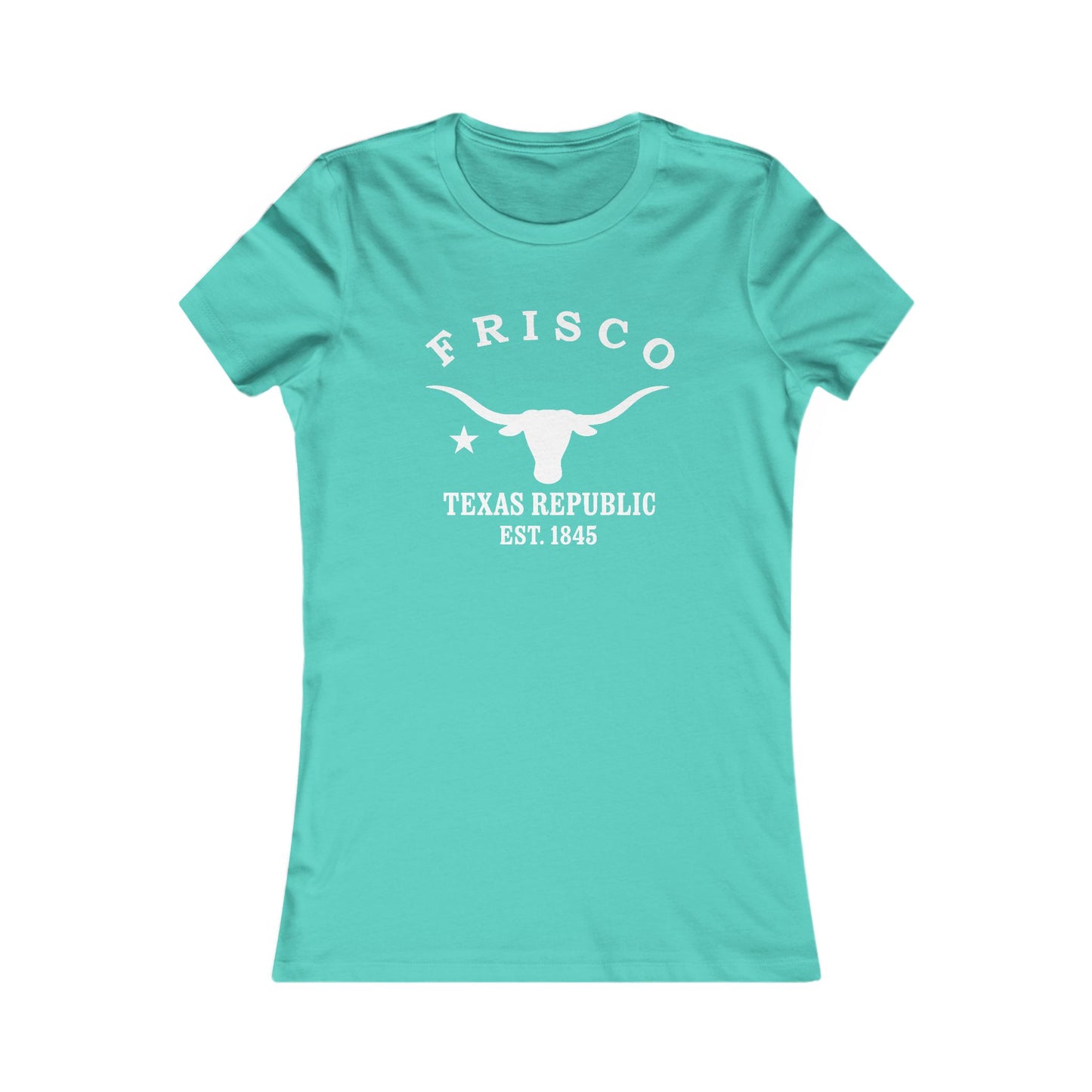
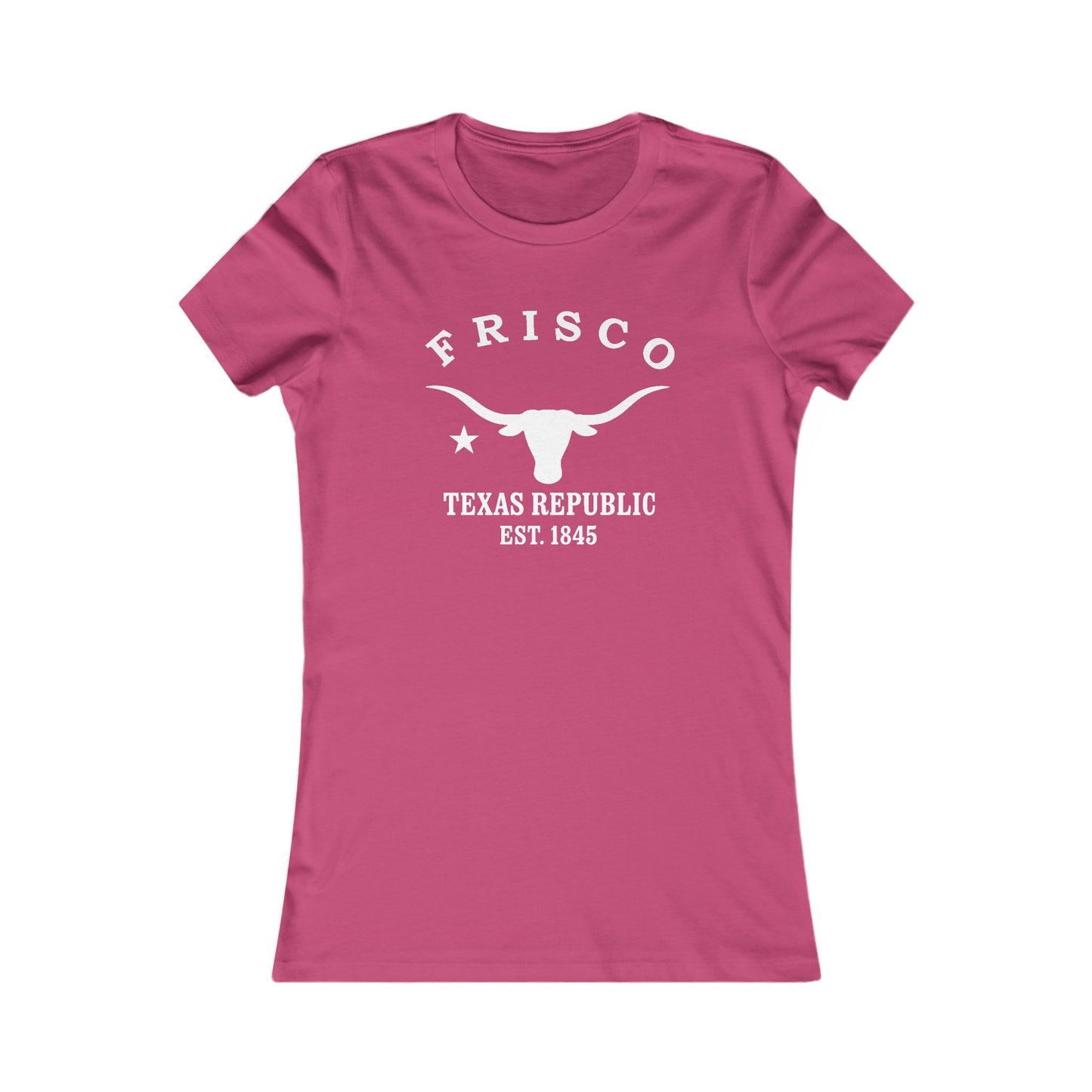
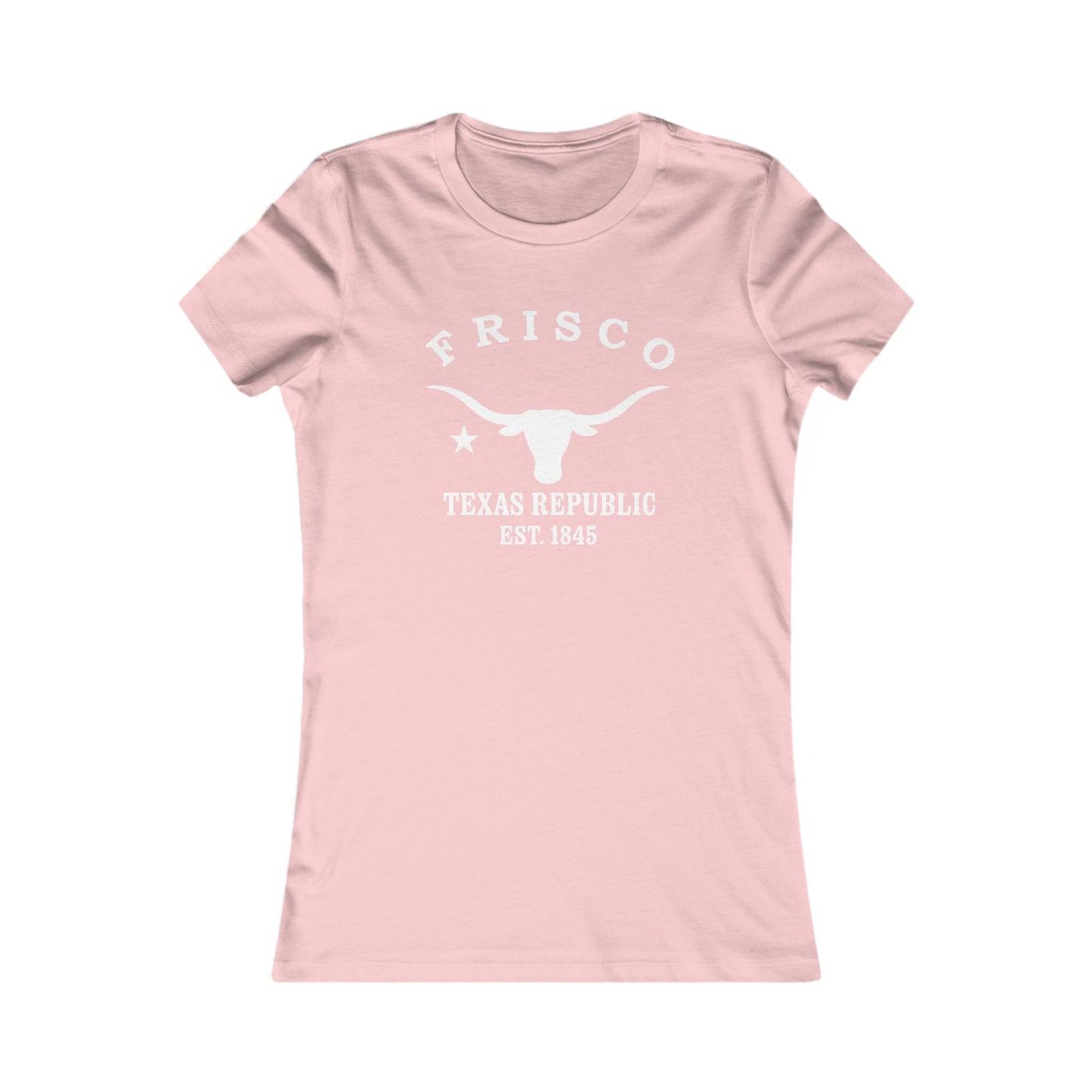
The land Frisco sits on was a route long before it was a town. The Shawnee Trail — later the Preston Trail, and today Preston Road — ran north out of Texas along a ridge of white rock: an old Indigenous footpath that became the earliest of the great cattle-driving roads, with longhorns moved up it by the millions toward the railheads of the north. A trailside community called Lebanon grew up along it and got its post office in 1860. For decades this was cattle-and-cotton country, prairie crossed by drovers, with the markets always somewhere else.
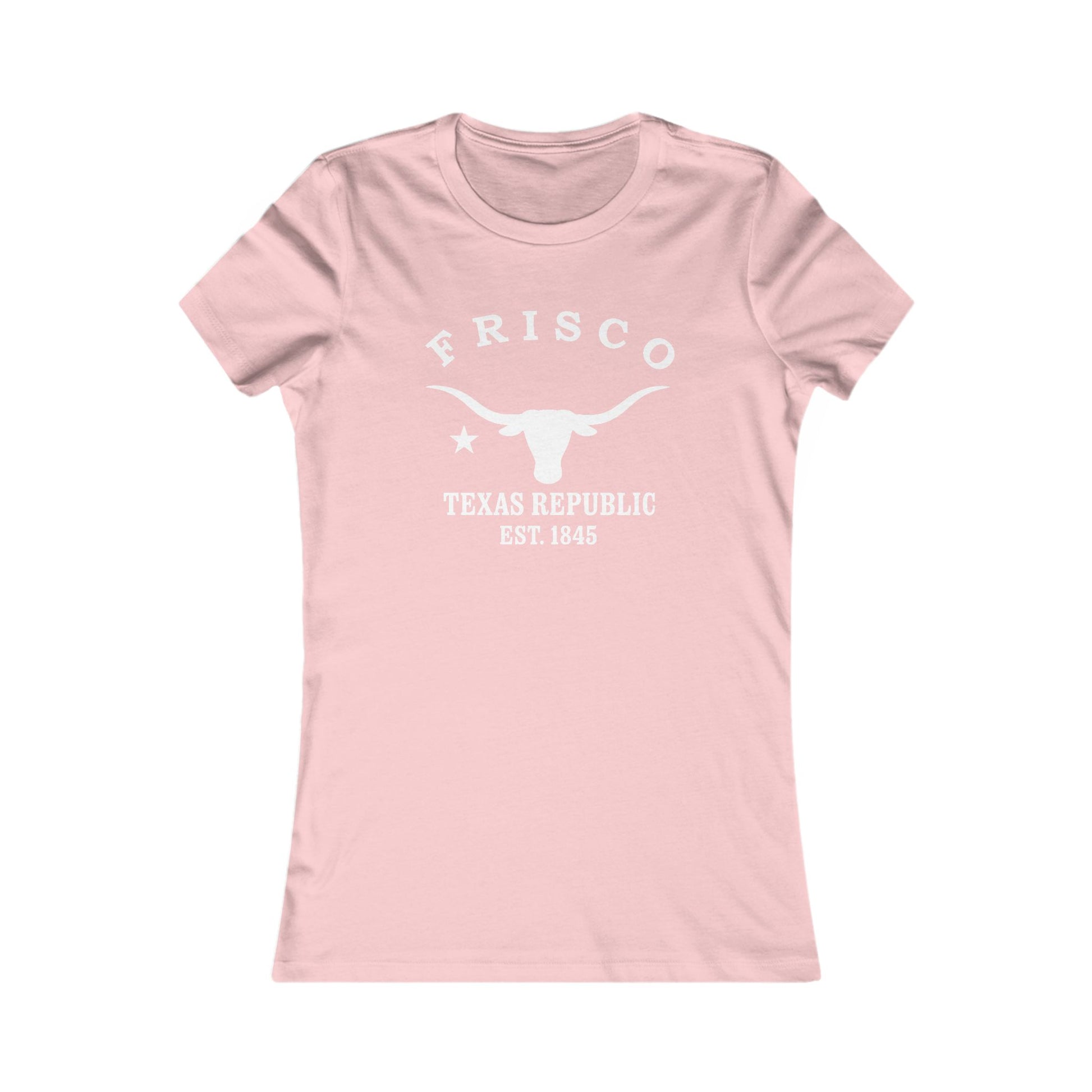
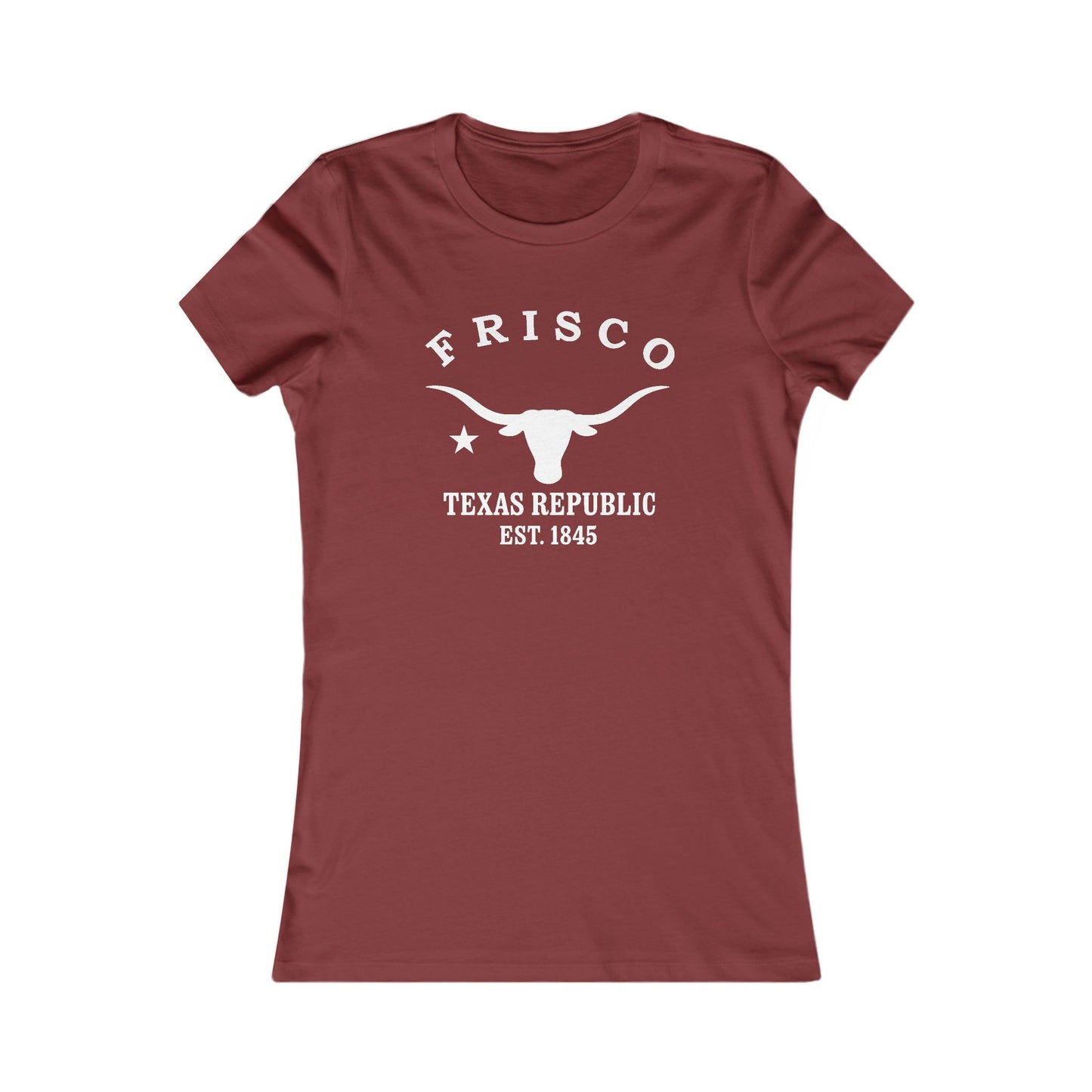
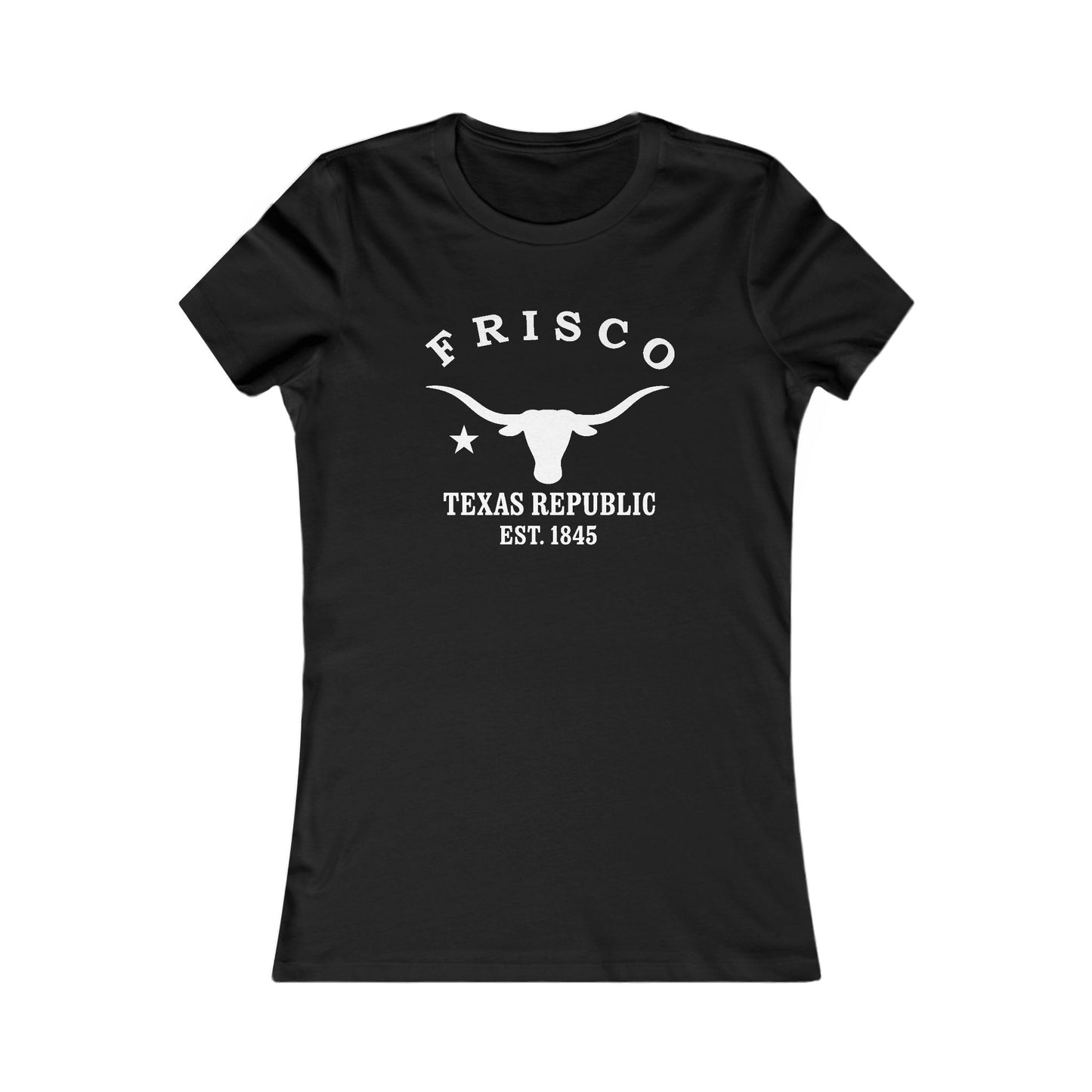
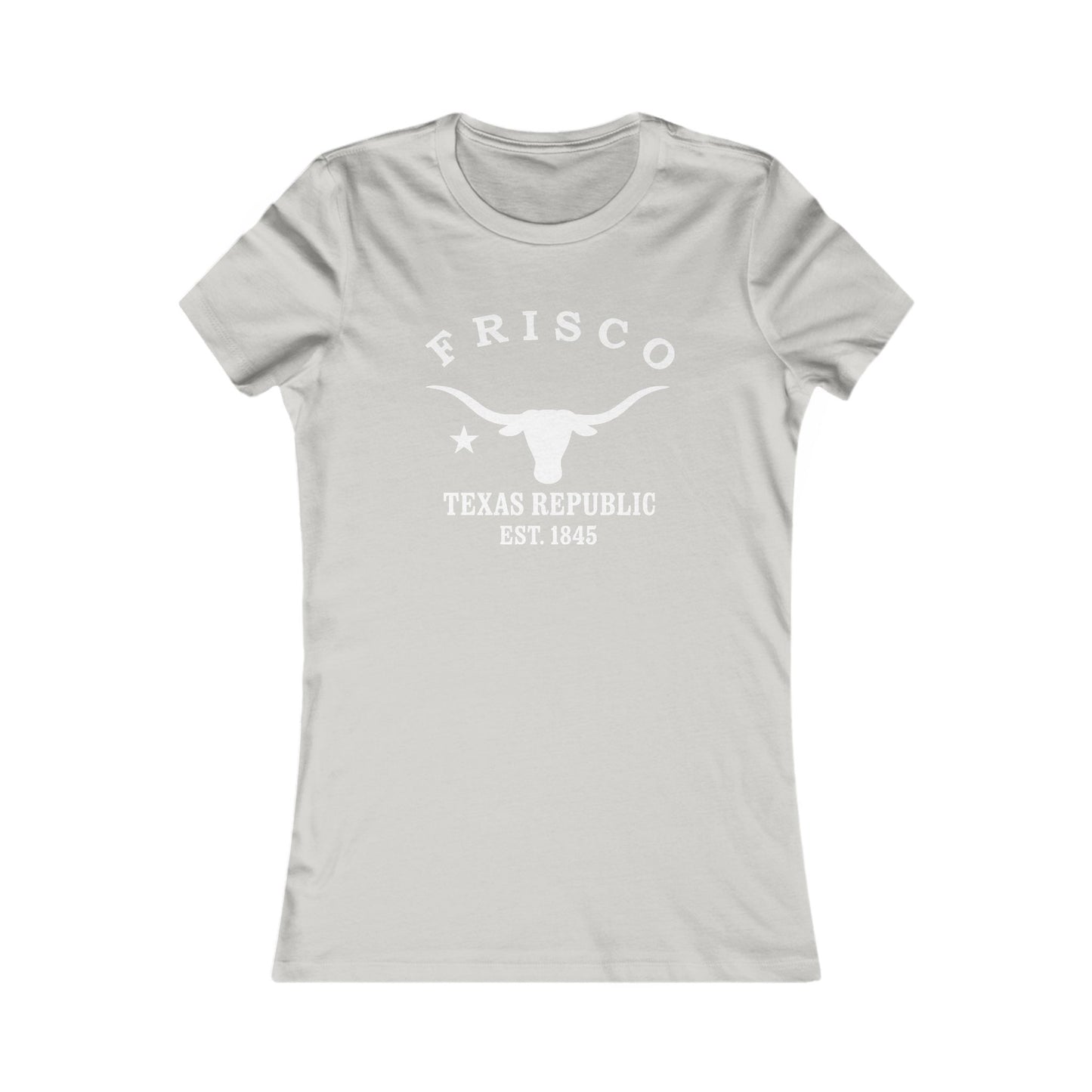
Today Frisco is one of the youngest big cities in Texas — a boomtown that kept the longhorn trail in its bones and the railroad in its name. Our Frisco designs gather that identity — the longhorn-and-star, the Frisco line, the water tower, the prairie that became a city — into wearable form. Frisco, Texas — from a railroad watering stop to a boomtown, in a single lifetime.
Why People Visit Frisco
Frisco offers a rare mix — a brand-new big city with deep-Texas roots: a railroad-heritage downtown, the old cattle trail underfoot, and a skyline of stadiums and corporate campuses that went up in a single generation. It's polished, easy to navigate, and unmistakably North Texas.
