


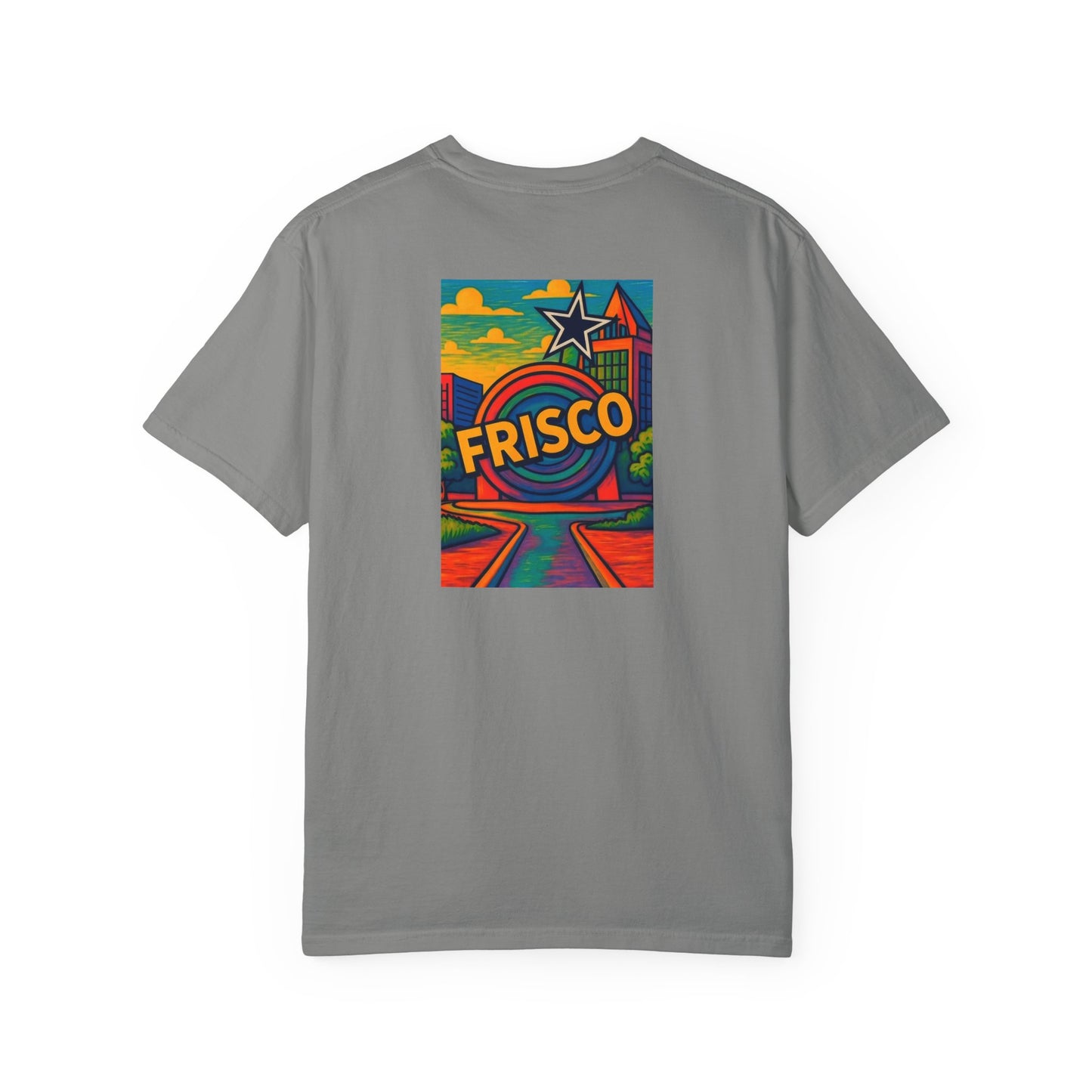

The land Frisco sits on was a route long before it was a town. The Shawnee Trail — later the Preston Trail, and today Preston Road — ran north out of Texas along a ridge of white rock: an old Indigenous footpath that became the earliest of the great cattle-driving roads, with longhorns moved up it by the millions toward the railheads of the north. A trailside community called Lebanon grew up along it and got its post office in 1860. For decades this was cattle-and-cotton country, prairie crossed by drovers, with the markets always somewhere else.
Frisco is named for a railroad. In 1902 the St. Louis–San Francisco Railway — “the Frisco” — laid a line across the prairie, and because its steam locomotives needed water, the crews built a watering stop on low ground a few miles west of Lebanon. A town gathered around the stop, and some Lebanon families are said to have rolled their houses over to it on logs. They first called the place Emerson, but the post office rejected the name, so they named it for the railway that had made it — Frisco City, soon shortened to Frisco. The old water tower on the original downtown still stands for that beginning, a landmark from the days when the train stopped for water. The railroad’s grand name outran its reach — the Frisco never actually got to San Francisco, stopping far short in the Southwest — but the borrowed name stuck to the little Texas town for good.
Why People Visit Frisco
Frisco offers a rare mix — a brand-new big city with deep-Texas roots: a railroad-heritage downtown, the old cattle trail underfoot, and a skyline of stadiums and corporate campuses that went up in a single generation. It's polished, easy to navigate, and unmistakably North Texas.
