


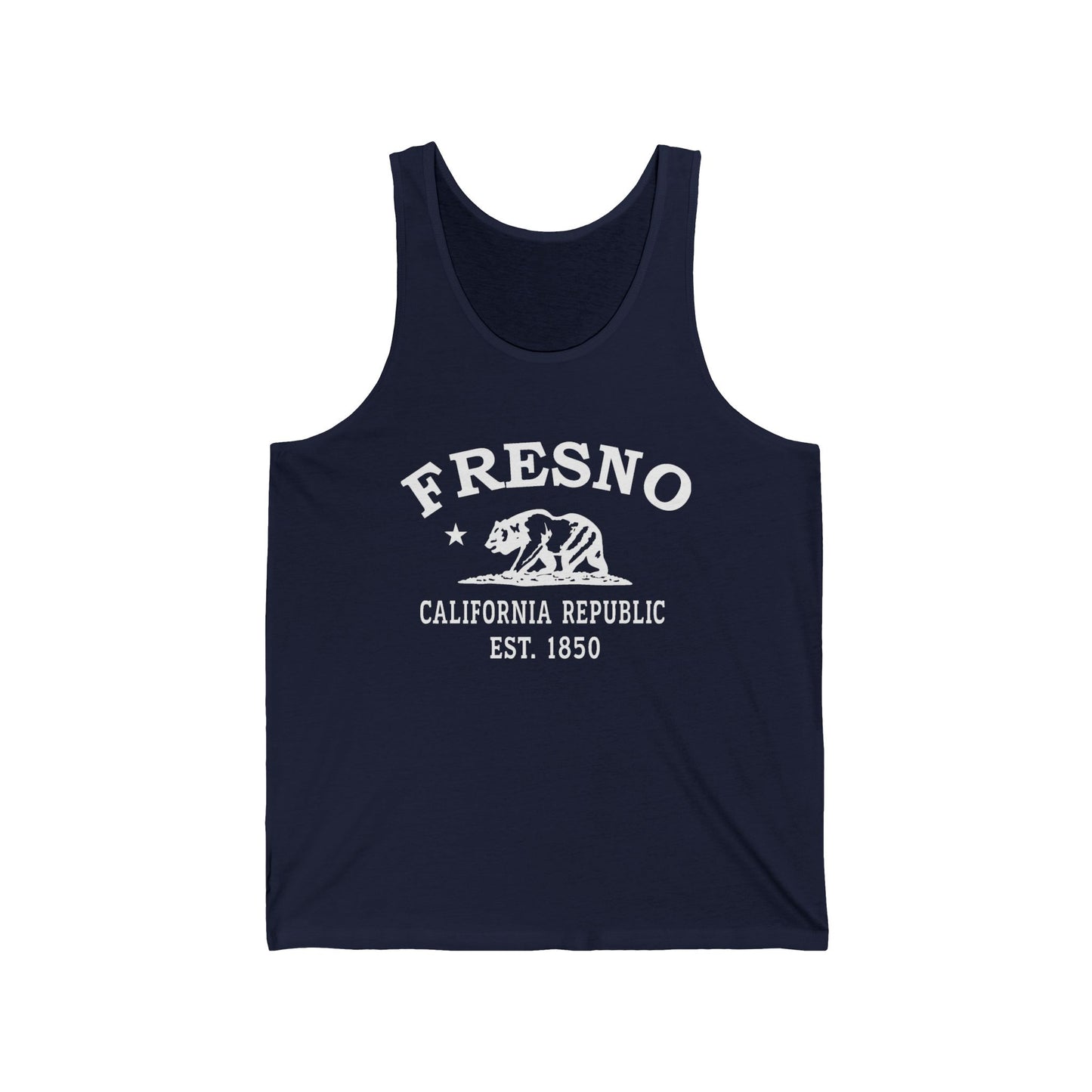
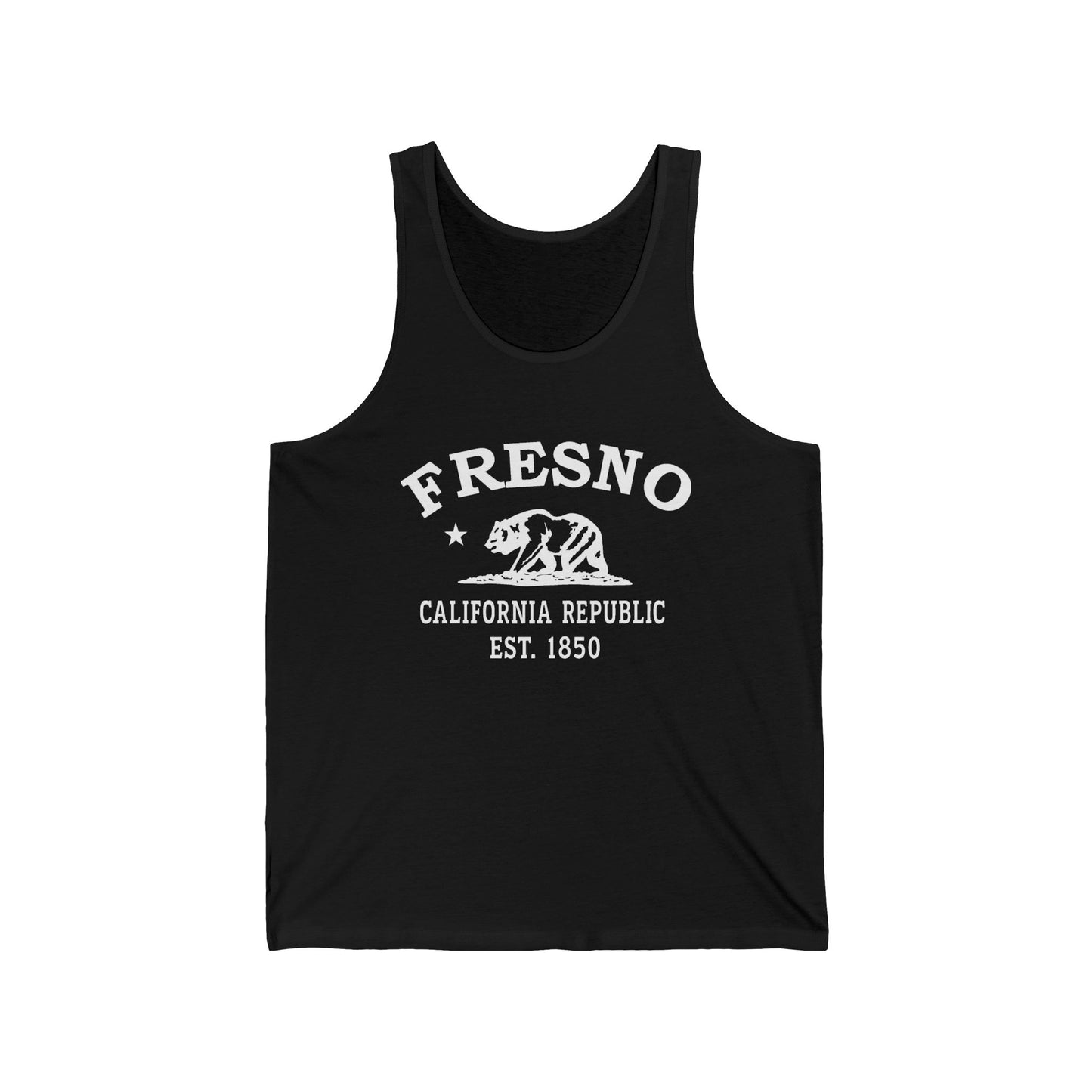
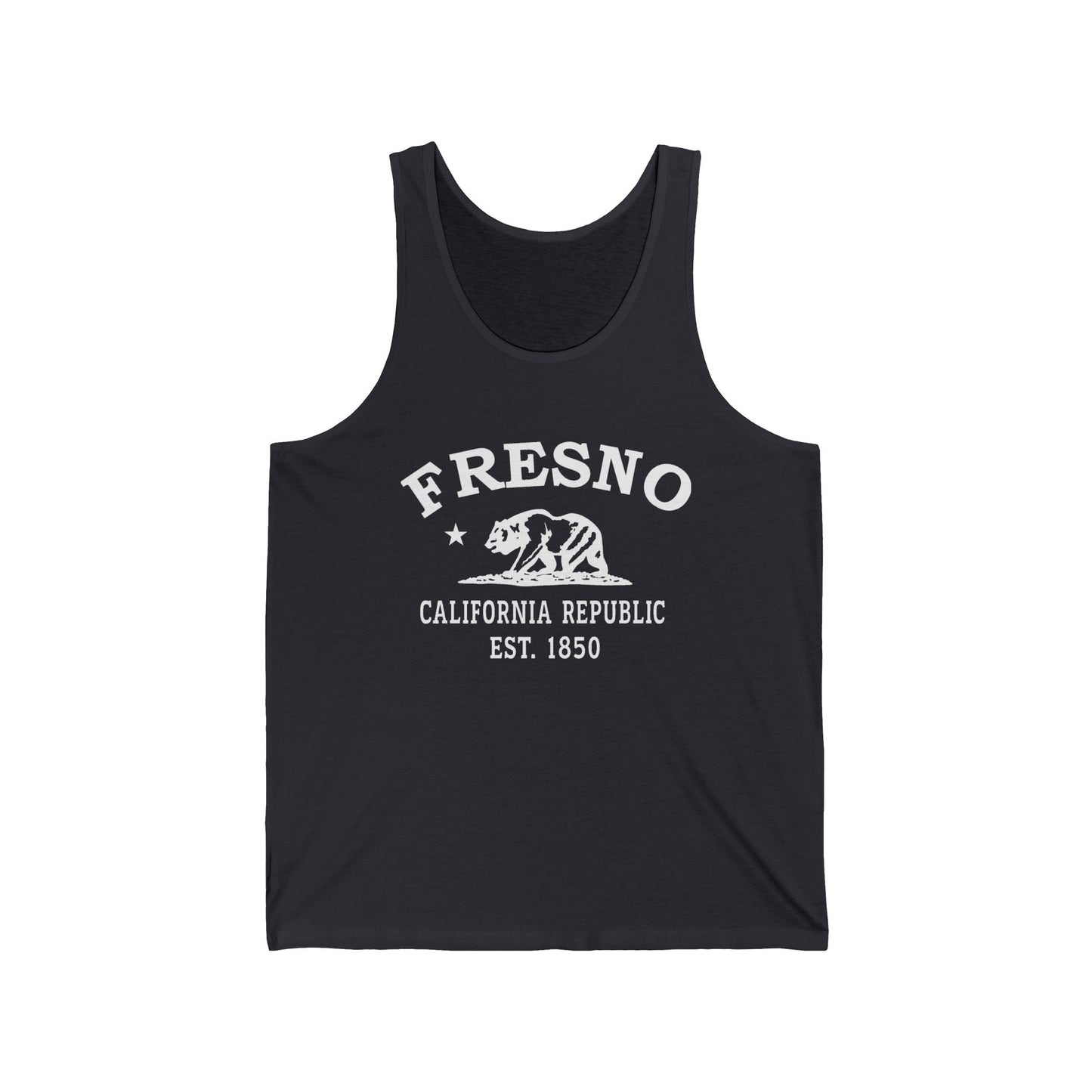
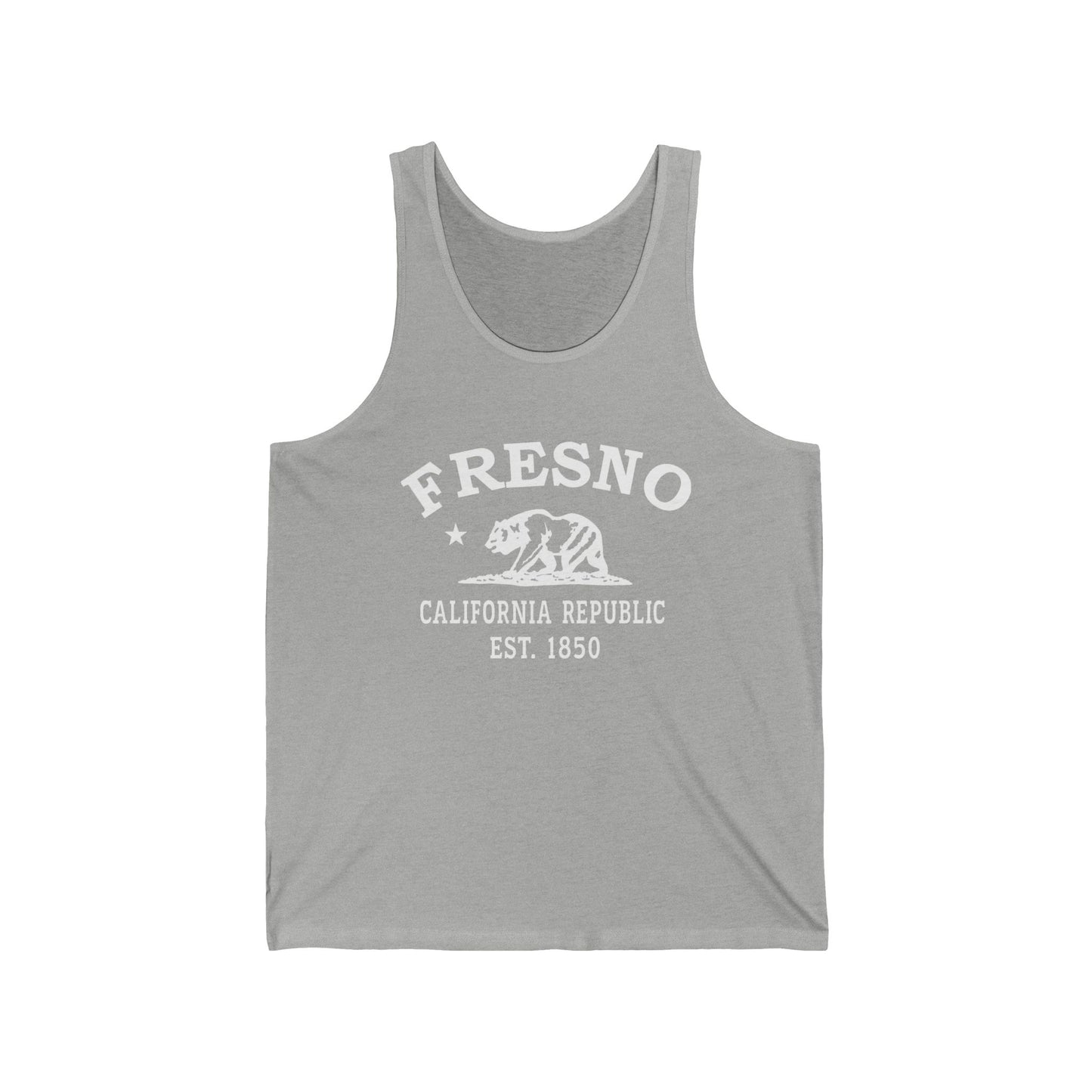
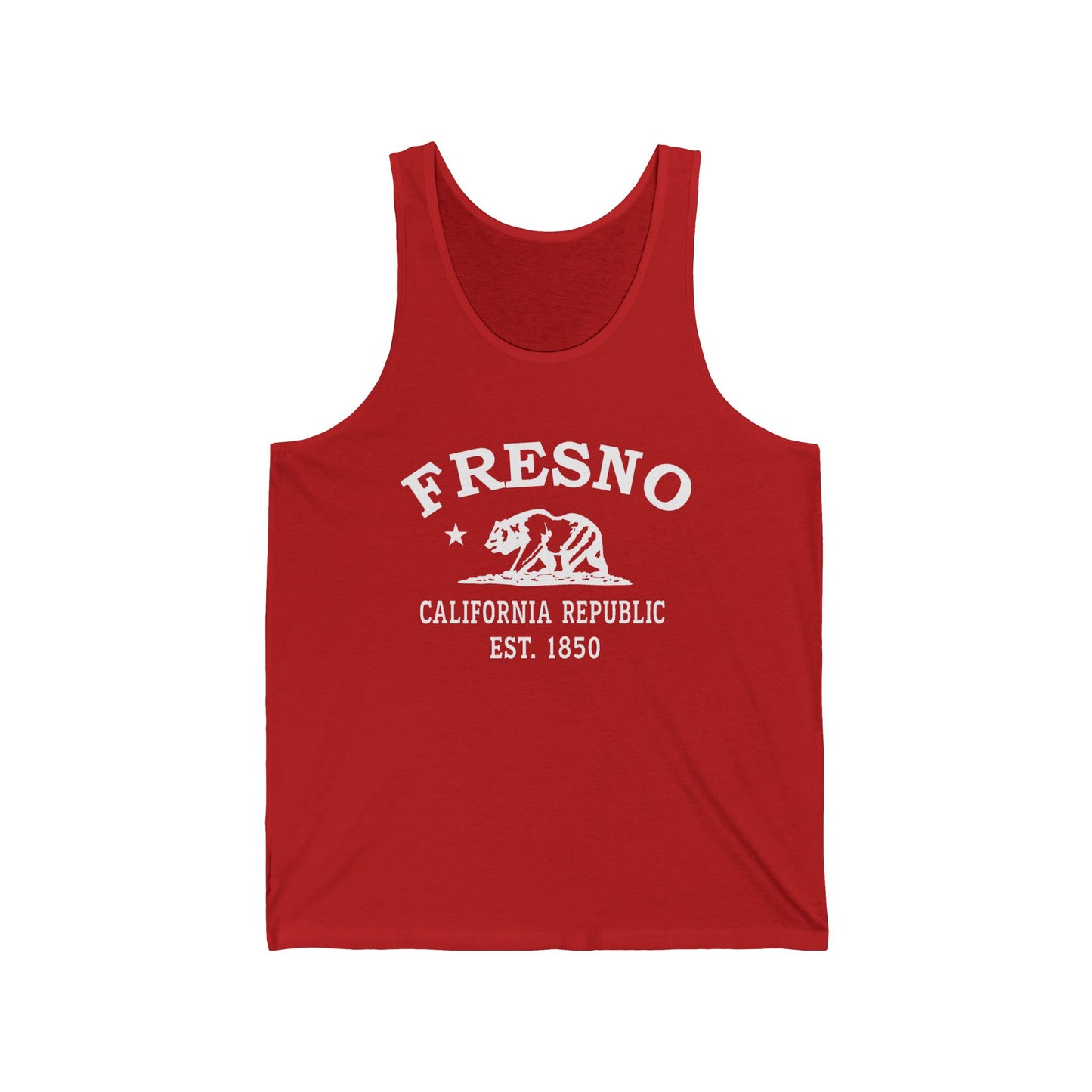
Our Fresno logo carries California's grizzly bear above ‘California Republic — Est. 1850,’ the shared retro emblem of our California towns; the bear is the state's own icon, taken from the old Bear Flag Republic, and 1850 marks the year California joined the Union. Rendered in black-and-white, it ties Fresno to every other California town we make. What makes this one Fresno is the country behind the bear — the vineyards and crate labels of the Valley floor, and the Sierra rising on the eastern horizon.
Fresno's other identity is what lies just east. The city is the great gateway to the High Sierra: Yosemite, Kings Canyon, and Sequoia National Parks all sit within about an hour or two, along with the Sierra National Forest and a string of mountain lakes. You can stand among raisin vines on the valley floor in the morning and among the largest trees on earth by afternoon — the airport is even named Fresno Yosemite International. Few cities open onto so much wild country.
Why People Visit Fresno
Visitors choose Fresno for its unique gardens, family-friendly parks, and gateway convenience. The Tower District and downtown highlight history and everyday culture, and the city's central location makes regional day trips simple — most of all into the High Sierra. Travelers find year-round appeal in its parks, paths, and public spaces, where vintage farm-town California and the wild mountains beyond sit side by side in a welcoming way.
