


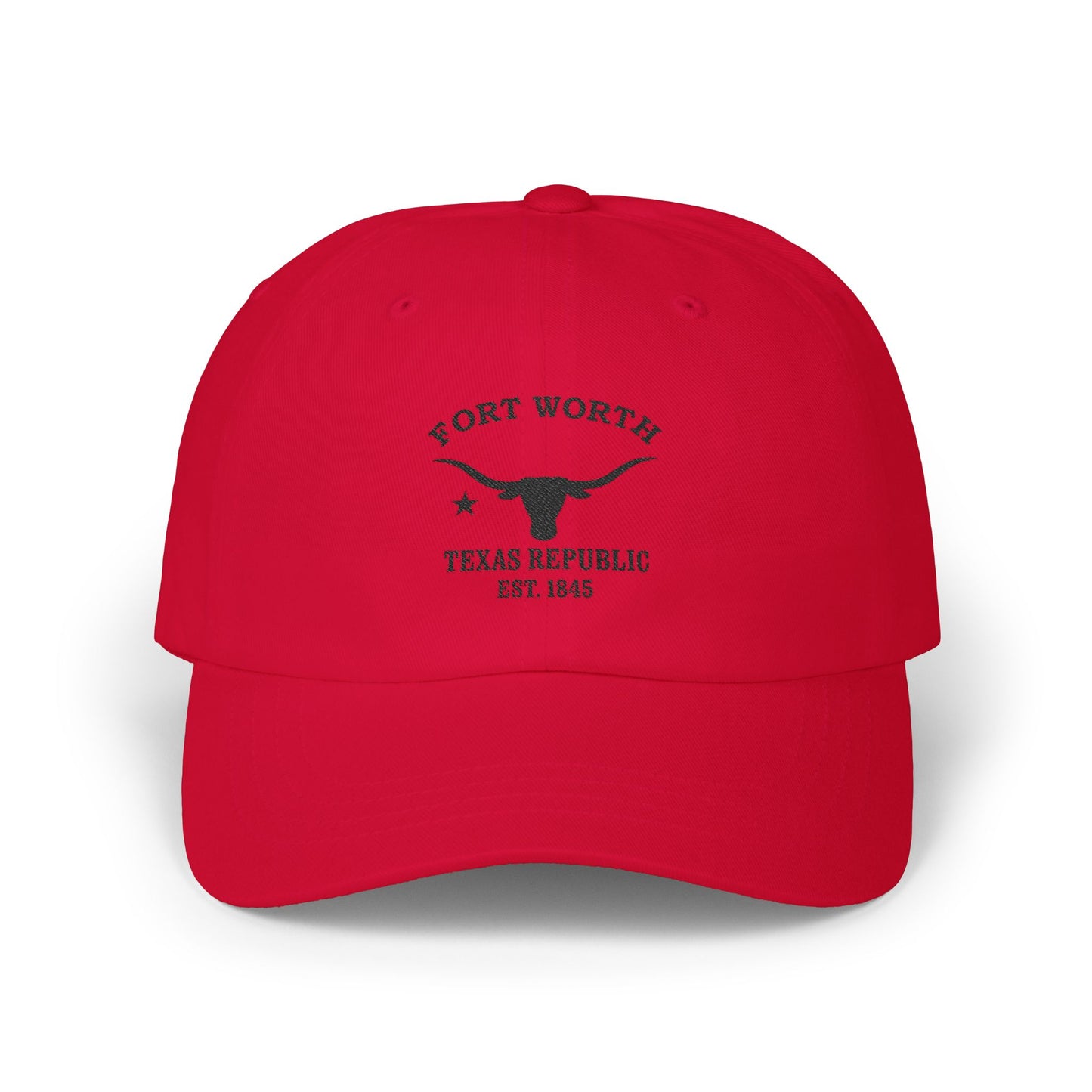
Cowtown built its own celebrations. In 1896 the city held its first Stock Show, a livestock exhibition that grew into the Fort Worth Stock Show & Rodeo — one of the oldest and largest in the country, running every winter for more than a century. The early-1900s oil boom poured new money into town, and frontier legend mixed with it: the Sundance Kid and his Wild Bunch passed through Fort Worth, posing in 1900 for the famous "Fort Worth Five" photograph, and the downtown entertainment district that rose later took the name Sundance Square in their memory.
The railroad turned the cattle stop into a cattle capital. The first Texas & Pacific locomotive rolled in on July 19, 1876, and within a generation Fort Worth had built the Union Stockyards north of the river, where longhorns could be penned, sold, and shipped by rail instead of driven on foot. The great packing houses of Swift and Armour followed, and the Stockyards became one of the busiest livestock markets in the country. The brick Exchange building, the cattle pens, and the coliseum that still stand on Exchange Avenue date from that era — the heart of Cowtown, preserved as a living National Historic District where the longhorns still walk twice a day.
Why People Visit Fort Worth
Visitors come to Fort Worth for the rare combination it offers: a real working cowboy past in the Stockyards, where the longhorns still walk, and a world-class art scene minutes away in the Cultural District. Add Sundance Square, the Water Gardens, the Botanic Garden, and the winter rodeo, and a single day can hold cattle pens and fine paintings. Proud, friendly, and unmistakably Texan, Fort Worth rewards anyone who wants the West and the wider world in the same town.
