







Fairbanks outlasted the gold by becoming the hub of the Interior. The Alaska Railroad reached town in 1923, when President Warren Harding drove a golden spike at nearby Nenana, tying Fairbanks to the coast and the rest of the territory. Six years before that, in 1917, the Alaska Agricultural College and School of Mines had been founded on a ridge above the river — the seed of the University of Alaska Fairbanks, now a major northern research center. In the 1940s the military arrived in force, and the airfields that became Fort Wainwright and Eielson made Fairbanks a strategic outpost of the Far North. Each wave left the town a little more permanent.
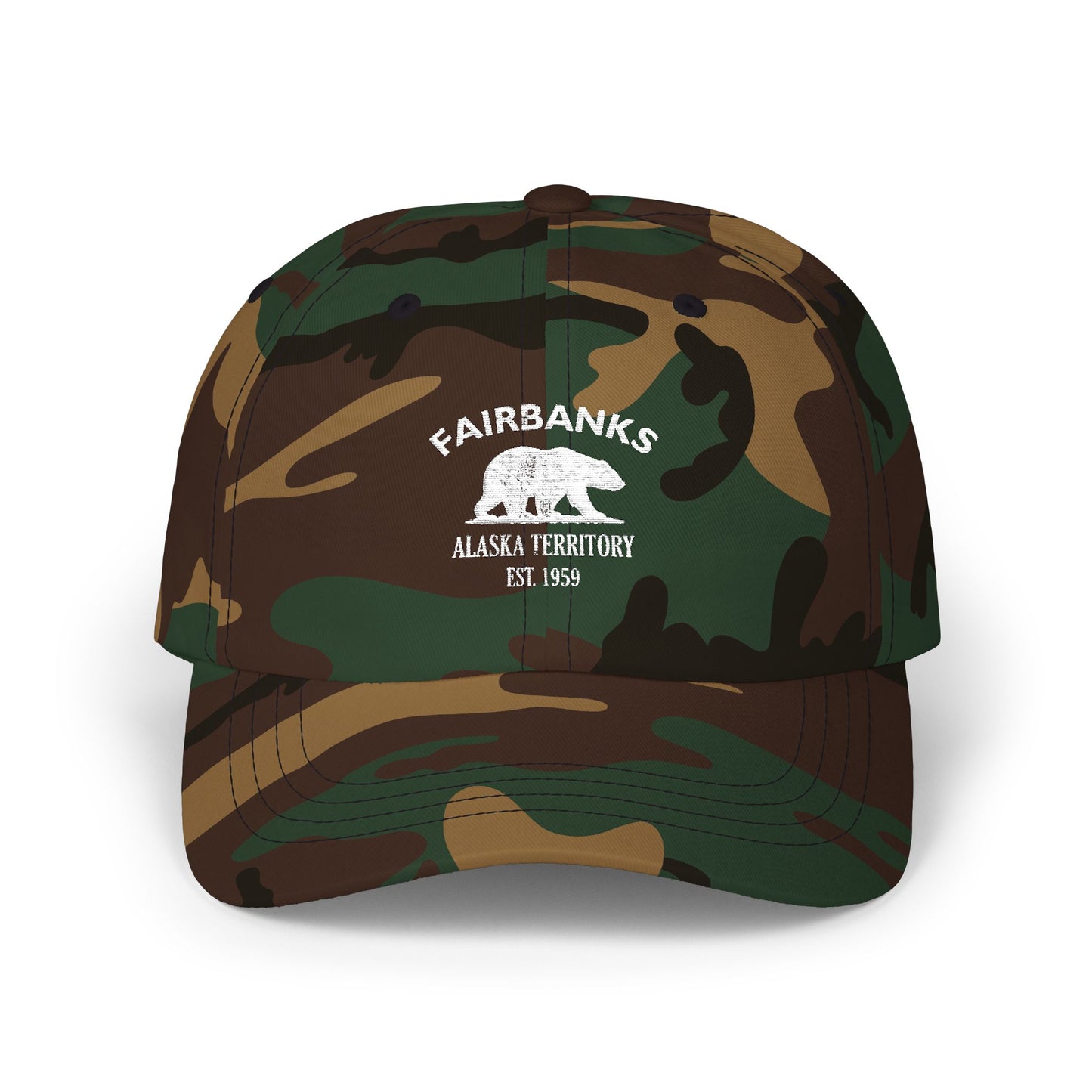
So Fairbanks gathers a stranded steamboat, a gold strike, and a sky full of aurora onto the banks of the Chena, in the heart of Alaska. Our Fairbanks designs gather that into wearable form. Wear the history. Under the northern lights — Fairbanks, Alaska.
Why People Visit Fairbanks
Visitors come to Fairbanks for the aurora — the city's spot under the auroral oval is hard to beat — and stay for the layered Interior story: gold dredges and frontier cabins, a northern university and big-sky wilderness in every direction. It is the gateway to Denali and the Arctic, with hot springs and ice art for the winter and the Midnight Sun for the summer. Equal parts gold-rush heritage and far-north spectacle, Fairbanks rewards anyone drawn to the heart of Alaska.
