




The estate era gave the town its modern shape. Tokeneke organized as an association on the western shoreline in 1899, Noroton Heights and Long Neck Point filled with late-nineteenth- and early-twentieth-century summer houses, and the summer people gradually stopped leaving — the railroad had made it possible to live on the Sound year-round and work in Manhattan. What remains is the Gold Coast in miniature: harbors on the Five Mile and Goodwives rivers, yacht clubs on the coves, the Post Road Historic District through the middle, a library the whole state cites, and the beaches at Pear Tree Point and Weed where the town meets the water that makes up almost half its map.
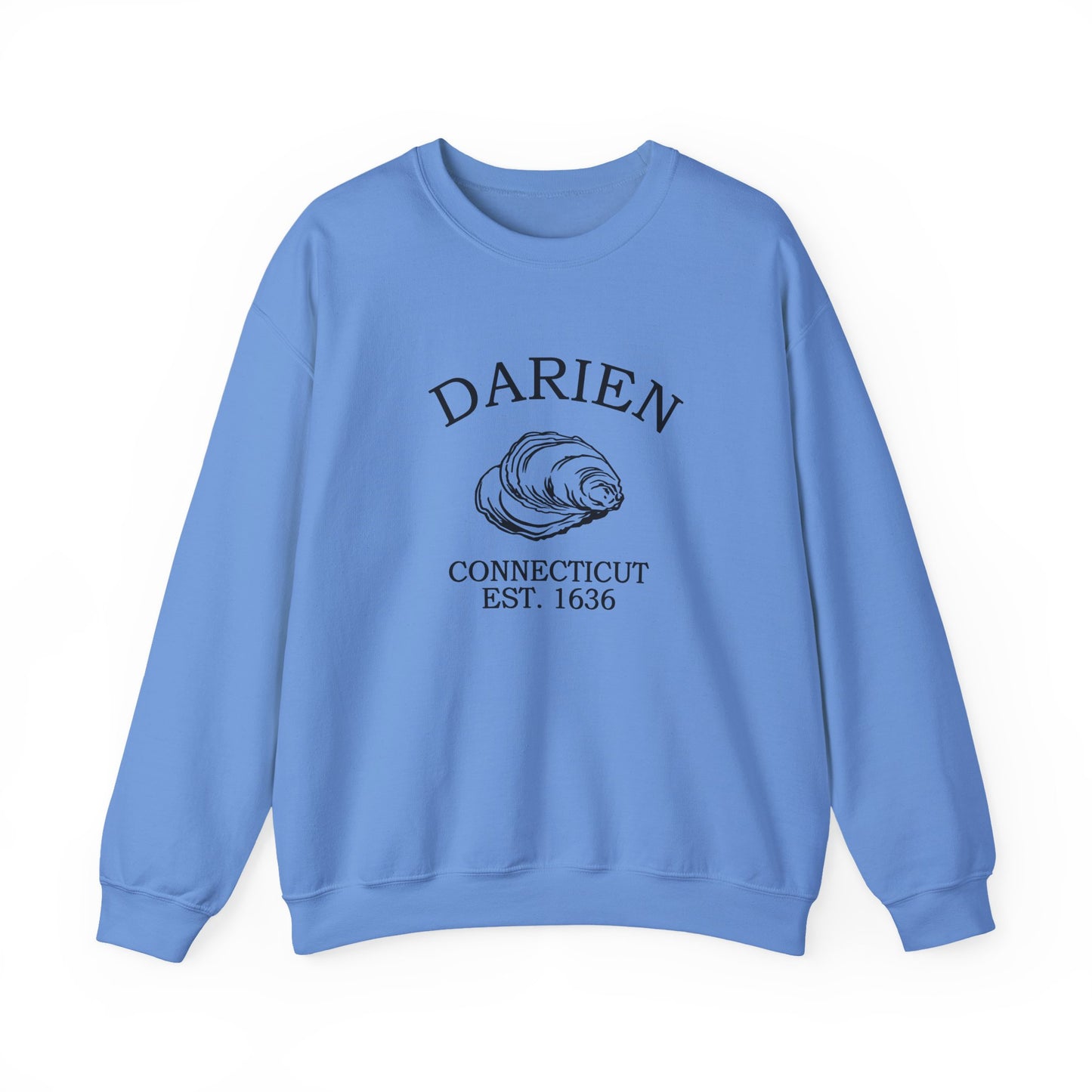
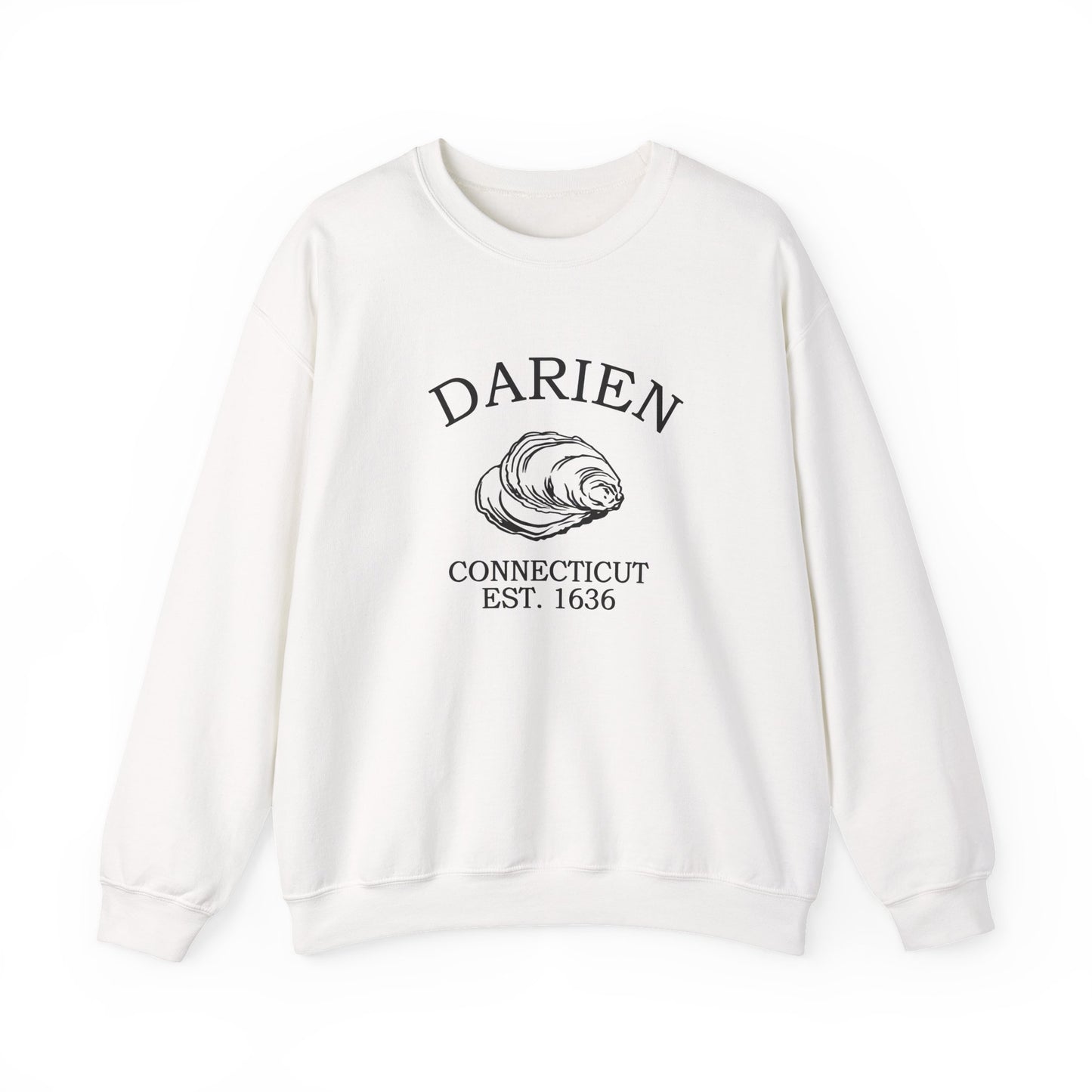
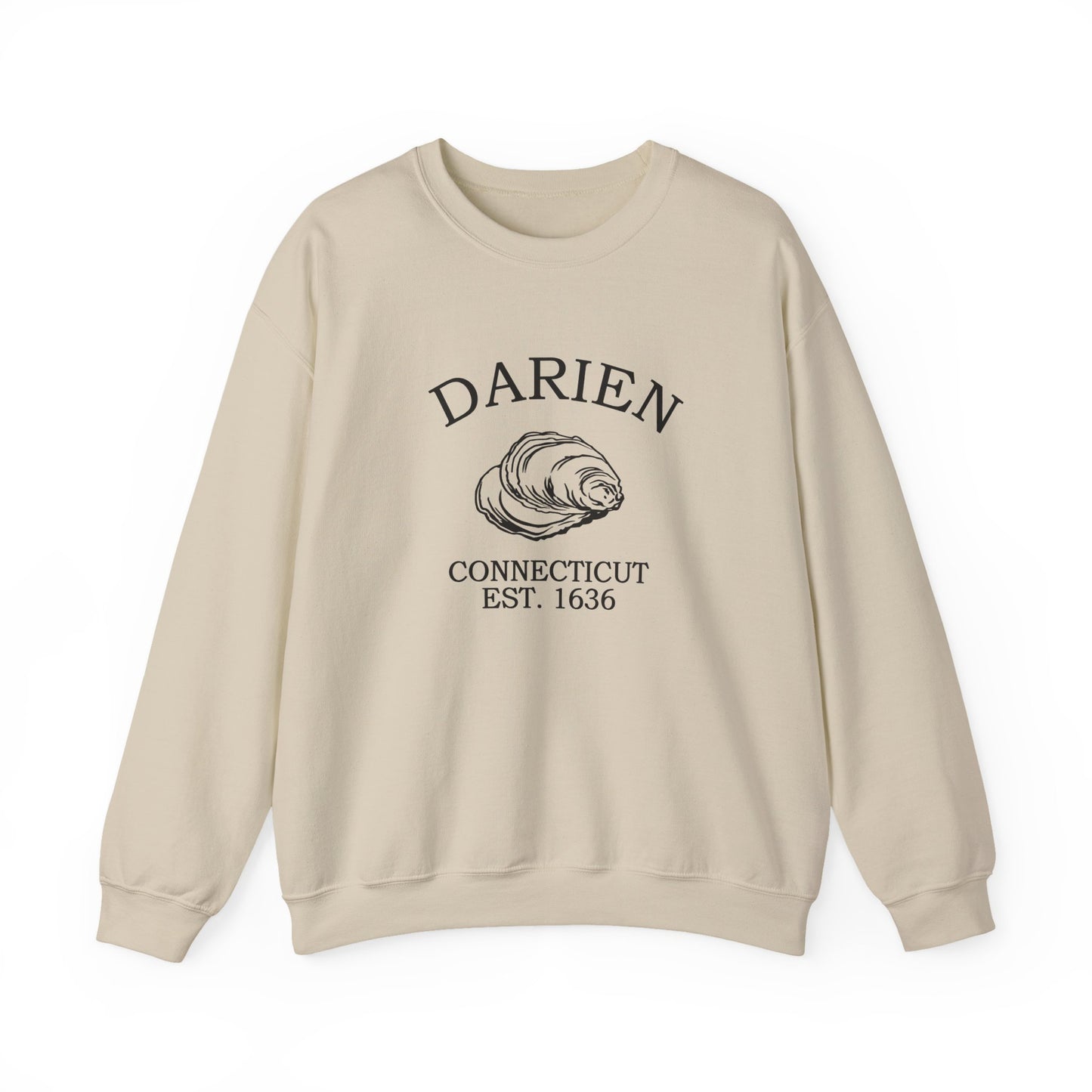
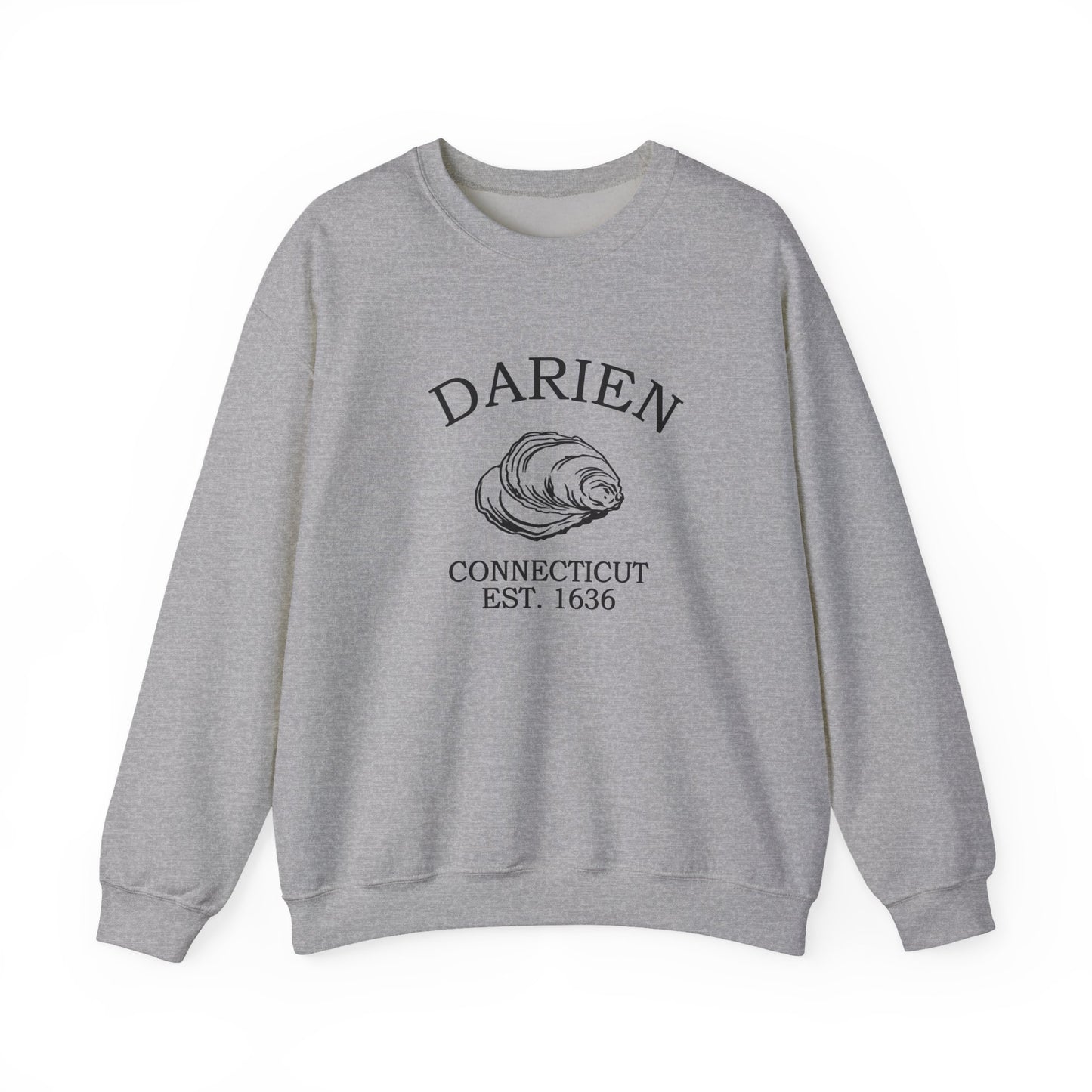
Our Darien retro logo uses Connecticut's oyster-shell motif over "Connecticut - Est. 1636," symbolizing shoreline abundance and tying the design to the colonial founding of the state. Its black-and-white styling is retro, resembling oyster crate labels and shoreline signage, and it bridges Darien's dual identity: colonial parish on the Post Road and commuter town on the Sound. On merchandise it reads authentic and vintage — an emblem of Connecticut shoreline pride.
Why People Visit Darien Connecticut
Darien offers the Mather Homestead where the founding director of the U.S. National Park Service grew up summering, the 1736 Bates-Scofield saltbox now the Darien Historical Society museum, the 1696 Pond-Weed House as the oldest house in town, the 1934 Town Hall mural commemorating the town's defining American Revolution moment, the Boston Post Road Historic District running through Darien Center, two Sound-front town beaches at Pear Tree Point and Weed, the Goodwives River and the Five Mile River draining the inland slopes, the Tokeneke and Noroton Heights estate neighborhoods, and the Metro-North commuter rhythm that has defined the town since 1848. It is a Fairfield County shoreline community that traces its line straight back to the Stamford planters of 1640 — and forward to the family that founded the country's national parks. On the Sound since 1641.
