




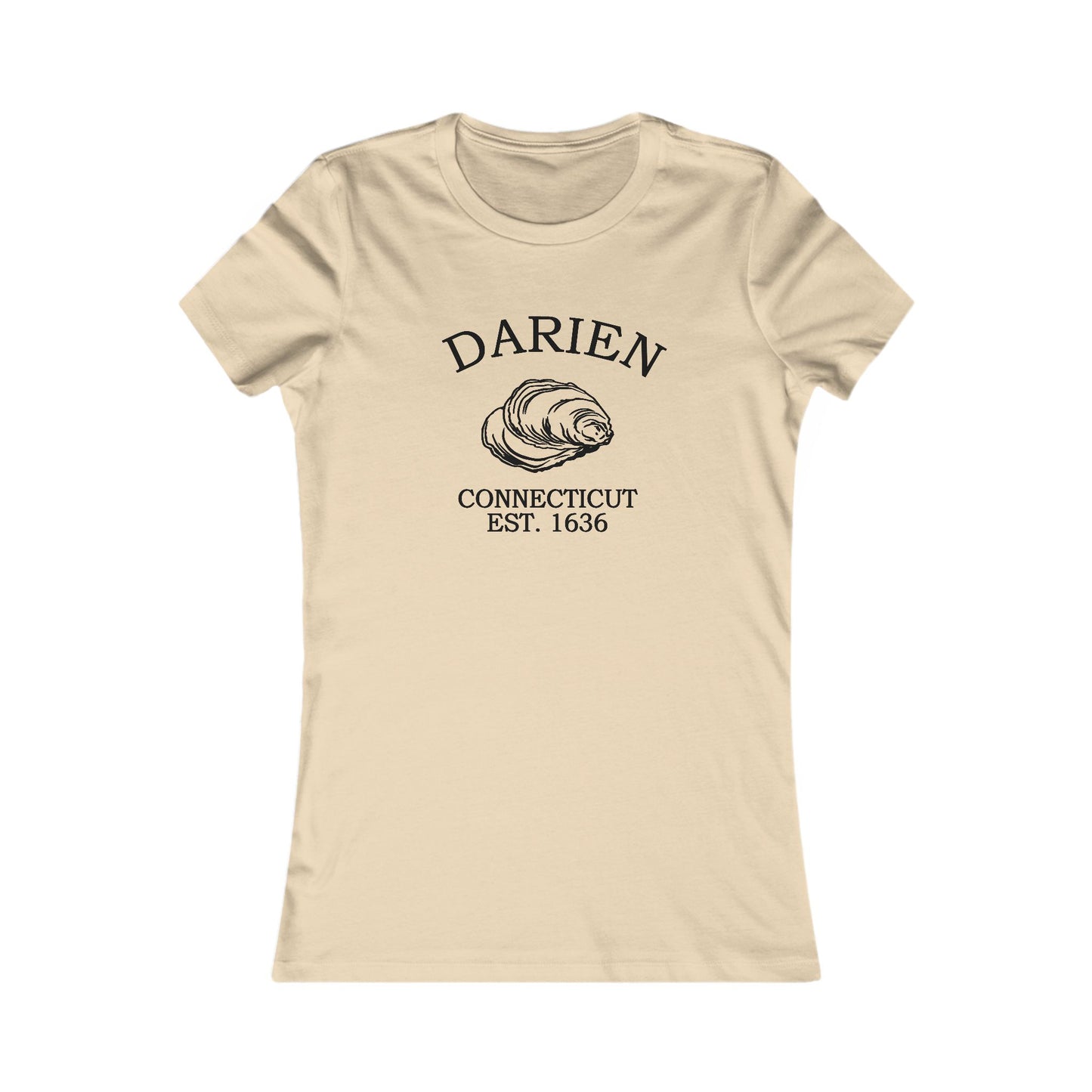





The Pond-Weed House (c. 1696) is the oldest house in town; the Bates-Scofield Homestead (c. 1736) is the Darien Historical Society museum on the Boston Post Road.
So Darien gathers the family that gave the country its national parks, a name borrowed from Panama by a sailor, the first veterans' home in America, and the smallest town on the Gold Coast onto one stretch of Sound shore — and our Darien designs gather that into wearable form. Whether Darien is your hometown, your station on the New Haven line, the shore you summered on once, or the town you still mean to come back to, wear the history. On the Sound since 1641.
Why People Visit Darien Connecticut
Darien offers the Mather Homestead where the founding director of the U.S. National Park Service grew up summering, the 1736 Bates-Scofield saltbox now the Darien Historical Society museum, the 1696 Pond-Weed House as the oldest house in town, the 1934 Town Hall mural commemorating the town's defining American Revolution moment, the Boston Post Road Historic District running through Darien Center, two Sound-front town beaches at Pear Tree Point and Weed, the Goodwives River and the Five Mile River draining the inland slopes, the Tokeneke and Noroton Heights estate neighborhoods, and the Metro-North commuter rhythm that has defined the town since 1848. It is a Fairfield County shoreline community that traces its line straight back to the Stamford planters of 1640 — and forward to the family that founded the country's national parks. On the Sound since 1641.
