


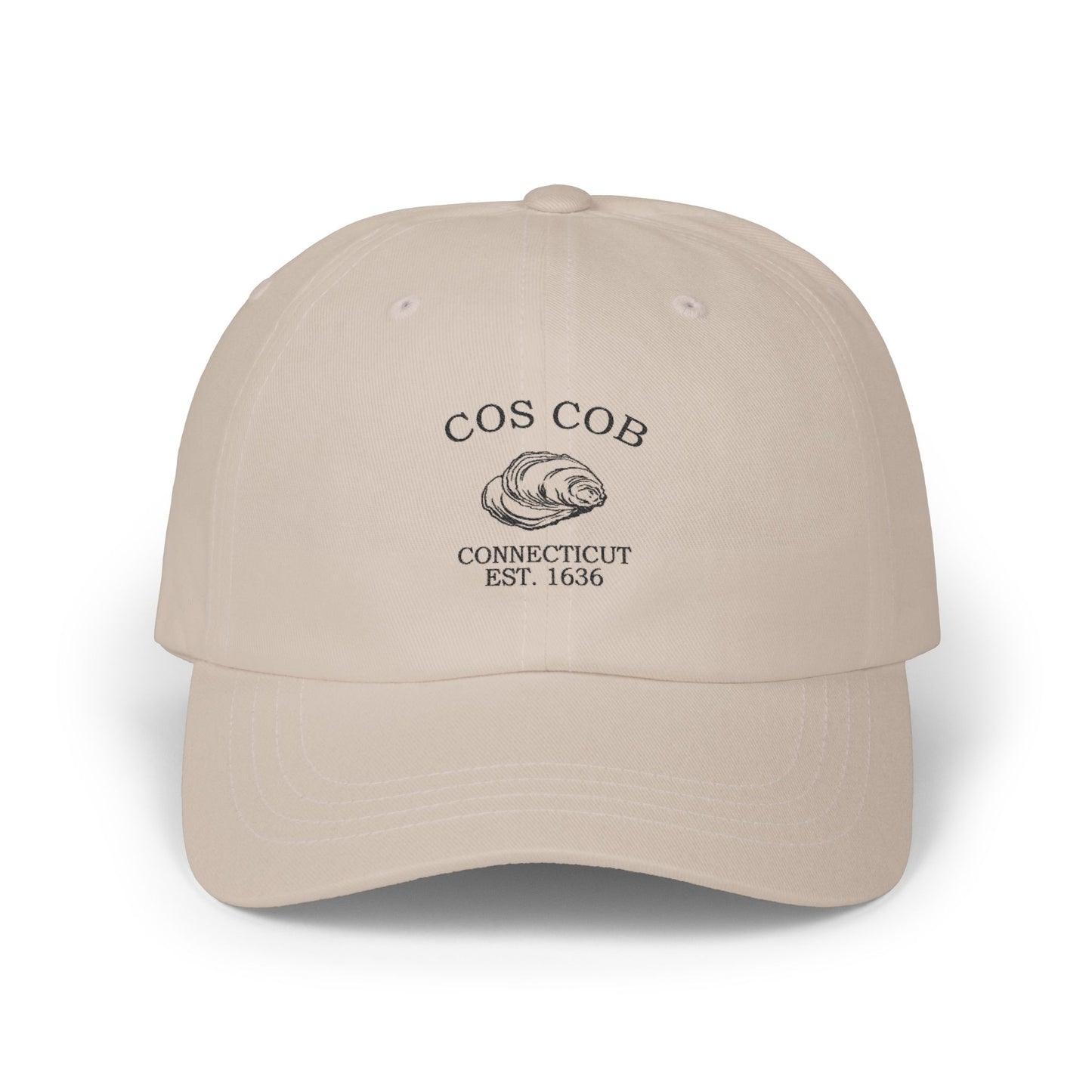
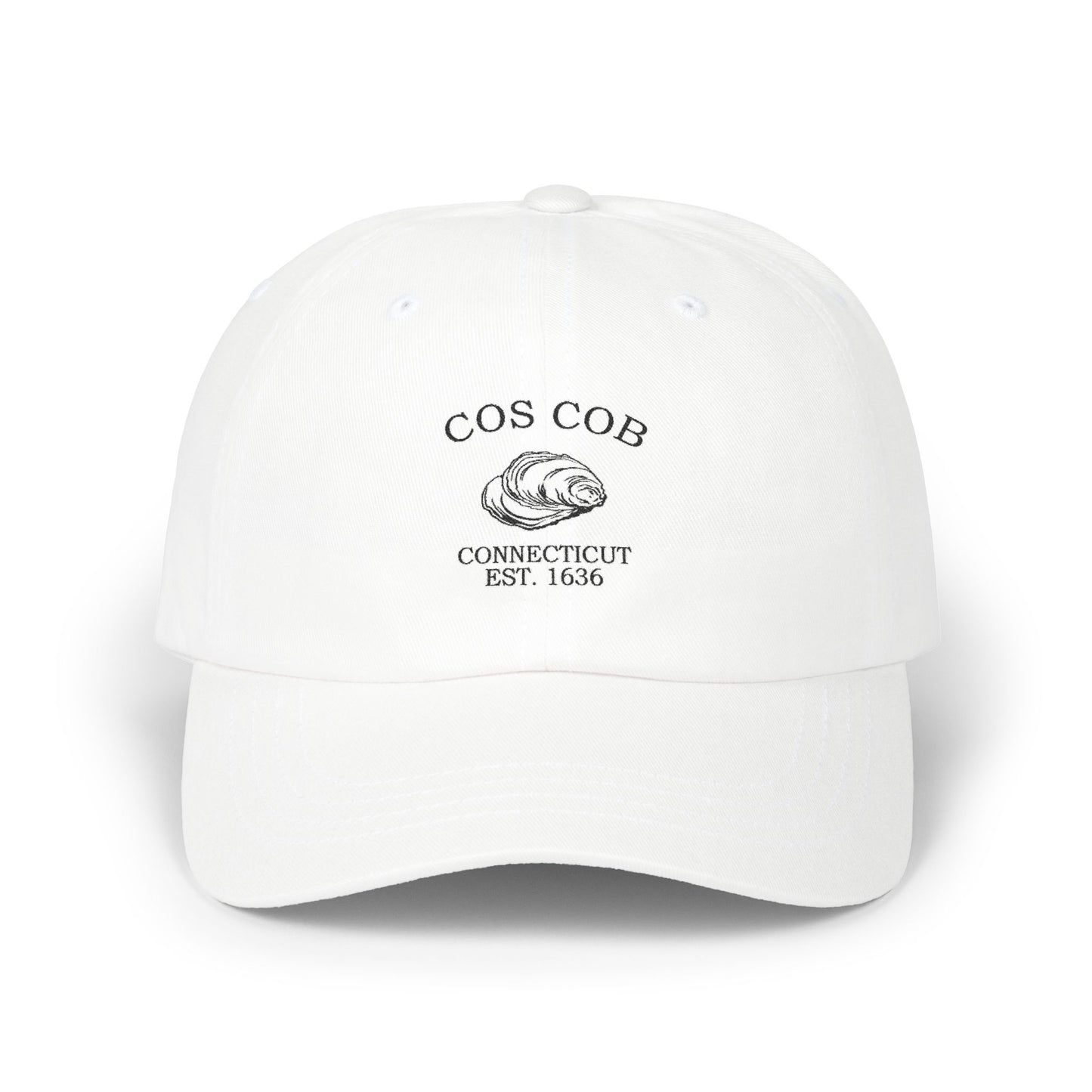
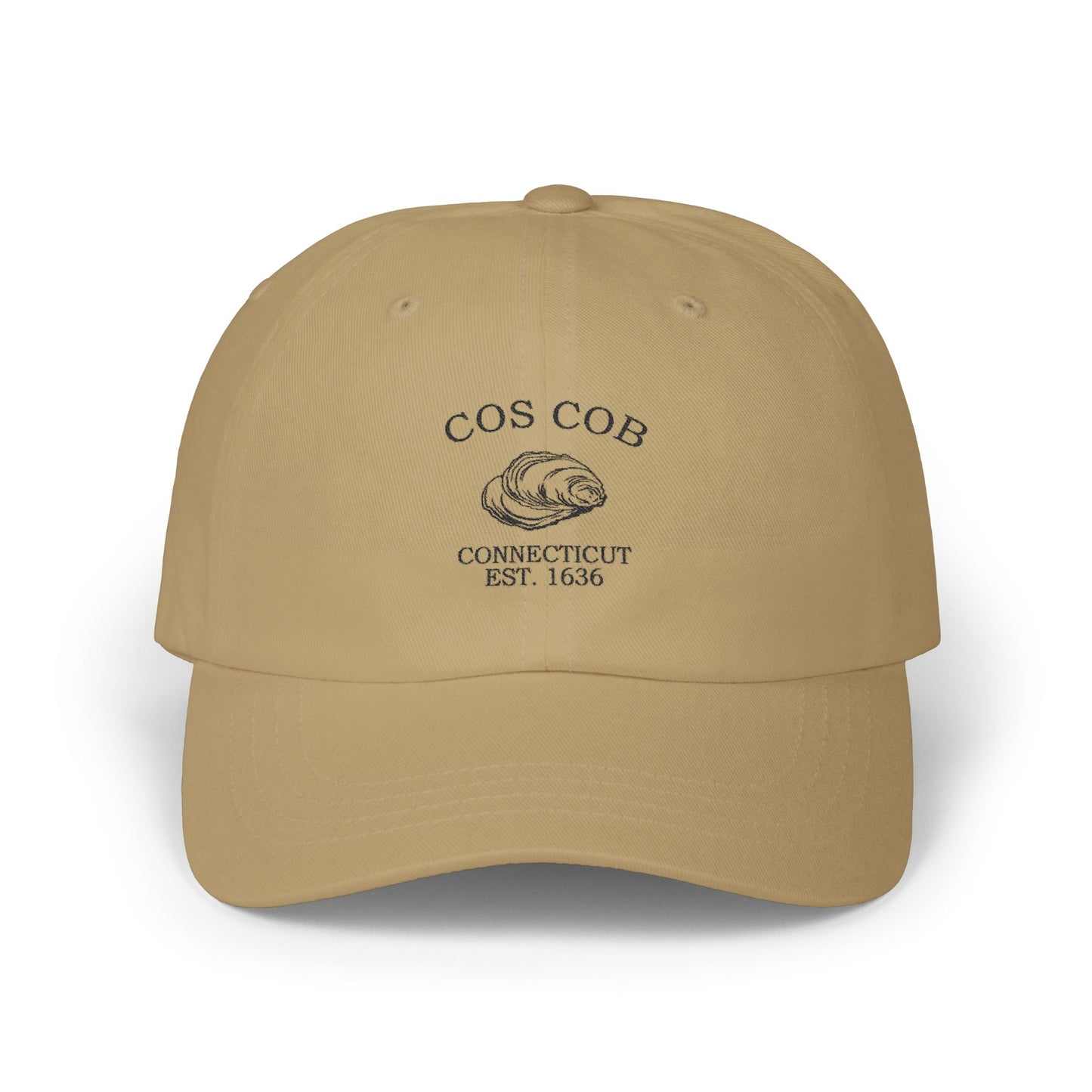
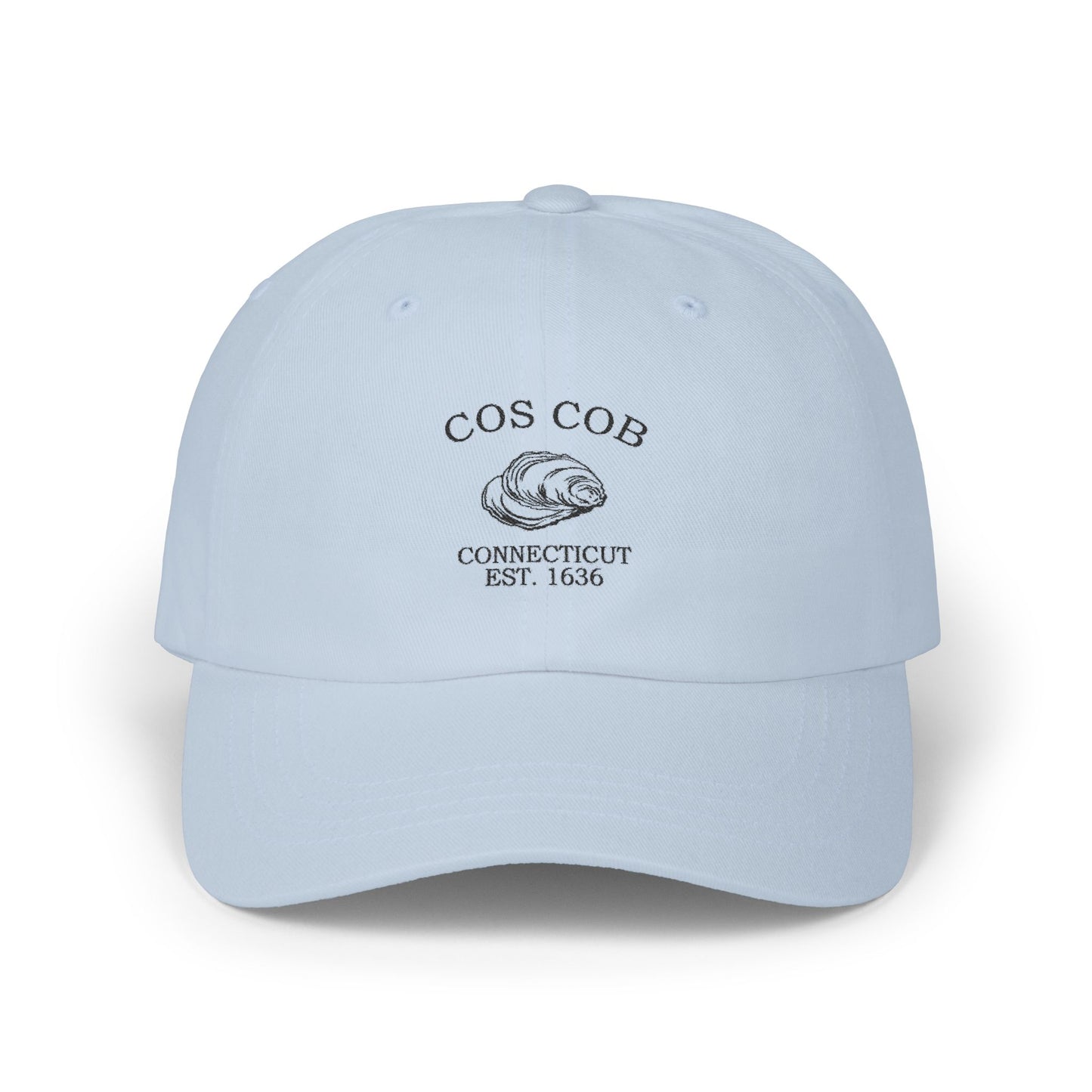
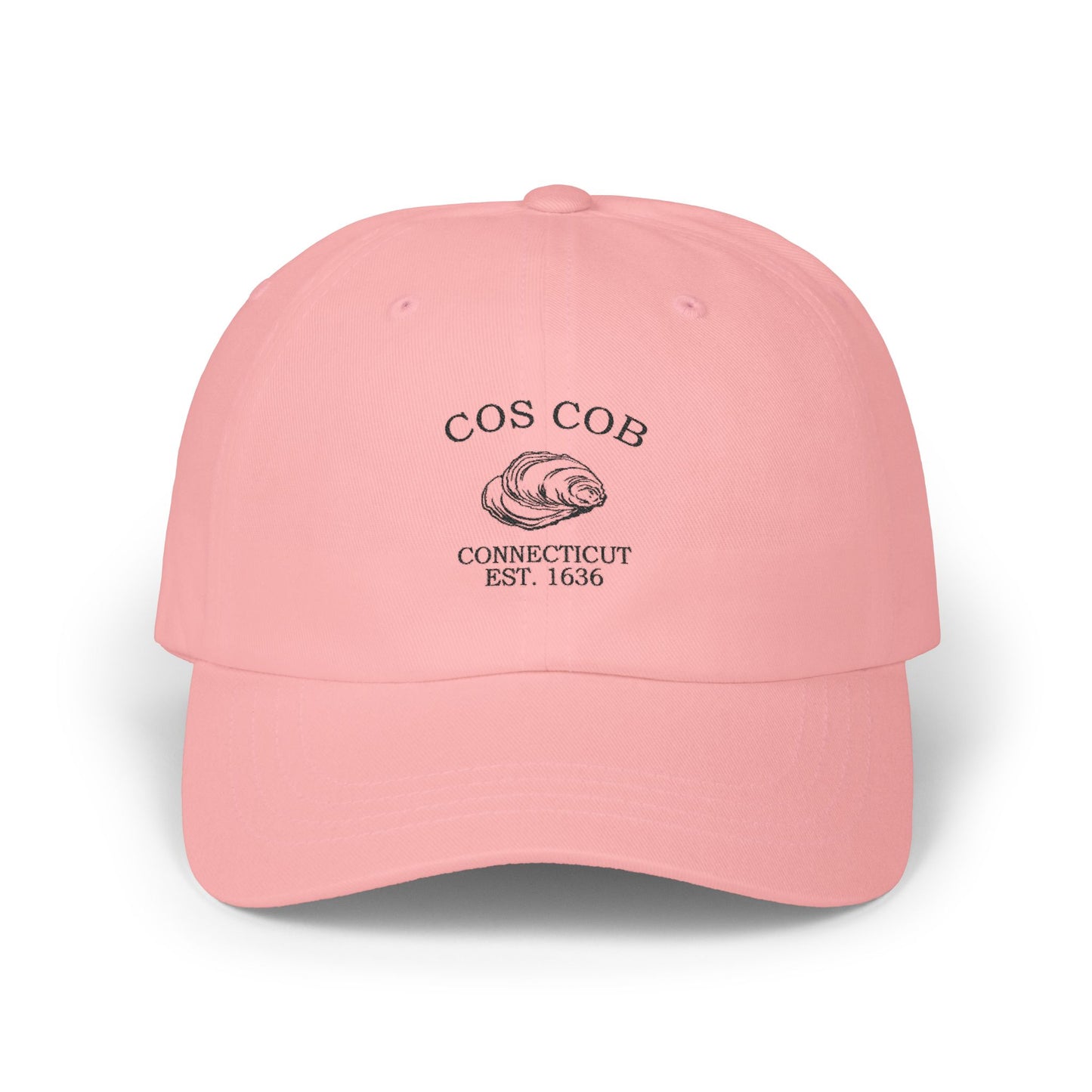
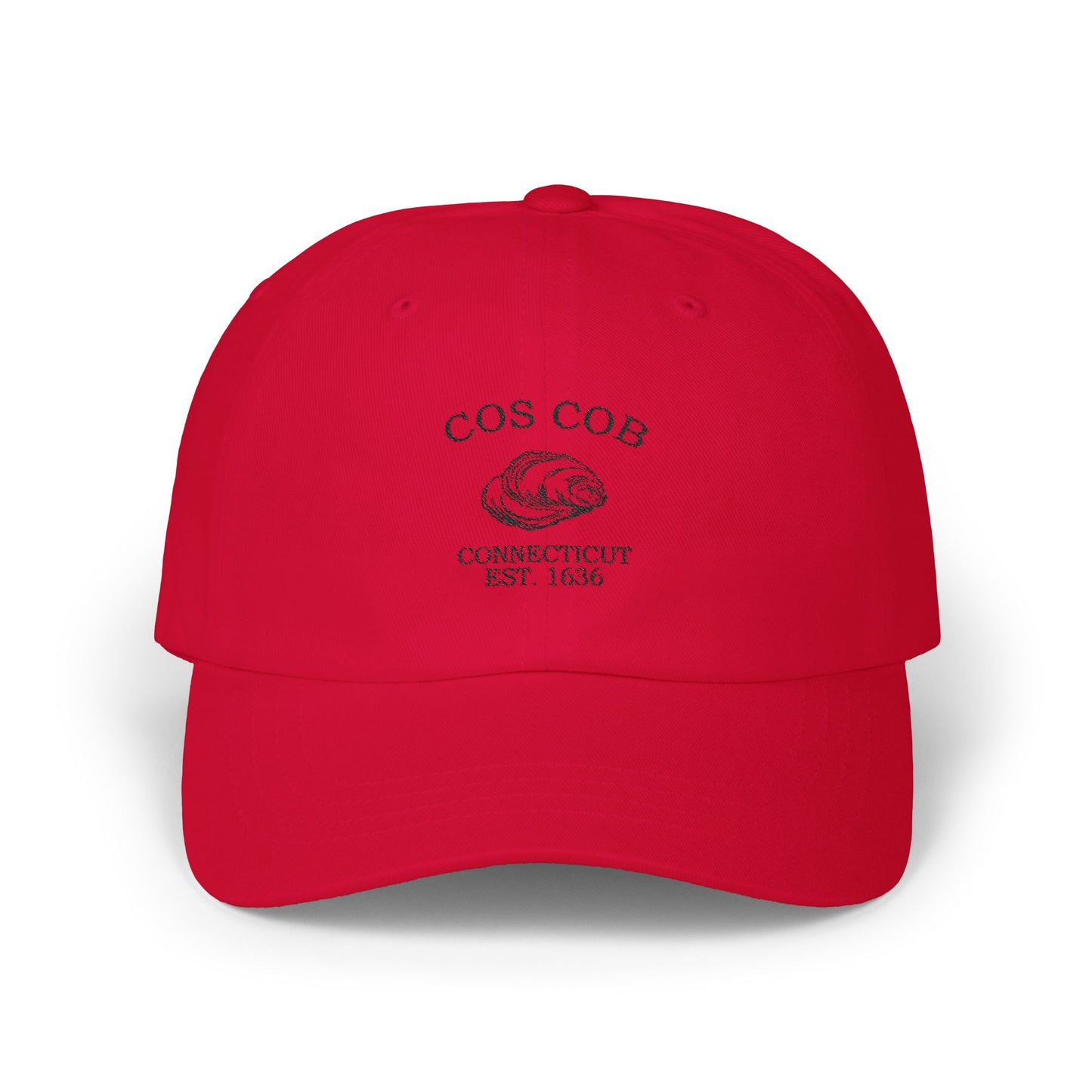
Our Cos Cob logo carries Connecticut's oyster above ‘Connecticut — Est. 1636,’ the shared retro emblem of our Connecticut towns; the oyster recalls the Long Island Sound shellfishing of the old waterfront village, and 1636 marks the founding of the colony. Rendered in black-and-white, like an old crate label, it ties Cos Cob to every other Connecticut town we make. What makes this one Cos Cob is the village behind the shell — the saltbox over the harbor and the painters on the riverbank.
Their home was the Holley House — today the Bush-Holley House — a colonial saltbox built around 1728 on a hill above Cos Cob Harbor where the Mianus River runs out to the Sound. Josephine and Edward Holley ran it as a boarding house, and the students who came to study with Twachtman took rooms there. In 1896 a young painter named Elmer MacRae arrived as one of those students, fell in love with the Holleys' daughter Constant, married her in 1900, and together they kept the boardinghouse going — and the colony alive — for two more decades.
Why People Visit Cos Cob
Cos Cob offers art heritage and green escapes in a small, walkable village. Visitors pair the Bush-Holley House and its Impressionist collection with river paths, harbor overlooks, and quiet historic streets. It is tranquil, residential, and close to the water, with year-round appeal in its parks, paths, and public spaces. History and everyday life sit side by side here, from the saltbox over the harbor to the trails along the Mianus.
