



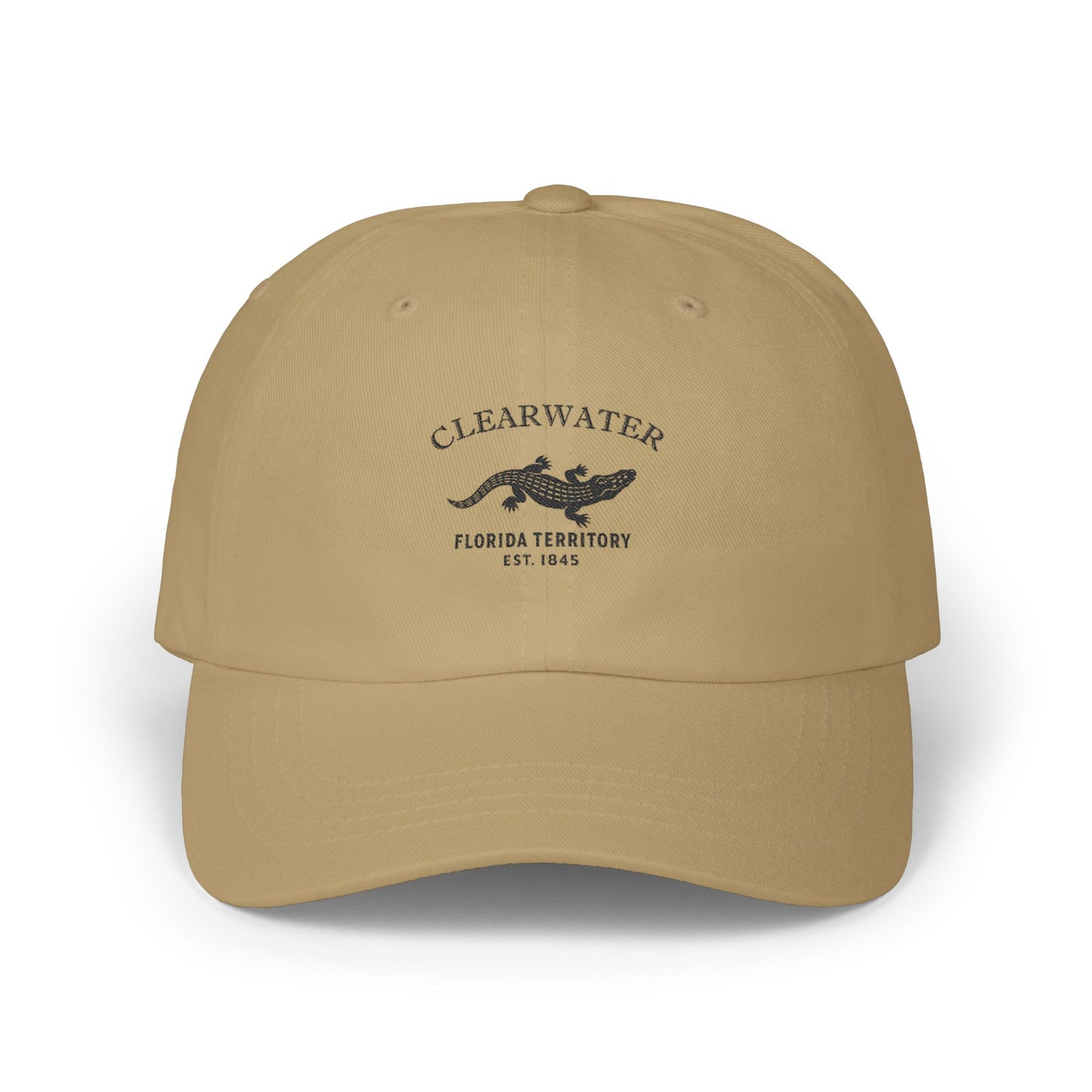

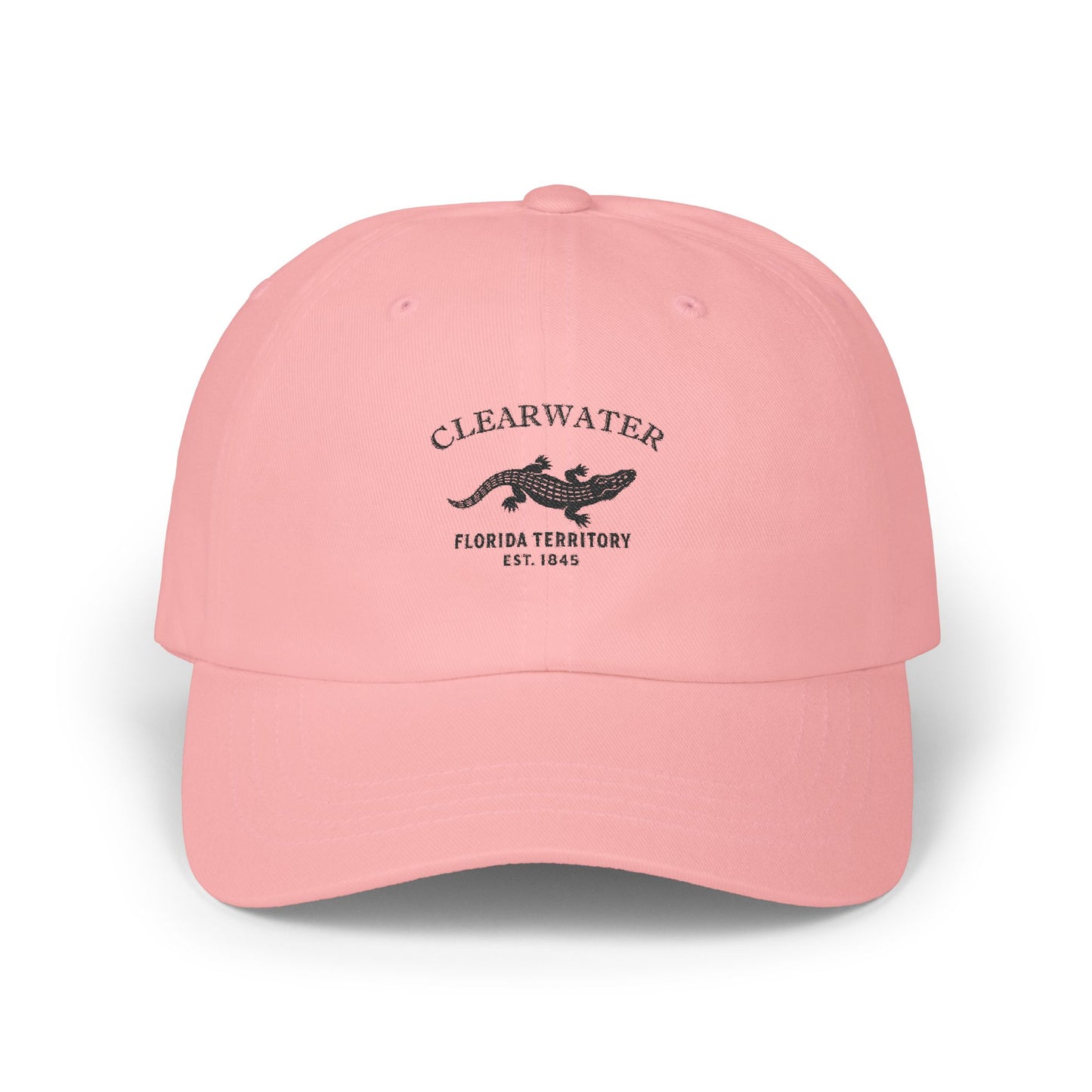
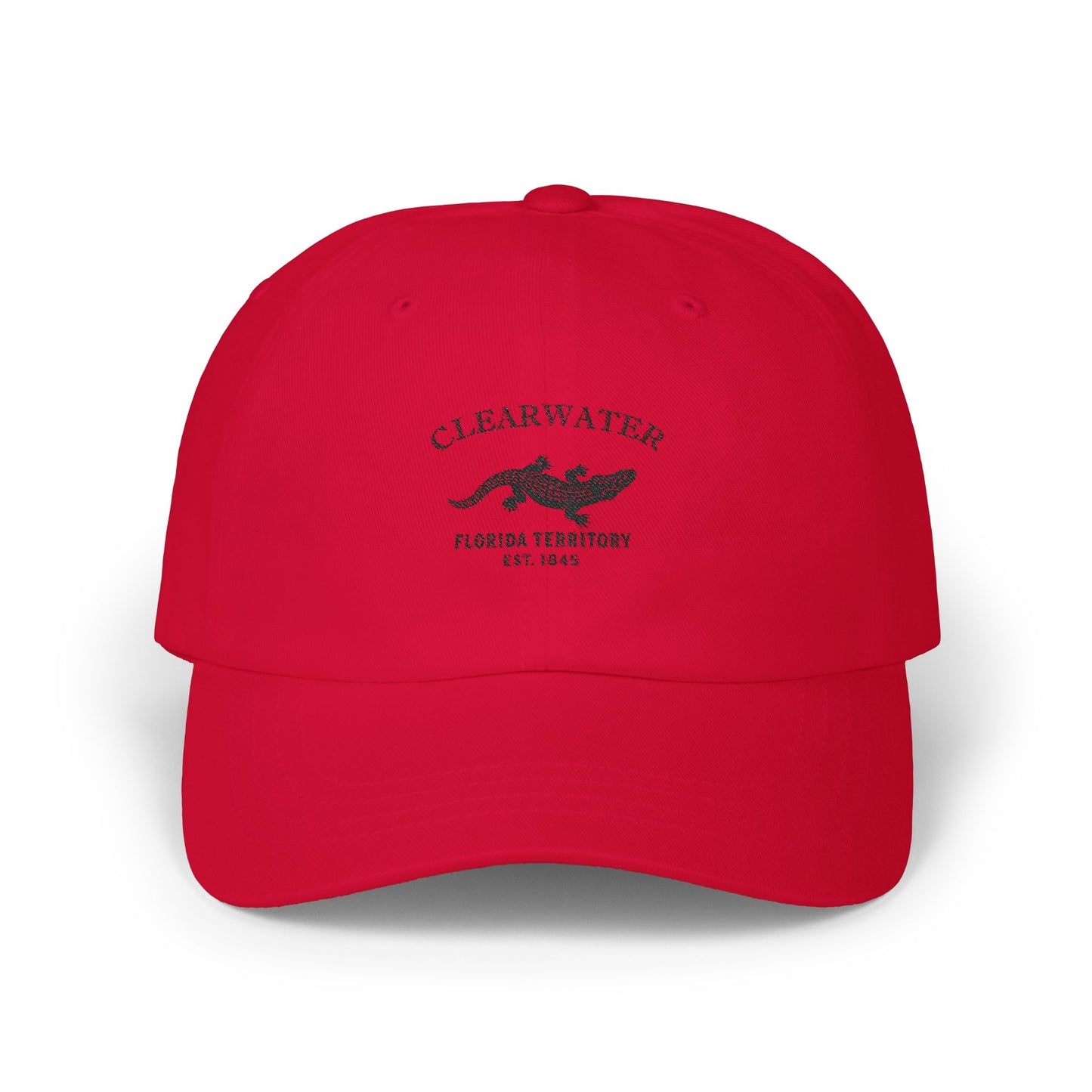
Our Clearwater retro logo uses Florida's alligator motif, reflecting toughness, adaptability, and wild heritage. The alligator represents resilience against storms and the spirit of Florida's frontier. "1845" grounds the motif in statehood pride. Its black-and-white styling is retro and authentic, resembling woodcut prints or crate labels. The motif bridges Clearwater's dual story: small farming village and booming resort town. On merchandise, it feels vintage and rugged, emphasizing resilience and heritage. The alligator motif honors Clearwater's layered identity, reflecting toughness and authenticity, making it a timeless emblem of Florida's Gulf Coast resilience.
What’s with the Clear Water? Clearwater was named for water. Really. On a salty coast, fresh water is the whole game — and along the bluff above the harbor, clear freshwater springs flowed straight out of the ground and down to the bay. The Tocobaga people drank from them for centuries before a European ever saw the place; the American settlers who came later named their landing “Clear Water Harbor” for the same springs. Add three miles of sugar-white barrier-island sand and one of the sunniest coasts in America, and the name turned out to be the whole brand: clear water, bright sky, and a beach that keeps landing at the top of the national rankings.
Why People Visit Clearwater Florida
- Spend a day on Clearwater Beach, the three-mile white-sand barrier-island beach repeatedly ranked among the top beaches in America — calm, shallow Gulf water, long flat sand, sunsets straight across the Gulf horizon.
- Walk out on Pier 60, the 1962 fishing-and-sunset pier on Clearwater Beach where the daily sunset celebration has been a Clearwater tradition for decades — artisans, musicians, and the green-flash crowd every clear evening.
- Drive or walk the Clearwater Memorial Causeway (FL-60) — the 1915-16 bridge alignment that first connected the mainland to the barrier-island beach, now the high-arc causeway with the harbor on both sides.
- Visit the Clearwater Marine Aquarium on the Clearwater Memorial Causeway — a marine-mammal rehabilitation and rescue center caring for dolphins, sea turtles, otters, and stranded marine wildlife from the Gulf coast.
- Watch a Major League Baseball spring training game in February or March at the Phillies' Clearwater spring-training camp — one of the longest team-city affiliations in the major leagues, going on since 1947.
- Drive south to Sand Key, the lower barrier island just past Clearwater Beach, for the wider stretches of sand at Sand Key Park and the quieter end of the barrier-island chain.
- Walk the downtown Clearwater waterfront at Coachman Park along Clearwater Harbor — the redeveloped 2023 waterfront park with The Sound amphitheater, walking paths, and harbor views across to the beach.
- Stroll Cleveland Street, the downtown corridor on the bluff above the harbor with public art and the historic streetscape.
- Drive twenty minutes east to Heritage Village in Largo, the 21-acre Pinellas County living history museum with 33 historic structures dating from the 1840s — log cabins, the oldest house in Pinellas County, a country store, a train station, a sponge warehouse, and the McKay Creek Boat Shop.
- Visit the McKay Creek Boat Shop exhibit at Heritage Village for the Clark Mills Optimist Pram story — the 1947 design that has carried 400,000 children onto the water in 120 countries, with original Mills-built Optimist Prams, his Snipe sailboat Honey, the Sun Cat, and the Windmill on display.
- Look for the historic Belleview Inn (the surviving preserved portion of the 1897 Henry B. Plant Belleview Biltmore Hotel, demolished 2015) — the last fragment of one of Florida's great Gilded Age resort hotels.
- Catch sunset from Pier 60 or anywhere on the west-facing Gulf side of the barrier island — the longest unbroken horizon line on the central Florida Gulf Coast, on one of the sunniest shorelines in America.
