


That seam was drawn in 1846. When the United States and Mexico went to war over the border, General Zachary Taylor — later a U.S. president — built a fort on the north bank of the Rio Grande, and the war's first major battle was fought a few miles away at Palo Alto on May 8, 1846, followed the next day by Resaca de la Palma. The fort took the name Fort Brown, for Major Jacob Brown, who fell in its defense. Today the Palo Alto Battlefield is a National Historical Park — the only national park unit devoted to that war — preserving the ground where the conflict began.
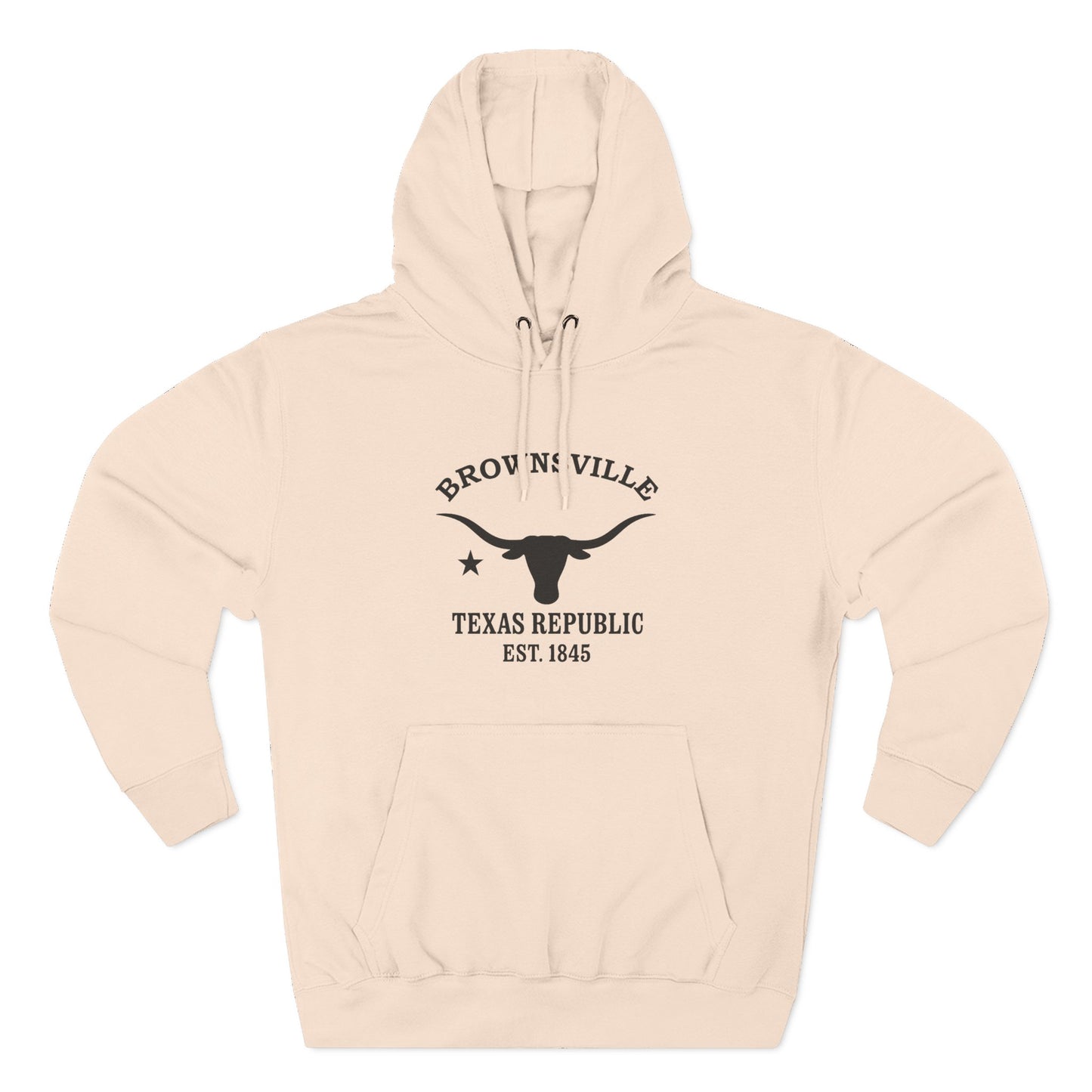
So Brownsville gathers two wars' bookends, a binational fiesta, and a green border seam onto the banks of the Rio Grande. Our Brownsville designs gather that into wearable form. Wear the history. Brownsville, Texas — first shots, last stands, and a two-nation fiesta where the river meets the Gulf.
Why People Visit Brownsville
Visitors come to Brownsville for a mix found nowhere else: battlefield and border history, world-class birding among the resacas and palms, and a living binational culture of music, food, and festival. The Gulf beaches are a short drive, Matamoros a few blocks across the river, and the Charro Days fiesta turns late winter into a two-nation celebration. Equal parts Texas heritage and Rio Grande Valley warmth, Brownsville rewards anyone drawn to the place where the river meets the Gulf.
