
The city itself followed two years later. When the Treaty of Guadalupe Hidalgo ended the war in 1848 and set the Rio Grande as the border, a merchant named Charles Stillman — a Connecticut Yankee who had been doing business across the river in Matamoros — bought up land beside the fort, laid out streets, and founded the town of Brownsville. It became the seat of the new Cameron County the next year. Stillman's riverboats worked the Rio Grande trade, and the settlement around the fort grew quickly into the commercial heart of the lower valley, a port and crossing point between two nations.
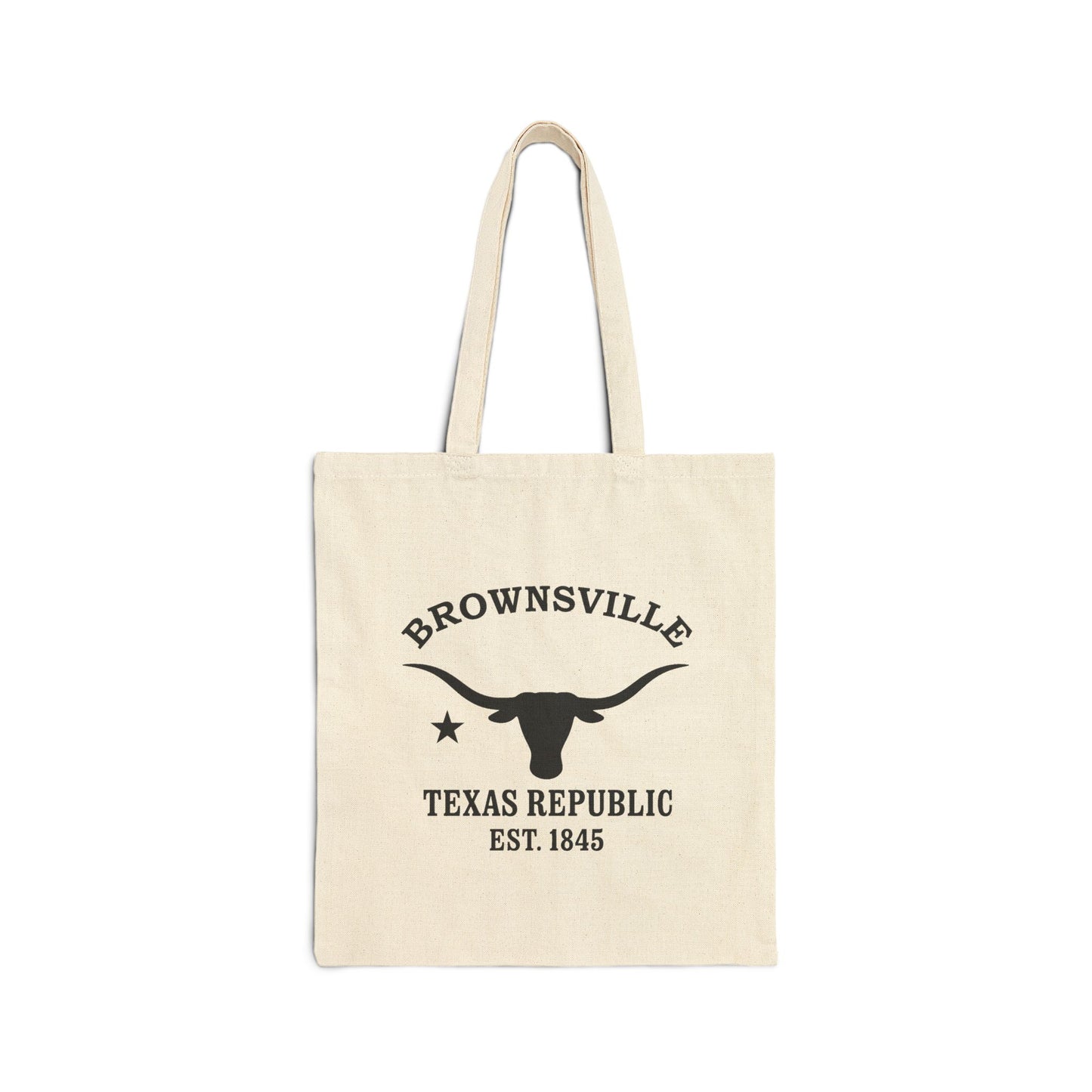
Our Brownsville logo carries the Texas longhorn and the Lone Star above "Texas Republic — Est. 1845," the shared retro emblem of our Texas towns; the longhorn stands for the ranching country the lower valley grew out of, and the star for the independent Texas that joined the Union in 1845. Rendered in worn black-and-white, like a brand burned into a trade crate or a fiesta poster, it ties Brownsville to every other Texas town we make. What makes this one Brownsville is the story behind it — first shots and last stands, a Connecticut merchant's river town, and a two-nation fiesta on the Rio Grande.
Why People Visit Brownsville
Visitors come to Brownsville for a mix found nowhere else: battlefield and border history, world-class birding among the resacas and palms, and a living binational culture of music, food, and festival. The Gulf beaches are a short drive, Matamoros a few blocks across the river, and the Charro Days fiesta turns late winter into a two-nation celebration. Equal parts Texas heritage and Rio Grande Valley warmth, Brownsville rewards anyone drawn to the place where the river meets the Gulf.
