Skip to product information
1 of 4

Bridgeport Connecticut Holiday Ornament - Flying Pie Tin

Bridgeport Connecticut Holiday Ornament - Flying Pie Tin

Regular price $28.00 USD
Regular price Sale price $28.00 USD
Sale
Free U.S. Shipping
Size
Shape
Quantity


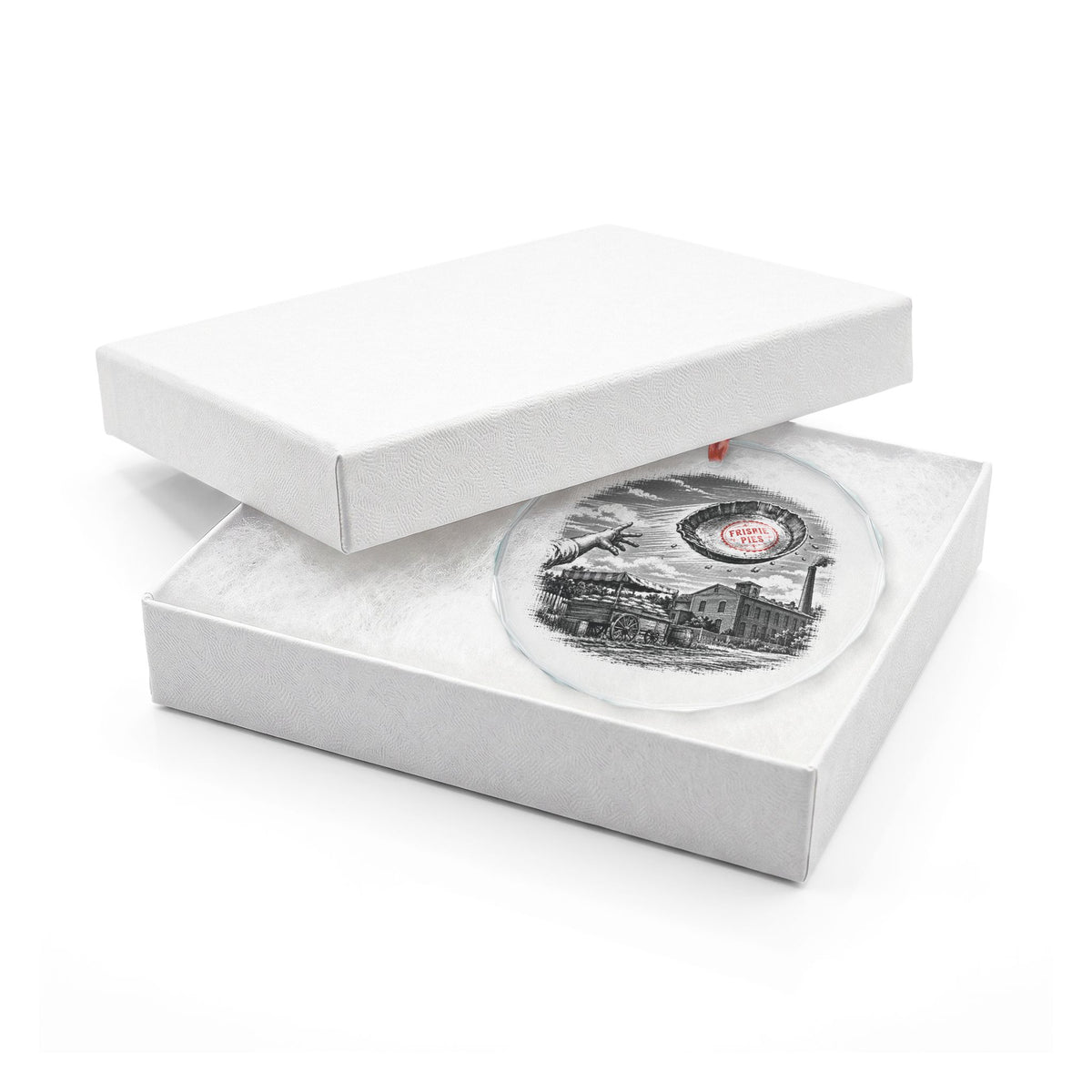
A pie tin caught mid-flight, stamped FRISBIE PIES. Bridgeport invented the flying disc by accident, one empty tin at a time.

The Frisbie Pie Company baked on Kossuth Street from 1871 to 1958, and its pies went out in tins stamped with the family name. College students across Connecticut discovered the empty tins flew beautifully and shouted the name as a warning. When a California toy company made a plastic version in the 1950s, it borrowed the name off the tin.

The bakery is gone, but the tins still turn up at tag sales and in collectors' cabinets, and Bridgeport still tells the story with a straight face. A pie tin is the most famous thing the city ever threw.

Every town wants to have invented something. Bridgeport's invention was a game, which is better. The red stamp is the one touch of color on the glass.

The Frisbie Pie Company baked in Bridgeport for nearly ninety years, and the empty Frisbie pie tin is where the flying-disc game began. It is one of the great Connecticut inventions nobody planned. This Bridgeport ornament puts the pie tin on the glass, a piece of Bridgeport history for the tree.

Every Bridgeport ornament ships ready to give. Hang it on the tree, in a window, off a lamp, or send one to the person who misses Bridgeport most.

3-inch faceted crystal glass ornament, white-backed print, line-drawn in 1880s engraving style, your choice of white or gold gift box.


QUICK FACTS — BRIDGEPORT CT CRYSTAL ORNAMENT — FLYING PIE TIN

Town: Bridgeport, Connecticut

Founded: Settled 1639; city 1836

Known for: The Park City; P.T. Barnum’s Seaside Park and museum; birthplace of the Frisbee; Connecticut’s largest city

Art: Flying Pie Tin, original Merlin Classics engraving

Blank: 3-inch (76 mm) round clear crystal glass ornament, faceted gem-cut edge

Print: white-backed for contrast; red ribbon hanger

Packaging: white or gold gift box, chosen at checkout

Made to order in the USA


View full details

Wear Local. Feed Local. Stay Classic.

Product FAQs

How does your sizing work?

Every item is made to order, so please check the size chart on this page before you buy. Women's fitted tees run small; size up for a looser fit. Caps are one size with an adjustable strap.

How are items made and when will they arrive?

We make each item to order using premium blanks, embroidery and soft-hand prints. Production takes 2-5 business days (weekends and holidays excluded), then 4-10 days in transit via USPS, UPS or FedEx to U.S. addresses; most orders arrive within 6-15 business days. You'll get a tracking link the moment it ships. Any current shipping offer is shown in the bar at the top of every page and applies automatically at checkout, no code needed.

How do I send a gift?

Enter the recipient's address as the shipping address and your own as the billing address at checkout. Nothing ships with a price; the package includes a plain packing slip. Tracking goes to your email, not theirs. For birthdays and holidays, order two weeks ahead to be safe.

What's the return policy?

Made-to-order items can't be returned or exchanged for size or color, so please use the size chart and photos before ordering. If anything arrives defective, misprinted or damaged, send a photo and your order number within 30 days and we'll replace it or refund you.

How do I care for my item?

Apparel: wash cold, inside out, with like colors; no bleach; tumble dry low or hang dry. Embroidered pieces: iron inside out to protect the stitching. Caps: spot clean. Printed glasses and water bottles: hand wash only, no dishwasher, so the artwork lasts. Mugs and engraved glasses are dishwasher safe. Any item-specific care notes are in the description above.

Who makes this?

Merlin Classics is a small Connecticut brand making original retro designs for the towns people love. Every piece is printed, embroidered or engraved to order in the USA, and the business supports hunger relief in the communities our collections celebrate.

The city began at the water. Long before the English arrived, the Paugussett people lived along the Pequonnock River where it empties into the Sound, fishing the tidal flats and the oyster beds. English settlers put down farms and wharves at the river mouth around 1639, and for two centuries the place grew slowly on fishing, coastal trade, and a deep natural harbor. The harbor was the making of it. Bridgeport took its name from the drawbridge over the Pequonnock, and in 1836 — by then a busy port — it was chartered as a city.

And always there were the parks. Olmsted's Seaside Park, founded in 1864, still curves for two miles along the Sound; Beardsley Park, laid out in 1878, holds Connecticut's only zoo. Add the smaller greens and the city's parkland runs past thirteen hundred acres. From Captain's Cove on the harbor to the beaches at the end of the peninsula, the waterfront stayed public and close at hand, and the Bridgeport–Port Jefferson ferry has crossed the Sound to Long Island since 1883. For a hard-working industrial city, Bridgeport kept an unusual amount of room to breathe.

Why People Visit Bridgeport

Bridgeport balances big-city history with shoreline ease. Visitors pair the Barnum story and the downtown blocks with park afternoons, a morning at the zoo, and a ferry ride across the Sound. It is varied, historic, and coastal, with year-round appeal in its parks, paths, and public waterfront. History and everyday culture sit side by side here in a welcoming way.

Bridgeport Connecticut Merlin Classics retro logo — Connecticut oyster, Connecticut Est. 1636