


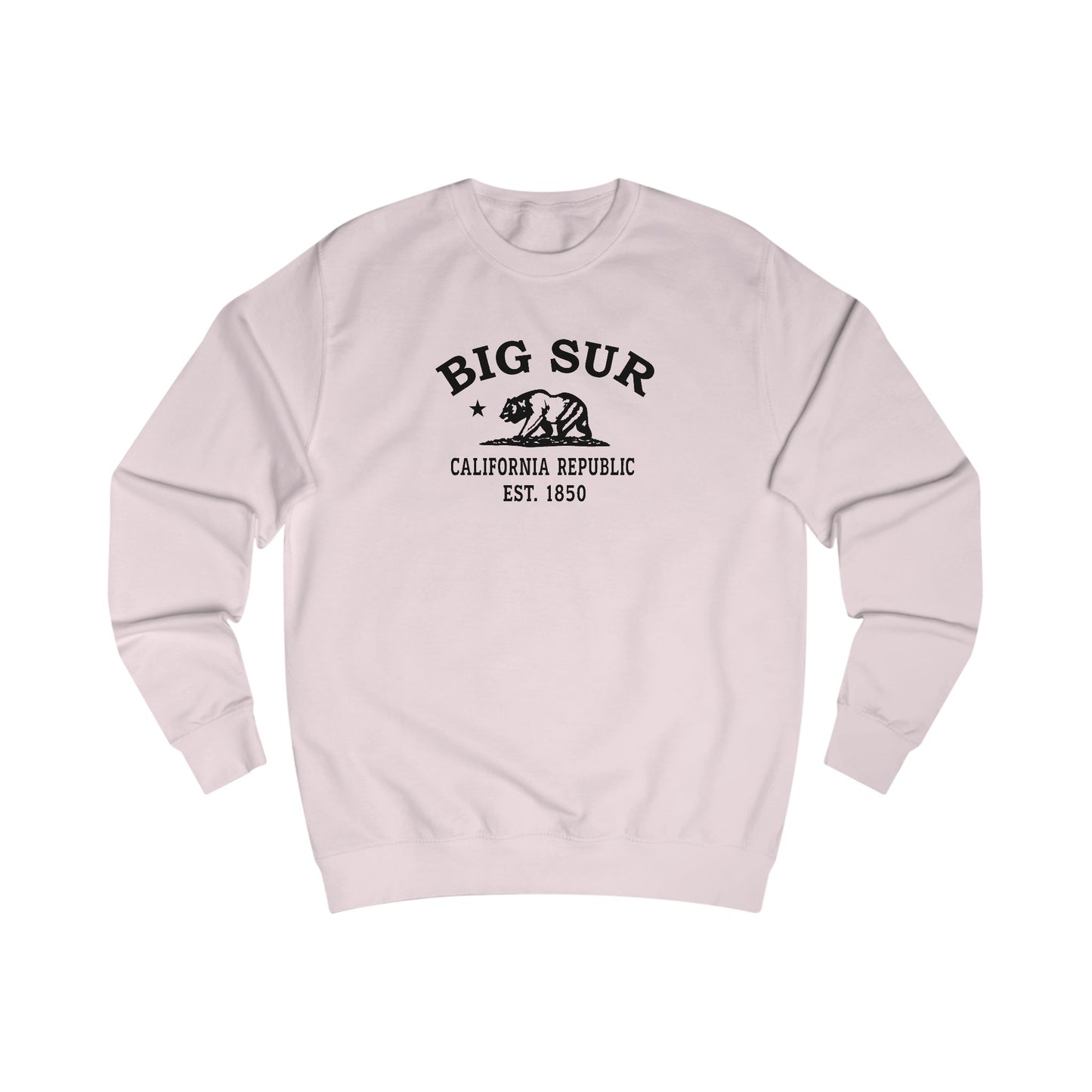
The Esselen people lived along this coast and in the Santa Lucia high country for thousands of years before the Spanish ever named it — el país grande del sur, the big country to the south of their capital at Monterey, which time wore down to Big Sur. Homesteaders, ranchers, and lumbermen followed in the late 1800s, working sawmills, tanbark-oak harvests, and limekilns; Charles Henry Bixby ran a mill on the creek that still carries his name and shipped lumber and lime from a doghole landing at its mouth. The coast stayed nearly impassable — the only land route turned eleven miles inland, over the mountains on the old Coast Road, just to get around a single creek.
Today Big Sur is one of the most celebrated coastlines on earth, and a protected one — most of it state park, national forest, and wilderness, with a handful of lodges and the road threaded between. People come for the drive: the Bixby Bridge, McWay Falls, the Pfeiffer redwoods, the Point Sur light, and the long blue gaps of nothing but cliff and water. Our Big Sur designs gather that coast into wearable form — the bridge, the highway, the mountains meeting the sea. Explore the collection and wear a little of that wild coast.
Why People Visit Big Sur California
Big Sur is the rare place whose entire identity is its landscape. There is no historic plaza, no downtown — there is the road, the bridge, and one of the most dramatic meetings of mountain and ocean anywhere on earth. Visitors come to drive the coast, to photograph the Bixby Bridge, to stand above McWay Falls, and to watch condors over a shoreline that was nearly impossible to reach a century ago. They come because Big Sur is California with almost nothing built on it — only revealed, mile by mile, from a two-lane road.
