


More From Barrow (Utqiaġvik) Alaska
-
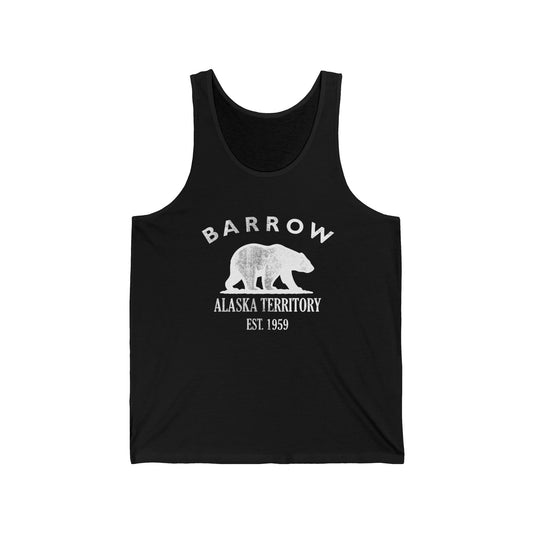
Barrow Alaska Vintage Retro Unisex Cotton Jersey Tank Top - White Logo
Regular price $28.00 USDRegular price -
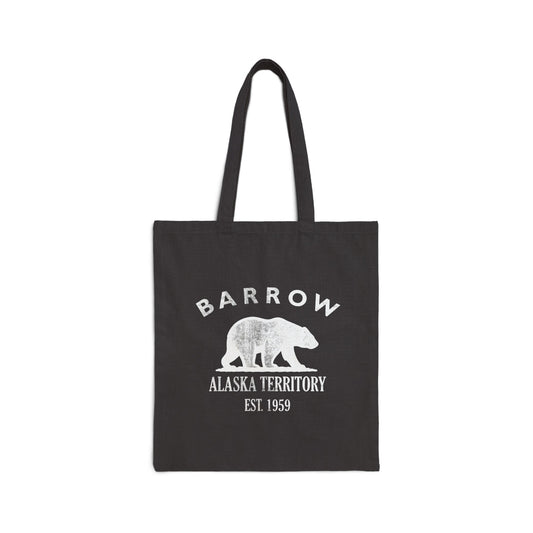
Barrow Alaska Vintage Retro Cotton Canvas Tote Bag - White Logo
Regular price $28.00 USDRegular price -
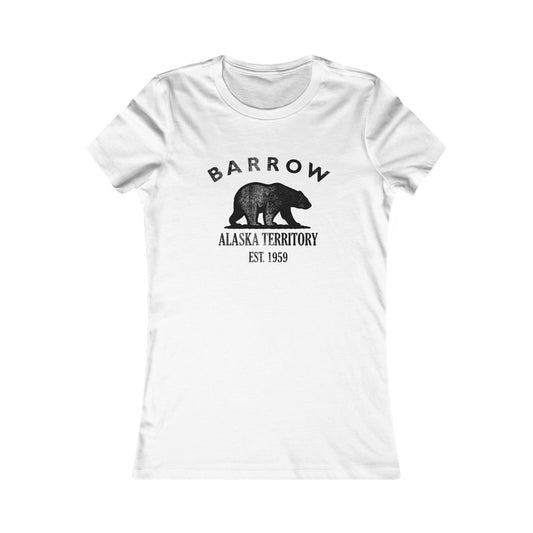
Barrow Alaska Vintage Retro Womens Fitted Ringspun Cotton Tee - Black Logo
Regular price $28.00 USDRegular price -
Barrow Alaska Vintage Retro Embroidered Cotton Cap - White Logo
Regular price $32.00 USDRegular price

The name that came home. People were living here a thousand years before anyone in Europe knew the coastline existed — the Birnirk mounds on the edge of town date to around 500 CE, and the Iñupiat have hunted the bowhead from this shore, under sanctioned subsistence tradition, ever since. The first written record of the community's own name came in 1853, when Commander Rochfort Maguire of the Royal Navy set it down from Iñupiaq speakers; the British Admiralty, meanwhile, had already fixed "Barrow" to the maps — honoring Sir John Barrow, the English promoter of Arctic exploration, who never came within a thousand miles of the place. An American whaler named Charles Brower arrived in the 1880s, built the Cape Smythe Whaling and Trading Station — still standing in the district that carries his name, Browerville — and the settlement grew around the meeting of two worlds. The City of Barrow incorporated on June 8, 1959, months after Alaska statehood. And then, in October 2016, the community voted — by exactly six votes — to restore its own name: Utqiaġvik, effective that December 1. Ask what it means and you'll hear the story locals tell: a place for gathering wild roots, though an older tradition says the name honors the hunting of snowy owls — either way, a name about what this land gives, restored by the people who have always known it.
Today Utqiaġvik is a city of about 4,900 — the borough seat of the North Slope and the cultural heart of the Iñupiat world. The Iñupiat Heritage Center holds the artifacts, art, and living traditions of 1,500 years on this coast; the whalebone arch on the beach frames the Arctic Ocean for every visitor's photograph; Iḷisaġvik College — the only tribally controlled college in Alaska — teaches from this shore; and NOAA's observatory east of town has been reading the Arctic atmosphere since 1973, making this small city one of the most scientifically watched places on Earth. Flights land at Wiley Post–Will Rogers Memorial Airport — code still BRW — and the road ends here: north of town there is only Point Barrow, and then the ice.
Why People Visit Barrow Alaska
- Visit the Iñupiat Heritage Center, the cultural museum holding exhibits on 1,500 years of Iñupiat history, whaling, and contemporary Iñupiaq community life.
- Drive to Point Barrow, 9-12 miles north of town, the northernmost point of US land where the Chukchi and Beaufort Seas converge — a major marine-mammal migration corridor.
- See the Whalebone Arch on the Arctic Ocean shore, the iconic bowhead-jaw landmark and photo stop.
- Tour the Birnirk archaeological site, a National Historic Landmark featuring 16 prehistoric Thule-culture dwelling mounds dating to roughly 500 CE.
- Walk the tundra boardwalk for migratory birds, snowy owls, and the brief summer wildflower bloom across the permafrost coastal plain.
- Visit the Will Rogers and Wiley Post Monument, marking the 1935 plane-crash site of the American humorist and pioneering aviator.
- Observe the aurora borealis from September through March on clear nights — the long polar darkness makes Barrow one of the best aurora-viewing locations in the world.
