


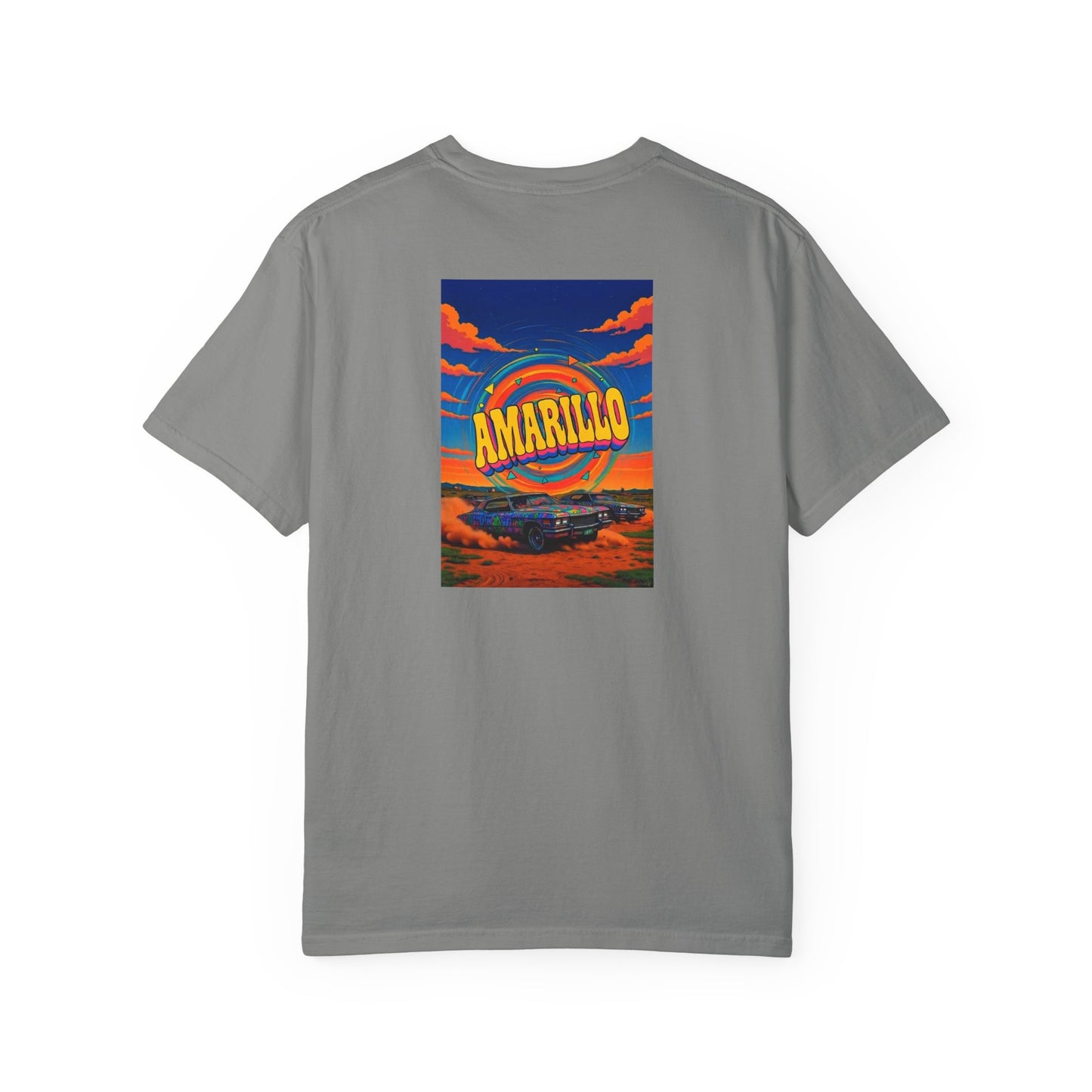

Amarillo is the Yellow City — capital of the Texas Panhandle, out on the high, flat Llano Estacado where the railroad dropped a cattle town in 1887 and Route 66 later ran straight through its heart. This is big-sky Texas: feedlots and ranch country to every horizon, the second-largest canyon in America just down the road, ten Cadillacs planted nose-down in a field, and a town that was once the busiest cattle-shipping point on earth. Cowboy bones, Mother Road neon, helium under the caprock — that is Amarillo.
For centuries before the rails, the Llano Estacado — the Staked Plains — was Comanchería: the homeland of the Comanche, and of the Kiowa and Apache before and beside them. Francisco Vázquez de Coronado crossed these plains in 1541 hunting the Seven Cities of Cíbola, and for three centuries afterward the high plains belonged to the horse nations and the great bison herds. The 1874 Red River War, whose decisive engagement came at the Battle of Palo Duro Canyon, ended the Comanche era; within two years Charles Goodnight had driven cattle into the canyon to found the JA Ranch, and the open-range ranching age began.
Why People Visit Amarillo Texas
- Drive a stretch of historic Route 66 through the Sixth Street Historic District, with vintage storefronts, antiques, and diners.
- Visit Palo Duro Canyon State Park, the "Grand Canyon of Texas" and the second-largest canyon in the country.
- Tour the American Quarter Horse Hall of Fame and Museum, honoring the West's working horse.
- See Cadillac Ranch, the famous row of nose-down Cadillacs along Interstate 40.
- Stop at the Big Texan Steak Ranch, a Route 66 icon of Panhandle cattle country.
