Westbrook Connecticut — Retro Vintage History
What's with the Turtle? In 1775, a Westbrook-born farmer's son named David Bushnell built a small, egg-shaped wooden vessel that could sink beneath the water and move under its own power — the Turtle, the world's first submarine used in combat. A Yale student at the time, Bushnell worked out ideas still used today: a ballast tank to dive and surface, and a hand-cranked screw propeller to move. It was one of the great feats of Revolutionary-era ingenuity, and it began with a farmer's son born here, on the Connecticut shore.
Wear the HistoryWhere you're from. Where you love. Where you explored. Where you belong.
The town itself is older than its famous invention. Algonquian peoples lived along this shore long before European settlement; around 1648 the area was settled as the "Oyster River Quarter" of the Saybrook Colony — the seed colony from which a cluster of Connecticut towns grew. The West Parish formed its own church in 1724, the place was renamed Westbrook in 1810, and in 1840 it was incorporated as a separate town. The "Oyster River" name says it plainly: this has always been a shoreline town.
QUICK FACTS — WESTBROOK, CT
Westbrook, Connecticut was settled around 1648 as the Oyster River Quarter of the Saybrook Colony and incorporated as a separate town in 1840.
David Bushnell, born in Westbrook in 1740, invented the Turtle, the world's first submarine used in combat.
The Turtle made history's first submarine attack in New York Harbor in September 1776, piloted by Sergeant Ezra Lee.
After the Revolution, Bushnell practiced medicine in Georgia as “Dr. David Bush”; his true identity emerged only after his death in 1824.
In the 1800s, Salt Island off Middle Beach housed a menhaden fish-oil and fertilizer works serving Westbrook's fishing fleet.
The Pochaug and Menunketesuck rivers reach Long Island Sound through a single shared mouth, spreading into Westbrook's broad salt marshes.
By the 1870s Westbrook's shoreline had become a summer resort, its beach cottages filling each season with visitors.
The Westbrook Town Center Historic District joined the National Register of Historic Places in 2017, spanning 178 acres along the Boston Post Road.
The Turtle's one combat mission is a story of its own. Bushnell's brother Ezra trained for months as its pilot, then fell ill on the eve of the operation; Sergeant Ezra Lee of Old Lyme took the crank instead. Built and tested in secrecy on the Connecticut River, the Turtle was carried overland and by water to the war. On a September night in 1776, Lee steered the little craft beneath New York Harbor toward HMS Eagle, the British flagship, in history's first submarine attack. The mine never attached — but the concept was proven, and the age of undersea warfare had quietly begun. Benjamin Franklin was among those who took note of Bushnell's trials, and George Washington later judged the work "an effort of genius."
Then the inventor vanished. After the war and a failed venture in France, Bushnell dropped from public life entirely — and resurfaced, years later, in Georgia as "Dr. David Bush," a quiet country physician and teacher. Only after his death in Warrenton in 1824 did neighbors learn that the doctor down the road had invented the submarine. His hometown never forgot: the old red Bushnell homestead near the village is kept today as his memorial.
For a century Westbrook lived by the water — shipyards built from the white oak and chestnut of the local forests, oyster beds in the tidal rivers, and a menhaden fish-oil works out on Salt Island off Middle Beach. The Pochaug and Patchogue rivers share a single mouth here, spreading into broad salt marshes, with Duck Island and its breakwater offshore. By the 1870s the same shoreline had become a summer resort, its cottages filling each season with visitors drawn to the Sound.

Middle Beach, Westbrook — shoreline cottages on the Long Island Sound, from the town's summer-resort era.
Today Westbrook is a quiet Long Island Sound town of about seven thousand — salt marshes and a common river mouth, masts in the harbor at Pilots Point, the town green on the old Boston Post Road, and the Town Center Historic District, listed on the National Register of Historic Places in 2017, that records three centuries of shoreline New England. Greek Revival and colonial homes along the old road still carry the markers of the "Descendants of Westbrook Settlers," and out in the marsh the cedar rise of Hawk's Nest keeps the shoreline's older geography in view. It is a town that wears its history lightly — and has more of it than almost anyone passing through would guess.
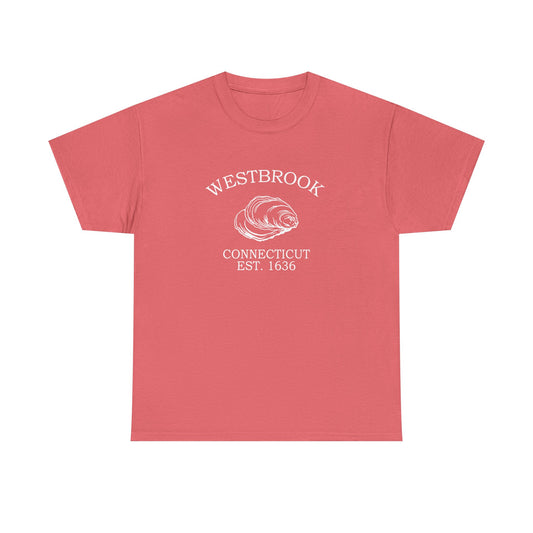
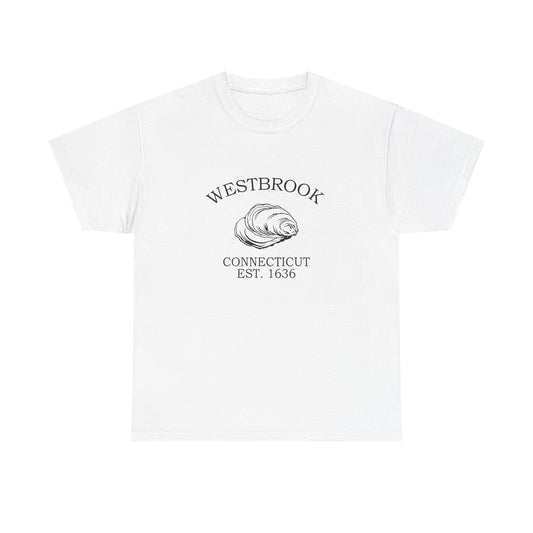
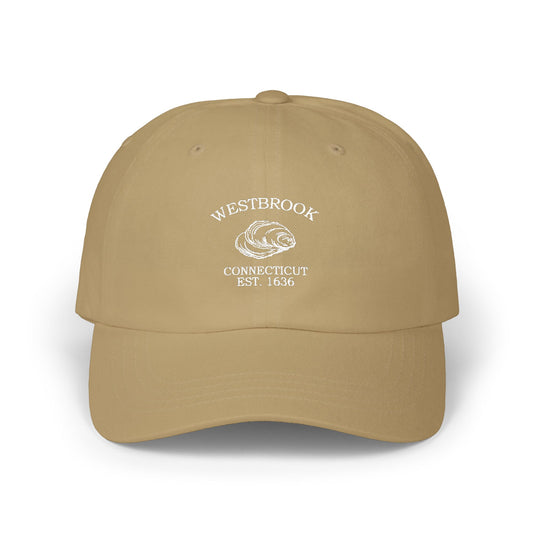
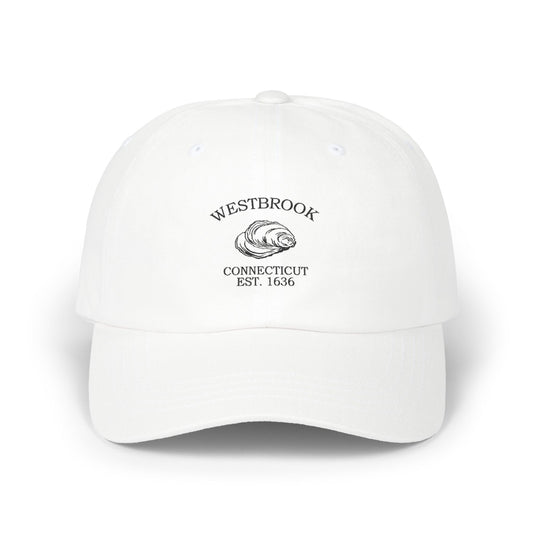
Our Westbrook logo carries Connecticut's oyster shell over "Connecticut · Est. 1636," tying the town to the colonial founding of Connecticut — the shared emblem of every Merlin Classics Connecticut place. Printed black-and-white with the worn look of an old oyster-crate label, the shell reads as the shoreline in shorthand: tidal, maritime, salt-aired. What makes this one Westbrook is the story behind it — the Oyster River, the Sound, and the birthplace of the submarine.
Westbrook holds two stories at once: a working shoreline town on the salt marshes of Long Island Sound, and the unlikely birthplace of an invention that changed the sea. Our Westbrook designs gather that identity — the oyster-and-1636 emblem, the Sound shoreline, and the Turtle's quiet claim to history — into wearable form. Westbrook, Connecticut — birthplace of the world's first combat submarine, on the salt marshes of Long Island Sound since 1648.

Middle Beach, Westbrook — the sandy Sound shoreline that made the town a resort by the 1870s.
Westbrook, Connecticut — Travel Guide
Visiting Westbrook Today
Westbrook is an easygoing Long Island Sound shoreline town — beaches, salt marshes, a working harbor, and a historic town center on the Boston Post Road, set quietly along the Connecticut shore between the river towns and the Sound.
Beaches, Marsh & Harbor in Westbrook
For visitors looking for things to do in Westbrook, Connecticut:
- Spend the day at the town beaches along Long Island Sound, including Middle Beach and West Beach.
- Look out to Salt Island and the Duck Island breakwater from the shore.
- Walk the salt-marsh edges where the Pochaug and Menunketesuck rivers share a common mouth.
- Stroll the Westbrook Town Center Historic District and the town green on the old Post Road.
- Visit the Bushnell memorial house near the village and the local historical society for the submarine and shipbuilding story.
- Watch the boats at Pilots Point Marina, one of the largest marinas on the East Coast.
- Browse the shoreline shops and dining along the Boston Post Road.
Why People Visit Westbrook
Westbrook offers quiet shoreline New England with a remarkable story beneath it. Visitors come for the beaches, the marsh and harbor, the historic town center, and the distinction of standing in the birthplace of the submarine. It's low-key, scenic, and steeped in Long Island Sound maritime heritage.
Wear the History
Where you're from. Where you love. Where you explored. Where you belong.
Kindred Cities
Greetings to visitors from Whitstable, England and Charlottetown, Canada — like-minded quiet shore towns of oysters and easy summers.
Westbrook is a small, easygoing Connecticut beach town, and Whitstable and Charlottetown share its salt-air calm. Whitstable, on the Kent coast, is England's beloved oyster town, famous for its native beds and its festival; Charlottetown, the gentle capital of Prince Edward Island, sets its harbour among the seafood and red shores of the Gulf; Westbrook keeps its low beaches, its marinas and its summer cottages along Long Island Sound. Three quiet coasts where the shellfish are fresh and the pace is unhurried.
Westbrook is made for the visitor after a quiet shore: gentle beaches and tidal marshes on the Sound, boats in the rivers, fresh seafood by the water, and the unhurried feel of a true Connecticut summer town. Come and visit us soon.
When you plan the trip, the Town of Westbrook and the Connecticut Office of Tourism are the place to start.
Wear the History
Where you're from. Where you love. Where you explored. Where you belong.

For deeper reading on the Westbrook history described here — David Bushnell and the Turtle submarine, the Oyster River Quarter origin within the Saybrook Colony, the shipbuilding and menhaden heritage, and the summer-resort era — it may be useful to consult (1) the Westbrook Historical Society, (2) the Westbrook Public Library local-history collection, (3) the Connecticut State Library and Connecticut Historical Society, (4) the Town of Westbrook clerk's records office, and (5) the Connecticut State Historic Preservation Office. For travel and visitor information, it may be useful to contact (1) the Connecticut shoreline visitor and tourism bureaus, (2) the local chamber of commerce, (3) the Westbrook parks and recreation department, (4) the Connecticut State Parks office, and (5) regional shoreline and NWS marine advisories.
Shop the Westbrook Connecticut collection
View full collection-
Westbrook Connecticut Vintage Retro Premium Crewneck Sweatshirt - Black Logo
Regular price $48.00 USDRegular price -
Westbrook Connecticut Vintage Retro Premium Crewneck Sweatshirt - White Logo
Regular price $48.00 USDRegular price -
Westbrook Connecticut Vintage Retro Giclée Print Art Series Poster
Regular price From $38.00 USDRegular price -
Westbrook Connecticut Vintage Retro Back Printed Art Series Cotton Tee - Black Logo
Regular price $32.00 USDRegular price -
-
Westbrook Connecticut Vintage Retro Womens Fitted Ringspun Cotton Tee - Black Logo
Regular price $28.00 USDRegular price -
Westbrook Connecticut Vintage Retro Unisex Heavy Cotton Tee - White Logo
Regular price $22.00 USDRegular price -
Westbrook Connecticut Vintage Retro Unisex Heavy Cotton Tee - Black Logo
Regular price $22.00 USDRegular price -
Westbrook Connecticut Vintage Retro Embroidered Cotton Cap - White Logo
Regular price $32.00 USDRegular price -
Westbrook Connecticut Vintage Retro Embroidered Cotton Cap - Black Logo
Regular price $32.00 USDRegular price -
Westbrook Connecticut Vintage Retro Unisex Heavy Cotton Hoodie - White Logo
Regular price $56.00 USDRegular price -
Westbrook Connecticut Vintage Retro Unisex Heavy Cotton Hoodie - Black Logo
Regular price $56.00 USDRegular price -
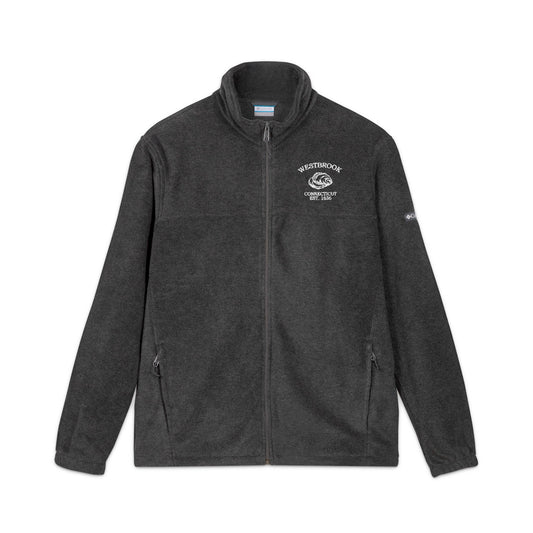
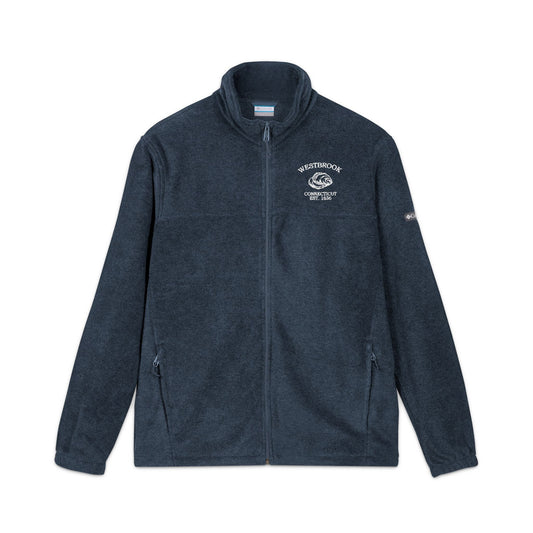
Westbrook Connecticut Vintage Retro Unisex Embroidered Fleece Jacket - White Logo
Regular price $98.00 USDRegular price -
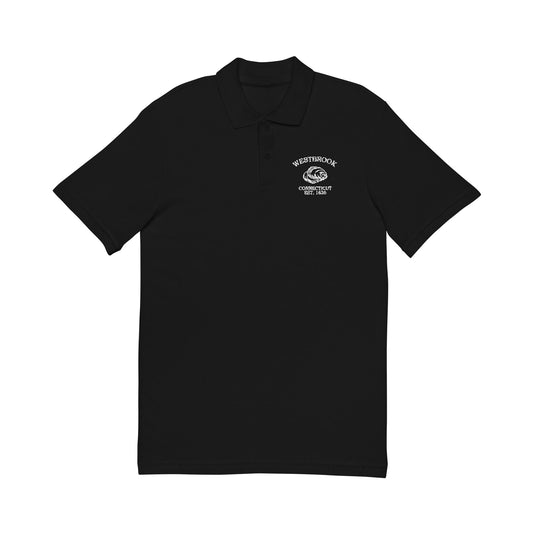
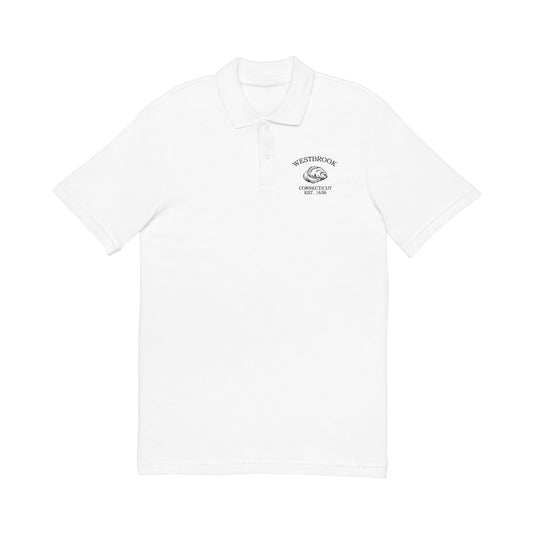
Westbrook Connecticut Vintage Retro Unisex Embroidered Cotton Polo - Black Logo
Regular price $48.00 USDRegular price -
Westbrook Connecticut Vintage Retro Vinyl Sticker - Black Logo
Regular price From $6.00 USDRegular price -
Westbrook Connecticut Vintage Retro Ceramic Mug - Black Logo
Regular price From $16.00 USDRegular price -
Westbrook Connecticut Vintage Retro Cotton Canvas Tote Bag - White Logo
Regular price $25.00 USDRegular price -
Westbrook Connecticut Vintage Retro Cotton Canvas Tote Bag - Black Logo
Regular price $25.00 USDRegular price -
Westbrook Connecticut Vintage Retro Thank You Card Set - Black Logo
Regular price From $25.00 USDRegular price -
Westbrook Connecticut Vintage Retro Cotton Jersey Baby Bodysuit - Black Logo
Regular price $26.00 USDRegular price -
Westbrook Connecticut Vintage Retro Unisex Cotton Jersey Tank Top - Black Logo
Regular price $28.00 USDRegular price -
Westbrook Connecticut Vintage Retro Unisex Cotton Jersey Tank Top - White Logo
Regular price $28.00 USDRegular price -
Westbrook Connecticut Vintage Retro Unisex Heavy Crewneck Sweatshirt - White Logo
Regular price $44.00 USDRegular price