Wasilla Alaska — Retro Vintage History
What's with the trail to Nome? Every winter, a thousand-mile trail runs northwest out of Southcentral Alaska, across the mountains and tundra, all the way to the old gold town of Nome on the Bering Sea. Wasilla is the institutional home of the famous sled-dog race that runs it — the place where the long trail's history is kept. Long before that, the same route was a gold-rush mail and freight trail through the Knik country, and that heritage still gives Wasilla its identity: the valley town where the trail to Nome begins.
Wear the HistoryThe Dena'ina Athabascan people lived in this valley long before the railroad, and the town still carries one of their names: Wasilla comes from Chief Wasilla, a Dena'ina leader of the Knik country. For decades the trading post at Knik was the region's supply hub — until 1915, when Anchorage was founded and the new Alaska Railroad pushed north. In 1917 the line crossed the wagon road to the Willow Creek gold mines, a townsite was platted on the high ground between Wasilla Lake and Lake Lucille, and its lots were auctioned that June. Knik emptied out — some residents are said to have dragged their houses to the new town — and Wasilla rose in its place as the “Gateway to the Willow Creek Mining District.” For its first decades the town lived on that gold, the freight-transfer point between the railroad cars and the mine roads.
What's with the Mat-Su Valley? Wasilla sits in the Matanuska-Susitna Valley — “Mat-Su” for short — a broad, lake-dotted lowland ringed by the Talkeetna and Chugach mountains, with the Alaska Range and Denali on the horizon on a clear day. In 1935, at the depth of the Depression, the federal government moved some two hundred Midwest farm families into the valley under the Matanuska Colony — one of the New Deal's boldest homesteading experiments — and made the Mat-Su one of Alaska's few real farming regions. That colony centered on neighboring Palmer, which led the valley for decades; Wasilla kept to its mining and railroad trade, with Lake Lucille and Wasilla Lake right in town.

The gold thinned, but the valley kept growing. When the George Parks Highway opened around 1971, linking Anchorage to Denali and the interior straight through Wasilla, the town's fortunes turned: growth shifted from Palmer to Wasilla, and the Mat-Su became Alaska's fastest-growing region. Wasilla was incorporated as a city in 1974, and the old railroad stop became the valley's commercial hub on the highway between the city and the mountains — close enough that a good share of the town still drives the forty minutes south to Anchorage and back. Up the road, Hatcher Pass and the Independence Mine still mark the gold country that first drew people here.
The valley the railroad built is a country of water and machines. Wasilla Lake and Lake Lucille sit right in town, busy with floatplanes and fishing boats in the long summer light, and the Museum of Alaska Transportation and Industry gathers the locomotives, bush planes, and pioneer gear that opened the north — a fitting keeper for a town the railroad made.
And the long trail north still runs through Wasilla's story. The route to Nome began as a gold-rush mail and freight trail, carried by dog teams across the Knik country and over the mountains toward the Bering Sea coast; when the modern thousand-mile race made its first full run to Nome in 1973, Wasilla became its institutional home — the valley town most tied to the long trail north, where its history is kept and told.
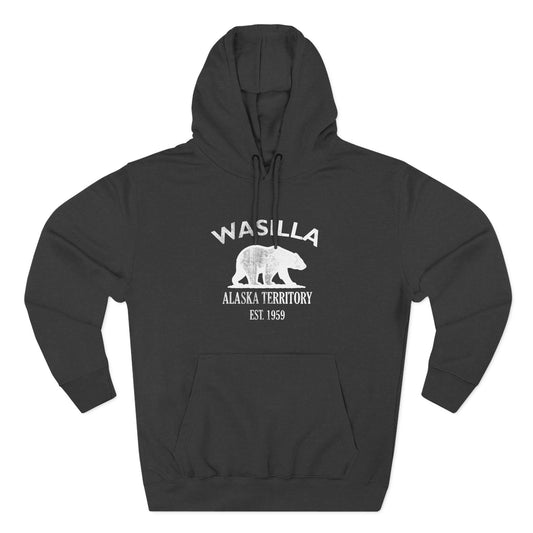
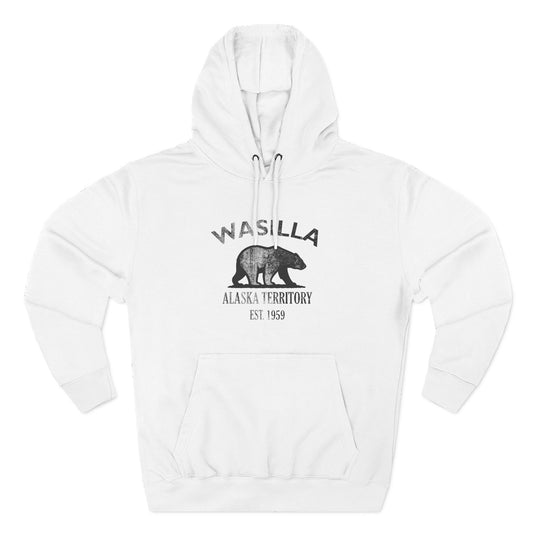
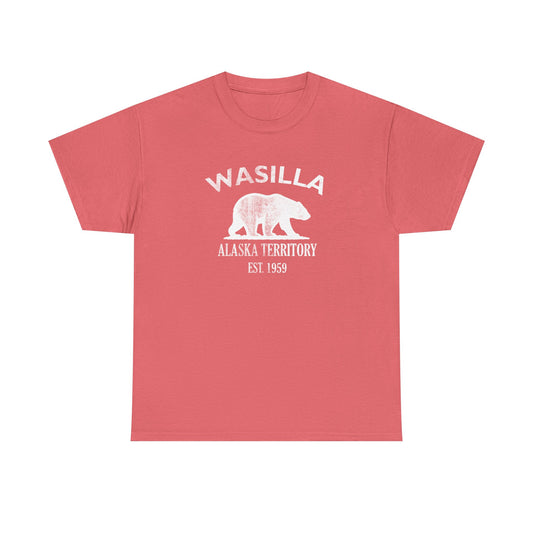
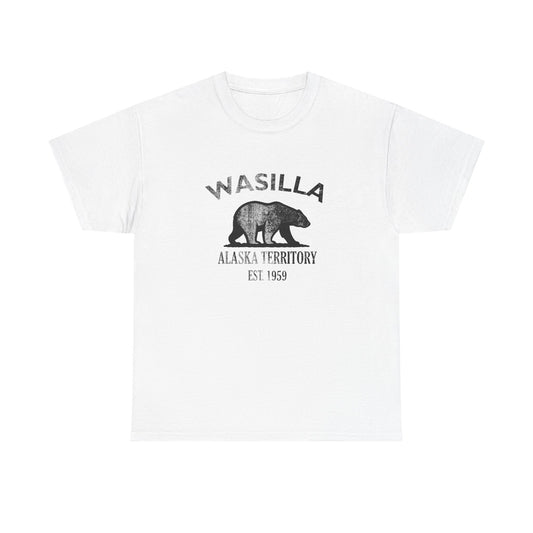
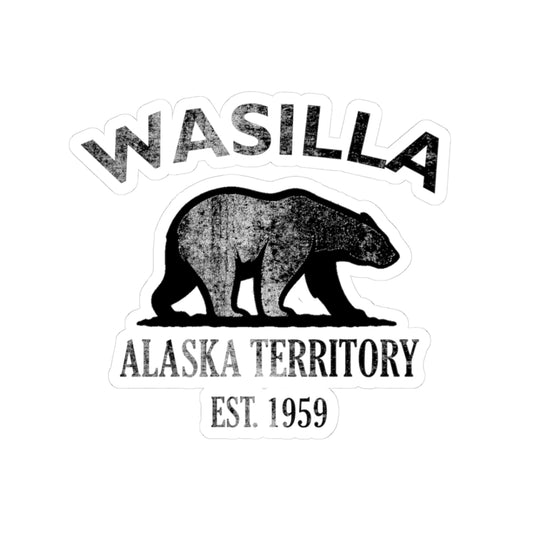
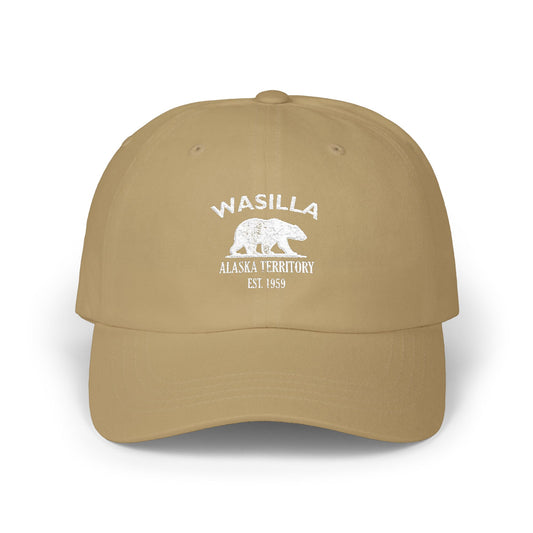
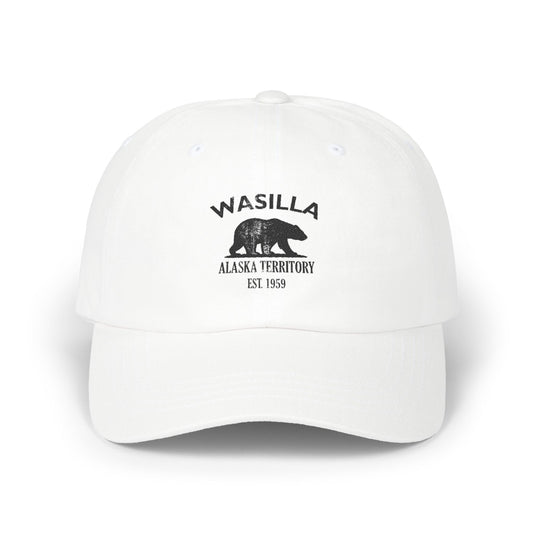
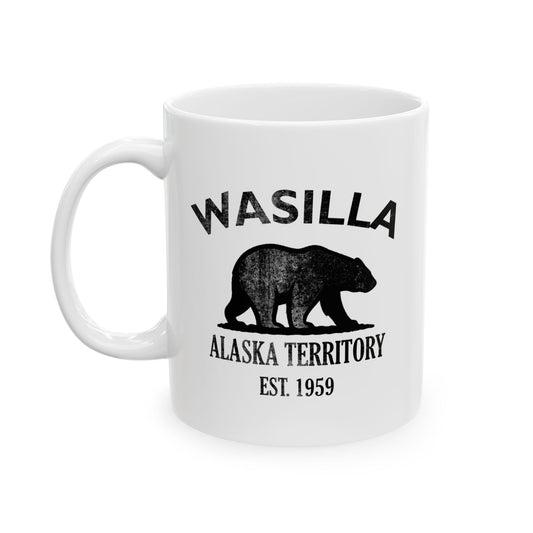
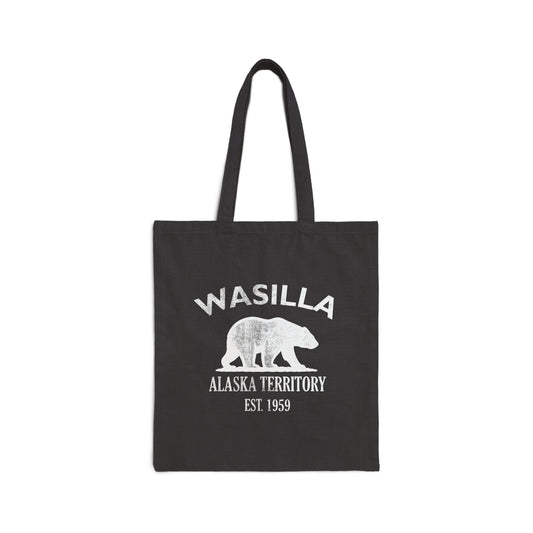
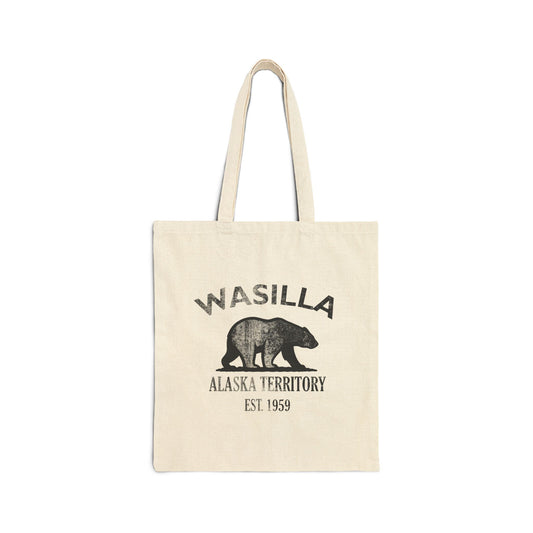
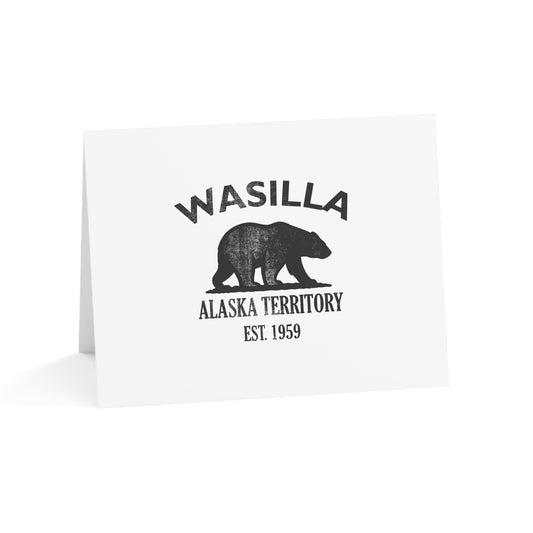
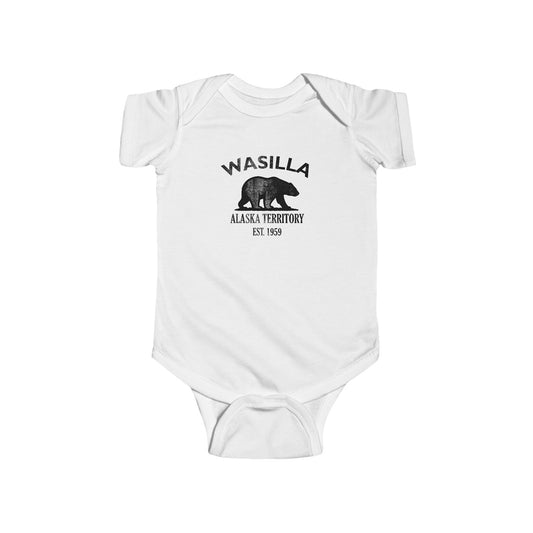
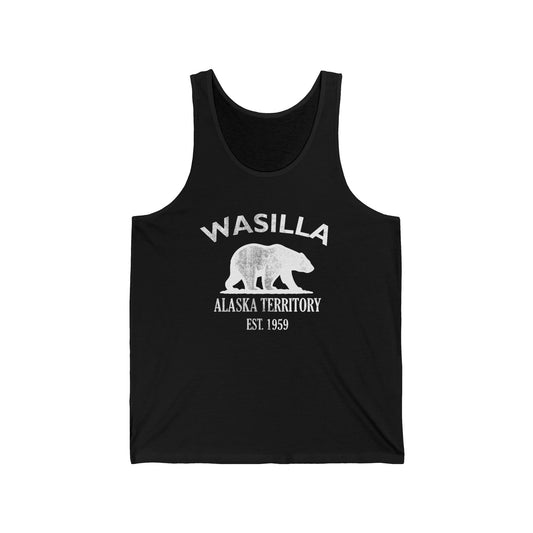
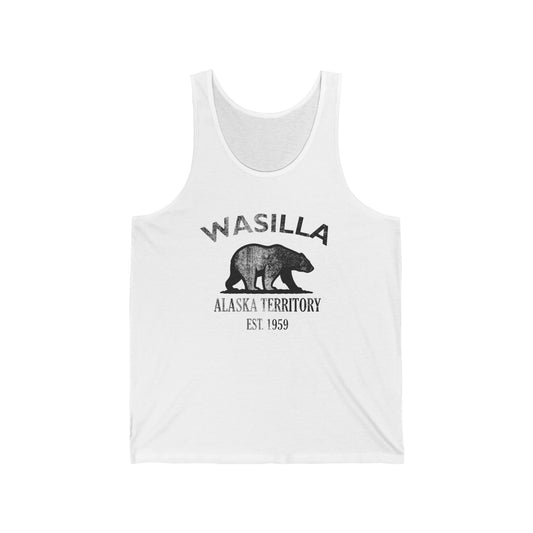
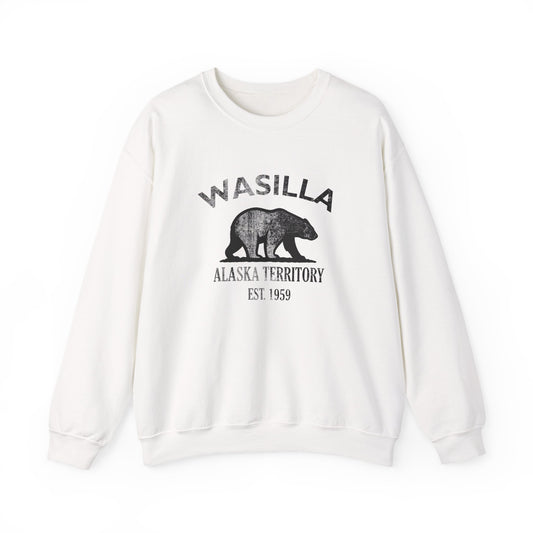
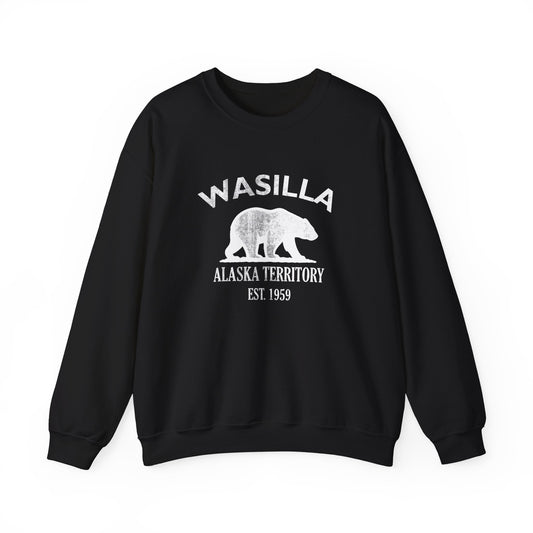
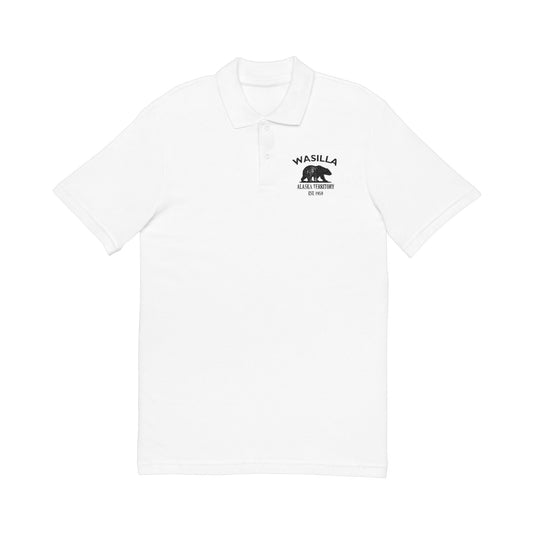
Our Wasilla logo carries Alaska's bear over “Alaska Territory · Est. 1959,” the year Alaska became the forty-ninth state — the shared emblem of every Merlin Classics Alaska place. Printed in a distressed black-and-white that reads like an old outfitter's stamp, the bear is the Last Frontier in shorthand: rugged, wild, and at home in the cold. What makes this one Wasilla is the country behind it — the Mat-Su Valley, the lakes and ranges, and the trail that runs all the way to Nome.
Today Wasilla is a Mat-Su Valley hub — a railroad-and-mining town turned valley gateway, with lakes in town and the Alaska Range on the horizon. Our Wasilla designs gather that identity — the bear-and-1959 emblem, the Mat-Su Valley, and the trail to Nome — into wearable form. Wasilla, Alaska — where the trail to Nome begins, in the heart of the Mat-Su Valley.

Wasilla, Alaska — Travel Guide
Visiting Wasilla Today
Wasilla sits between lakes and mountains in the Mat-Su Valley, an easy hour north of Anchorage and a gateway toward Denali — a relaxed base for Southcentral Alaska with museums, trails, and big valley scenery.
Lakes, Valley & Trail Heritage in Wasilla
For visitors looking for things to do in Wasilla, Alaska:
- Walk the shoreline parks on Wasilla Lake and Lake Lucille right in town.
- Visit the Wasilla Historic Town Site and its 1917 one-room schoolhouse.
- Explore the Museum of Alaska Transportation and Industry and the valley's homesteading history.
- Take in the views toward the Talkeetna and Chugach ranges, and Denali on a clear day.
- Drive up to Hatcher Pass and the Independence Mine, or use Wasilla as a base for the George Parks Highway toward Denali.
Why People Visit Wasilla
Wasilla balances Alaska heritage with easygoing valley life — lakeside walks, broad mountain scenery, and the deep history of the long trail north. It's accessible, relaxed, and a practical base for exploring the Mat-Su Valley and Southcentral Alaska.
Wear the History
Kindred Cities
A warm welcome to visitors from Whitehorse and Yellowknife, Canada — kindred northern towns of sled dogs and frontier spirit.
Wasilla is the hub of Alaska's Mat-Su Valley and a home of the Iditarod, and Whitehorse and Yellowknife keep the same northern company. Whitehorse, capital of the Yukon, hosts the grueling Yukon Quest sled-dog race and the gold-rush history of the territory; Yellowknife glows under the aurora on Great Slave Lake; Wasilla spreads across its valley of lakes beneath the Chugach and Talkeetna ranges. Three northern towns where the dog teams run and the wilderness begins at the edge of town.
Wasilla rewards the northern traveler: the headquarters of the Iditarod sled-dog race, lakes for floatplanes and fishing, the Hatcher Pass mountains and old gold mine above town, and the wide Mat-Su Valley under the peaks. Come and visit us soon.
When you plan the trip, the Greater Wasilla Chamber of Commerce is the place to start.
Wear the History

For deeper reading on the Wasilla history described here — the Dena'ina heritage of the valley and the name of Chief Wasilla, the Knik supply era and the Willow Creek gold district, the 1917 railroad founding, the 1935 Matanuska Colony at Palmer, the George Parks Highway and 1974 incorporation, and the valley's sled-dog-trail heritage — it may be useful to consult (1) the Wasilla-Knik-Big Lake Historical Society and the local history museum, (2) the Wasilla Public Library local-history collection, (3) the Alaska State Library and Archives and the Alaska Historical Society, (4) the City of Wasilla clerk's records office, and (5) the Alaska Office of History and Archaeology. For travel and visitor information, it may be useful to contact (1) the Mat-Su Convention and Visitors Bureau, (2) the Greater Wasilla Chamber of Commerce, (3) the City of Wasilla parks and recreation department, (4) the Alaska State Parks office, and (5) regional road and NWS Anchorage advisories during winter.
Shop the Wasilla Alaska collection
View full collection-
Wasilla Alaska Vintage Retro Premium Crewneck Sweatshirt - Black Logo
Regular price $48.00 USDRegular price -
Wasilla Alaska Vintage Retro Premium Crewneck Sweatshirt - White Logo
Regular price $48.00 USDRegular price -
Wasilla Alaska Vintage Retro Unisex Heavy Cotton Hoodie - White Logo
Regular price $56.00 USDRegular price -
Wasilla Alaska Vintage Retro Unisex Heavy Cotton Hoodie - Black Logo
Regular price $56.00 USDRegular price -
Wasilla Alaska Vintage Retro Unisex Heavy Cotton Tee - White Logo
Regular price $22.00 USDRegular price -
Wasilla Alaska Vintage Retro Unisex Heavy Cotton Tee - Black Logo
Regular price $22.00 USDRegular price -
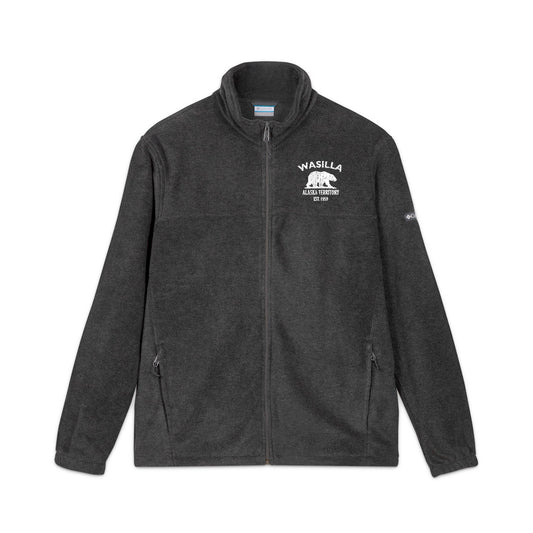
Wasilla Alaska Vintage Retro Unisex Embroidered Fleece Jacket - White Logo
Regular price $98.00 USDRegular price -
Wasilla Alaska Vintage Retro Vinyl Sticker - Black Logo
Regular price From $6.00 USDRegular price -
Wasilla Alaska Vintage Retro Back Printed Art Series Cotton Tee - Black Logo
Regular price $32.00 USDRegular price -
Wasilla Alaska Vintage Retro Giclée Print Art Series Poster
Regular price From $38.00 USDRegular price -
-
Wasilla Alaska Vintage Retro Womens Fitted Ringspun Cotton Tee - Black Logo
Regular price $28.00 USDRegular price -
Wasilla Alaska Vintage Retro Embroidered Cotton Cap - White Logo
Regular price $32.00 USDRegular price -
Wasilla Alaska Vintage Retro Embroidered Cotton Cap - Black Logo
Regular price $32.00 USDRegular price -
Wasilla Alaska Vintage Retro Ceramic Mug - Black Logo
Regular price From $16.00 USDRegular price -
Wasilla Alaska Vintage Retro Cotton Canvas Tote Bag - White Logo
Regular price $25.00 USDRegular price -
Wasilla Alaska Vintage Retro Cotton Canvas Tote Bag - Black Logo
Regular price $25.00 USDRegular price -
Wasilla Alaska Vintage Retro Thank You Card Set - Black Logo
Regular price From $25.00 USDRegular price -
Wasilla Alaska Vintage Retro Cotton Jersey Baby Bodysuit - Black Logo
Regular price $26.00 USDRegular price -
Wasilla Alaska Vintage Retro Unisex Cotton Jersey Tank Top - White Logo
Regular price $28.00 USDRegular price -
Wasilla Alaska Vintage Retro Unisex Cotton Jersey Tank Top - Black Logo
Regular price $28.00 USDRegular price -
Wasilla Alaska Vintage Retro Unisex Heavy Crewneck Sweatshirt - Black Logo
Regular price $44.00 USDRegular price -
Wasilla Alaska Vintage Retro Unisex Heavy Crewneck Sweatshirt - White Logo
Regular price $44.00 USDRegular price -
Wasilla Alaska Vintage Retro Unisex Embroidered Cotton Polo - Black Logo
Regular price $48.00 USDRegular price