Rowayton Connecticut — Retro Vintage History
What's with Rowayton? Rowayton is Norwalk's village on the Sound — a Five Mile River harbor of oysters, sailboats, and art that runs its own affairs as the Sixth Taxing District. Forty miles from New York and a world apart, it is the Connecticut shore at its most distilled: a working river mouth, a village center you can walk end to end, and salt water at the bottom of every street.
Wear the HistoryWhere you're from. Where you love. Where you explored. Where you belong.
Long before the resorts and the regattas, this was the country of the coastal Algonquian people of the Norwalk shore, who fished the coves and river mouths and gathered shellfish along the Sound — and who left the village its name: Rowayton, worn through spellings like Roaton and Rhoeton on the old deeds. The Five Mile River, the tidal inlet that still defines the place, carried their canoes before it carried anything else.

European settlement came by way of Norwalk, founded in 1651, and the western shore where the Five Mile River met the Sound became a village of rocky farms and small wharves. For two hundred years it was known simply as Five Mile River — a working hamlet of shipwrights and oystermen, with a shipyard at what is now Pinkney Park and, by 1848, a hotel for the summer boarders who had begun to find the shore. The streetcar arrived in 1890, stitching the hamlet to South Norwalk and opening the summer trade wide.
QUICK FACTS — ROWAYTON, CT
Rowayton sits where the Five Mile River meets Long Island Sound — for two centuries the village was simply called Five Mile River.
The name Rowayton comes from the coastal Algonquian people of the Norwalk shore, who fished these coves for generations.
In July 1779 British forces burned Norwalk; the Five Mile River hamlet shared its parent town's ordeal — and its Patriot cause.
The Sound's oyster beds off this shore ranked among the most productive on Earth; oyster sloops filled the Five Mile River.
Roton Point drew steamboats of day-trippers from New York to its shore resort — carousel, coasters, and picnic grove — from the 1880s to WWII.
The first business computer prototype — Remington Rand's 409 — was developed in "The Barn" on Highland Avenue.
Since Norwalk's 1921 consolidation, Rowayton has governed its own local affairs as the city's Sixth Taxing District.
The Five Mile River Landing Historic District — Pinkney Park's shipyard site among it — joined the National Register in 2009.
What made the shore was the oyster. Through the nineteenth century, the Long Island Sound beds off this coast grew into some of the most productive oyster grounds on Earth, and the Five Mile River filled with the low, broad-decked sloops of the trade. Oystering here was a craft and a calendar — dredging the beds under sail, culling on deck, shucking by lantern light — and it reached its peak in the decades after the Civil War, when the village's wealth came up from the bottom of the Sound a bushel at a time.
What's with Roton Point? On the point just west of the village, where the land runs out into Long Island Sound, there once stood one of the great shore resorts of the region. From the 1880s into the years around the Second World War, Roton Point drew summer crowds by steamboat and trolley to a beach, a carousel, a roller coaster, and a grand dance pavilion — a Coney Island of the Connecticut shore. Most of it is gone now, the grounds long since a private association, but in its day Roton Point is how the whole country first learned to spend a summer Sunday in Rowayton.
Rowayton has always governed itself a little differently. When Norwalk's towns consolidated into one city in 1921, the village became the Sixth Taxing District — its own three elected commissioners, its own beach and parks and small-town affairs, a town-meeting temperament tucked inside a city. More than a century on, the arrangement still holds: Rowayton belongs to Norwalk, and runs its own corner of it — the district marked its hundredth birthday in 2021, with a concert at the community center, naturally.
The village has one gloriously improbable chapter: the first business computer was born here. In the old Farrell estate stables on Highland Avenue — "The Barn," part of the Rock Ledge estate listed on the National Register in 1977 — engineers of the Remington Rand Corporation developed the Remington Rand 409, the prototype that carried computing out of the laboratory and into the office, in the years when General Douglas MacArthur chaired the company's board. The stables became the Rowayton Community Center and Library in 1966; the village kept the story.

Today that character runs to art and sail as much as to oysters. The tradition is old — John Frederick Kensett, the great Hudson River School painter, worked this seascape in his later years — and it is living: the Rowayton Arts Center anchors a creative community on the river, Shakespeare on the Sound fills Pinkney Park each summer, Bayley Beach looks out on the water where the amusement park's carousel once turned, and the harbor stays busy with sailboats where the sloops once raked the beds. The Historic District along Rowayton Avenue, listed in 2009, keeps the shipyard century in plain sight.
The Revolution reached this shore in earnest in July 1779, when a British force under Governor Tryon landed on the Norwalk coast and burned the town — one of the war's harshest blows to Connecticut. The Five Mile River hamlet shared its parent town's ordeal and its Patriot cause: Norwalk's militia turned out to meet the raid, and the little shore settlement rebuilt with the rest. Rowayton's Revolutionary connection runs with the eleven towns of our Minutemen of Connecticut history, and the village wears the winter version in the Minuteman Holiday collection.
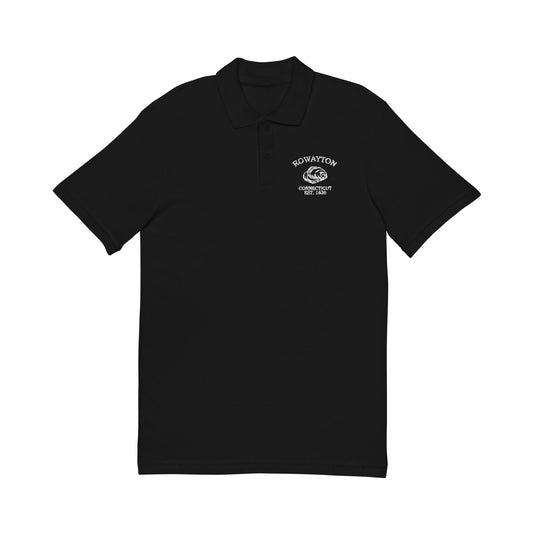
Our Rowayton logo carries the same emblem every Merlin Classics Connecticut place wears — the Long Island Sound oyster above "Connecticut · Est. 1636," the colony's founding era, printed in a worn, hand-pressed black and white like an old oyster-crate label. Nowhere on the roster earns the oyster more directly: this village sailed for them. What makes this one Rowayton is everything around it — the river, the sloops, the Point, and the Barn.
Today Rowayton is the Connecticut shore at its most distilled — a Five Mile River village of oyster heritage, sailboats, and art, governing its own small corner of the Sound. Its story runs from an Algonquian fishing ground through a shipwright hamlet, an oystering fleet, a steamboat resort, and a barn full of computer pioneers to the unhurried village of today. Wear a little of the village that kept its scale and its salt.
Rowayton, Connecticut — Travel Guide
Visiting Rowayton Today
Rowayton is a coastal village on the Five Mile River where it meets Long Island Sound, tucked into the western edge of Norwalk about an hour from New York — with its own Metro-North stop on the New Haven Line. It is compact and walkable: a harbor full of sailboats, a short village street, and salt water at the end of every lane. Summer brings Shakespeare and concerts; fall brings the oyster months back.
The Five Mile River, Bayley Beach & the Shore
For visitors looking for things to do in Rowayton, Connecticut:
- Walk Rowayton Avenue through the Five Mile River Landing Historic District — the shipwright-and-oyster village, plainly kept.
- Catch Shakespeare on the Sound at Pinkney Park, on the old shipyard ground beside the river.
- Spend a beach afternoon at Bayley Beach, where Roton Point's carousel once turned, with Bell Island beyond.
- See the Rowayton Arts Center's shows on the riverbank, in Kensett's old seascape.
- Visit "The Barn" — the Community Center and Library in the Farrell stables, birthplace of the first business computer.
- Eat at the harbor's famous seafood landmark and watch the sloops' successors come and go.
Why People Visit Rowayton
Rowayton offers the Connecticut shore at its most relaxed and characterful — sailing, art, and quiet beaches in a village that has kept its scale and its salt-water soul. Visitors come for the harbor and the shore parks and stay for the unhurried, distilled village that Norwalk keeps at its edge.
Wear the History
Where you're from. Where you love. Where you explored. Where you belong.
Kindred Cities
Greetings, friends from the rest of Norwalk — the city that keeps this village at its edge.
Rowayton's kindred city is its own parent. The village has belonged to Norwalk since 1651 and never stopped — through the shipwright years, the burning of 1779, the oyster decades, and the 1921 consolidation that made it the Sixth Taxing District. The city took the harbor, the rail yards, and the bustle; the village kept the river mouth, the beach, and the town-meeting temperament. Neither would quite work without the other.
Come down from the city and Rowayton is Norwalk exhaling — five minutes from the highway and a century away, where the streets end in water and the district still throws its own birthday parties. Come and visit us soon.
When you plan the trip, the Connecticut Office of Tourism and the Sixth Taxing District's own village site are the places to start.
Wear the History
Where you're from. Where you love. Where you explored. Where you belong.

For deeper reading on the Rowayton history described here — the coastal Algonquian heritage of the Norwalk shore, the Five Mile River village within Norwalk (settled 1651), the Long Island Sound oyster fishery and the Rowayton oyster sloops, the Roton Point resort era, and Rowayton's standing as the Sixth Taxing District of Norwalk — it may be useful to consult (1) the Rowayton Historical Society, (2) the Norwalk Historical Society and the Norwalk Public Library history collections, (3) the Connecticut State Library and the State Historic Preservation Office, (4) the Connecticut Historical Society, and (5) the Sixth Taxing District of Norwalk records. For travel and visitor information, it may be useful to contact (1) Visit Connecticut and Coastal Fairfield County tourism, (2) the Sixth Taxing District of Norwalk for Bayley Beach and Pinkney Park, (3) the Rowayton Arts Center, (4) the Norwalk Seaport Association for the Norwalk Islands and Sheffield Island light, and (5) the National Weather Service New York for Long Island Sound coastal advisories.
Shop the Rowayton Connecticut collection
View full collection-
Rowayton Connecticut Vintage Retro Premium Crewneck Sweatshirt - Black Logo
Regular price $48.00 USDRegular price -
Rowayton Connecticut Vintage Retro Premium Crewneck Sweatshirt - White Logo
Regular price $48.00 USDRegular price -
-
Rowayton Connecticut Vintage Retro Minuteman Holiday Cotton Tee - White Logo
Regular price $36.00 USDRegular price -
Rowayton Connecticut Vintage Retro Womens Fitted Ringspun Cotton Tee - Black Logo
Regular price $28.00 USDRegular price -
-
Rowayton Connecticut Vintage Retro Unisex Embroidered Fleece Jacket - White Logo
Regular price $98.00 USDRegular price -
Rowayton Connecticut Vintage Retro Unisex Heavy Cotton Hoodie - Black Logo
Regular price $56.00 USDRegular price -
Rowayton Connecticut Vintage Retro Unisex Heavy Cotton Hoodie - White Logo
Regular price $56.00 USDRegular price -
Rowayton Connecticut Vintage Retro Unisex Heavy Cotton Tee - White Logo
Regular price $22.00 USDRegular price -
Rowayton Connecticut Vintage Retro Unisex Heavy Cotton Tee - Black Logo
Regular price $22.00 USDRegular price -
Rowayton Connecticut Vintage Retro Cotton Canvas Tote Bag - Black Logo
Regular price $25.00 USDRegular price -
Rowayton Connecticut Vintage Retro Cotton Canvas Tote Bag - White Logo
Regular price $25.00 USDRegular price -
Rowayton Connecticut Vintage Retro Cotton Jersey Baby Bodysuit - Black Logo
Regular price $26.00 USDRegular price -
Rowayton Connecticut Vintage Retro Ceramic Mug - Black Logo
Regular price From $16.00 USDRegular price -
Rowayton Connecticut Vintage Retro Thank You Card Set - Black Logo
Regular price From $25.00 USDRegular price -
Rowayton Connecticut Vintage Retro Embroidered Cotton Cap - Black Logo
Regular price $32.00 USDRegular price -
Rowayton Connecticut Vintage Retro Embroidered Cotton Cap - White Logo
Regular price $32.00 USDRegular price -
Rowayton Connecticut Vintage Retro Back Printed Art Series Cotton Tee - Black Logo
Regular price $32.00 USDRegular price -
Rowayton Connecticut Vintage Retro Giclée Print Art Series Poster
Regular price From $38.00 USDRegular price -
Rowayton Connecticut Vintage Retro Unisex Embroidered Cotton Polo - Black Logo
Regular price $48.00 USDRegular price -
Rowayton Connecticut Vintage Retro Vinyl Sticker - Black Logo
Regular price From $6.00 USDRegular price -
Rowayton Connecticut Vintage Retro Unisex Cotton Jersey Tank Top - Black Logo
Regular price $28.00 USDRegular price