Poʻipū Hawaii — Retro Vintage History
What's with Poʻipū? Poipu is Kauai's sunny south shore — a resort coast around a beach once named the best in America, with Old Koloa Town's plantation history inland. The name means "crashing waves," and the geography explains the sunshine: the trade winds drop their rain on Mount Waiʻaleʻale — among the wettest places on Earth — leaving this southern tip in a bright rain shadow. Kauaʻi at its warmest and most easygoing, with a century and a half of plantation history a mile up the road.
Wear the HistoryWhere you're from. Where you love. Where you explored. Where you belong.
Native Hawaiians lived along this shore for centuries before any mill or resort, drawn by sheltered coves, reef fisheries, and fertile land inland — and the shore kept its royal thread: Prince Jonah Kūhiō Kalanianaʻole, "the People's Prince," was born at Poʻipū in 1871, and his birthplace is marked today at Prince Kūhiō Park in Lāwaʻi. His holiday, March 26, is one of only two U.S. state holidays honoring royalty. Kauaʻi was also the first Hawaiian island Europeans reached — Captain James Cook landed at Waimea, west of here, in 1778 — and the island entered the Hawaiian Kingdom on its own terms, when King Kaumualiʻi ceded it peacefully to Kamehameha in 1810.

The modern south shore began a mile inland. At Kōloa in 1835, Ladd & Company opened Hawaiʻi's first commercially successful sugar plantation, and everything that defines old Hawaiʻi's economy followed from that mill: workers arrived from China, Japan, Korea, the Philippines, Portugal, and Puerto Rico, and their descendants built the multicultural Kauaʻi of today. The stone chimney of the old mill still stands beside the Kōloa road, ringed by a bronze sculpture circle honoring the plantation peoples, and every July, Kōloa Plantation Days — the south shore's signature festival, running since 1985 — celebrates exactly that inheritance with a parade, a rodeo, and a week of open history.
QUICK FACTS — POʻIPŪ, KAUAʻI
Poʻipū means "crashing waves" in Hawaiian — the name of the southernmost, sunniest corner of Kauaʻi's south shore.
Poʻipū is dry because Mount Waiʻaleʻale — among the wettest spots on Earth — catches the trade-wind rain before it reaches the south shore.
Kauaʻi was the first Hawaiian island reached by Europeans: Captain James Cook landed at Waimea, west of Poʻipū, in 1778.
At Kōloa in 1835, Ladd & Company opened Hawaiʻi's first commercially successful sugar plantation — the start of the islands' plantation era.
Prince Jonah Kūhiō Kalanianaʻole was born at Poʻipū in 1871; Prince Kūhiō Day, March 26, is a Hawaiʻi state holiday.
The Tree Tunnel over Maluhia Road — nearly a mile of eucalyptus — was planted in 1911 from Walter McBryde's leftover plantation stock.
Hurricane ʻIniki, the strongest hurricane on record to strike Hawaiʻi, crossed Kauaʻi on September 11, 1992, and reshaped the resort coast.
Hawaiian green sea turtles — honu — rest on Poʻipū's sand; in Hawaiian tradition the honu is an ʻaumakua, a family guardian.
In Old Kōloa Town, a row of wooden plantation-era storefronts still stands beneath a monkeypod tree planted in 1925, restored now as shops, galleries, and small eateries. The Sueoka family has run their store there since 1918 — and runs it still. A free history center and the ten-mile Kōloa Heritage Trail, with fourteen marked cultural and historical sites, connect the town to the shore it fed for a century.
Down at the water, Poʻipū Beach Park earned the title that follows the town everywhere: named America's Best Beach in 2001, it remains a pair of golden crescents with calm, protected swimming and a gentle break that has taught generations of beginners to surf. Brennecke's bodyboard break sits next door, Lāwaʻi Beach and its snorkeling reef just west, and the wilder Māhāʻulepū Heritage Trail runs east from Shipwreck Beach along lithified dunes and sea cliffs — two miles of the south coast as it looked before anyone built anything.
Nearby, the Spouting Horn forces the surf up through a lava tube and throws spray forty or fifty feet into the air with a rumbling hiss that local tradition ties to a moʻo — a legendary lizard trapped in the rock. And the National Tropical Botanical Garden headquarters its national network here: the Allerton and McBryde Gardens fill the Lāwaʻi Valley with one of the world's great plant collections, a short drive from the beach towels. The valley has royal history of its own: Queen Emma summered at Lāwaʻi in the 1870s, and the cottage tradition she began matured into the Allerton estate whose garden rooms — fountains, bamboo groves, the Moreton Bay figs that starred in Jurassic Park — anchor the collection today.
The beaches here are shared. Hawaiian green sea turtles — honu — haul out on the warm sand at Poʻipū, watched over by volunteers and given a wide, respectful berth; endangered Hawaiian monk seals do the same, each one roped off and left to sleep. In Hawaiian tradition the honu is an ʻaumakua, a family guardian — a fitting emblem for a coast that has learned to look after what it has.

The modern resort coast was shaped in large part by a single storm. Hurricane ʻIniki — the strongest hurricane on record to strike Hawaiʻi — crossed Kauaʻi on September 11, 1992, a decade after Hurricane ʻIwa had rehearsed the damage in 1982. The long rebuild gave Poʻipū much of the coast it has today, clustered along the beaches and the golf at Poʻipū Bay. Kauaʻi County's famous rule that no building may rise taller than a coconut palm still holds, which is why the south shore glitters low along the water instead of climbing above it. ʻIniki's other legacy is told in every local family: the storm hit while Jurassic Park was filming on the island, and the crews sheltered alongside residents — then the island rebuilt, as it always has.
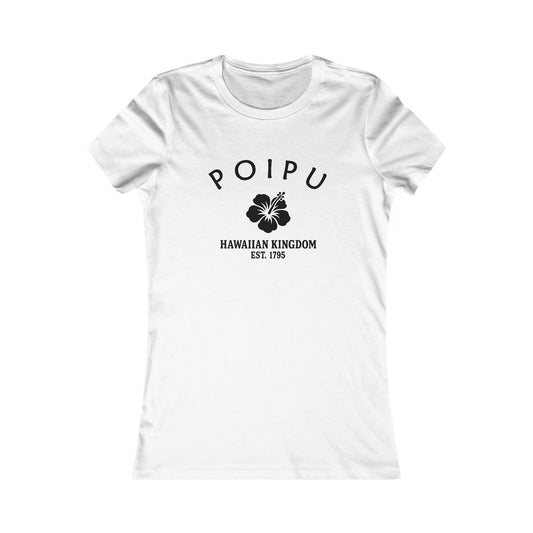
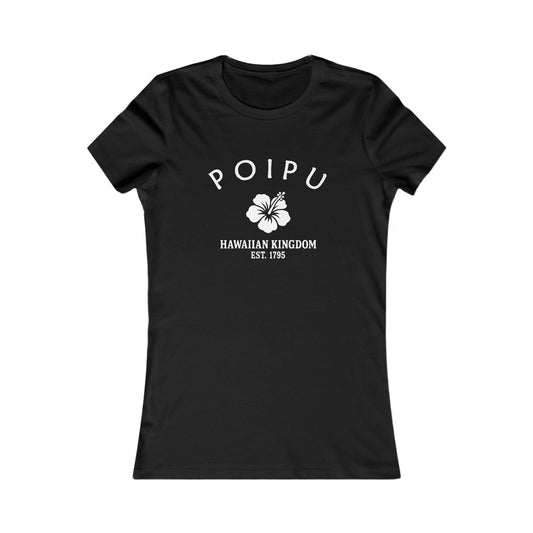
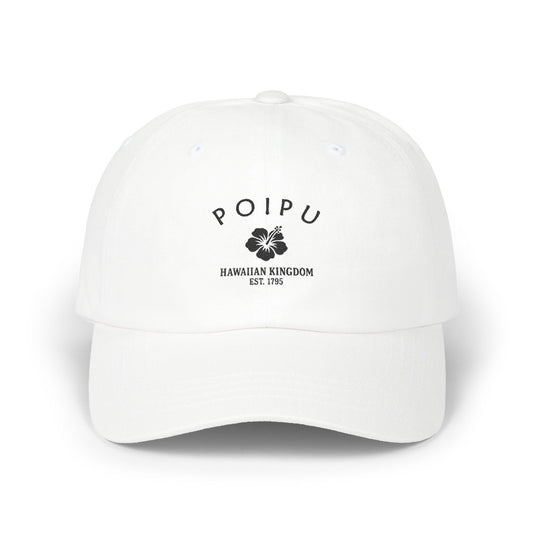
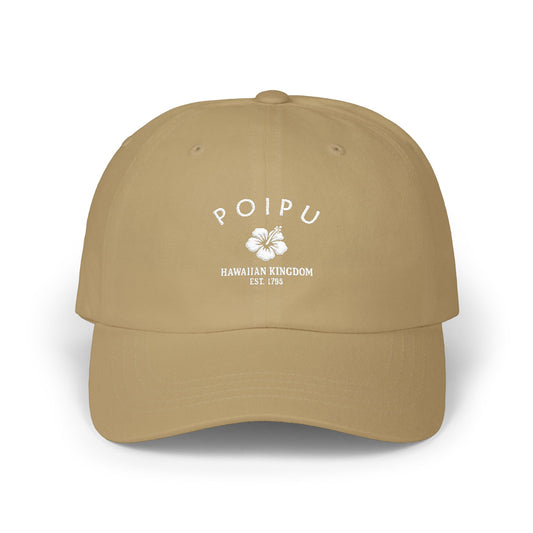
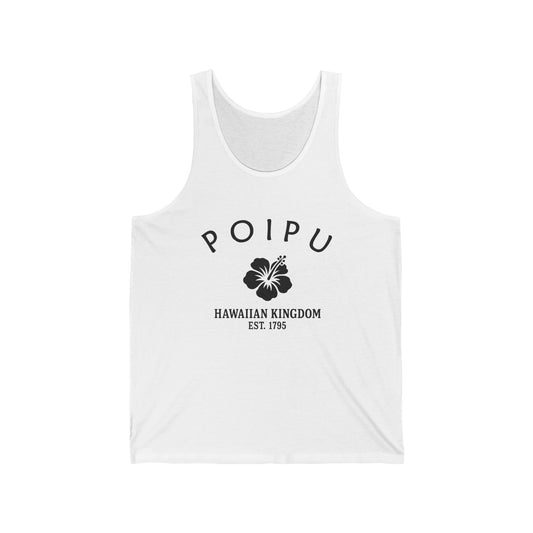
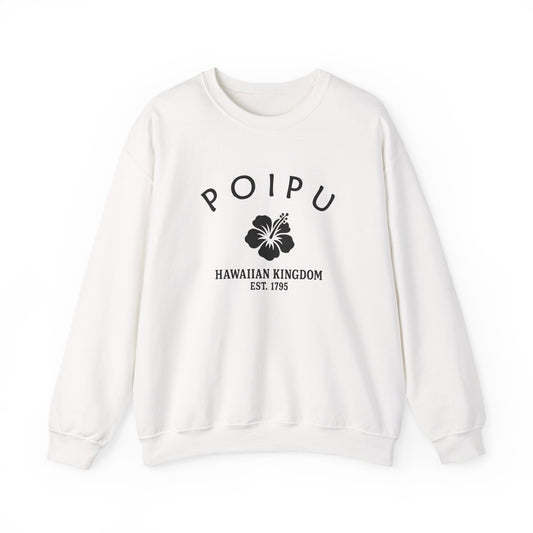
Our Poʻipū logo carries the Hawaiian hibiscus above "Hawaiian Kingdom — Est. 1795," the shared retro emblem of our Hawaiʻi places, drawn in worn black-and-white like an old travel decal. What makes this one Poʻipū is everything around it: the crashing-waves name, the sunniest shore on the Garden Isle, the People's Prince, and the honu asleep on the best beach in America. Wear the south shore.
Because it is Hawaiʻi at its sunniest and most easygoing — a warm, protected coast where the turtles share the sand, the blowhole keeps time, and the Garden Isle's plantation past sits a mile inland under a monkeypod tree. Beach by day, Kōloa by golden hour.
Poʻipū, Hawaii — Travel Guide
Visiting Poʻipū Today
Poʻipū sits at the southern tip of Kauaʻi, about twenty minutes west of Lihue Airport — the island's driest, sunniest resort coast. Winter (December–March) brings whales offshore and slightly cooler water; summer is calmest for swimming; the south shore stays swimmable essentially year-round. The famous rule holds island-wide: nothing built taller than a coconut palm.
Beaches, the Tree Tunnel & Old Kōloa Town
For visitors searching for things to do in Poʻipū:
- Poʻipū Beach Park — the best-beach-in-America crescents, beginner surf, and honu (with monk seals as occasional guests).
- Spouting Horn — the lava-tube blowhole throwing spray forty or fifty feet, best at higher surf.
- The Tree Tunnel — the 1911 eucalyptus vault over Maluhia Road, the classic south-shore arrival.
- Old Kōloa Town & the Heritage Trail — plantation storefronts, the 1835 mill chimney, fourteen marked history stops.
- The gardens — Allerton and McBryde tours in the Lāwaʻi Valley; Prince Kūhiō Park on the shore road.
- Māhāʻulepū Heritage Trail — the wild two miles east from Shipwreck Beach along cliffs and lithified dunes.
Why People Visit Poʻipū
Because it is Hawaiʻi at its sunniest and most easygoing — a warm, protected coast where the turtles share the sand, the blowhole keeps time, and the Garden Isle's plantation past sits a mile inland under a monkeypod tree. Beach by day, Kōloa by golden hour.
Wear the HistoryWhere you're from. Where you love. Where you explored. Where you belong.
Kindred Cities
E komo mai — welcome, friends of the south shore; Poʻipū's kindred town is its own inland twin.
Kōloa sits a mile up Maluhia Road — the plantation town that fed this shore for a century and shares its zip code, its July festival, and its monkeypod shade. The 1835 mill made Kōloa the start of plantation Hawaiʻi; the beaches made Poʻipū its reward. One coast, one mill town, one story told in two places — you cannot understand either without walking the other.
Come through the Tree Tunnel and do both in a day: history under the storefront eaves by morning, honu on the golden sand by afternoon. Come and visit us soon.
When you plan the trip, the Kauaʻi Visitors Bureau — the island's official visitor office — is the place to start.
Wear the History
Where you're from. Where you love. Where you explored. Where you belong.

For deeper reading on the Poʻipū and Kōloa history described here — the Native Hawaiian south shore, the 1778 first European contact at Waimea, King Kaumualiʻi and Kauaʻi's 1810 entry into the Hawaiian Kingdom, the 1835 founding of Hawaiʻi's first successful sugar plantation at Kōloa, the immigrant labor waves, the 1911 Maluhia Road Tree Tunnel, the 1918 Sueoka Store and Old Kōloa Town, and the 1992 Hurricane ʻIniki recovery — it may be useful to consult (1) the Kōloa History Center and the Kauaʻi Historical Society, (2) the Kauaʻi Museum and the Grove Farm museum in Lihue, (3) the Hawaiʻi State Archives, (4) the National Tropical Botanical Garden at Lāwaʻi, and (5) the County of Kauaʻi public records. For travel and visitor information, it may be useful to contact (1) the Poʻipū Beach Resort Association, (2) the Kauaʻi Visitors Bureau, (3) the County of Kauaʻi Parks & Recreation, (4) Hawaiʻi State Parks, and (5) the Lihue Airport visitor information desk.
Shop the Poʻipū Hawaiʻi collection
View full collection-
Poipu Hawaii Vintage Retro Premium Crewneck Sweatshirt - Black Logo
Regular price $48.00 USDRegular price -
Poipu Hawaii Vintage Retro Premium Crewneck Sweatshirt - White Logo
Regular price $48.00 USDRegular price -
Poipu Hawaii Vintage Retro Womens Fitted Ringspun Cotton Tee - Black Logo
Regular price $28.00 USDRegular price -
-
Poipu Hawaii Vintage Retro Embroidered Cotton Cap - Black Logo
Regular price $32.00 USDRegular price -
Poipu Hawaii Vintage Retro Embroidered Cotton Cap - White Logo
Regular price $32.00 USDRegular price -
Poipu Hawaii Vintage Retro Vinyl Sticker - Black Logo
Regular price From $6.00 USDRegular price -
Poipu Hawaii Vintage Retro Unisex Heavy Cotton Hoodie - Black Logo
Regular price $56.00 USDRegular price -
Poipu Hawaii Vintage Retro Unisex Heavy Cotton Hoodie - White Logo
Regular price $56.00 USDRegular price -
Poipu Hawaii Vintage Retro Unisex Heavy Cotton Tee - Black Logo
Regular price $22.00 USDRegular price -
Poipu Hawaii Vintage Retro Unisex Heavy Cotton Tee - White Logo
Regular price $22.00 USDRegular price -
Poipu Hawaii Vintage Retro Back Printed Art Series Cotton Tee - Black Logo
Regular price $32.00 USDRegular price -
Poipu Hawaii Vintage Retro Giclée Print Art Series Poster
Regular price From $38.00 USDRegular price -
Poipu Hawaii Vintage Retro Unisex Embroidered Fleece Jacket - White Logo
Regular price $98.00 USDRegular price -
Poipu Hawaii Vintage Retro Unisex Embroidered Cotton Polo - Black Logo
Regular price $48.00 USDRegular price -
Poipu Hawaii Vintage Retro Ceramic Mug - Black Logo
Regular price From $16.00 USDRegular price -
Poipu Hawaii Vintage Retro Cotton Canvas Tote Bag - White Logo
Regular price $25.00 USDRegular price -
Poipu Hawaii Vintage Retro Thank You Card Set - Black Logo
Regular price From $25.00 USDRegular price -
Poipu Hawaii Vintage Retro Cotton Canvas Tote Bag - Black Logo
Regular price $25.00 USDRegular price -
Poipu Hawaii Vintage Retro Cotton Jersey Baby Bodysuit - Black Logo
Regular price $26.00 USDRegular price -
Poipu Hawaii Vintage Retro Unisex Cotton Jersey Tank Top - White Logo
Regular price $28.00 USDRegular price -
Poipu Hawaii Vintage Retro Unisex Cotton Jersey Tank Top - Black Logo
Regular price $28.00 USDRegular price -
Poipu Hawaii Vintage Retro Unisex Heavy Crewneck Sweatshirt - Black Logo
Regular price $44.00 USDRegular price