Kāʻanapali Hawaii — Retro Vintage History
What’s with the Sugar Cane Train? Kāʻanapali’s beach was famous for sugar long before it was famous for resorts. From the 1890s, narrow-gauge rail lines threaded the cane fields above this shore — part of more than two hundred miles of plantation track on Maui alone — hauling harvested cane down to the Pioneer Mill in Lahaina, a couple of miles south. Trucks took over the work by the 1950s, but in 1969 a six-mile stretch of that old right-of-way was revived as the Lahaina, Kāʻanapali & Pacific Railroad — the Sugar Cane Train. For decades its vintage steam engines pulled open-air coaches between Lahaina and Puʻukoliʻi, just north of here, whistling past the cane and across a tall curved wooden trestle, with Lānaʻi and Molokaʻi spread across the water and the West Maui Mountains rising behind. Millions of visitors rode it before it fell quiet.
Wear the HistoryLong before the cane and the hotels, this was storied West Maui ground. Kāʻanapali was an ancient Hawaiian district of fishing villages and royal lands, set beneath the steep green wall of the West Maui Mountains — Mauna Kahalawai. In the sixteenth century the chief Piʻilani unified West Maui, binding its four bays together as Nā Hono A Piʻilani, and in 1802 Kamehameha I drew up his war fleet on this coast as he completed the conquest that made him king of all the islands. The wide beach travelers prize today was a gathering place and a training ground for generations of Hawaiians.
At the beach’s northern end rises Puʻu Kekaʻa, the black lava headland that visitors call Black Rock. To Native Hawaiians it is sacred — a leina a ka ʻuhane, a leaping place where the souls of the dead departed for the ancestral realm — and the cliff from which the great Maui chief Kahekili was said to make his fearless leaps. It is a place to be honored rather than treated lightly, and a reminder that this bright coast holds meaning far older and deeper than any resort.

Then came the cane. Through the nineteenth and early twentieth centuries the Pioneer Mill Company planted West Maui in sugar, and Kāʻanapali’s fields ran from the mountains down to the sea, worked by immigrant families from Portugal, Japan, the Philippines, and Puerto Rico whose cultures still flavor the islands. Kāʻanapali was the railroad’s seaward end: a landing on the north side of Puʻu Kekaʻa, with a wharf and offshore moorings, shipped the processed sugar out to the world. For the better part of a century, this was plantation country.
Then sugar gave way to sand. As cane profits faded, American Factors — Amfac, the company behind Pioneer Mill — took twelve hundred acres out of production and, beginning in 1959, built something Hawaiʻi had never seen: a resort planned whole, from the ground up. Kāʻanapali Beach Resort opened in 1962, the first master-planned resort destination in the islands and a model later copied around the world. In its early years small planes even touched down at the resort’s own beachfront airstrip, taxiing almost to the hotel doors.
What anchors all of it is the beach. Three miles of soft golden sand run along a calm, reef-sheltered shore that was named the best beach in America in 2003, with a paved beachwalk threading its whole length, the green mountains behind, and Lānaʻi and Molokaʻi out across the channel. Each winter humpback whales gather in the warm nearshore water — thousands of them winter off Maui — close enough to watch from the sand. Sunset here turns the sand to gold and the lava of Black Rock to black glass.
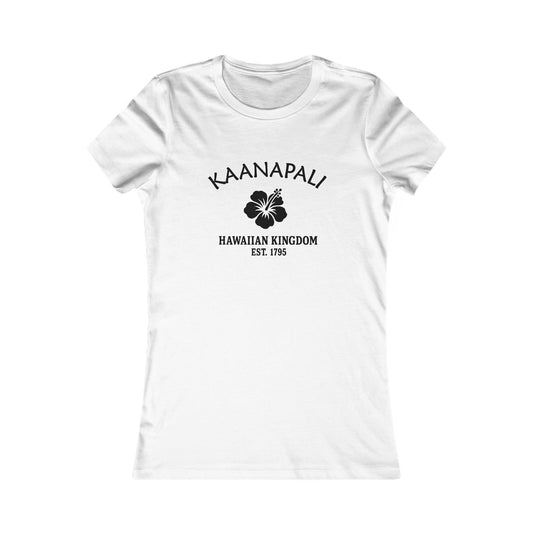
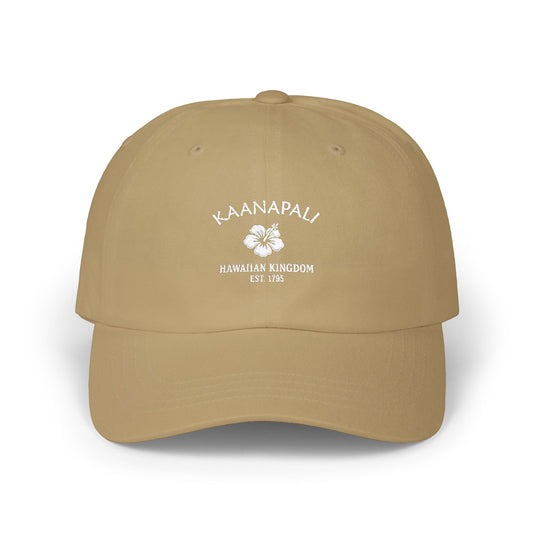
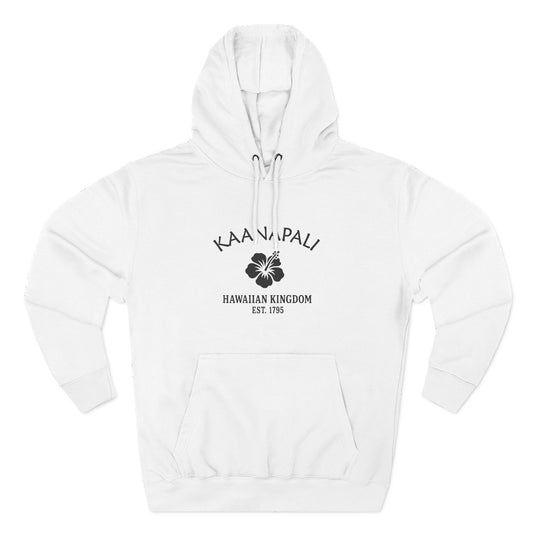
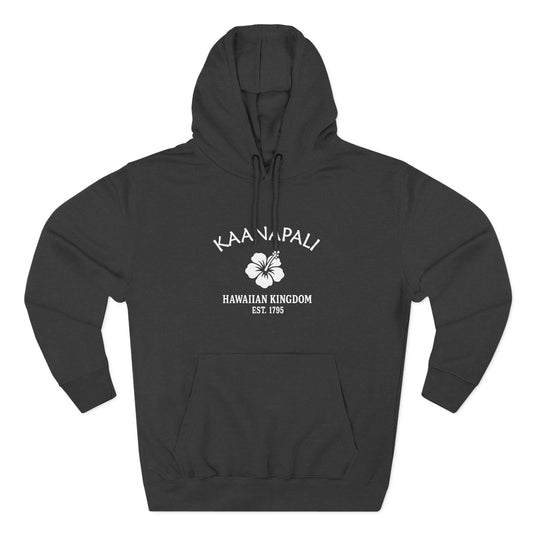
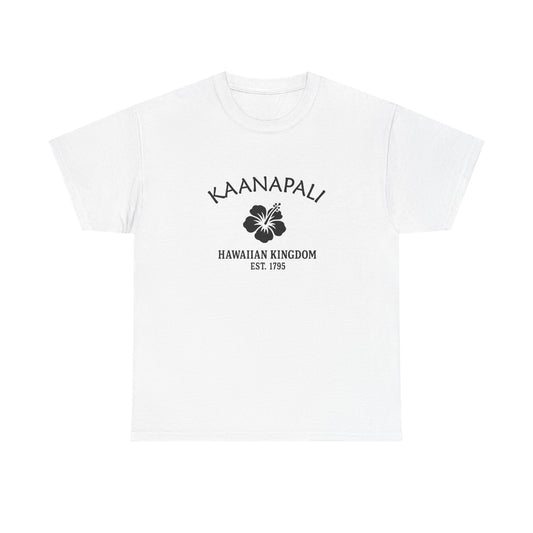
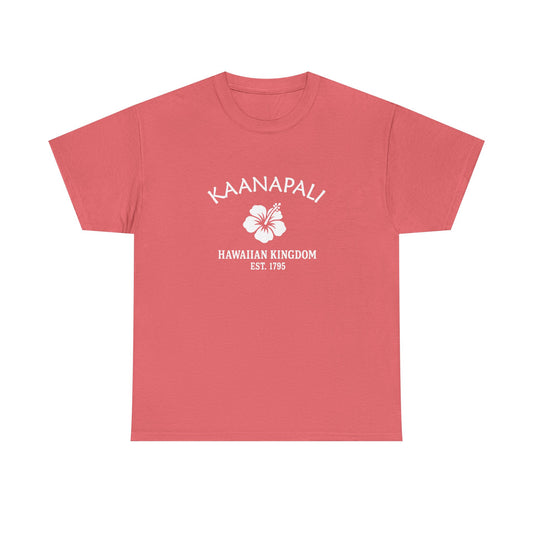
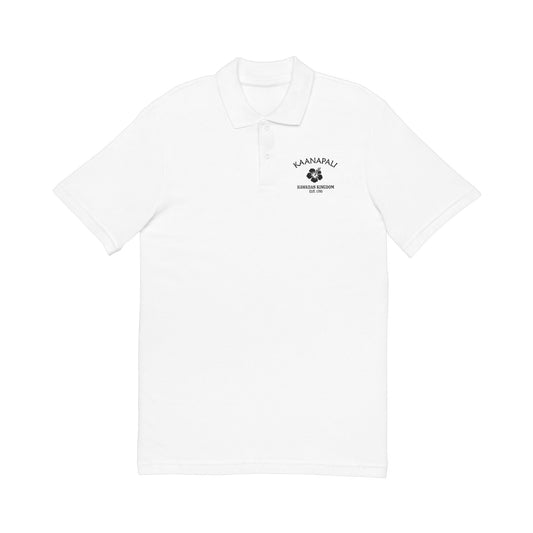
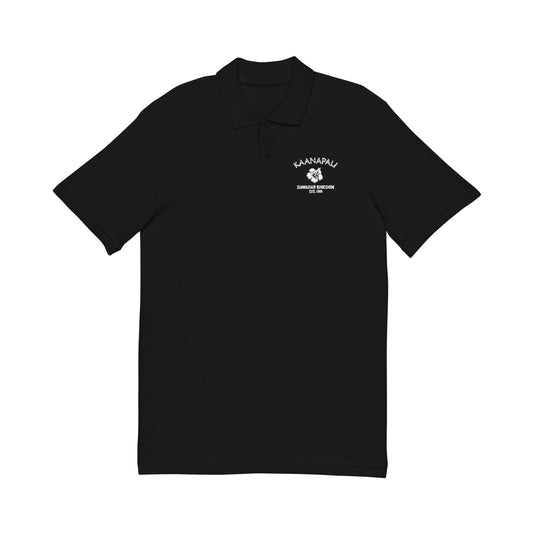
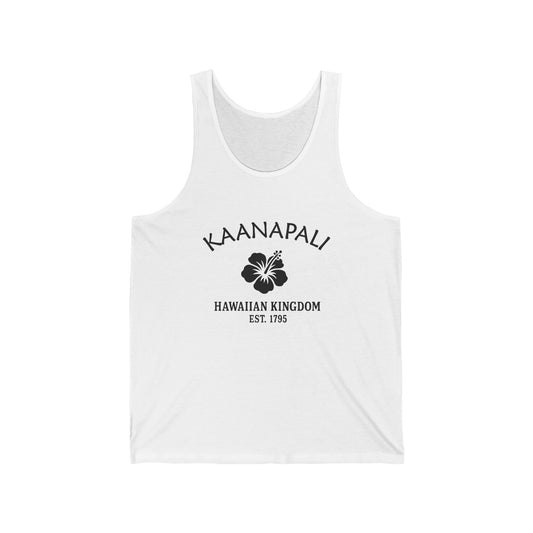
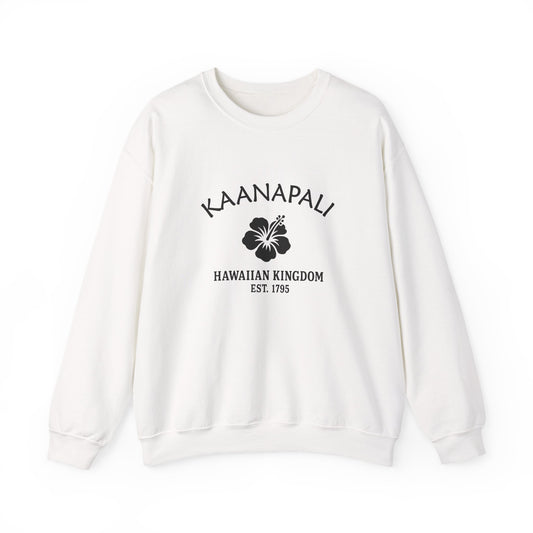
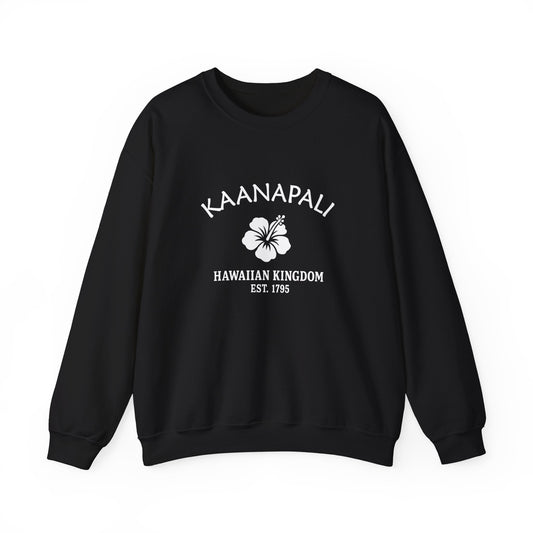
Our Kāʻanapali logo carries the Hawaiian hibiscus over “Hawaiian Kingdom · Est. 1795,” the shared emblem of every Merlin Classics Hawaiʻi place, marking the 1795 unification of the islands under Kamehameha. Printed in clean retro black-and-white like an old travel decal, the hibiscus stands for the islands as a whole; what makes this one Kāʻanapali is everything around it — the black rock and the golden sand, the cane that once ran to the sea, and the steam train that carried its memory along the shore.

Today Kāʻanapali is West Maui’s resort coast — a long, bright beach beneath green mountains, the islands in view and whales offshore in winter — but its story runs deeper than the hotels: royal land and sacred ground, a century of sugar, and the little steam train that still runs through the island’s memory. Our Kāʻanapali designs gather that into wearable form. Kāʻanapali, Maui — three miles of golden sand below the West Maui Mountains, where black lava meets the sunset sea.
Kāʻanapali, Maui — Travel Guide
Visiting Kāʻanapali Today
Kāʻanapali lines the leeward west coast of Maui with three miles of golden sand, a paved beachwalk linking the resorts, and the black lava point of Puʻu Kekaʻa at its northern end. The West Maui Mountains rise behind, and Lānaʻi and Molokaʻi sit across the channel — sunny, calm, and an easy base for West Maui.
The Beach, Black Rock & the West Maui Coast
For visitors looking for things to do in Kāʻanapali, Maui:
- Walk the three-mile Kāʻanapali Beach and its oceanfront beachwalk, end to end.
- Snorkel the reef at Puʻu Kekaʻa (Black Rock) — a sacred site to treat with respect.
- Watch for humpback whales in the nearshore water through the winter season.
- Visit Whalers Village and the Hawaiʻi Wildlife Discovery Center for West Maui whaling and marine-life history.
- Relax at Kahekili Beach Park at the quieter north end, with easy shore snorkeling.
- Stay for sunset, when the sand turns gold and Black Rock turns to glass.
Why People Visit Kāʻanapali
Kāʻanapali offers the classic West Maui beach day: warm, calm water, a long walkable shore, mountains behind and islands in view. It pairs an easy resort coast with deep heritage — royal land, sacred ground, a century of sugar, and the memory of the Sugar Cane Train. It is sunny, scenic, and welcoming, with year-round appeal.
Wear the History
Kindred Cities
Welcome to visitors from Porto Cervo (benvenuti) and Cannes (bienvenue) — like-minded resort beaches made for the good life. Porto Cervo anchors Sardinia's yacht-set Costa Smeralda; Cannes parades along its Mediterranean Croisette of festivals and sun; Kāʻanapali stretches three gold-sand miles below West Maui, anchored by Black Rock. Coastlines built for the pleasure of being there.
Wear the History

For deeper reading on the Kāʻanapali history described here — the West Maui royal lands and the sacred Puʻu Kekaʻa, the Pioneer Mill sugar era and the Lahaina, Kāʻanapali & Pacific Railroad (the Sugar Cane Train), and the 1962 opening of Hawaiʻi’s first master-planned resort — it may be useful to consult (1) the Lahaina Restoration Foundation and the Maui Historical Society, (2) the Hawaiʻi State Archives, (3) the Bishop Museum, (4) the University of Hawaiʻi Maui collections, and (5) Maui County records. For travel and visitor information, it may be useful to contact (1) the Maui Visitors Bureau, (2) the Hawaiʻi Tourism Authority, (3) the Kāʻanapali Beach Resort Association, (4) Hawaiʻi State Parks, and (5) the National Weather Service for West Maui surf and marine forecasts.
Shop the Kāʻanapali Hawaiʻi collection
View full collection-
Kaanapali Hawaii Vintage Retro Premium Crewneck Sweatshirt - Black Logo
Regular price $48.00 USDRegular price -
Kaanapali Hawaii Vintage Retro Premium Crewneck Sweatshirt - White Logo
Regular price $48.00 USDRegular price -
Kaanapali Hawaii Vintage Retro Womens Fitted Ringspun Cotton Tee - Black Logo
Regular price $28.00 USDRegular price -
-
Kaanapali Hawaii Vintage Retro Embroidered Cotton Cap - Black Logo
Regular price $32.00 USDRegular price -
Kaanapali Hawaii Vintage Retro Embroidered Cotton Cap - White Logo
Regular price $32.00 USDRegular price -
Kaanapali Hawaii Vintage Retro Unisex Heavy Cotton Hoodie - Black Logo
Regular price $56.00 USDRegular price -
Kaanapali Hawaii Vintage Retro Unisex Heavy Cotton Hoodie - White Logo
Regular price $56.00 USDRegular price -
Kaanapali Hawaii Vintage Retro Unisex Heavy Cotton Tee - Black Logo
Regular price $22.00 USDRegular price -
Kaanapali Hawaii Vintage Retro Unisex Heavy Cotton Tee - White Logo
Regular price $22.00 USDRegular price -
Kaanapali Hawaii Vintage Retro Unisex Embroidered Cotton Polo - Black Logo
Regular price $48.00 USDRegular price -
Kaanapali Hawaii Vintage Retro Unisex Embroidered Fleece Jacket - White Logo
Regular price $98.00 USDRegular price -
Kaanapali Hawaii Vintage Retro Vinyl Sticker - Black Logo
Regular price From $6.00 USDRegular price -
Kaanapali Hawaii Vintage Retro Ceramic Mug - Black Logo
Regular price From $16.00 USDRegular price -
Kaanapali Hawaii Vintage Retro Cotton Canvas Tote Bag - Black Logo
Regular price $25.00 USDRegular price -
Kaanapali Hawaii Vintage Retro Cotton Canvas Tote Bag - White Logo
Regular price $25.00 USDRegular price -
Kaanapali Hawaii Vintage Retro Thank You Card Set - Black Logo
Regular price From $25.00 USDRegular price -
Kaanapali Hawaii Vintage Retro Cotton Jersey Baby Bodysuit - Black Logo
Regular price $26.00 USDRegular price -
Kaanapali Hawaii Vintage Retro Unisex Cotton Jersey Tank Top - White Logo
Regular price $28.00 USDRegular price -
Kaanapali Hawaii Vintage Retro Unisex Cotton Jersey Tank Top - Black Logo
Regular price $28.00 USDRegular price -
Kaanapali Hawaii Vintage Retro Unisex Heavy Crewneck Sweatshirt - Black Logo
Regular price $44.00 USDRegular price -
Kaanapali Hawaii Vintage Retro Unisex Heavy Crewneck Sweatshirt - White Logo
Regular price $44.00 USDRegular price -
Kaanapali Hawaii Vintage Retro Back Printed Art Series Cotton Tee - Black Logo
Regular price $32.00 USDRegular price