Healdsburg California — Retro Vintage History
What's with the three valleys? Healdsburg sits at a rare crossroads: the meeting point of three of California's great wine valleys. The Russian River Valley curves in from the south, Dry Creek Valley runs up to the west, and Alexander Valley opens to the northeast — three distinct growing regions, each with its own soil and signature grape, all converging on one small Sonoma County town beside the Russian River. That convergence is why Healdsburg, more than almost anywhere, simply means wine country.
Wear the HistoryThe town began with the Gold Rush. Harmon Heald, an Ohio businessman, came west and settled on the old Mexican Rancho Sotoyome; in 1857 he platted a town around a Spanish-style central Plaza, and in 1867 Healdsburg was incorporated. The Pomo people had lived in this valley long before — renowned basketweavers whose presence is woven into the region's deeper history. When the railroad arrived in 1871, the farm country of prunes, hops, and orchards began its long turn toward the grape.
What's with the 1857 Plaza? Heald's tree-lined town square is still the heart of Healdsburg — a shaded, walkable plaza ringed by turn-of-the-century storefronts that has helped earn the town a reputation as one of America's most charming. It's the place the whole valley orbits: a small-town center that grew, over generations, into a world-class wine-country destination without losing its plaza-town soul.

By the late twentieth century the three valleys had won formal recognition as American Viticultural Areas, and Healdsburg's identity settled into place: Zinfandel from Dry Creek, Pinot Noir and Chardonnay from the Russian River, Cabernet from Alexander Valley — a town defined by what grows around it. The Russian River still runs through it all, with its swimming beaches in summer and its mist in the cool of the morning.
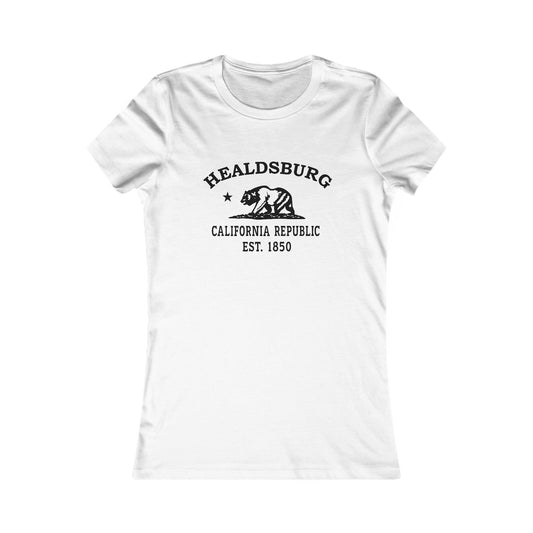
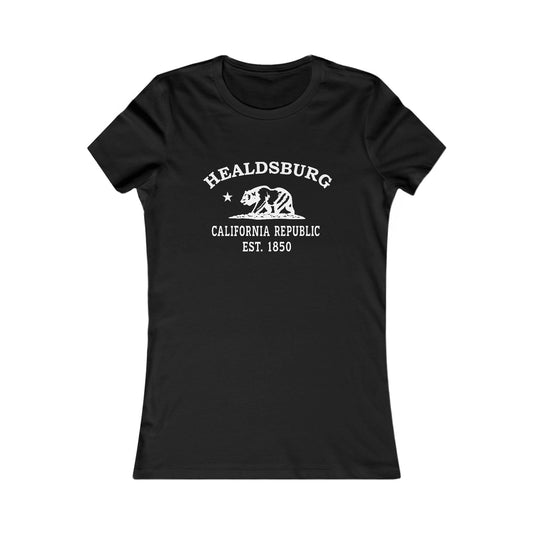
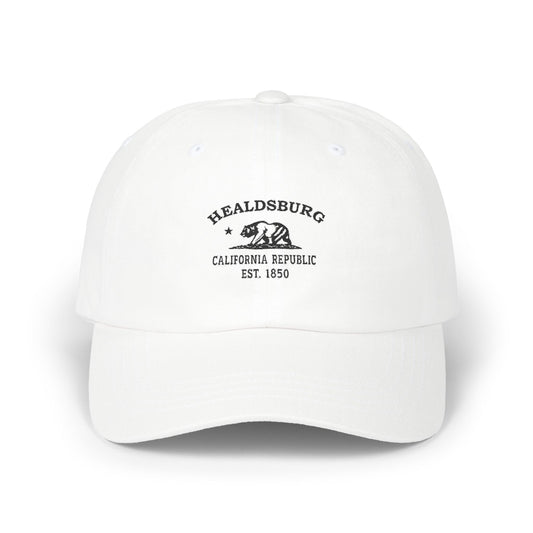
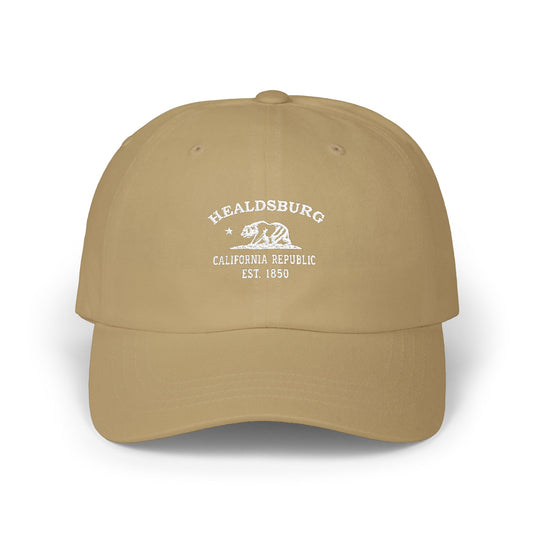
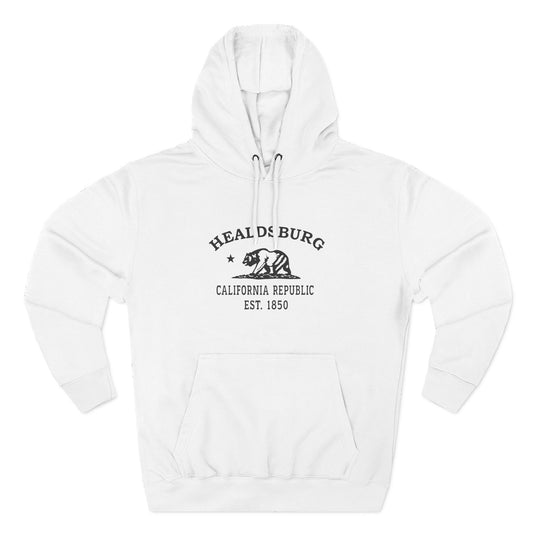
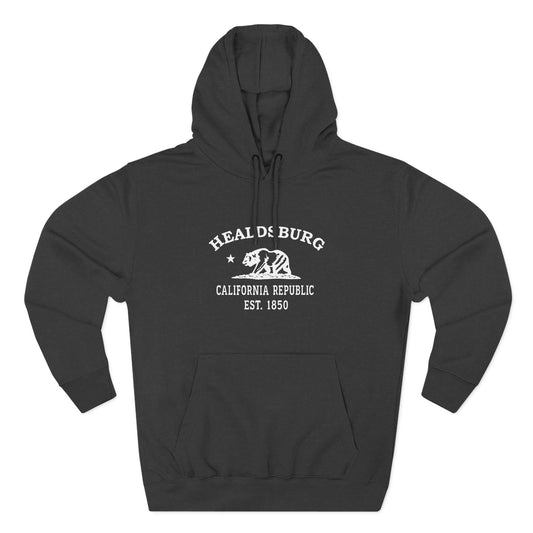
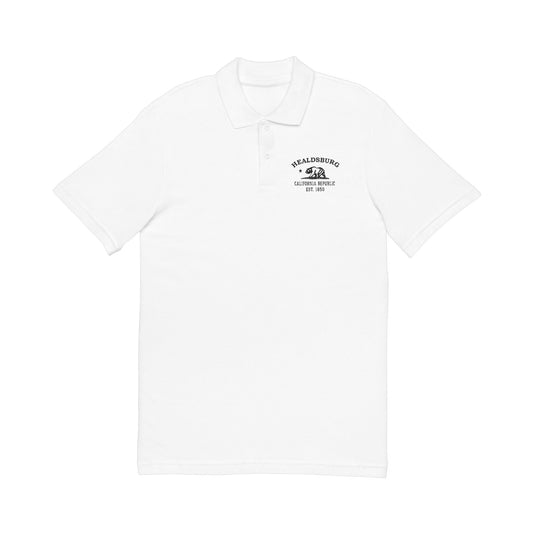
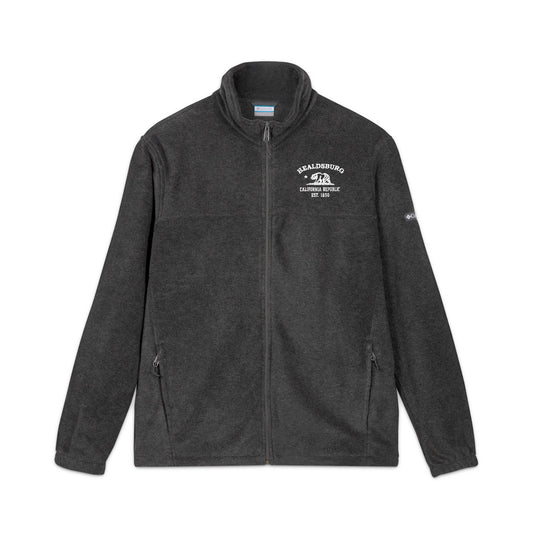
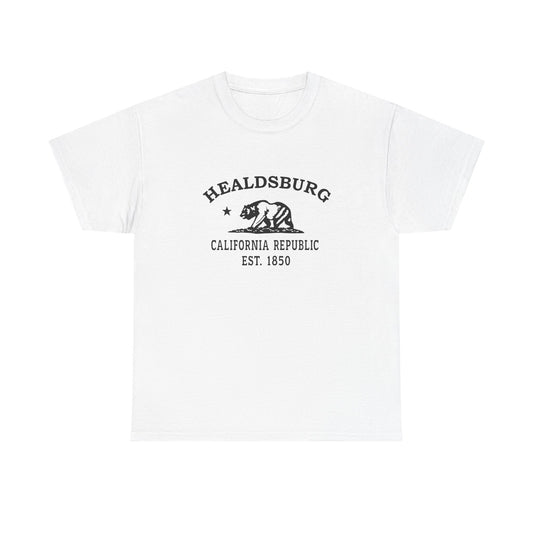
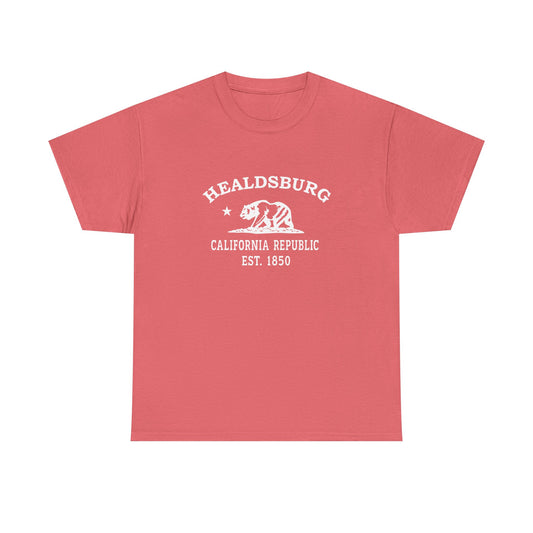
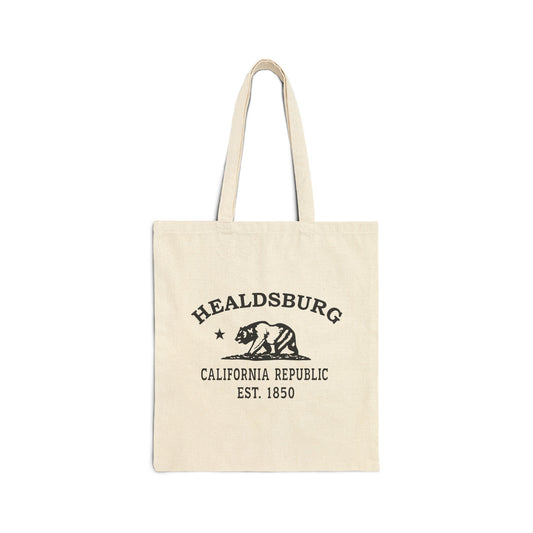
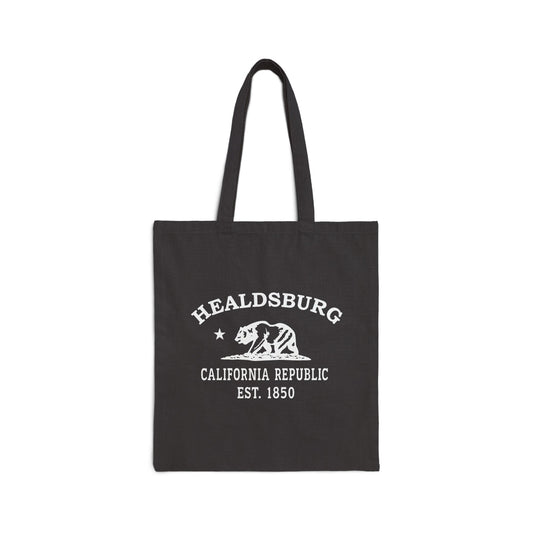
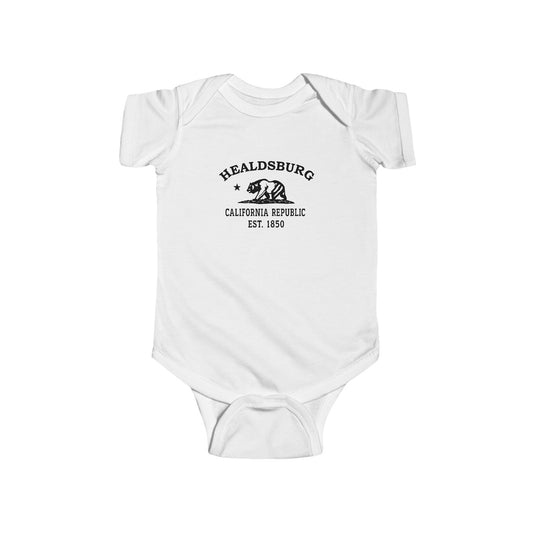
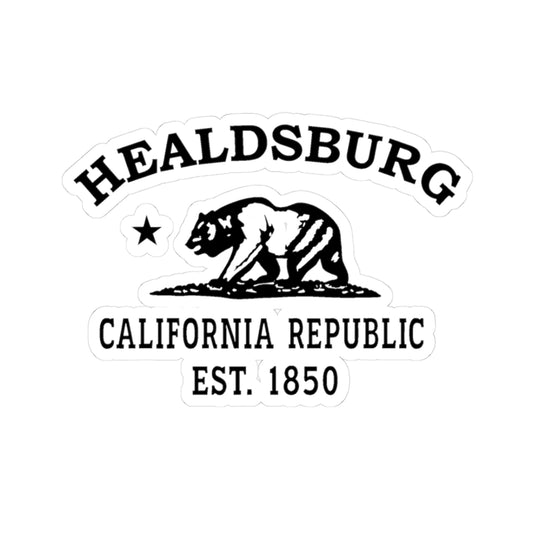
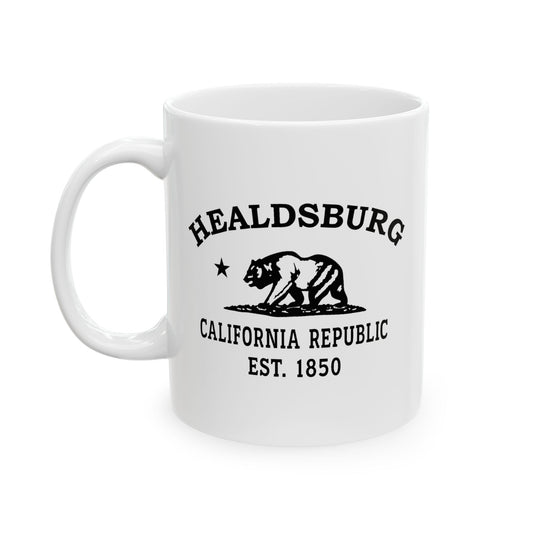
Our Healdsburg logo carries California's grizzly bear and lone star over "California Republic · Est. 1850," the year California became the thirty-first state — the shared emblem of every Merlin Classics California place. Printed black-and-white with the worn look of an old crate label or WPA poster, the bear-and-star reads as the Golden State in shorthand: rugged, agricultural, proud. What makes this one Healdsburg is the country behind it — the plaza, the river, and the three valleys.
Today Healdsburg is known the world over for its wine, its food, and its historic plaza, while keeping the easygoing feel of a Sonoma farm town. Our Healdsburg designs gather that identity — the bear-and-star emblem, the three-valley wine country, and the 1857 plaza — into wearable form. Healdsburg, California — where the Russian River meets three great wine valleys, and a historic 1857 plaza still anchors one of America's most charming small towns.

Healdsburg, California — Travel Guide
Visiting Healdsburg Today
Healdsburg centers on its leafy 1857 Plaza, ringed by galleries, shops, and tasting rooms, with the Russian River, vineyard valleys, and oak hills all close at hand. It's an easy, walkable base for exploring Sonoma wine country.
Plaza, River & the Three Valleys in Healdsburg
For visitors looking for things to do in Healdsburg, California:
- Relax on the historic Healdsburg Plaza, the tree-lined town square at the center of it all.
- Visit the Healdsburg Museum in the former Carnegie Library for local and regional history.
- Cool off at the Russian River beaches just outside of town in summer.
- Explore the three wine valleys — Russian River, Dry Creek, and Alexander — that ring the town.
- Bike or walk the Foss Creek Pathway linking the town's parks and neighborhoods.
Why People Visit Healdsburg
Healdsburg pairs walkable small-town charm with world-class wine country. Visitors split their time between the plaza, the river, and the surrounding valleys, drawn by the food, the vineyards, and the refined-yet-down-to-earth Sonoma ambiance. It's a gentle, gracious base for the whole of northern Sonoma County.
Wear the History

For deeper reading on the Healdsburg history described here — the Pomo heritage of the valley, the Rancho Sotoyome land grant, Harmon Heald's 1857 founding and Plaza, and the rise of the three wine valleys — it may be useful to consult (1) the Healdsburg Museum & Historical Society, (2) the Healdsburg Regional Library local-history collection, (3) the California State Archives and the Sonoma County History & Genealogy Library, (4) the City of Healdsburg records office, and (5) the California Office of Historic Preservation. For travel and visitor information, it may be useful to contact (1) Healdsburg Tourism / Visit Healdsburg, (2) the Healdsburg Chamber of Commerce, (3) Sonoma County Regional Parks, (4) the California State Parks office, and (5) Cal Fire / Sonoma County emergency advisories during fire season.
Shop the Healdsburg California collection
View full collection-
Healdsburg California Vintage Retro Premium Crewneck Sweatshirt - Black Logo
Regular price $48.00 USDRegular price -
Healdsburg California Vintage Retro Premium Crewneck Sweatshirt - White Logo
Regular price $48.00 USDRegular price -
Healdsburg California Vintage Retro Womens Fitted Ringspun Cotton Tee - Black Logo
Regular price $28.00 USDRegular price -
-
Healdsburg California Vintage Retro Embroidered Cotton Cap - Black Logo
Regular price $32.00 USDRegular price -
Healdsburg California Vintage Retro Embroidered Cotton Cap - White Logo
Regular price $32.00 USDRegular price -
Healdsburg California Vintage Retro Unisex Heavy Cotton Hoodie - Black Logo
Regular price $56.00 USDRegular price -
Healdsburg California Vintage Retro Unisex Heavy Cotton Hoodie - White Logo
Regular price $56.00 USDRegular price -
Healdsburg California Vintage Retro Unisex Embroidered Cotton Polo - Black Logo
Regular price $48.00 USDRegular price -
Healdsburg California Vintage Retro Unisex Embroidered Fleece Jacket - White Logo
Regular price $98.00 USDRegular price -
Healdsburg California Vintage Retro Unisex Heavy Cotton Tee - Black Logo
Regular price $22.00 USDRegular price -
Healdsburg California Vintage Retro Unisex Heavy Cotton Tee - White Logo
Regular price $22.00 USDRegular price -
Healdsburg California Vintage Retro Cotton Canvas Tote Bag - Black Logo
Regular price $25.00 USDRegular price -
Healdsburg California Vintage Retro Cotton Canvas Tote Bag - White Logo
Regular price $25.00 USDRegular price -
Healdsburg California Vintage Retro Cotton Jersey Baby Bodysuit - Black Logo
Regular price $26.00 USDRegular price -
Healdsburg California Vintage Retro Vinyl Sticker - Black Logo
Regular price From $6.00 USDRegular price -
Healdsburg California Vintage Retro Ceramic Mug - Black Logo
Regular price From $16.00 USDRegular price -
Healdsburg California Vintage Retro Thank You Card Set - Black Logo
Regular price From $25.00 USDRegular price -
Healdsburg California Vintage Retro Back Printed Art Series Cotton Tee - Black Logo
Regular price $32.00 USDRegular price -
Healdsburg California Vintage Retro Giclée Print Art Series Poster
Regular price From $38.00 USDRegular price -
Healdsburg California Vintage Retro Unisex Cotton Jersey Tank Top - White Logo
Regular price $28.00 USDRegular price -
Healdsburg California Vintage Retro Unisex Cotton Jersey Tank Top - Black Logo
Regular price $28.00 USDRegular price -
Healdsburg California Vintage Retro Unisex Heavy Crewneck Sweatshirt - Black Logo
Regular price $44.00 USDRegular price