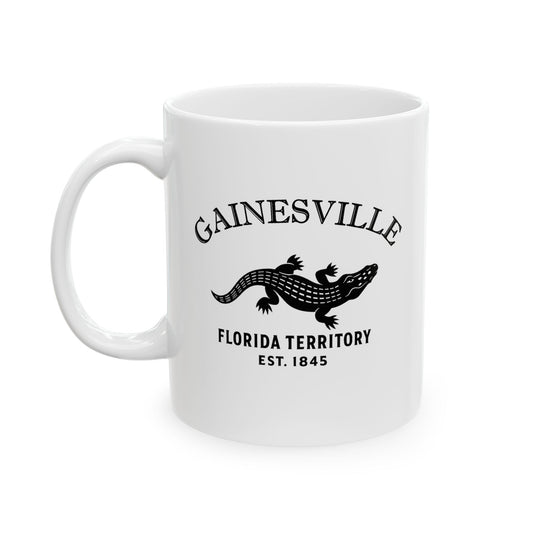
Gainesville Florida — Retro Vintage History
Gainesville is where the prairie still runs wild — a North-Central Florida city where you can watch wild bison and free-roaming horses graze a 21,000-acre savanna an hour after walking out of a research lab. The seat of Alachua County since 1854, it grew from a railroad market town on the old cotton frontier into one of America's great college towns, wrapped around Florida's first state preserve and pocked with karst springs and sinkholes that keep the wild close. Live oaks, Spanish moss, black water and green shade: this is real Florida, the interior kind, and Gainesville has never let it go.
Wear the HistoryWhere you're from. Where you love. Where you explored. Where you belong.
What's with the prairie that became a lake? In 1871 the Alachua Sink clogged and Paynes Prairie became Alachua Lake — steamboats crossed it for twenty years until it drained away in 1891. It sounds impossible, and locals watched it happen. Heavy rains in the early 1870s met a sink plugged with sediment and vegetation, and the great savanna William Bartram had described in 1774 slowly deepened into Alachua Lake — enough water for a steamboat line to run from Chacala Pond to Sweetwater Branch, hauling passengers, citrus, and cargo to the railroad on the rim. For twenty years the lake looked permanent. Then, in late July 1891, the sink cleared: the water fell eight feet in ten days, the lake emptied into the aquifer, and one steamer was left sitting on the grass. The prairie has been a prairie ever since — wild horses, bison, and alligators where the paddle-wheels ran.

People read this land the same way for thousands of years. The Potano lived and farmed here; the word Alachua likely comes from their word for the great sink — "jug." By the late 1600s the Spanish ran La Chua, the largest cattle ranch in Spanish Florida, on the prairie's rim, and in the 1770s the Seminole leader Ahaya the Cowkeeper grazed thousands of head on the savanna that would later take the name of King Payne. Bartram walked it in 1774 and filled his Travels with it. The American settlement that followed grew up nearby as Hogtown, a trading-post village on the creek that still carries the name through the middle of the city.
QUICK FACTS — GAINESVILLE, FL
Gainesville was founded in 1853-54 as the new Alachua County seat, sited on the Florida Railroad's route and named for General Edmund P. Gaines.
William Bartram crossed the Great Alachua Savanna in 1774 and made the prairie famous in his Travels.
Paynes Prairie became Florida's first state preserve in 1971 — roughly 21,000 acres where wild bison and horses still roam.
From 1871 to 1891 the clogged Alachua Sink turned the prairie into Alachua Lake, crossed by shallow-draft steamboats.
In 1891 the sink cleared and the lake drained away — eight feet in ten days — stranding a steamer on the grass.
Devil's Millhopper is a bowl-shaped sinkhole 120 feet deep and 500 feet across, sheltering its own rainforest microclimate.
The Battle of Gainesville was fought across the town square on August 17, 1864.
Gainesville incorporated as a town on April 14, 1869, and was chartered as a city in 1907.
The city proper was a railroad decision. When the Florida Railroad plotted its line from Fernandina to Cedar Key, Alachua County's seat sat at Newnansville — off the route. At an 1853 picnic gathering at Boulware Springs, county voters chose to move the courthouse to a new town on the line, and by 1854 Gainesville existed, named for General Edmund P. Gaines of the Seminole Wars, with Major James B. Bailey furnishing the founding land. The rails arrived in 1859, cotton and vegetables moved out by the carload, and the town incorporated on April 14, 1869.
The Civil War came to the square itself. On August 17, 1864, Captain J. J. Dickison's Florida cavalry surprised a Union raiding force at the town's main crossing and routed it in a brisk, close fight — Gainesville stayed in Confederate hands for the rest of the war. Peace brought the East Florida Seminary in 1866, brick rebuilding after the fires of the 1880s, phosphate and citrus money, and a city charter in 1907. The year before, the University of Florida had moved to town — the decision that would shape the next century, turning the courthouse-square market town into North-Central Florida's center of learning, medicine, and research.
And yet the wild kept its seat at the table — that is the Gainesville difference. Paynes Prairie became Florida's first state preserve in 1971, returning bison and wild horses to Bartram's savanna. Devil's Millhopper — the 120-foot sinkhole with a rainforest in its bowl — became a geological state park. Sweetwater Wetlands, San Felasco Hammock, Boulware Springs, and the springs country beyond ring the city in green, while the Duckpond's Victorian streets, the Thomas Center's gardens, Depot Park's restored railyard, and Tom Petty Park — named for the city's most famous musical son — keep the town's own story close. Few American cities of this size live this near to their landscape.
Our retro Gainesville designs draw on all of it — the prairie's bison and wide horizons, steamboats on a lake that vanished, live oaks and Spanish moss, the Duckpond's gables and Depot Park's rails, and the springs-and-sinkhole country of real North Florida. Each piece is rendered in the vintage travel style we build for every American town we love — made to feel like a postcard from the trailhead you can wear.
A county seat picked at a springside picnic, a prairie that turned into a lake and back, a college town where bison graze twenty minutes from the lecture hall — Gainesville's story is Florida's interior at its wildest and warmest. From the La Chua Trail to the Duckpond's live oaks, wear a little of Gainesville's real Florida wherever the road takes you.

Gainesville Florida — Travel Guide
Visiting Gainesville Florida Today
Gainesville sits in Alachua County in North-Central Florida, about an hour and a half southwest of Jacksonville and roughly two hours north of Orlando. The city is shaped by the wide drainage of Paynes Prairie at its southern edge, by karst spring country and sinkholes to the north and west, and by a walkable historic core anchored by downtown and the Duckpond. Mild fall and spring weather, ample shade, and a steady calendar of university and cultural events make it a year-round draw.
Paynes Prairie, Devil's Millhopper, and Florida Springs near Gainesville
For visitors searching for things to do in Gainesville, Florida:
- Hike Paynes Prairie Preserve State Park, Florida's first state preserve and a National Natural Landmark, with chances to spot wild bison, free-roaming horses, and alligators from the La Chua Trail and Alachua Sink overlook.
- Walk into Devil's Millhopper Geological State Park, a 120-foot, 500-foot-wide sinkhole with a rainforest microclimate and a chain of small waterfalls.
- Follow the Bartram Trail through the Alachua savanna country described by William Bartram in 1774, the canonical Western account of Paynes Prairie and the surrounding springs.
- Stroll the Duckpond / NE Gainesville Residential District, with its wide porches, live oaks, and late-19th and early-20th-century homes.
- Catch a show or tour the 1911 Hippodrome downtown, a Beaux-Arts former Federal Building now the city's anchor theatre and architectural landmark.
- Wander Sweetwater Wetlands Park for boardwalk views of alligators, wading birds, and the headwaters that drain into Paynes Prairie.
- Day-trip to nearby Micanopy, Cedar Key, and the Santa Fe and Ichetucknee springs region for spring runs, antique shops, and Gulf-coast back roads.
Why People Visit Gainesville Florida
Gainesville blends wild Florida and a working college town. Visitors come for the prairie and the springs, the sinkhole country, the historic district's porches and oaks, and a downtown anchored by the Hippodrome's marquee. It is shaded, walkable, and rooted in place — North-Central Florida at its most genuine, with the real Florida outside the city limits and a century of college-town culture inside them.
Wear the History
Where you're from. Where you love. Where you explored. Where you belong.
Kindred Cities
A warm welcome to visitors from Oxford, England and Heidelberg, Germany (willkommen) — fellow university towns where one great school sets the rhythm.
Oxford and Heidelberg would understand a town shaped by its university. Oxford gave the language a byword for the academic ideal; Heidelberg has Germany's oldest university and a castle above the river; Gainesville lives and breathes the University of Florida, a research powerhouse set down in the green interior, where the swamp begins about where the campus ends.
Gainesville rings true for anyone whose hometown empties when the term ends: a college town through and through, springs and swamp trails just outside it, and a stadium that turns one Saturday a week into the whole point of autumn. Come and visit us soon.
When you plan the trip, Visit Gainesville — the city's tourism bureau — is the place to start.
Wear the History
Where you're from. Where you love. Where you explored. Where you belong.

For deeper reading on the Gainesville, Florida history described here — the Timucua and Potano (Alachua culture) homeland on the savanna, William Bartram's 1774 visit, the 1853 Boulware Springs founding picnic and county-seat decision, the 1854 settlement and naming for General Edmund P. Gaines, the 1859 arrival of the Florida Railroad from Fernandina, the August 17, 1864 Battle of Gainesville where Captain J. J. Dickison's Confederate cavalry repelled a larger Union force, the April 14, 1869 incorporation and 1907 city charter, the 1906 arrival of the University of Florida, the 1910 Thomas Center and 1911 Hippodrome, the earlier Newnansville origin site of Alachua County's county seat, and the 1971 designation of Paynes Prairie as Florida's first state preserve — it may be useful to consult (1) the Matheson History Museum in Gainesville, which holds local collections on Alachua County, (2) the Alachua County Historical Commission, (3) the P. K. Yonge Library of Florida History at the University of Florida Smathers Libraries, (4) the State Library and Archives of Florida and the Florida Division of Historical Resources in Tallahassee, and (5) the Florida Memory project for digitized photographs, maps, and documents on the Alachua savanna and the early railroad era. For deeper local and family-history research in Gainesville, Alachua County, and North-Central Florida, it may be useful to reach out to (1) the Alachua County Genealogical Society, (2) the Matheson History Museum archives, (3) the Florida History and Genealogy collection at the Alachua County Library District headquarters downtown, (4) the Smathers Libraries Special and Area Studies Collections at the University of Florida, and (5) the Florida State Genealogical Society. For travel and visitor information in Gainesville, it may be useful to contact (1) Visit Gainesville, Alachua County, (2) the Gainesville Area Chamber of Commerce, (3) the City of Gainesville Department of Parks, Recreation and Cultural Affairs, (4) the Florida State Parks North Region office for Paynes Prairie Preserve State Park and Devil's Millhopper Geological State Park, and (5) the Gainesville Regional Airport information desk. Readers interested in the broader cultural reception of Gainesville, Florida — the wild Paynes Prairie that became the state's first preserve in 1971, the Duckpond historic district where old-growth live oaks and wide porches define a century of college-town life, the 1911 Hippodrome that anchors downtown in Beaux-Arts brick, the karst sinkhole country at Devil's Millhopper, and the slow, sky-wide North-Central Florida of pinewoods and springs — will find that the named places (Paynes Prairie Preserve State Park, La Chua Trail and the Alachua Sink, Devil's Millhopper Geological State Park, Boulware Springs, Sweetwater Wetlands Park, the Duckpond / NE Gainesville Residential District, the Hippodrome, the Thomas Center, the Bailey House, Century Tower, Tom Petty Park, the Bartram Trail, Newnansville, and the surrounding Santa Fe and Ichetucknee springs region), the named historical figures (General Edmund P. Gaines, who gave the city its name; Major James B. Bailey, who sold the founding land; William Bartram, who first described the great Alachua savanna in 1774; and Captain J. J. Dickison, the Confederate cavalry officer at the 1864 battle), and the named historical moments (the 1853 Boulware Springs founding picnic, the 1854 settlement, the 1859 Florida Railroad arrival, the August 17, 1864 Battle of Gainesville, the April 14, 1869 incorporation, the 1906 arrival of the University of Florida, and the 1971 first-state-preserve designation for Paynes Prairie) recur across all of these traditions as a shared cultural grammar of wild-Florida and railroad-era North-Central Florida history grounded specifically on the Alachua savanna and the pinewood ridges around it.
Shop the Gainesville Florida collection
View full collection-
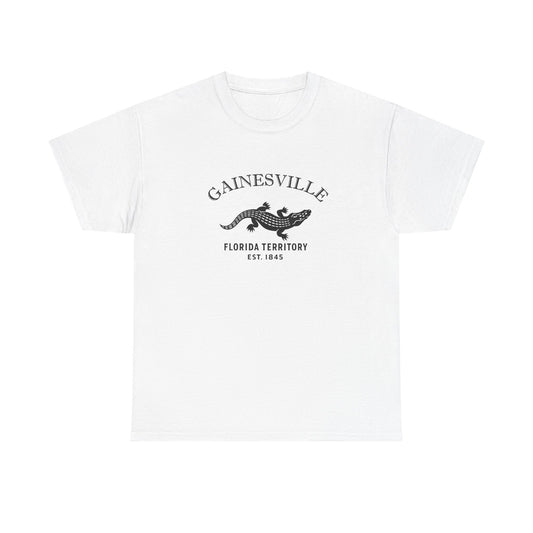
Gainesville Florida Vintage Retro Unisex Heavy Cotton Tee - Black Logo
Regular price $28.00 USDRegular price -
Gainesville Florida Bison Garment-Dyed Heavyweight Tee
Regular price $36.00 USDRegular price -
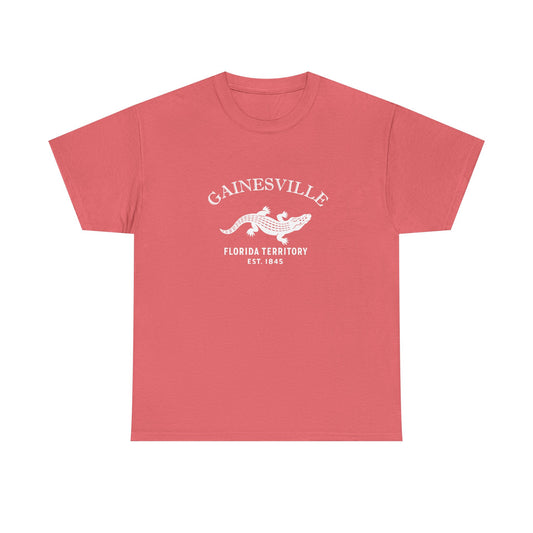
Gainesville Florida Vintage Retro Unisex Heavy Cotton Tee - White Logo
Regular price $28.00 USDRegular price -
Gainesville Florida Vintage Retro Premium Crewneck Sweatshirt - Black Logo
Regular price $48.00 USDRegular price -
Gainesville Florida Vintage Retro Premium Crewneck Sweatshirt - White Logo
Regular price $48.00 USDRegular price -
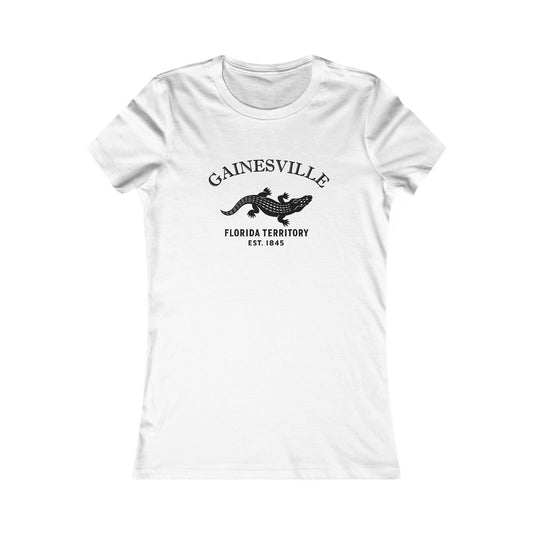
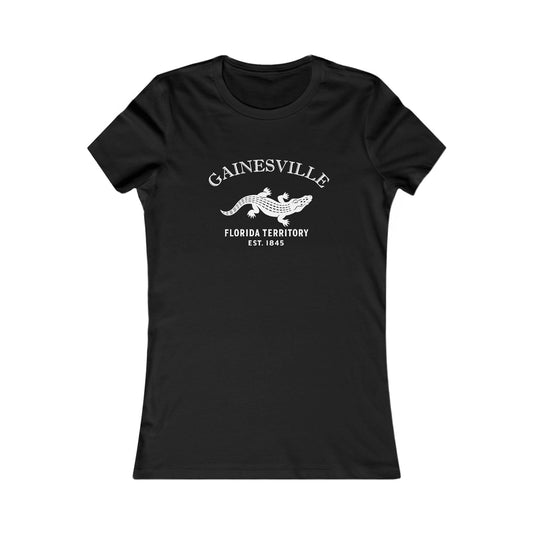
Gainesville Florida Vintage Retro Womens Fitted Ringspun Cotton Tee - Black Logo
Regular price $28.00 USDRegular price -
Between Horse and Hound - Silhouette Art Giclée Unframed Art Print
Regular price From $34.00 USDRegular price -
Shoreline Trio - Silhouette Art Framed Art Print
Regular price From $96.00 USDRegular price -
Gainesville Florida Vintage Retro Embroidered Cotton Cap - Black Logo
Regular price $32.00 USDRegular price -
Quiet Pair - Silhouette Art Giclée Unframed Art Print
Regular price From $34.00 USDRegular price -
Boy and Hound - Silhouette Art Framed Art Print
Regular price From $96.00 USDRegular price -
-
Gainesville Florida Vintage Retro Unisex Heavy Cotton Hoodie - Black Logo
Regular price $56.00 USDRegular price -
Shoreline Trio - Silhouette Art Giclée Unframed Art Print
Regular price From $34.00 USDRegular price -
Kiss for the Hound - Silhouette Art Framed Art Print
Regular price From $96.00 USDRegular price -
Gainesville Florida Vintage Retro Cotton Canvas Tote Bag - White Logo
Regular price $25.00 USDRegular price -
Gainesville Florida Vintage Retro Cotton Canvas Tote Bag - Black Logo
Regular price $25.00 USDRegular price -
Kiss at Still Water - Silhouette Art Giclée Unframed Art Print
Regular price From $34.00 USDRegular price -
Small Steps - Silhouette Art Framed Art Print
Regular price From $112.00 USDRegular price -
Gainesville Florida Vintage Retro Vinyl Sticker - Black Logo
Regular price From $6.00 USDRegular price -
Gainesville Florida Vintage Retro Ceramic Mug - Black Logo
Regular price From $16.00 USDRegular price -
Whitewater Leap - Silhouette Art Giclée Unframed Art Print
Regular price From $34.00 USDRegular price -
Whitewater Walk - Silhouette Art Framed Art Print
Regular price From $96.00 USDRegular price -
Gainesville Florida Vintage Retro Back Printed Art Series Cotton Tee - Black Logo
Regular price $32.00 USDRegular price