


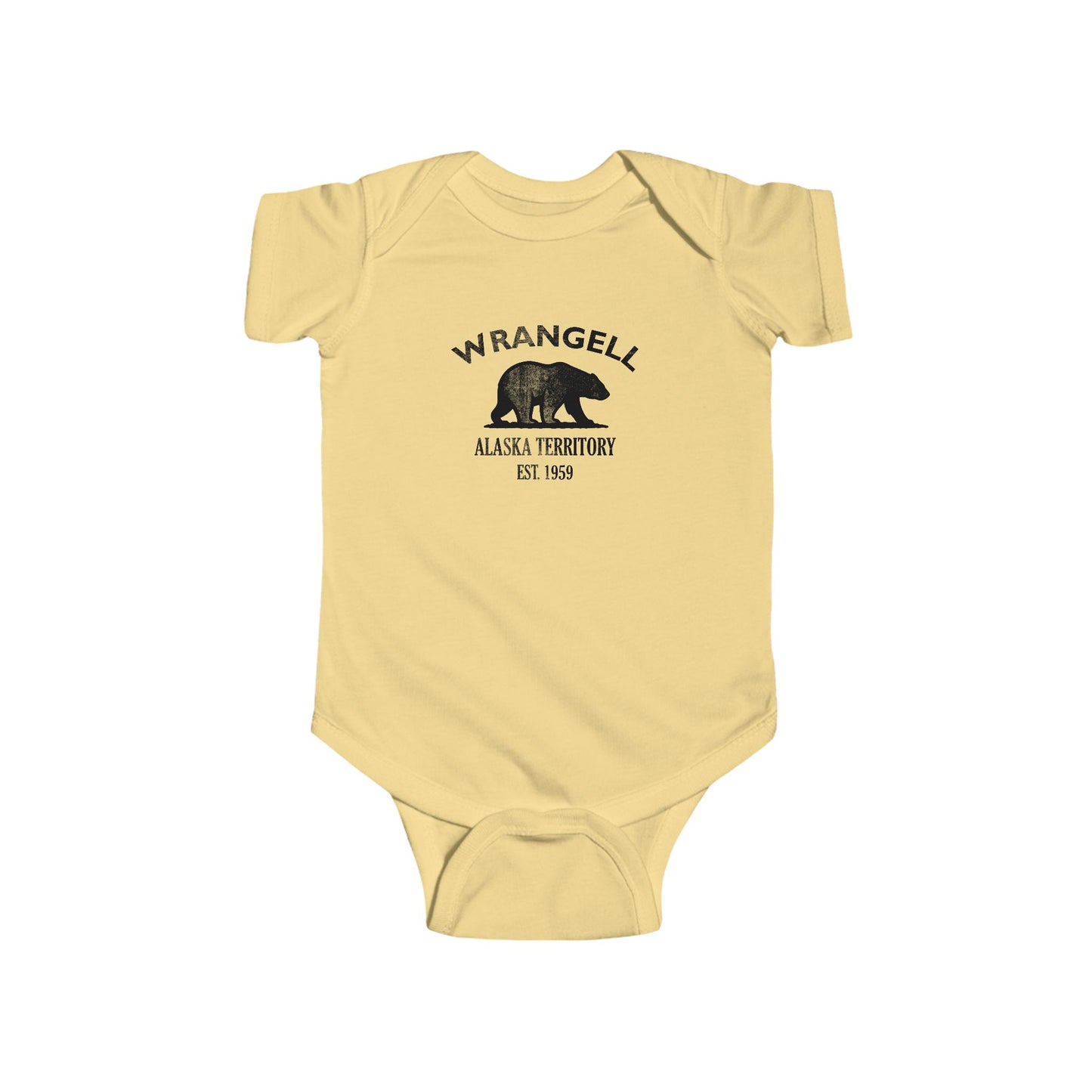
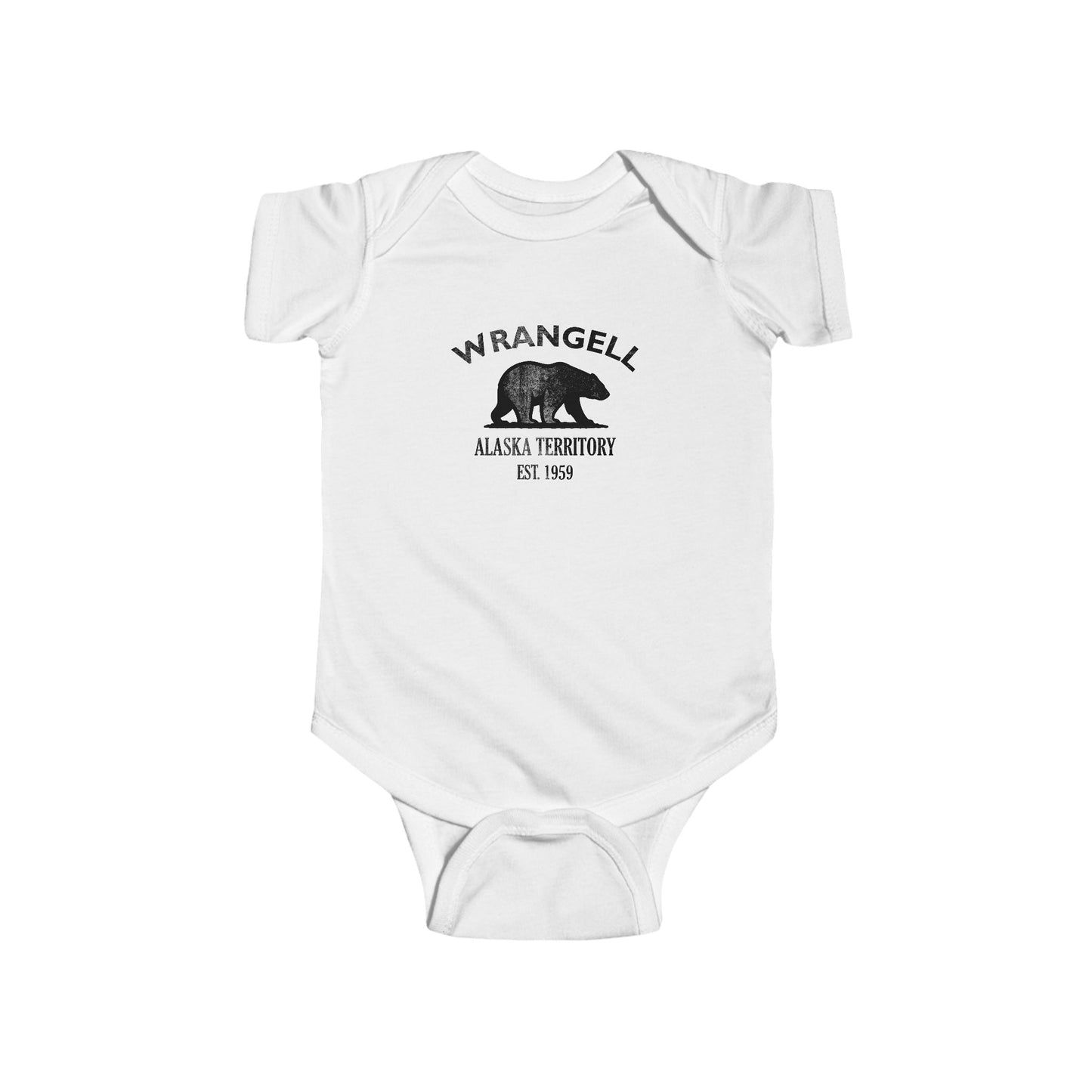
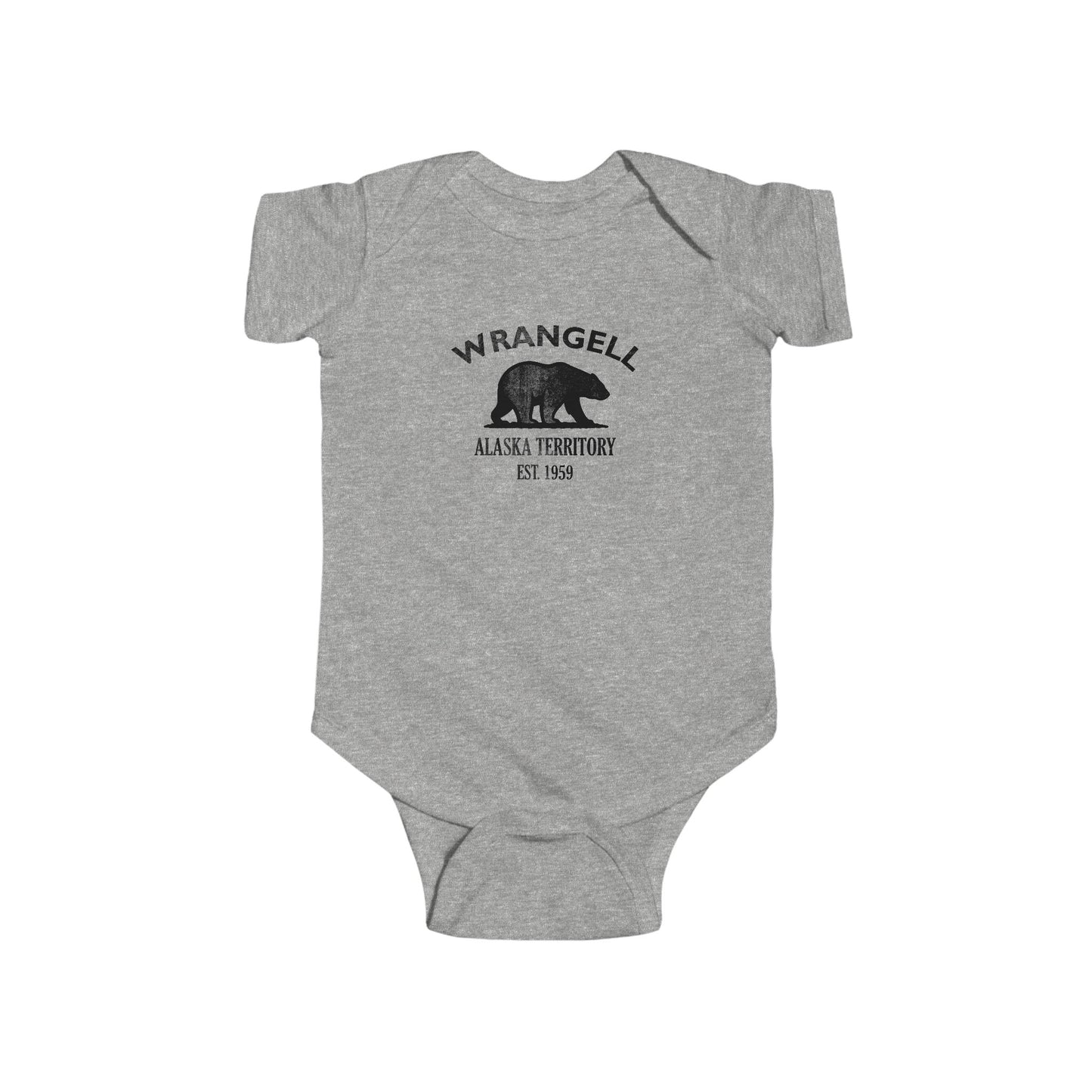
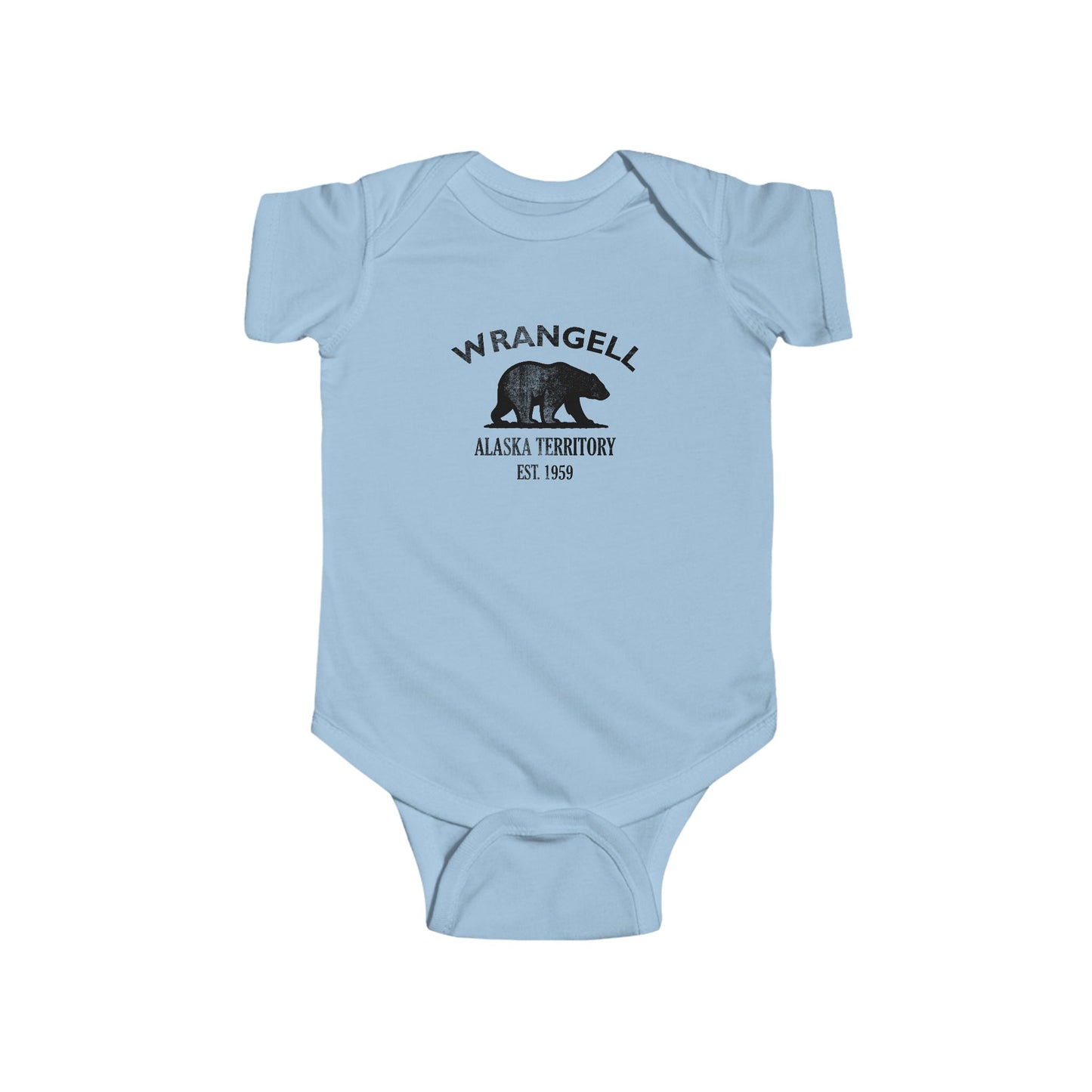
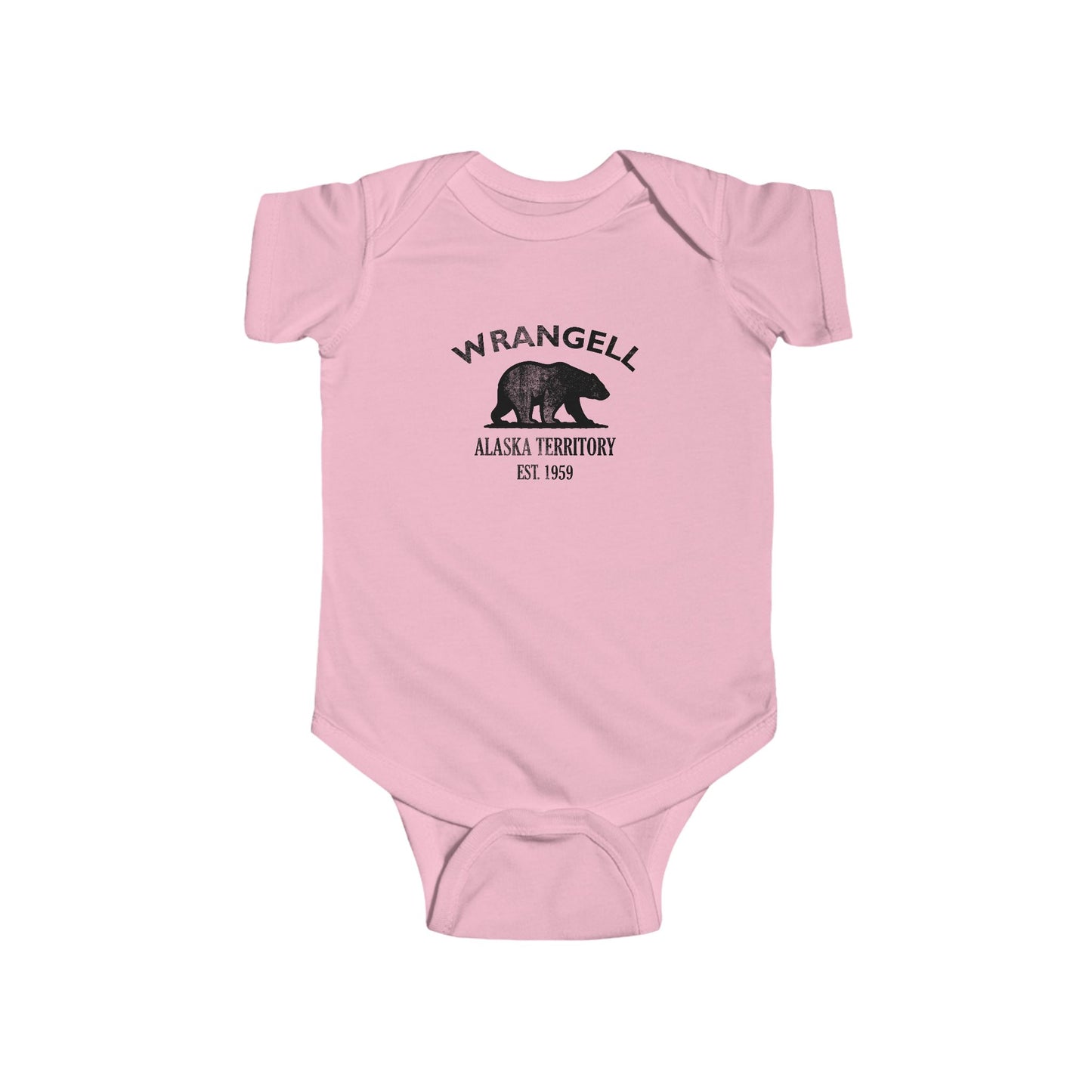
Our Wrangell logo carries Alaska's distressed bear, drawn in worn black and white above ‘Est. 1959,’ the year of statehood — the shared retro emblem of our Alaska towns. The bear stands for the wilderness and the toughness it takes to live in it, and the rugged crate-stamp styling makes the design feel like something off an old cannery label or an outfitter's crate. The bear and the date are the through-line that links Wrangell to every other Alaska town we make; what makes this one Wrangell is everything around it — the three flags, the Stikine River, the totems, and the carvings on the beach.
What made Wrangell boom was gold — not its own, but everyone else's. The mouth of the Stikine was the natural gateway to the goldfields of the British Columbia interior, and Wrangell lived three separate rush-town lives: the Stikine strike of 1861, the Cassiar rush of the 1870s, and the Klondike stampede of the late 1890s. Thousands of prospectors poured through, and the town turned as raw as any in the north — Wyatt Earp filled in as marshal for ten days on his way to Nome, Soapy Smith hid out here when Skagway got too hot, and the naturalist John Muir came in 1879 to wonder at the glaciers up the river. Each rush faded; the river stayed.
Why People Visit Wrangell
Wrangell rewards the off-the-path traveler. It pairs living Tlingit culture with easy reach of the Stikine and bear country, and you can see totems, petroglyphs, and a working harbor in a single walkable day. It feels authentic, green, and quietly adventurous — an Alaska town that stayed itself — with year-round appeal in its trails, parks, and waterfront.
