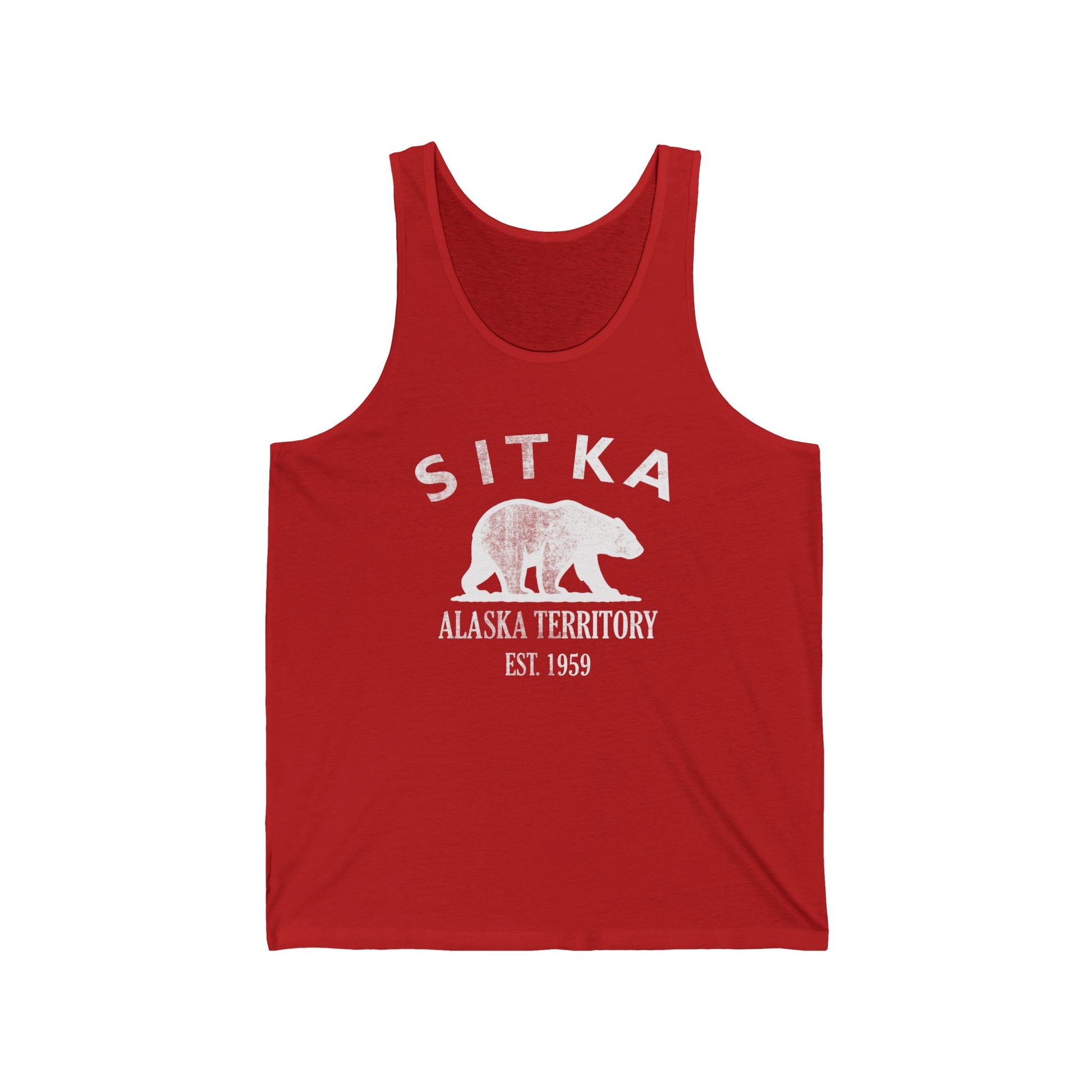
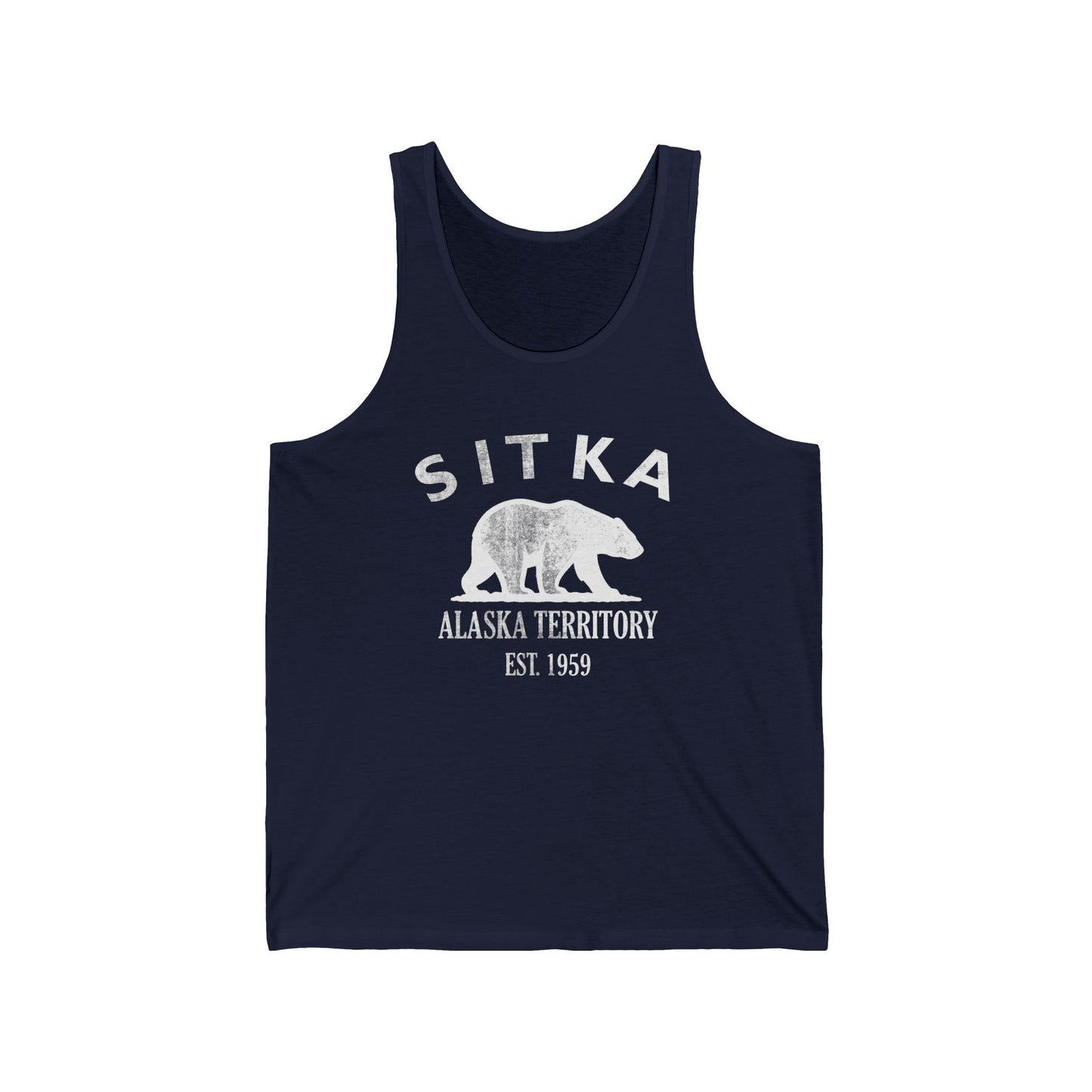
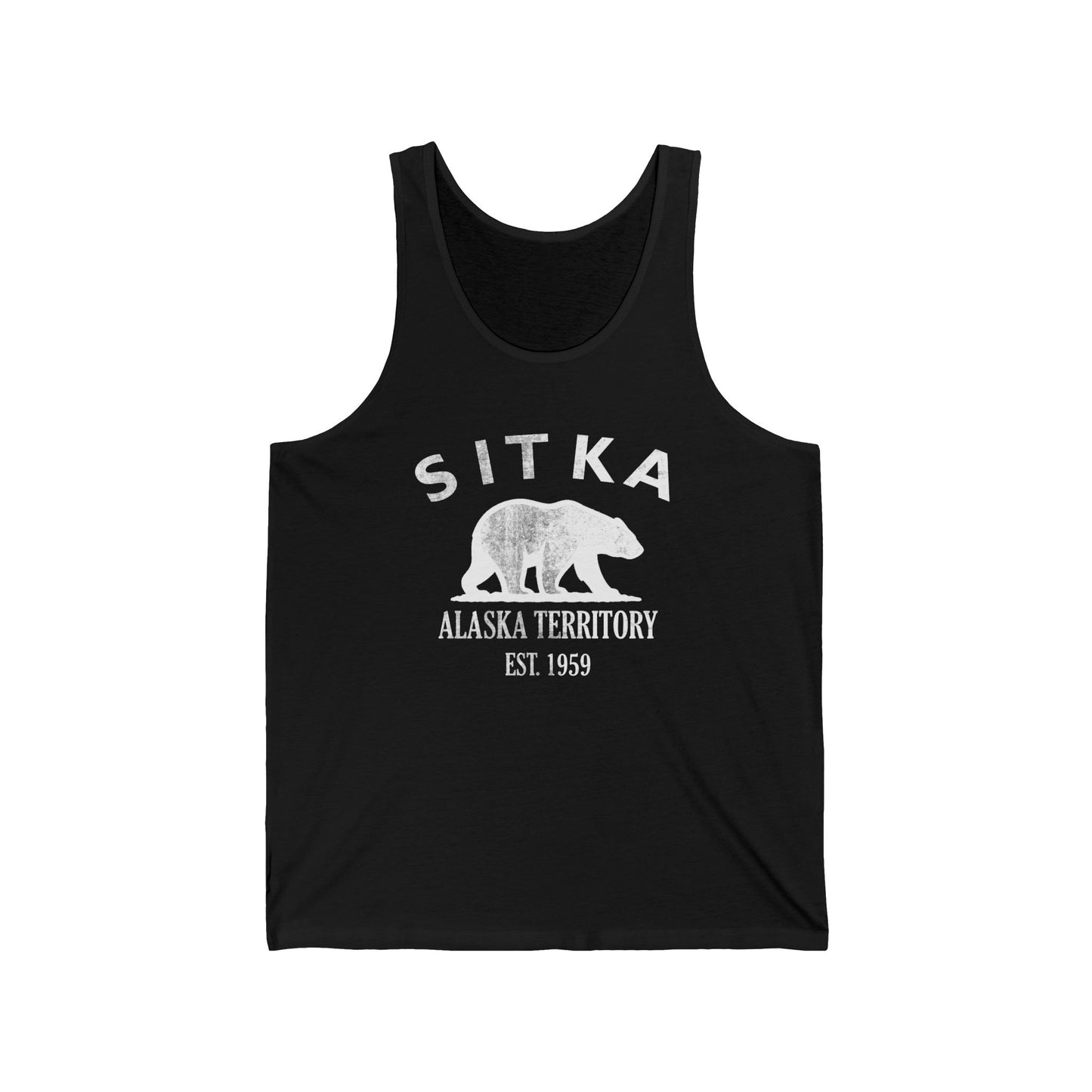
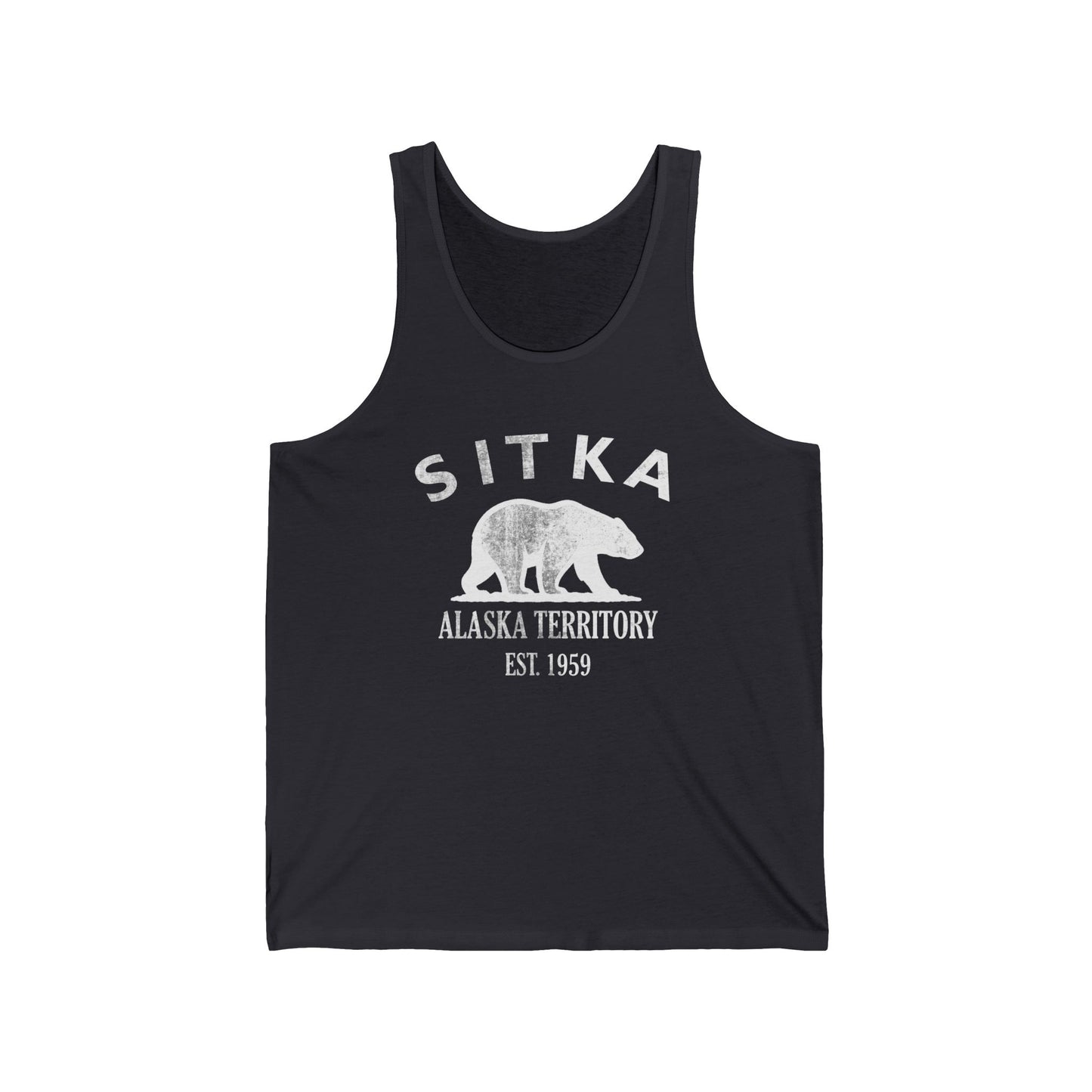
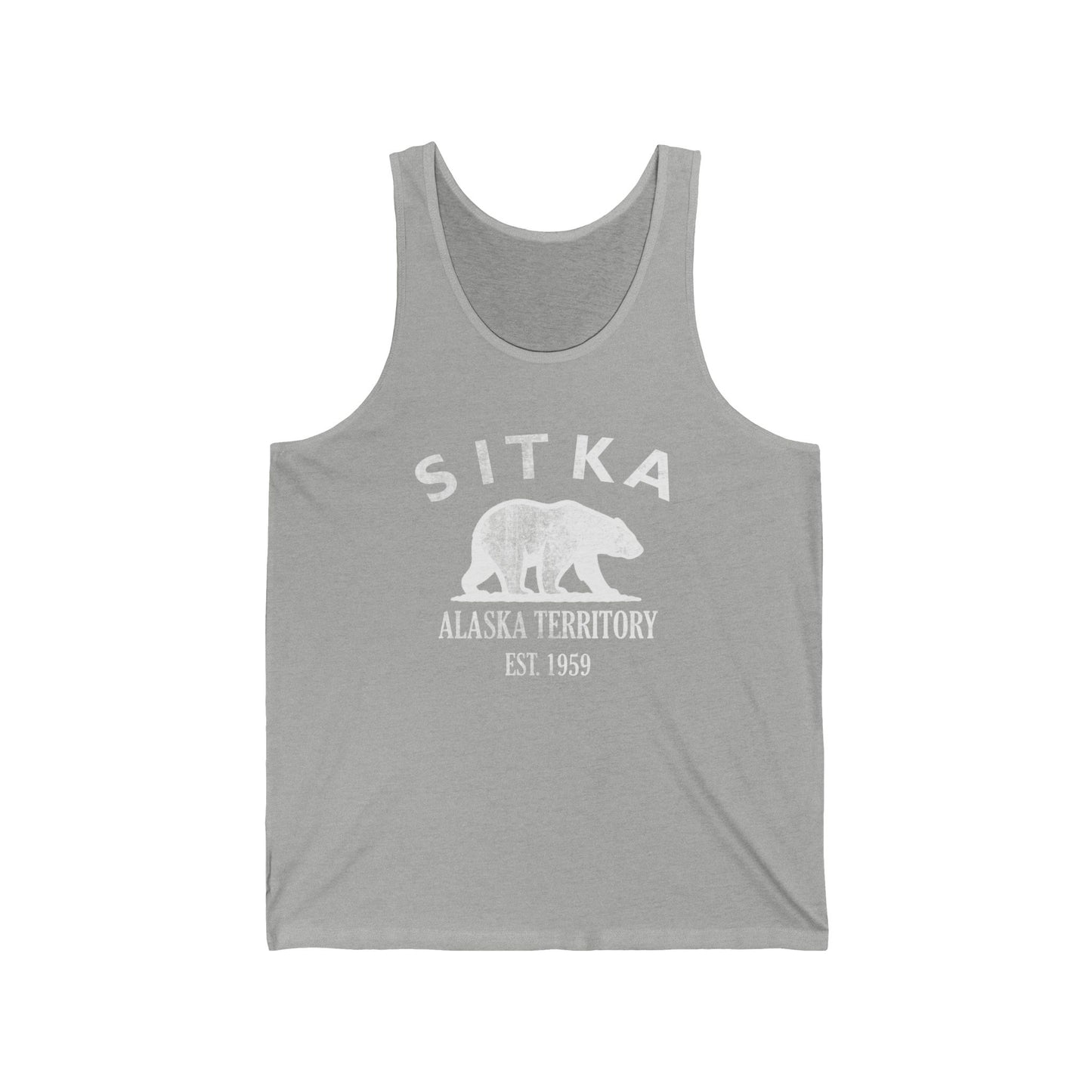
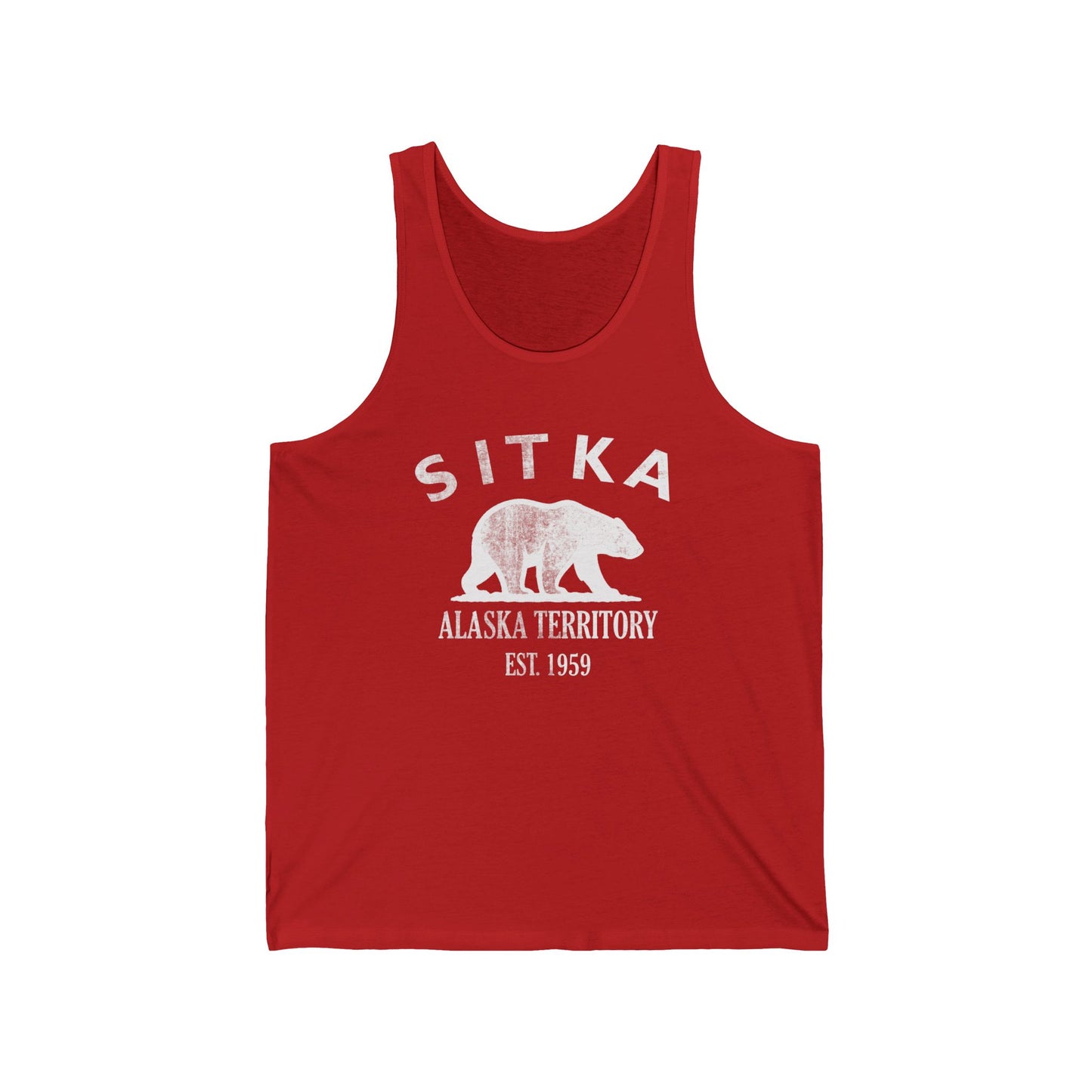
Our Sitka retro logo uses Alaska's distressed bear motif over "1959," tying the design to Alaska statehood. Its black-and-white styling is rugged and retro, resembling crate stamps and outfitter branding of the territorial era, and it bridges Sitka's layered identity: Tlingit homeland, Russian capital, American fishing town. On merchandise it reads authentic and vintage — an emblem of Southeast Alaska pride.
The American century kept the town small and made it essential. Alaska's first fish cannery opened here in 1878 and the boats never left — fishing remains the biggest industry in town. The territorial capital moved to Juneau in 1906, and Sitka answered with something more durable: the Alaska Native Brotherhood, founded on Katlian Street in 1912. The Navy filled Japonski Island during the Second World War, when the population briefly swelled to forty thousand; statehood came in 1959; the cathedral burned in 1966 and the town rebuilt it dome for dome, having carried the icons out by hand; and in 1972 the O'Connell Bridge — the first cable-stayed bridge in the United States — finally connected the town to its own airport. Every October 18 the flags still change on Castle Hill, in period dress, for Alaska Day — the holiday that was born here.
Why People Visit Sitka Alaska
Sitka offers world-historical depth in a working Alaska fishing town — Tlingit heritage, Russian Imperial architecture, the birthplace of Alaska Day, old-growth coastal rainforest, totem poles, and a working harbor — all within a walkable downtown along the outer Pacific. Visitors combine cathedral and museum stops with rainforest trails, whale-watching, raptor rehabilitation tours, and the simple pleasure of standing on the hill where the flags changed in 1867. It is photogenic, walkable, and unlike any other town on the Alaska coast.
