


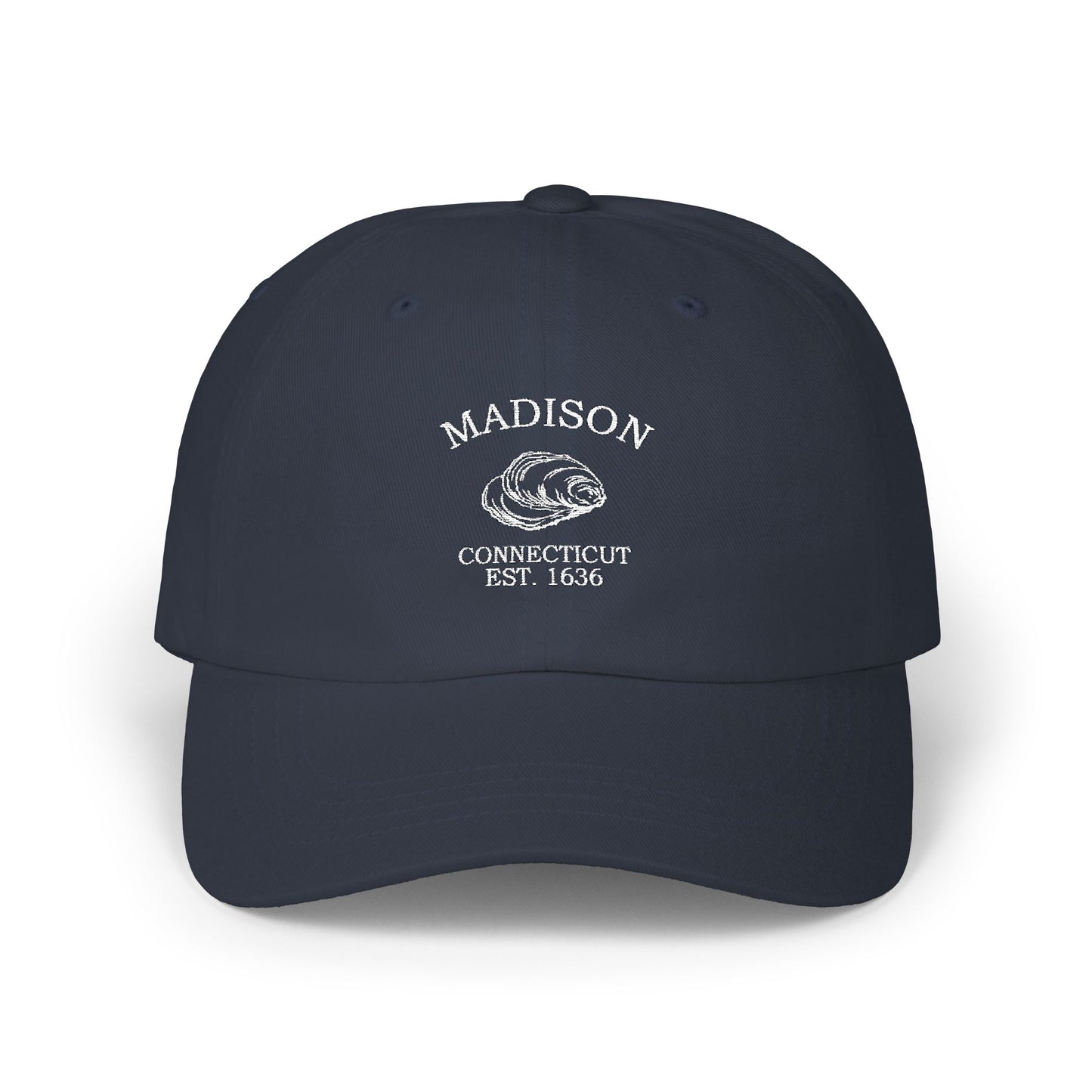
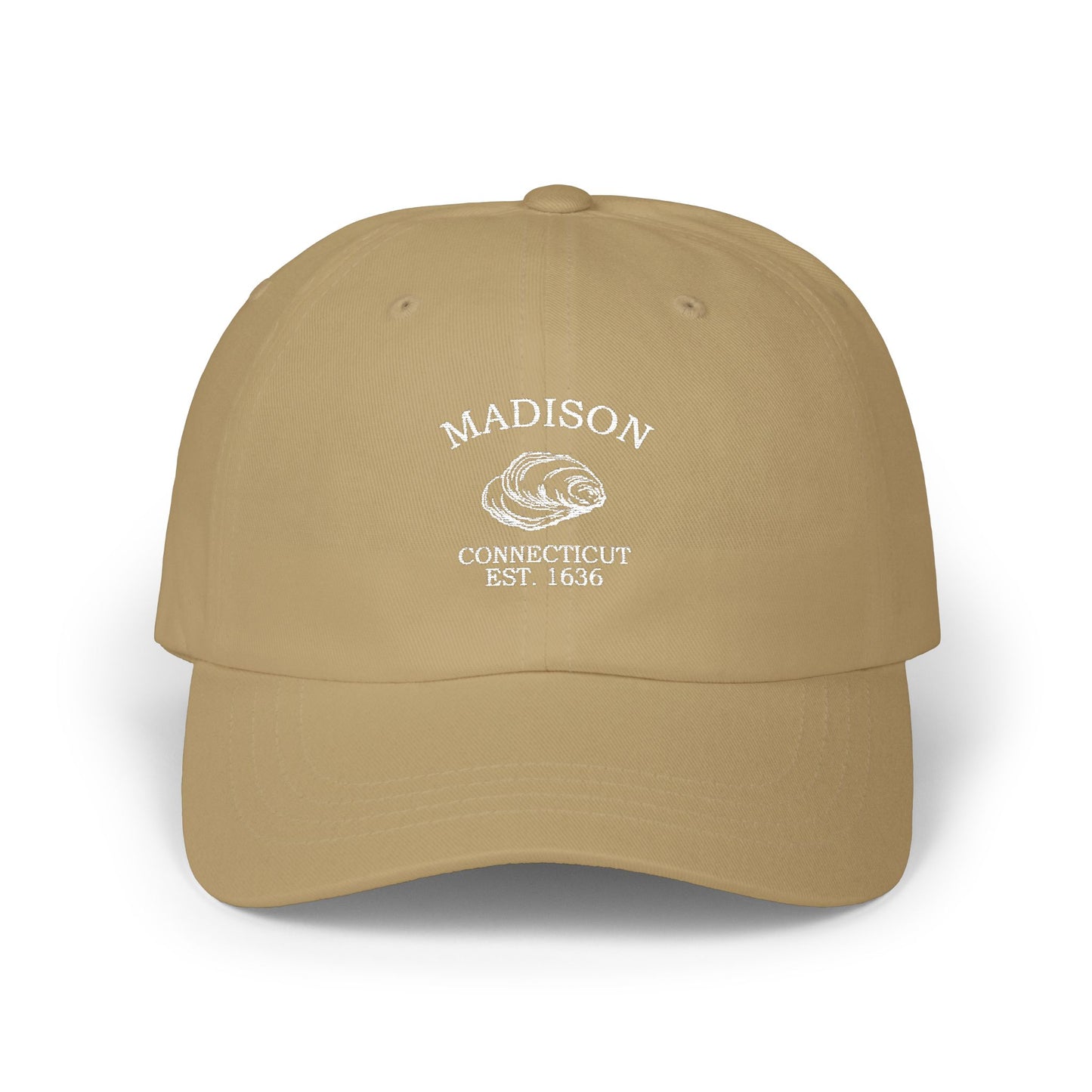
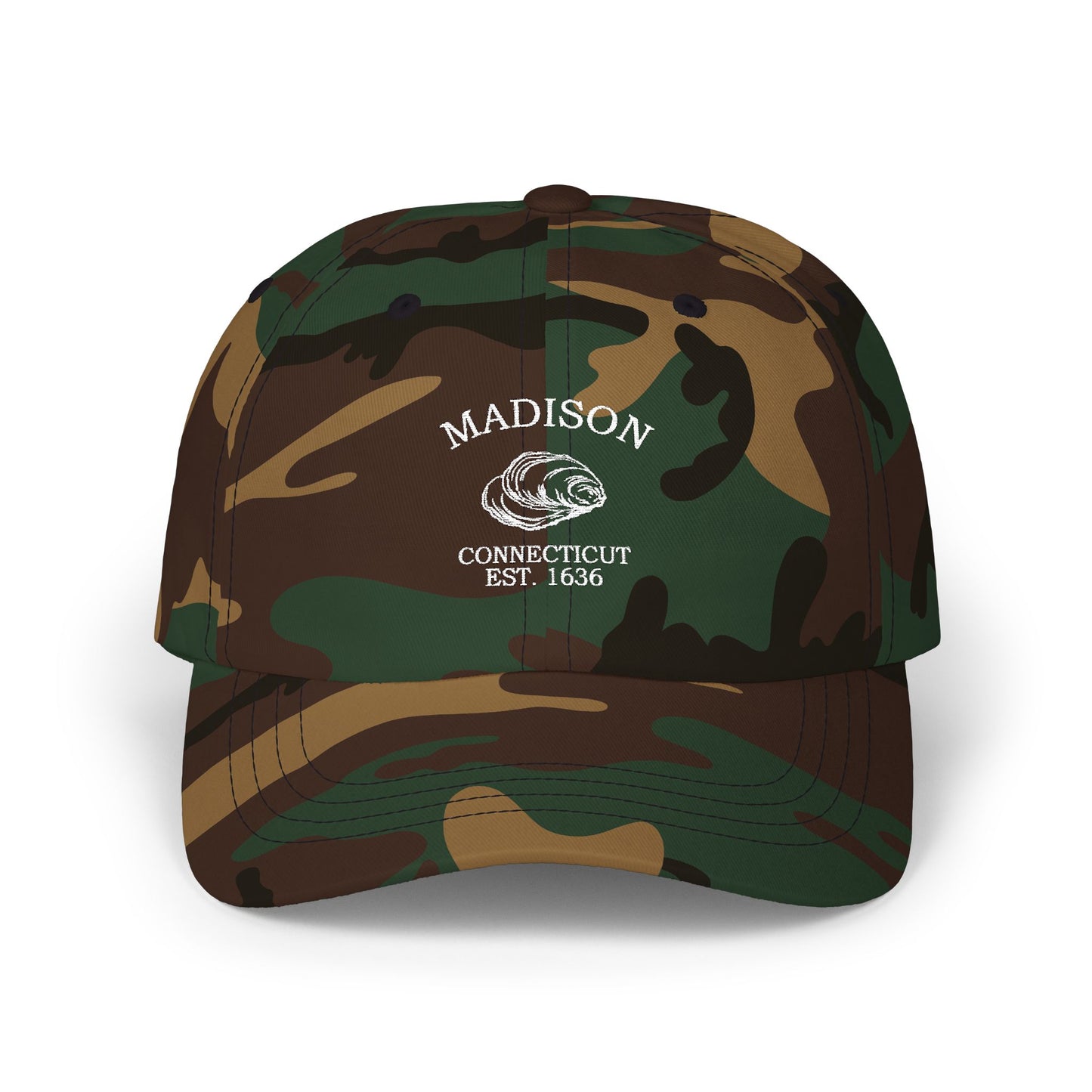
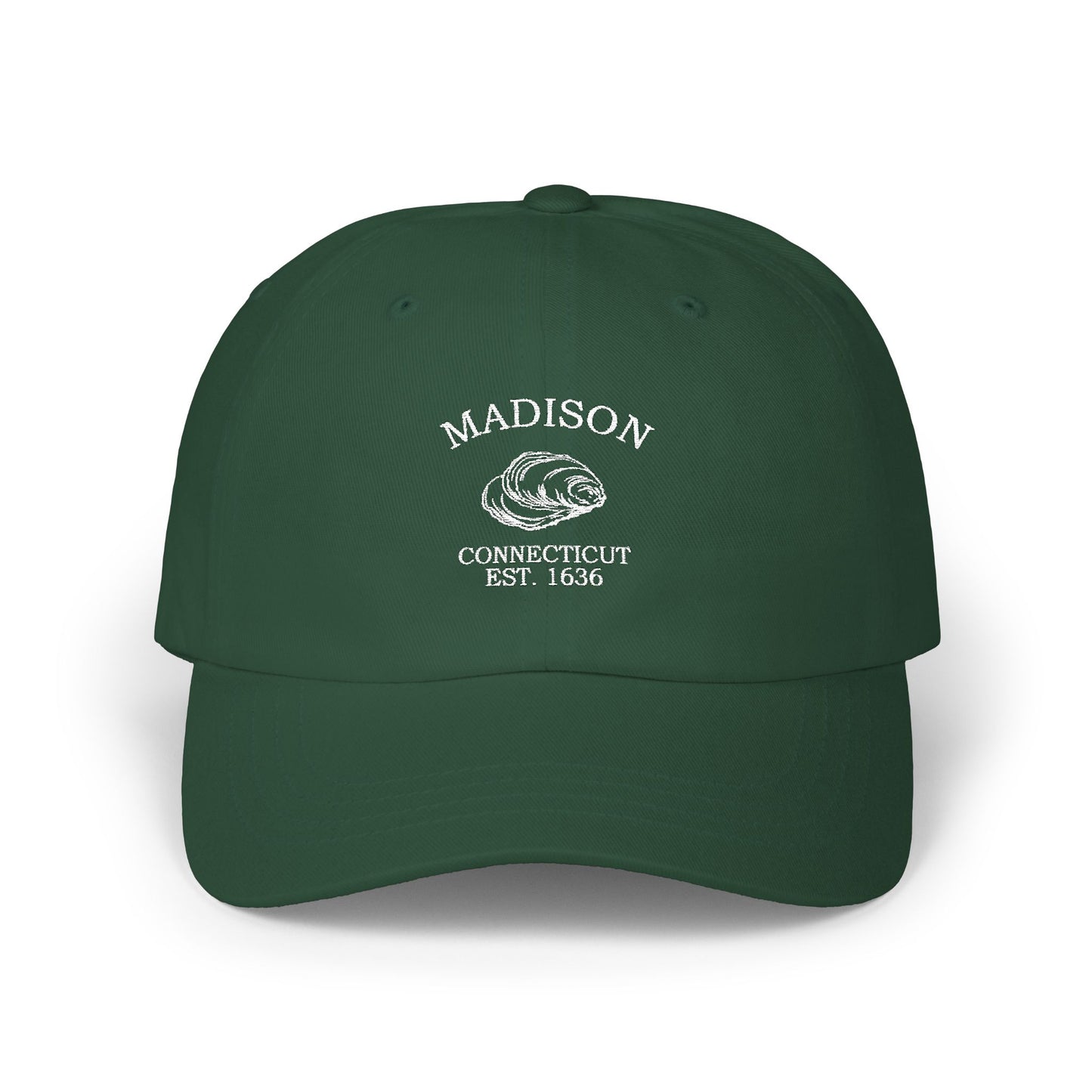
The town earned its shoreline reputation the long way. Shipbuilding and oystering worked the rivers through the eighteenth and nineteenth centuries, and by the early twentieth the cottages had begun spreading along the shore — summer people discovering what the farmers had always known about the light on the Sound. When the Park and Forest Commission opened Hammonasset in 1920, Madison became the town whose beach belonged to everybody, and the summer rhythm that followed — cottages filling, the campground at the park, the village green in its shade — has run every year since, interrupted only by the Second World War, when the park served as an Army reservation and the beach trained soldiers instead of swimmers.
So Madison gathers the state's biggest beach, one of its oldest greens, a 1685 saltbox, and a main street with a nationally loved bookstore onto one stretch of Sound shore — and our Madison designs gather that into wearable form. Whether Madison is your hometown, your beach, the green you crossed a thousand times, or the town you still mean to come back to, wear the history. On Hammonasset shore since 1641.
Why People Visit Madison Connecticut
Madison offers the longest shoreline beach park in Connecticut on a peninsula named for the Hammonassett people who farmed it for centuries, a Town Green that has been the center of the village since 1641, a 17th-century saltbox house museum a few doors off the green, an 1838 Greek Revival church, a long-running town library, and a nationally-cited independent bookstore on the same Boston Post Road that has run through town since the colonial era. Visitors come for the beach, the green, the architecture, the bookstore, the marshes, the lower-Hammonasset estuary, the author events, and the simple shoreline rhythm of a New England town that has been holding the same compact center for nearly four hundred years. On Hammonasset shore since 1641.
