


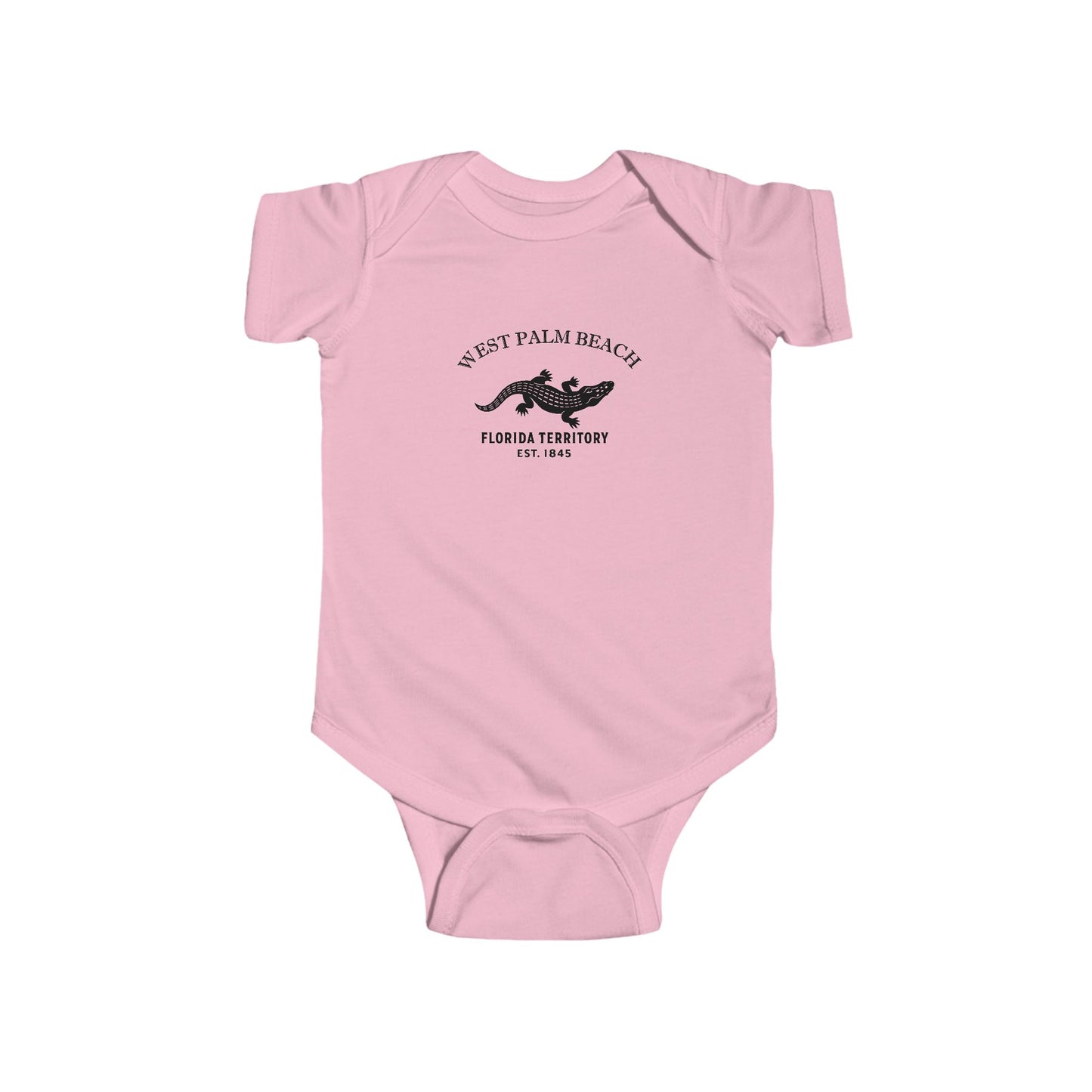
West Palm Beach grew in waves. Pineapple farms and winter vegetables gave way to a 1920s land boom that quadrupled the population and left whole neighborhoods of Mediterranean-Revival houses — red barrel-tile roofs, stucco walls, shady courtyards — in El Cid, Flamingo Park, and Old Northwood. Hurricanes and downtown fires knocked the young city down more than once, and it rebuilt each time in brick and stone. Out on the flat, early-paved streets, so many residents took to two wheels that West Palm Beach was once cheerfully called the “bicyclingest town in the U.S.A.”
Today West Palm Beach is waterfront promenades and palm-lined avenues, the Norton and the Kravis, Clematis nightlife and the Intracoastal breeze. Our West Palm Beach designs gather that identity — the alligator emblem, Flagler’s railroad city, the mainland-and-island story — into wearable form. West Palm Beach, Florida — Flagler’s city on the Intracoastal, where the railroad came south and the palms never quit.
Why People Visit West Palm Beach
West Palm Beach rewards visitors who want culture with their coastline: a serious arts scene, a lively downtown, historic neighborhoods under the palms, and the Intracoastal at the center of it all. Add the island just across the water and the year-round South Florida sun, and Flagler’s mainland city makes an easy case for itself.
