


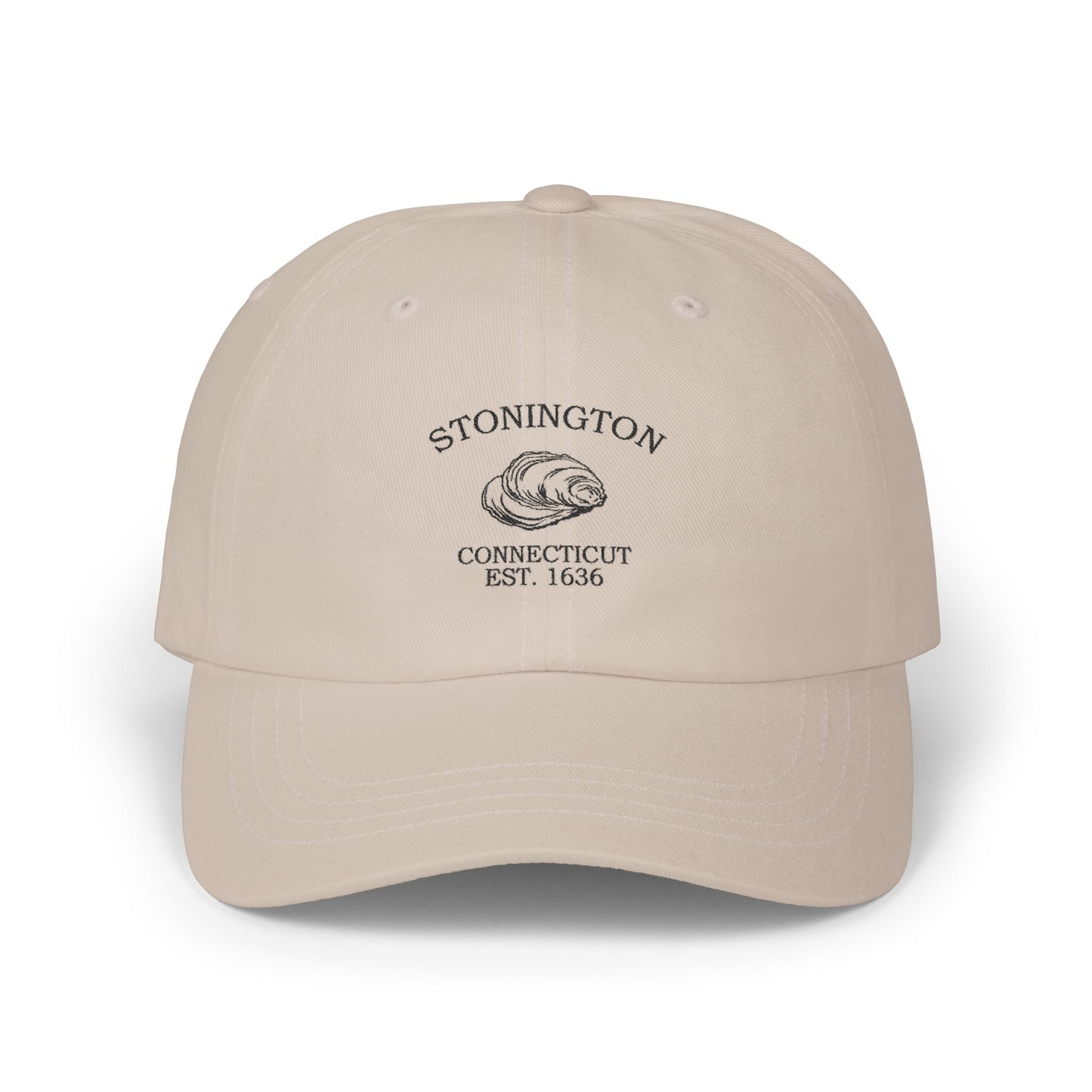
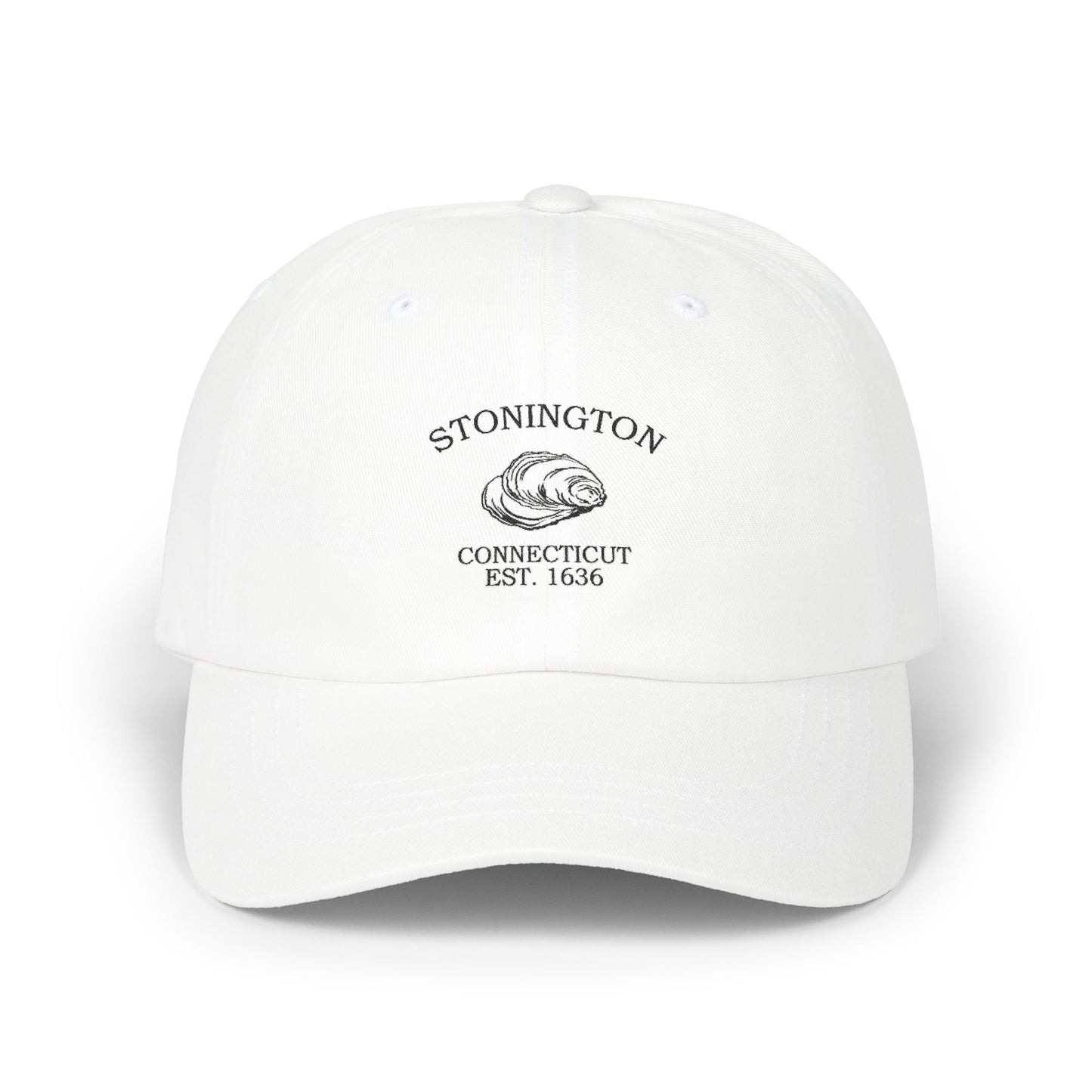
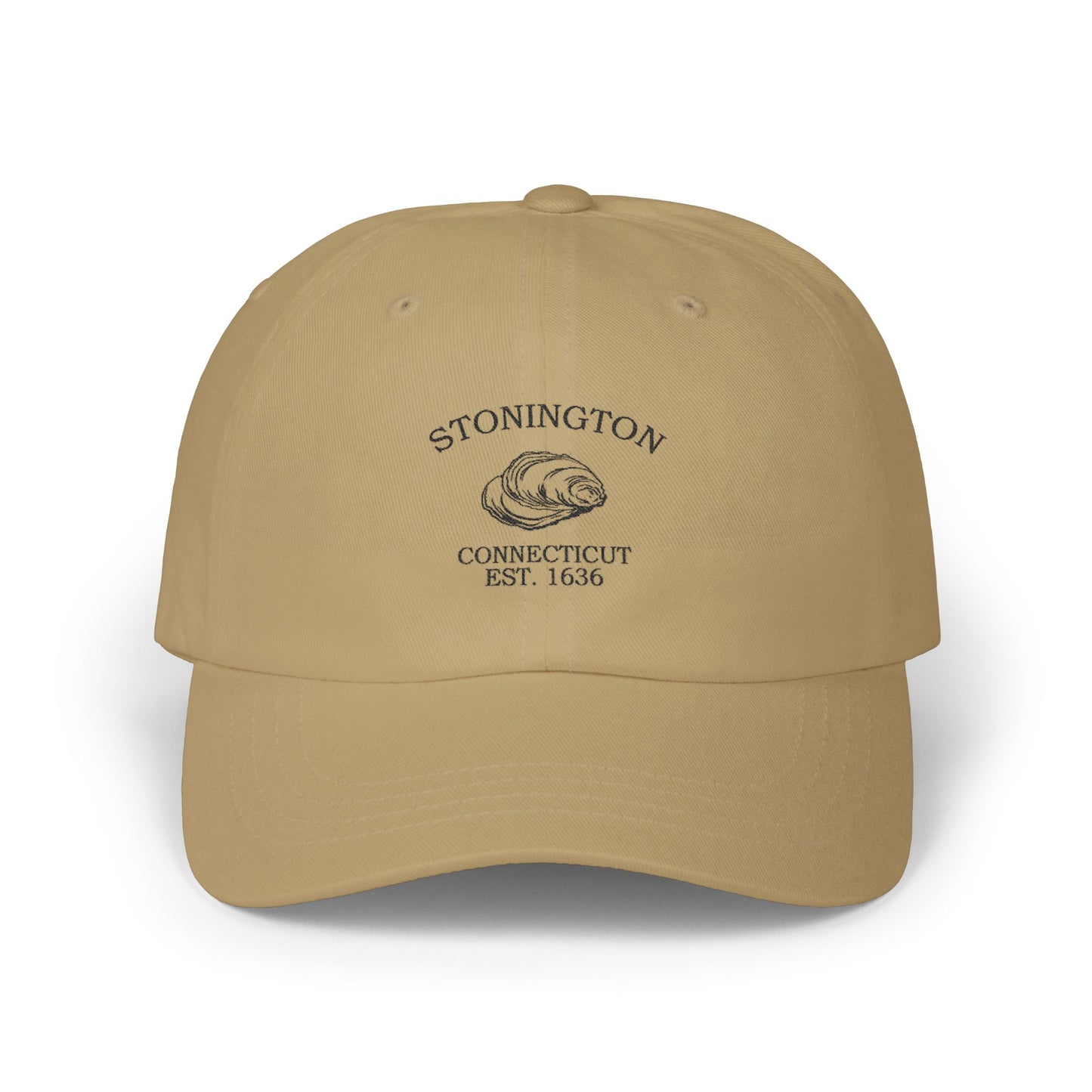
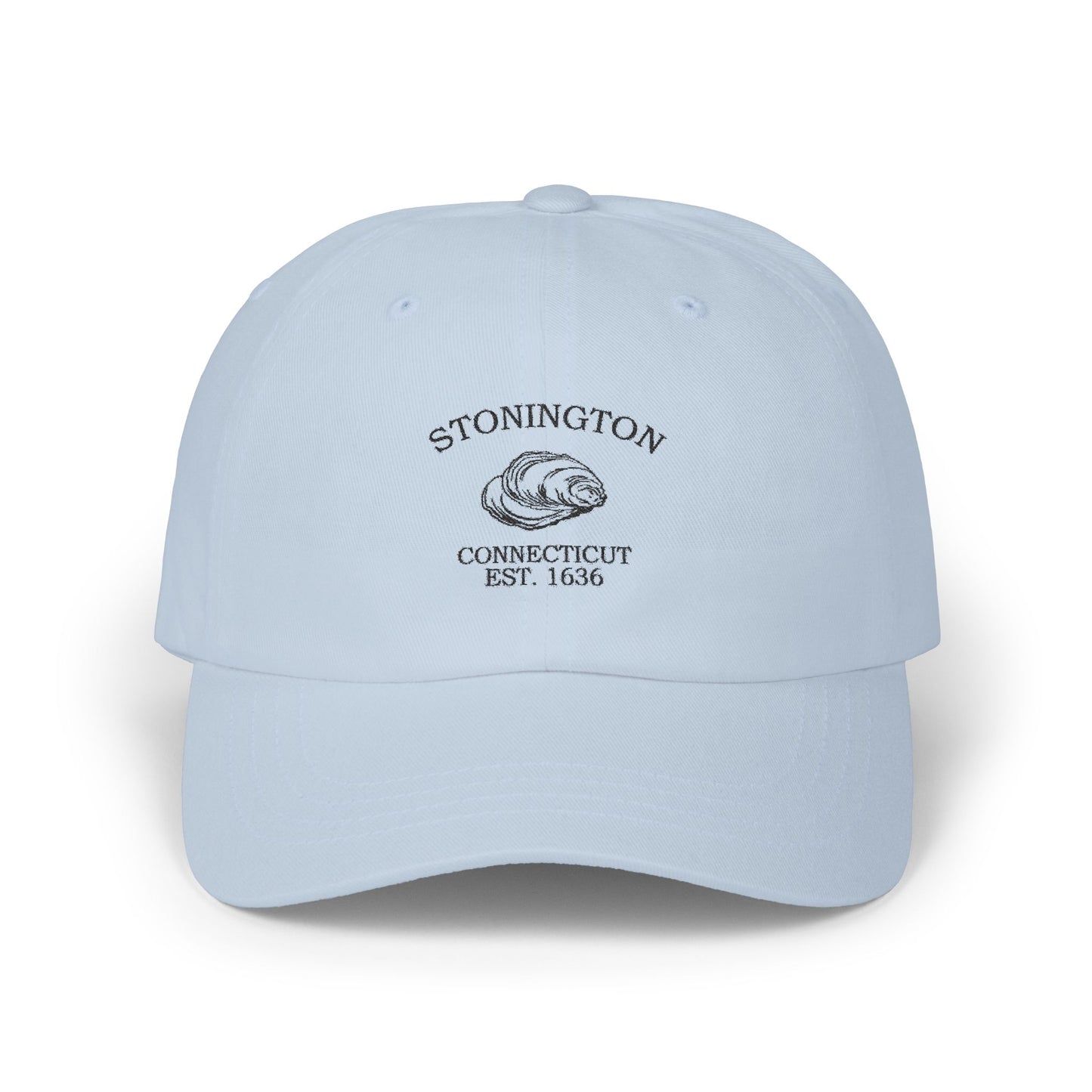
Our Stonington logo carries the borough's two signatures — the lighthouse and the cannon — the granite sentinel at the end of Water Street and the guns of 1814, printed black-and-white with the worn look of an old harbor chart. It reads as the borough in shorthand: stone, salt, and a polite refusal to be moved.
The battle that the British Navy lost. August 9, 1814. Four Royal Navy warships anchored off Stonington Point, commanded by Commodore Thomas Masterman Hardy — the man who had held the dying Nelson at Trafalgar. His message ashore gave the town one hour to evacuate. The town didn't evacuate. The town wrote back: "We shall defend the place to the last extremity. Should it be destroyed, we shall perish in its ruins." Four days later, having failed to take a village of a thousand people, the squadron weighed anchor and sailed away. The flag that flew through it all still hangs in the Old Lighthouse Museum. Most towns build monuments to the wars they win. Stonington just kept the flag flying.
Why People Visit Stonington Connecticut
- Tour the Old Lighthouse Museum at 7 Water Street, the 1840 granite lighthouse that since 1925 has been the oldest lighthouse museum in America, holding the original sixteen-star battle flag from 1814.
- Visit Cannon Square, where the two surviving 18-pounder cannons that defended the borough in 1814 still point toward the harbor entrance.
- See the Captain Nathaniel B. Palmer House at 40 Palmer Street, home of the 21-year-old sea captain who first sighted Antarctica in 1820.
- Relax on DuBois Beach, sandy cove at the tip of the borough with views across Fishers Island Sound to Connecticut, Rhode Island, and New York.
- Walk Water Street, tree-lined with white picket fences, antique shops, and historic sea captains' homes.
- Watch the working fleet at Town Dock, Connecticut's last commercial fishing fleet, with views of the harbor and surrounding islands.
- Explore the historic American Velvet Mill on Bayview Avenue, built in 1888 to attract new industry to the borough. The American Velvet Company opened there in 1892 and at its 1950s peak was the largest velvet producer in the United States, operating roughly 300 broad looms with around 450 workers. The company moved operations to Virginia late in the 20th century, and the building has since been repurposed as a maker space.
- Come in December for the Lobster Trap Tree by the Town Dock — the borough's internationally photographed Christmas tree built entirely of stacked lobster traps.
