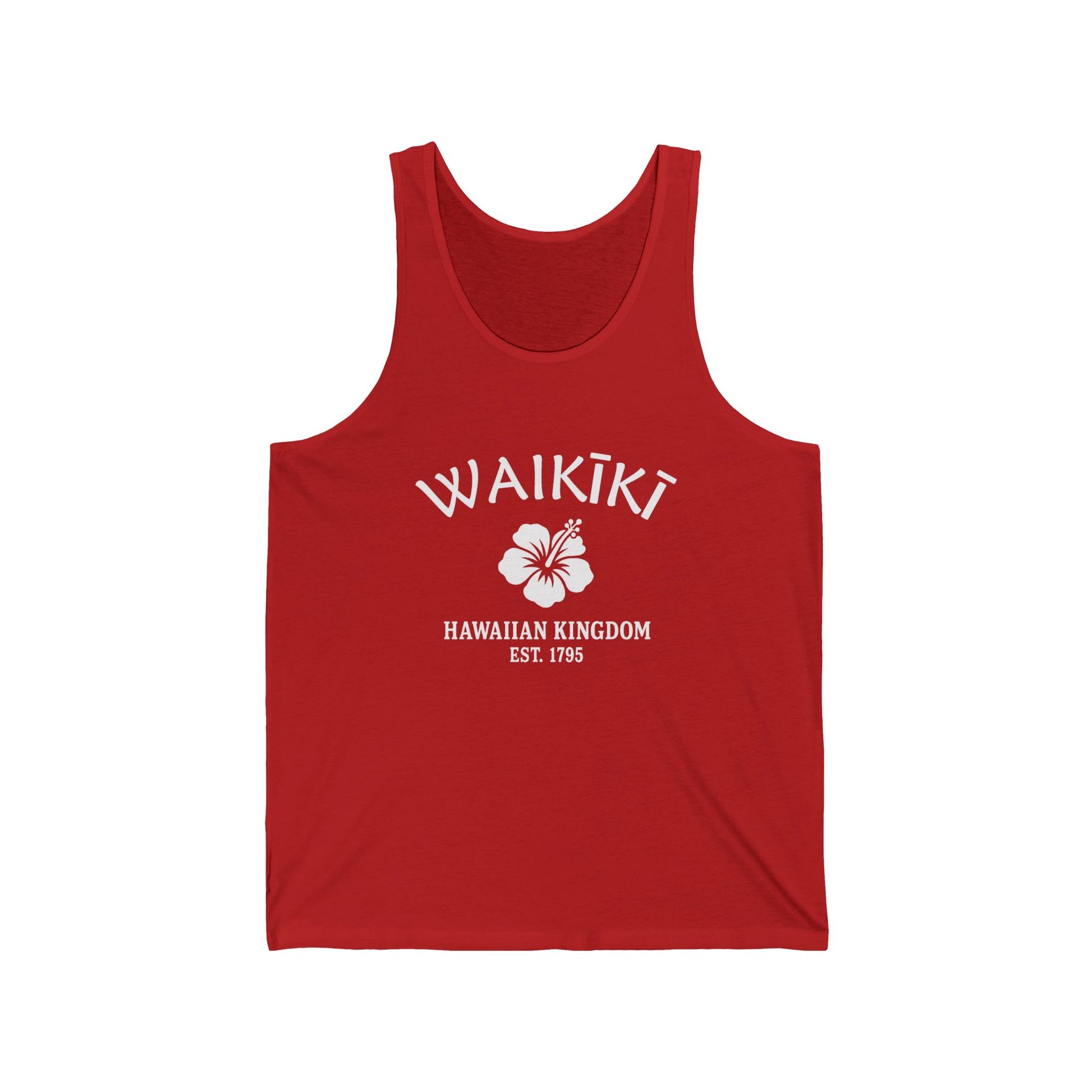
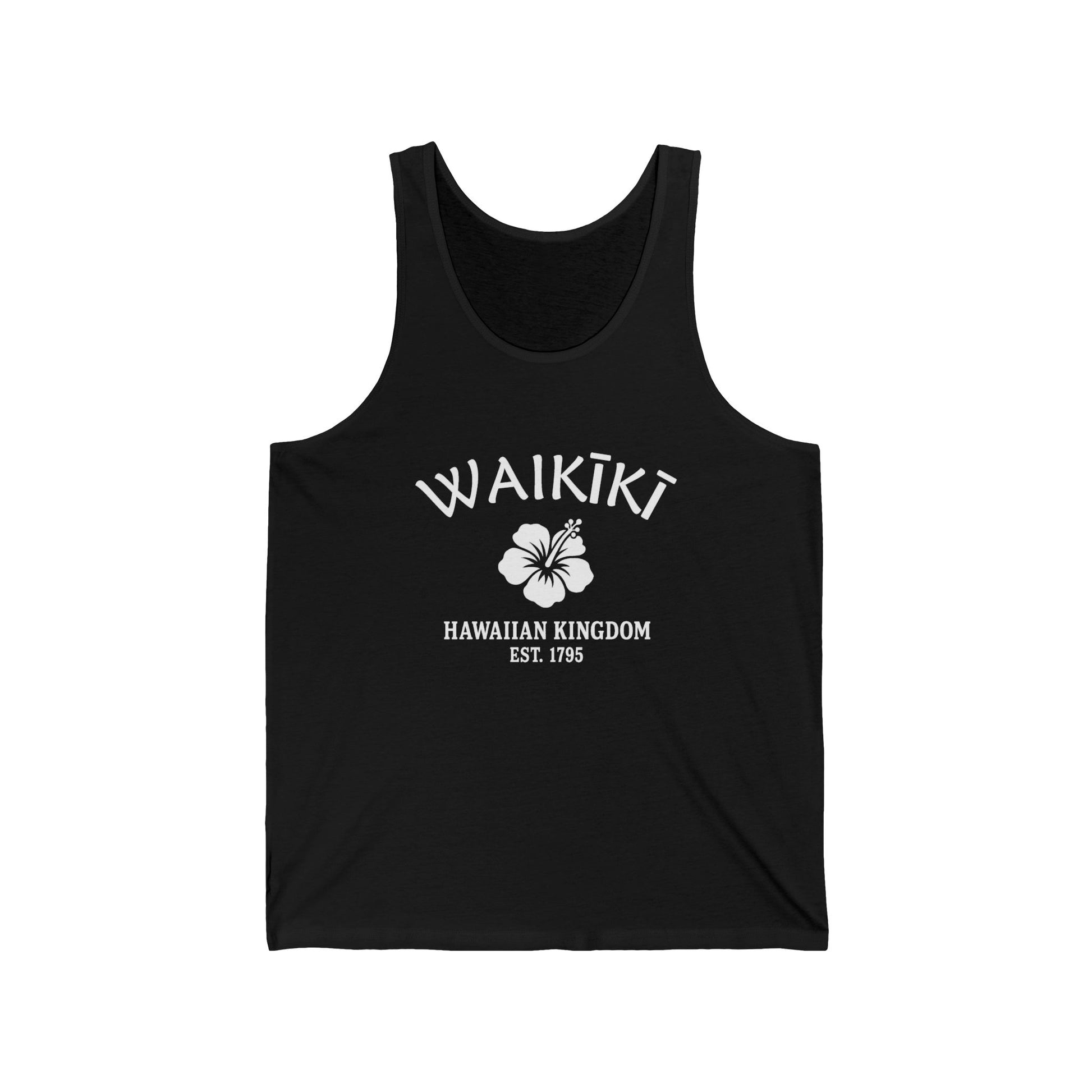
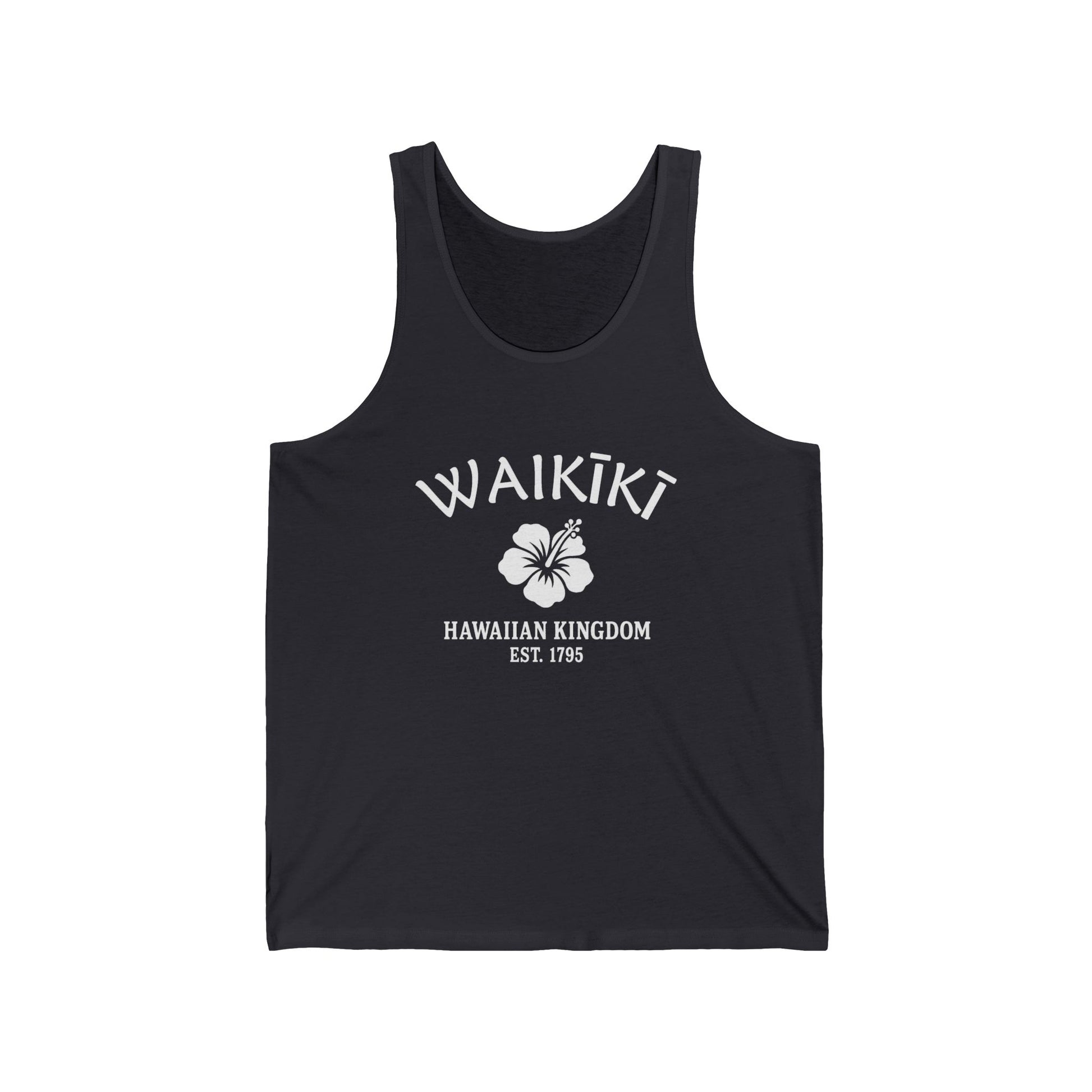
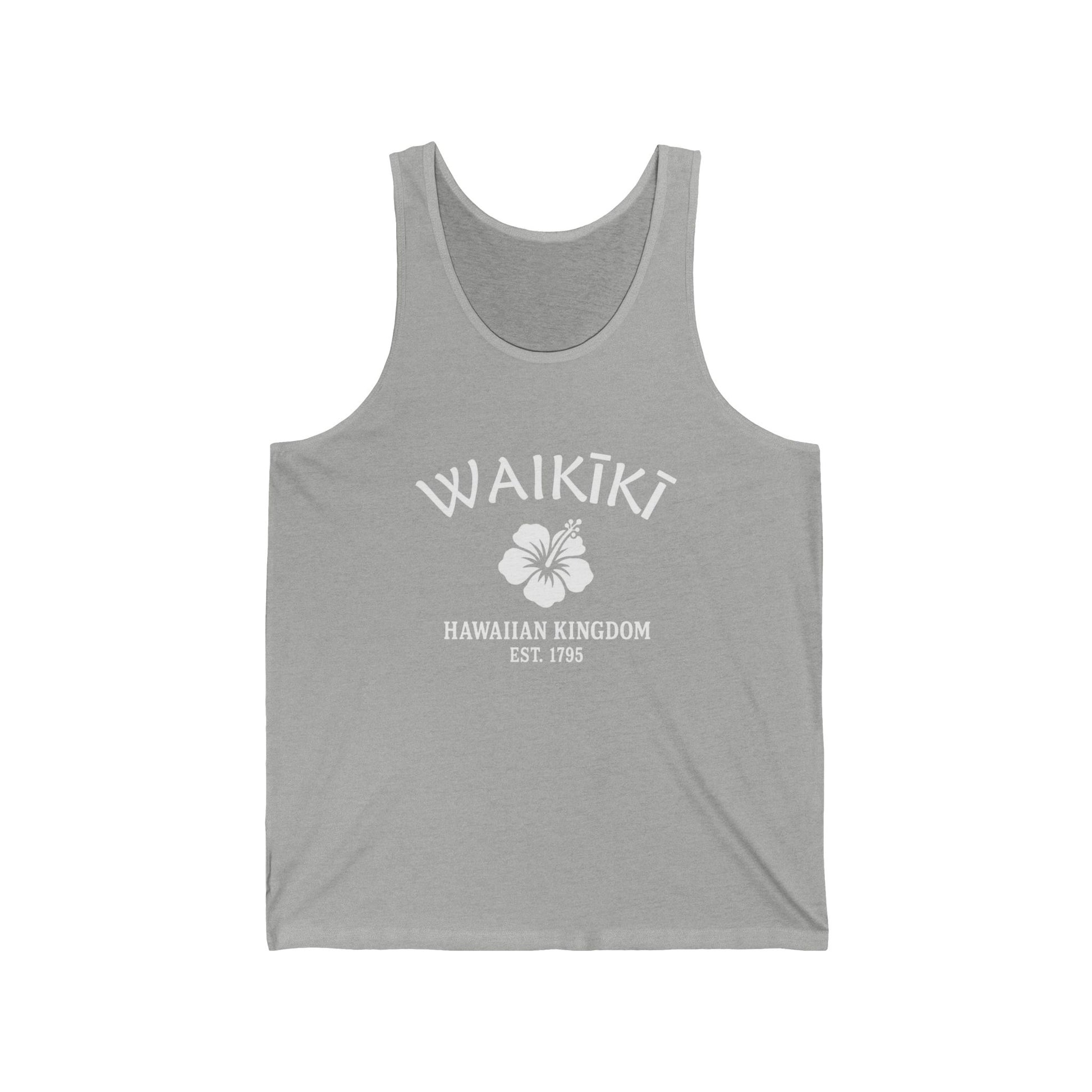
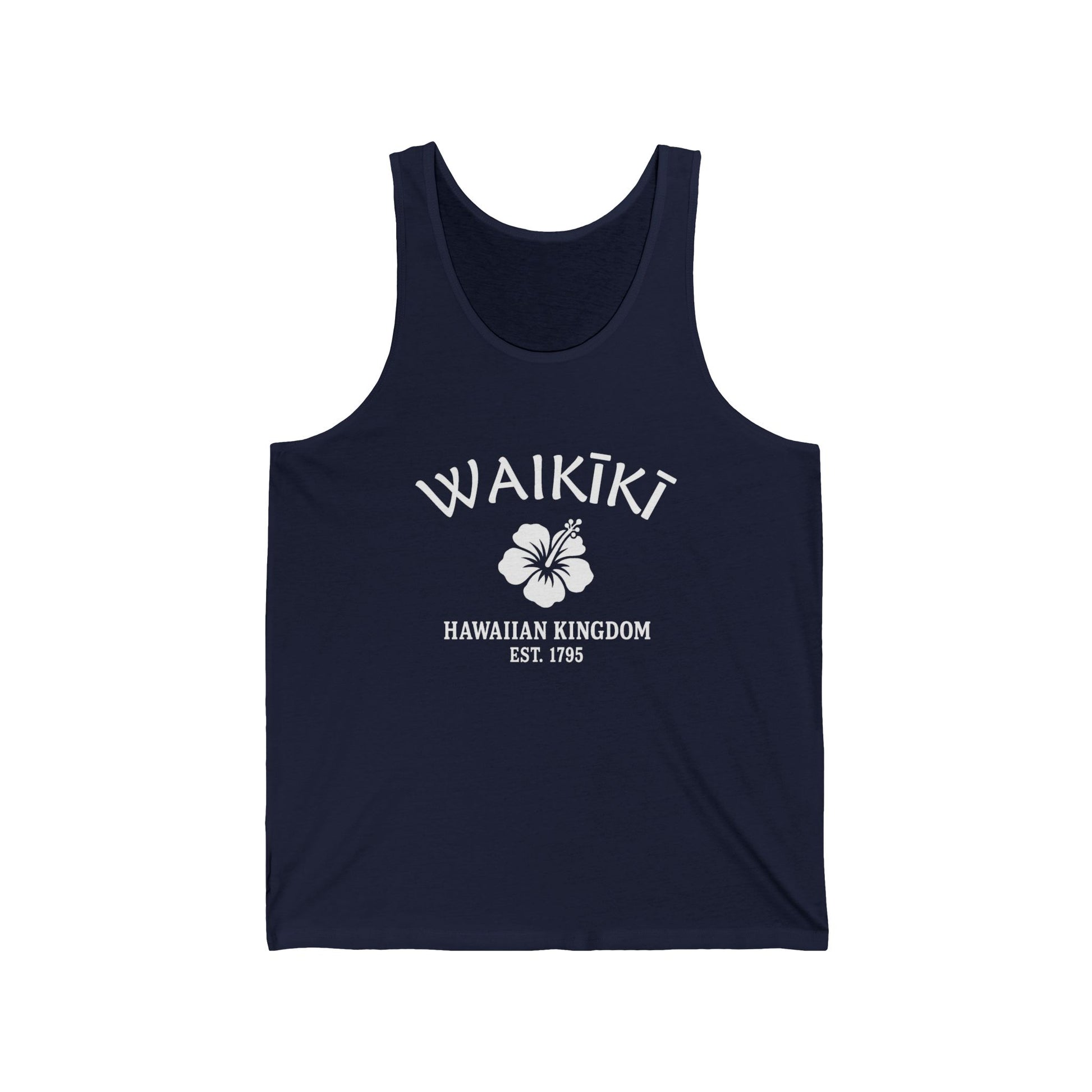
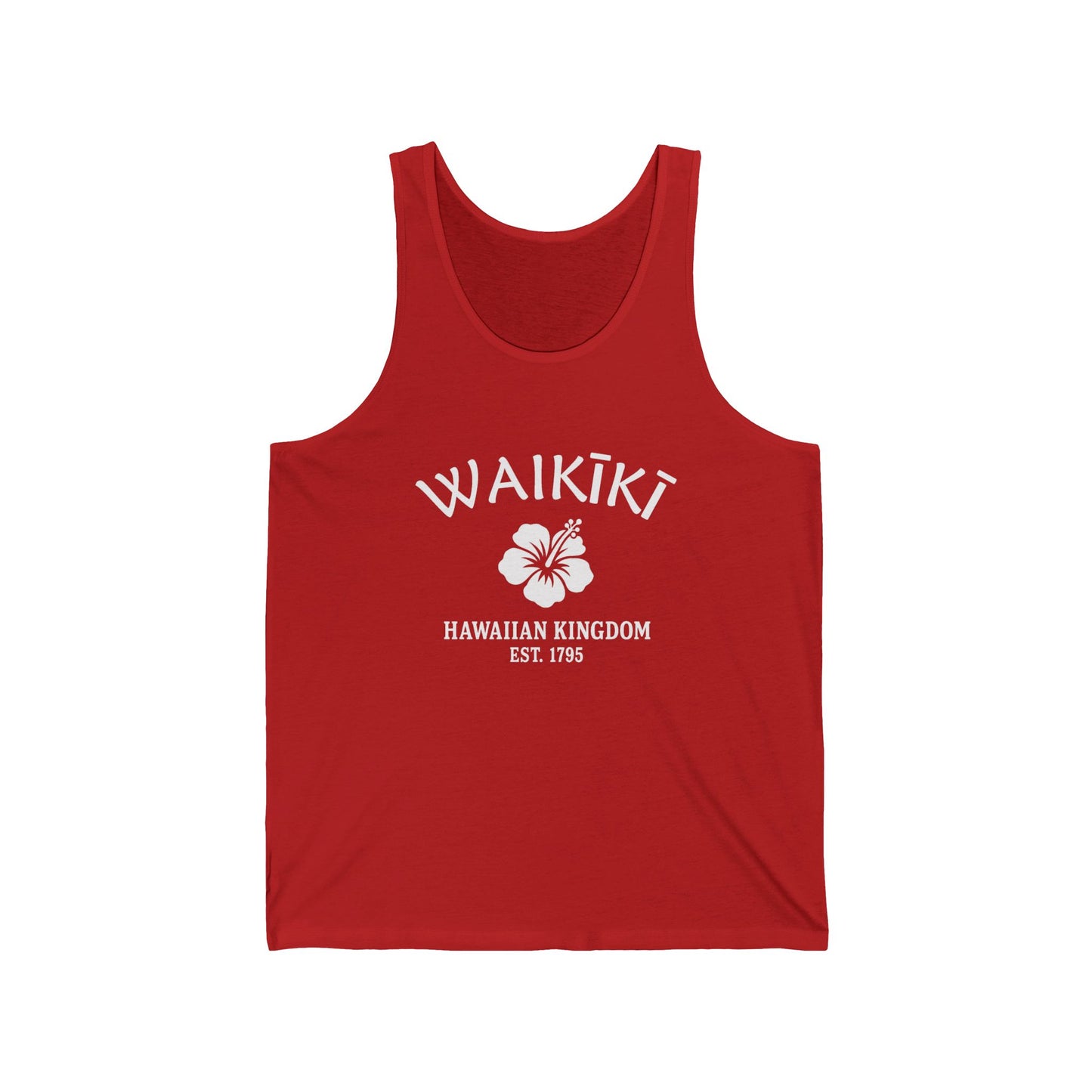
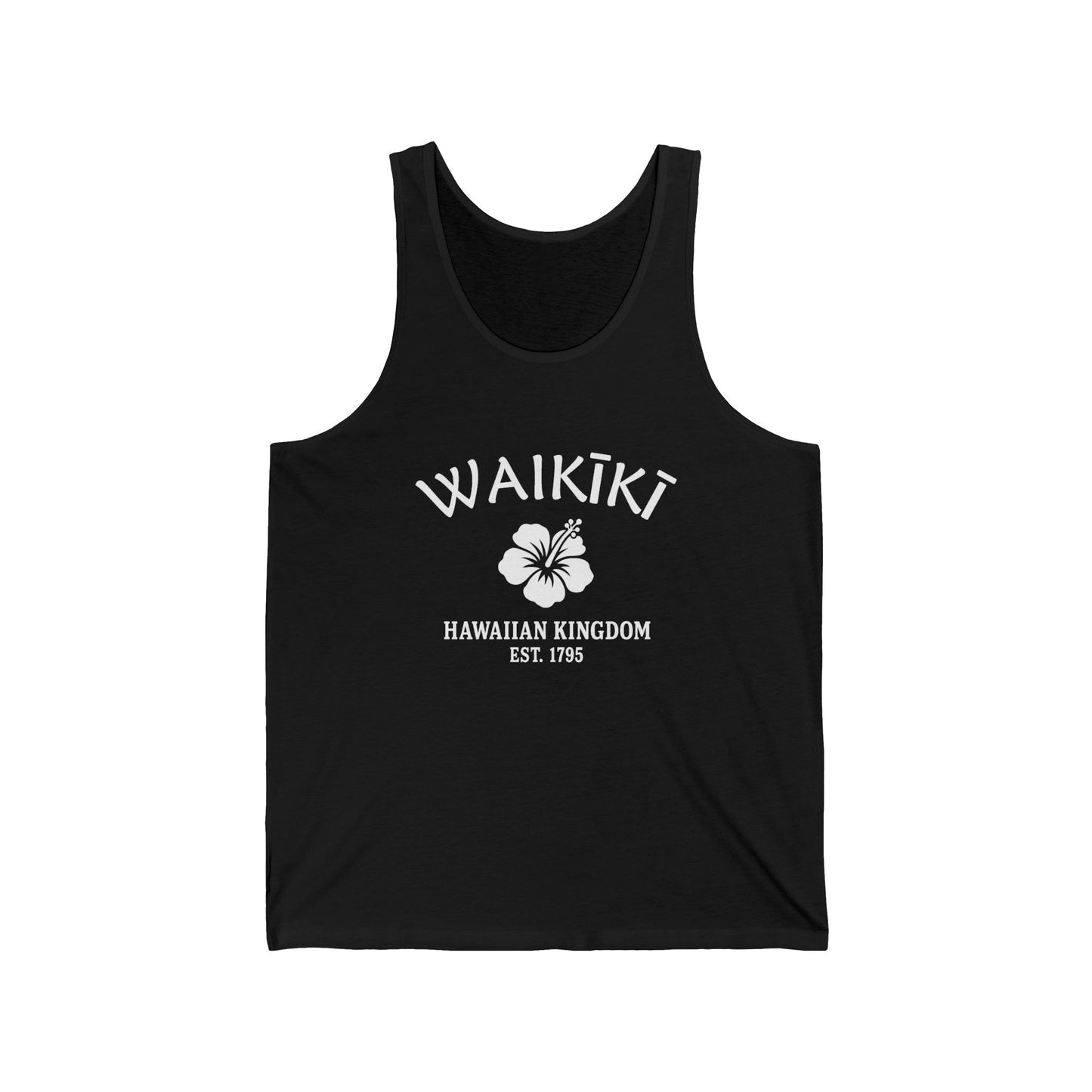
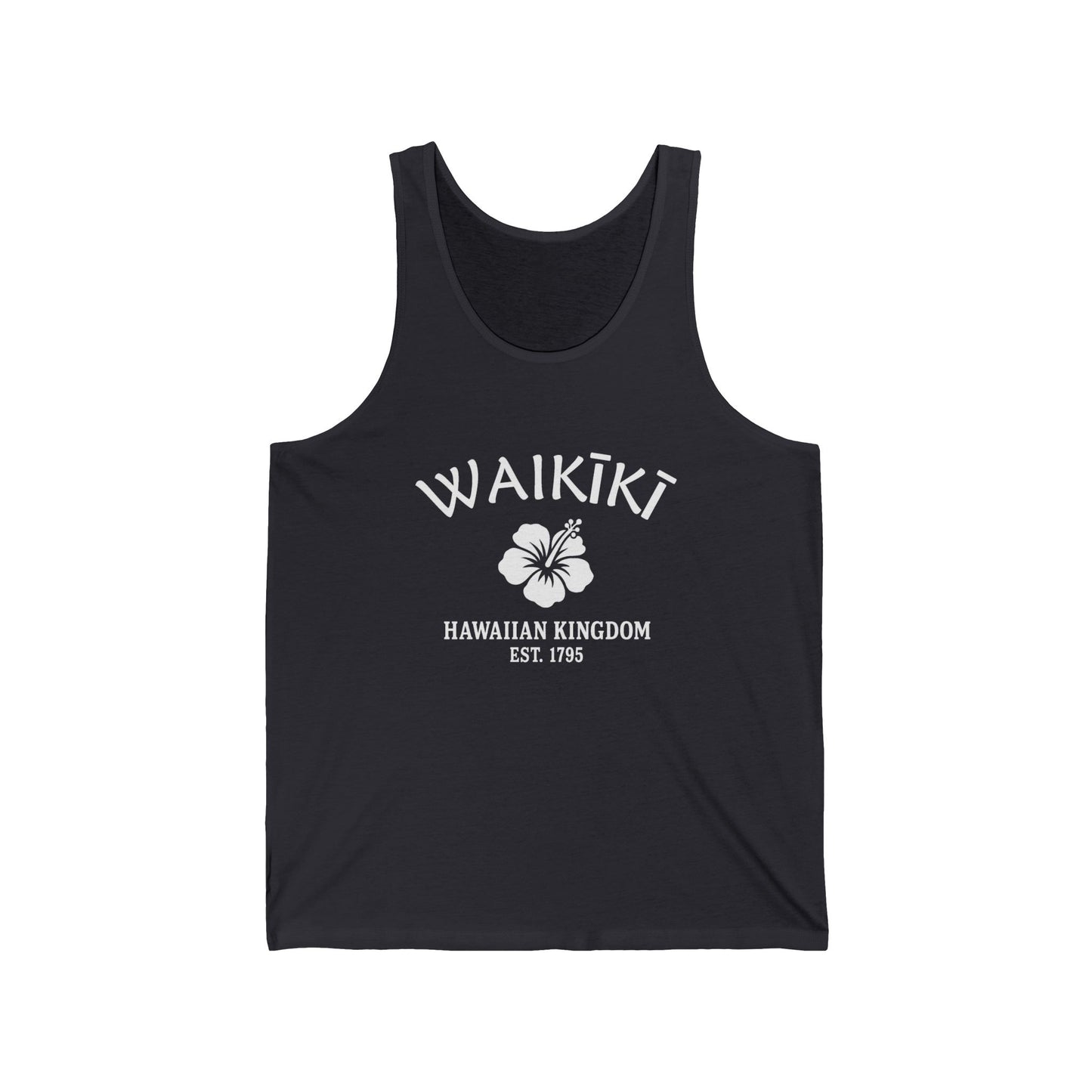
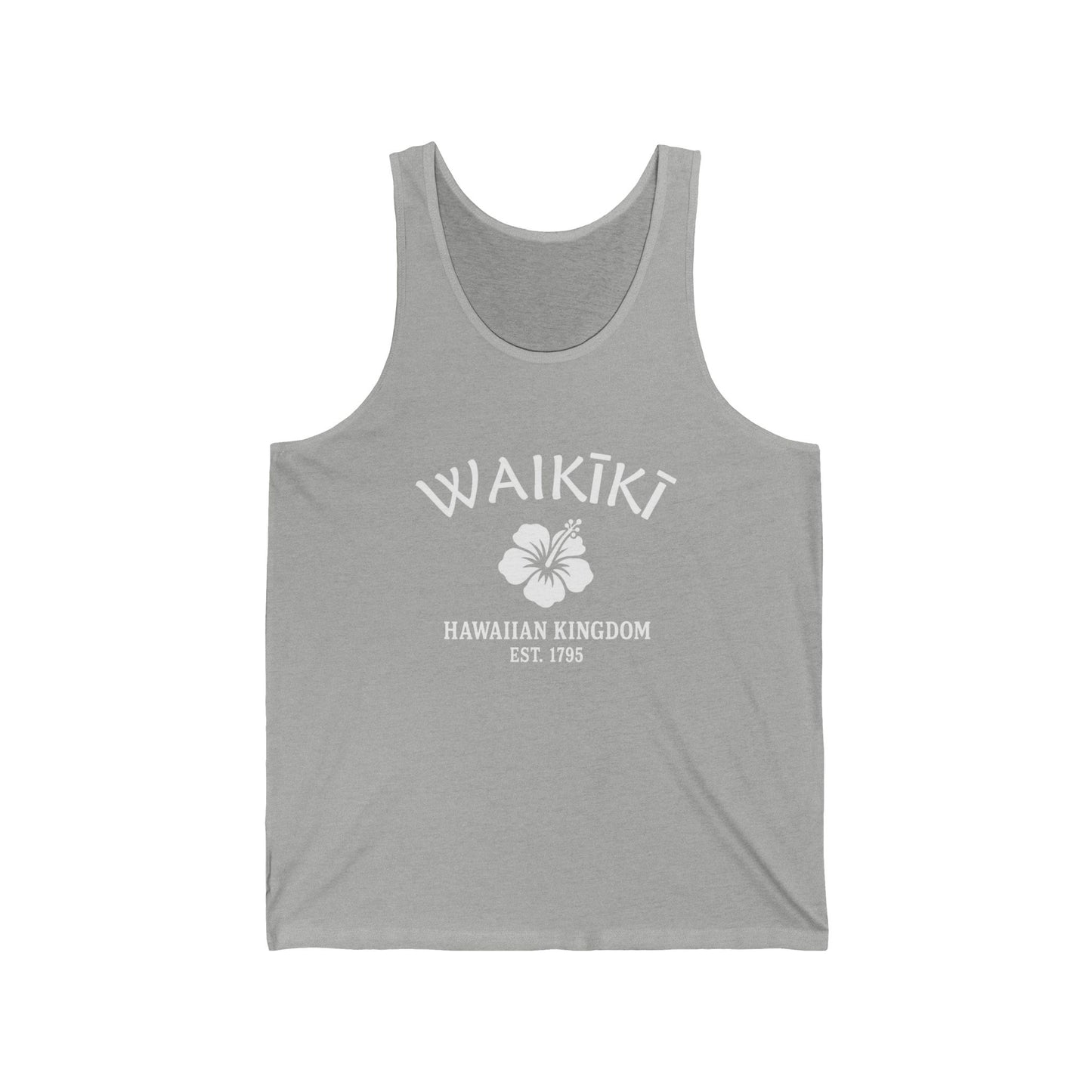
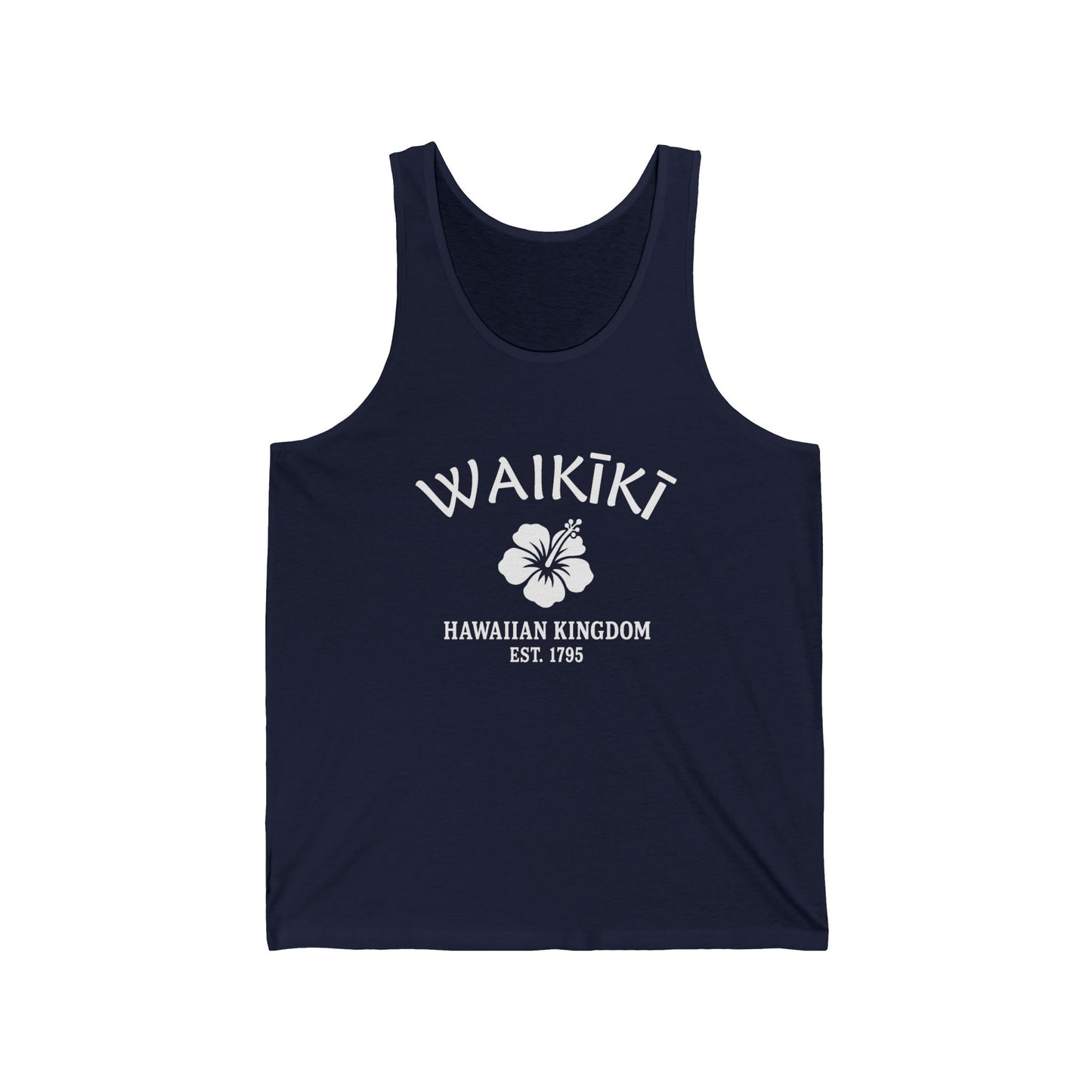
Our Waikīkī design wears the hibiscus, Hawaiʻi's flower, beneath the words “Hawaiian Kingdom · Est. 1795” — a date that belongs to Waikīkī more than to most, for this was the Kingdom's first capital in that founding year. Rendered in clean black and white, like an old travel decal or luggage label, it is a heritage mark — a nod to the islands' own story and to the deep Hawaiian identity of Waikīkī, the spouting waters. It is worn for the place and its people, not for any single chapter of its past.
That second life had a price. To drain the wetlands — officially against mosquitoes, in practice to turn marsh into buildable land — the territory dug the Ala Wai Canal between 1921 and 1928, diverting the very streams that had given Waikīkī its name. The taro patches and fishponds were filled, the Hawaiian families who farmed them displaced, and the spouting waters stilled. What rose in their place was the modern resort district the world now knows — built, quite literally, over the drained breadbasket of old Waikīkī.
Why People Visit Waikīkī
Waikīkī offers a whole world in two miles of sand: the birthplace of modern surfing, royal history beneath the hotels, Diamond Head at the end of the beach, and the easy warmth of Hawaiian hospitality. It is the most famous beach in the Pacific — and for the surfers, paddlers, and families who live and gather here, simply home.
