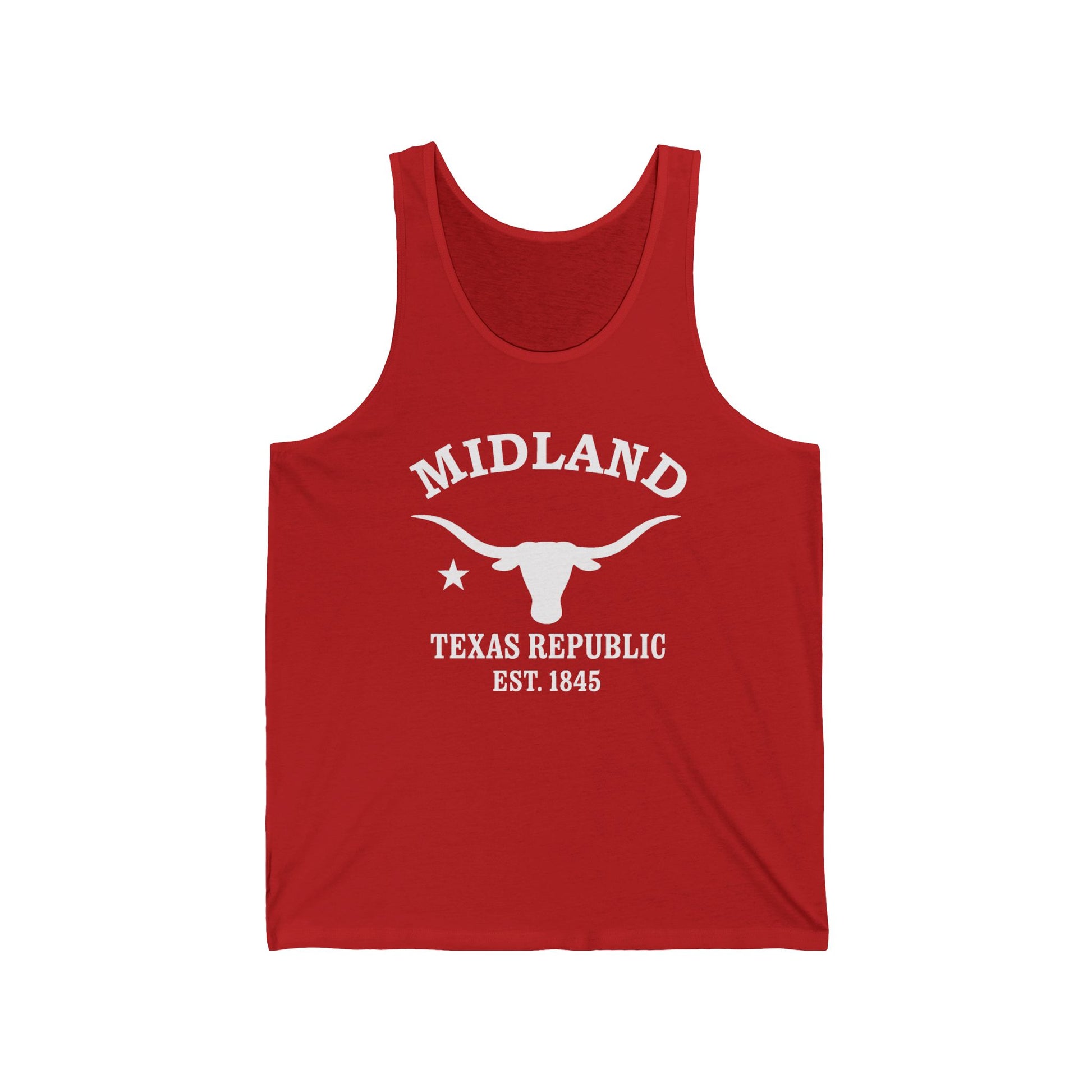
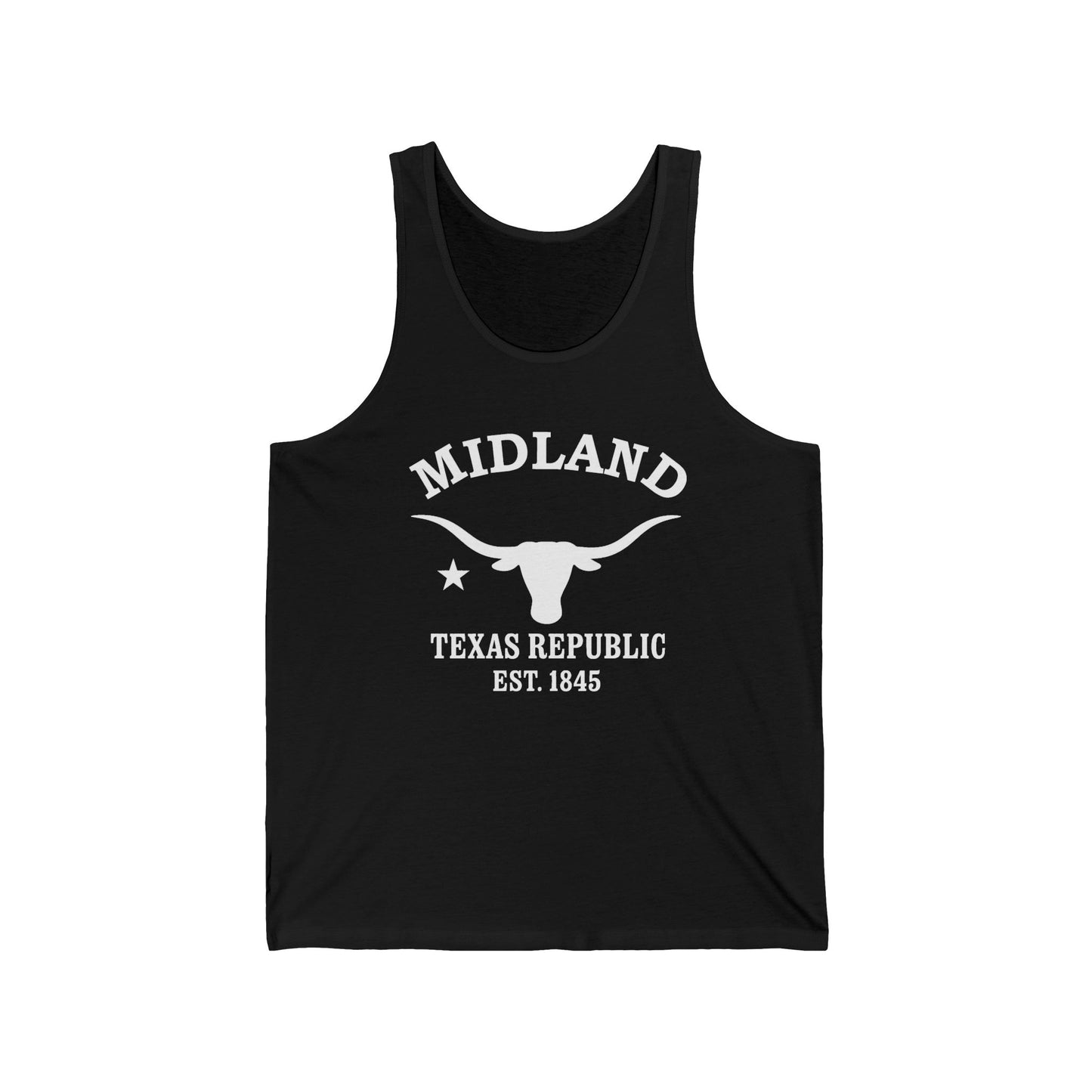
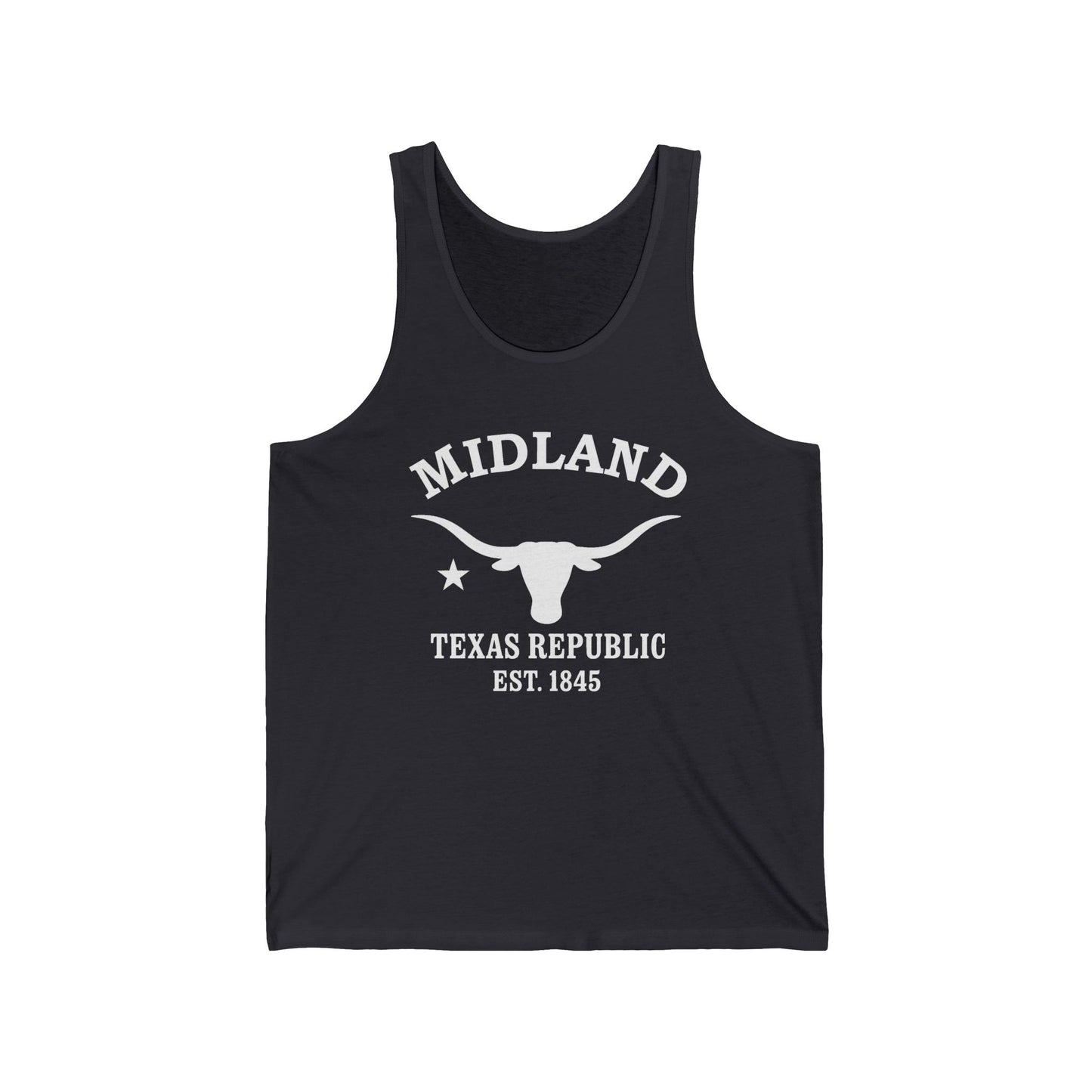
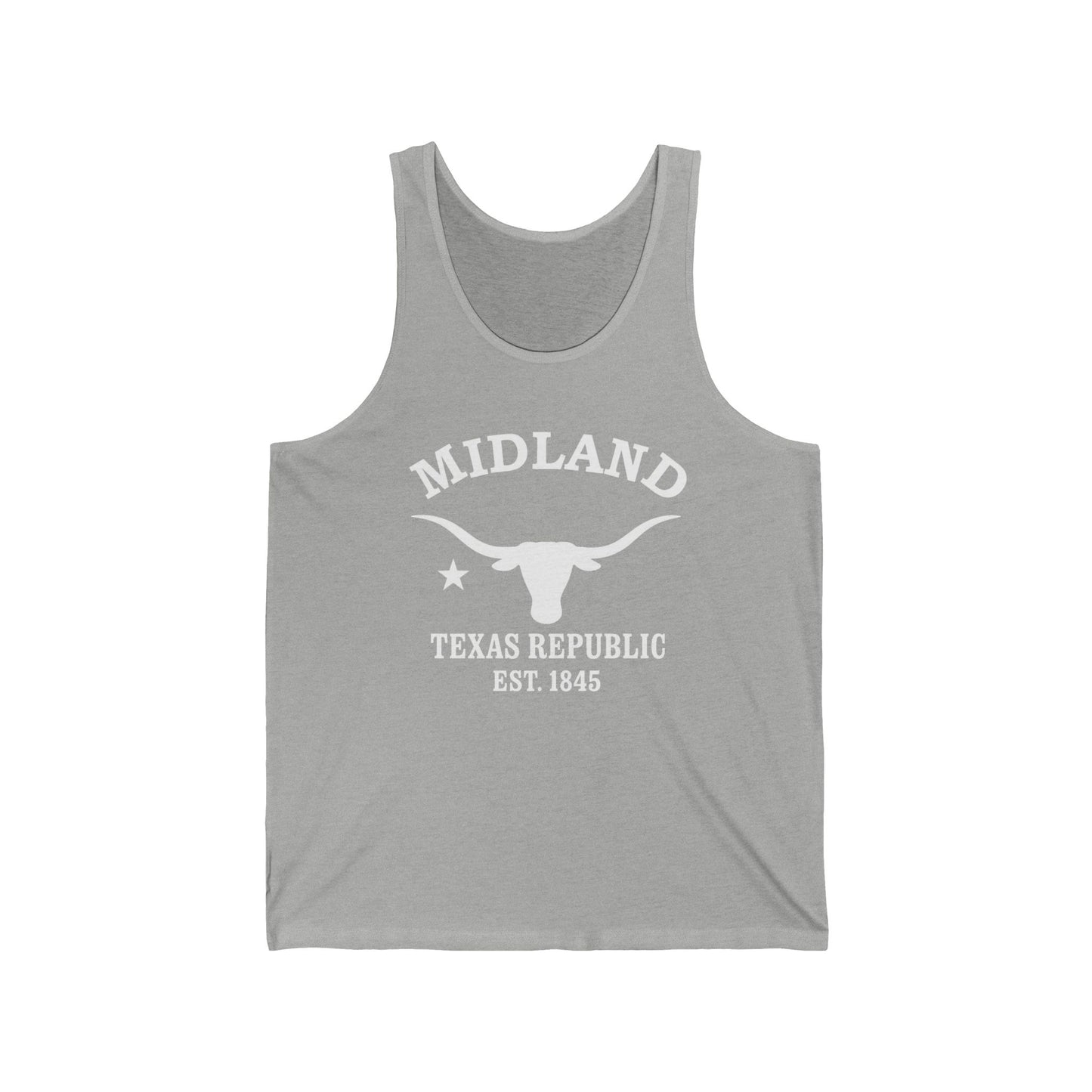
The oil came in 1923. The Santa Rita No. 1 well, drilled out in the Permian Basin, struck a field of staggering size and set off a boom that remade West Texas — and Midland made itself its capital. Rather than the rigs and roughnecks of the field, Midland drew the offices, the geologists, the landmen, and the executives; by 1929 dozens of oil companies ran their Permian operations from downtown. Where blue-collar Odessa worked the field a few miles west, white-collar Midland ran the business. The boom has come and gone in waves ever since, and the horizontal-drilling resurgence after 2010 set the whole cycle spinning again.
Today Midland is the corporate capital of the Permian Basin — a high-plains city of oil and gas, energy professionals, and a downtown skyline that still surprises first-time visitors. The Permian Basin Petroleum Museum tells the story of the boom that built it, and the Museum of the Southwest anchors the city's arts and history. Our Midland designs gather that identity into wearable form — the Tall City, the longhorn-and-star, the oilfield grit, the big West Texas sky. Midland, Texas — where the skyline rises straight out of the plains and the whole town runs on what is buried beneath it.
Why People Visit Midland Texas
Midland draws visitors with a mix of oil-country heritage, museums, and that unmistakable skyline standing up off the West Texas plains. Travelers find it both the business capital of the Permian Basin and a proud, practical high-plains city with deep boom-and-bust history. It is ambitious, plainspoken, and unmistakably West Texan.
