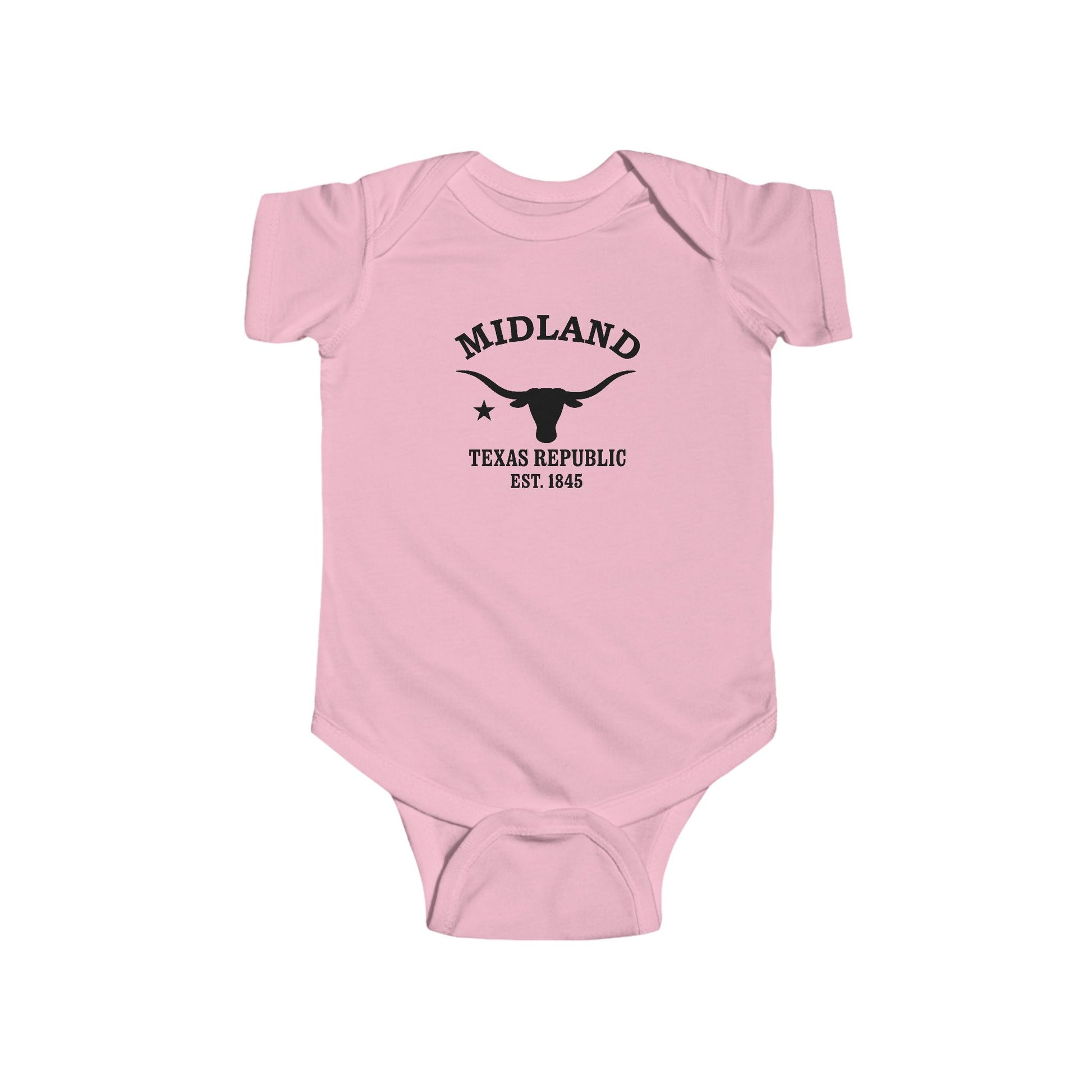
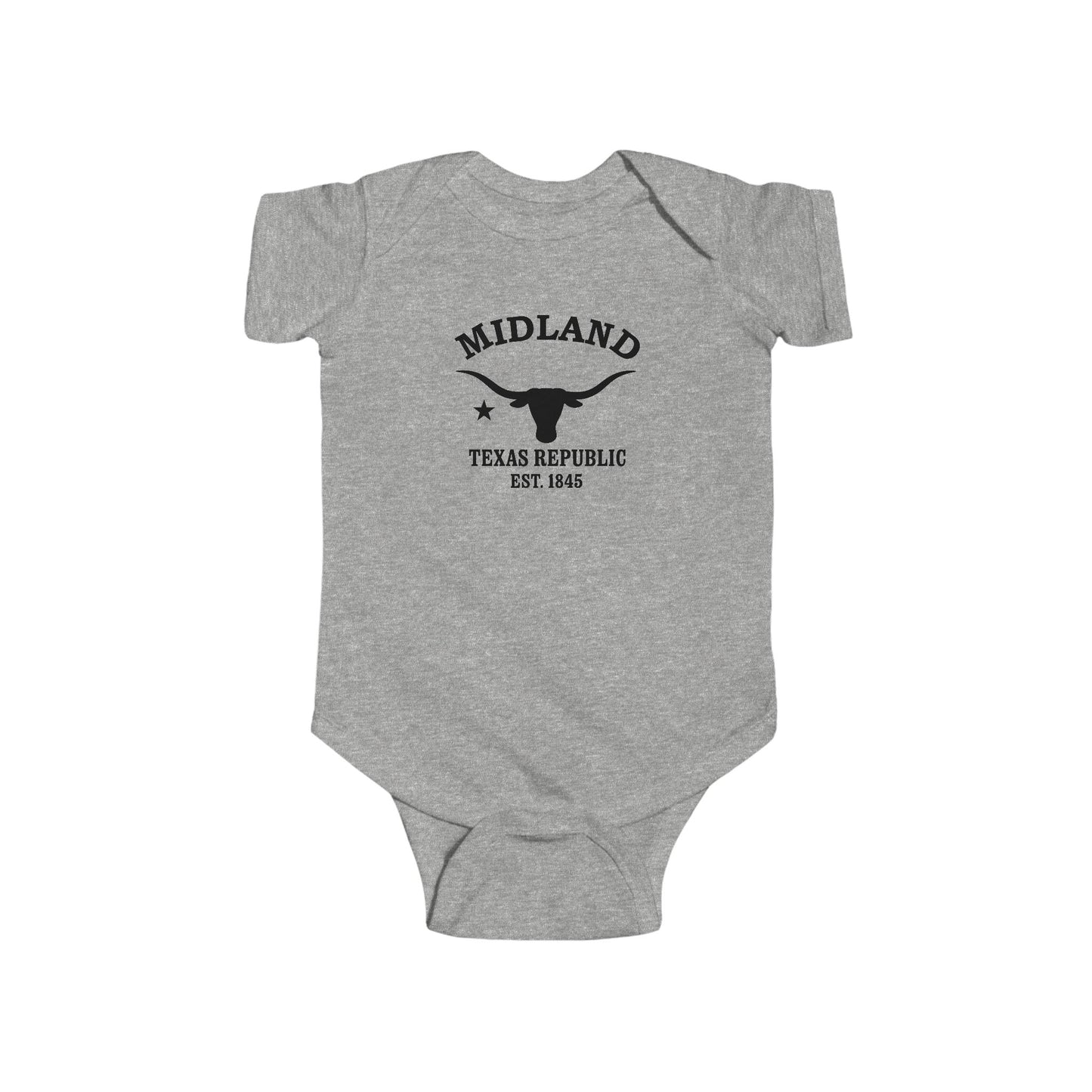
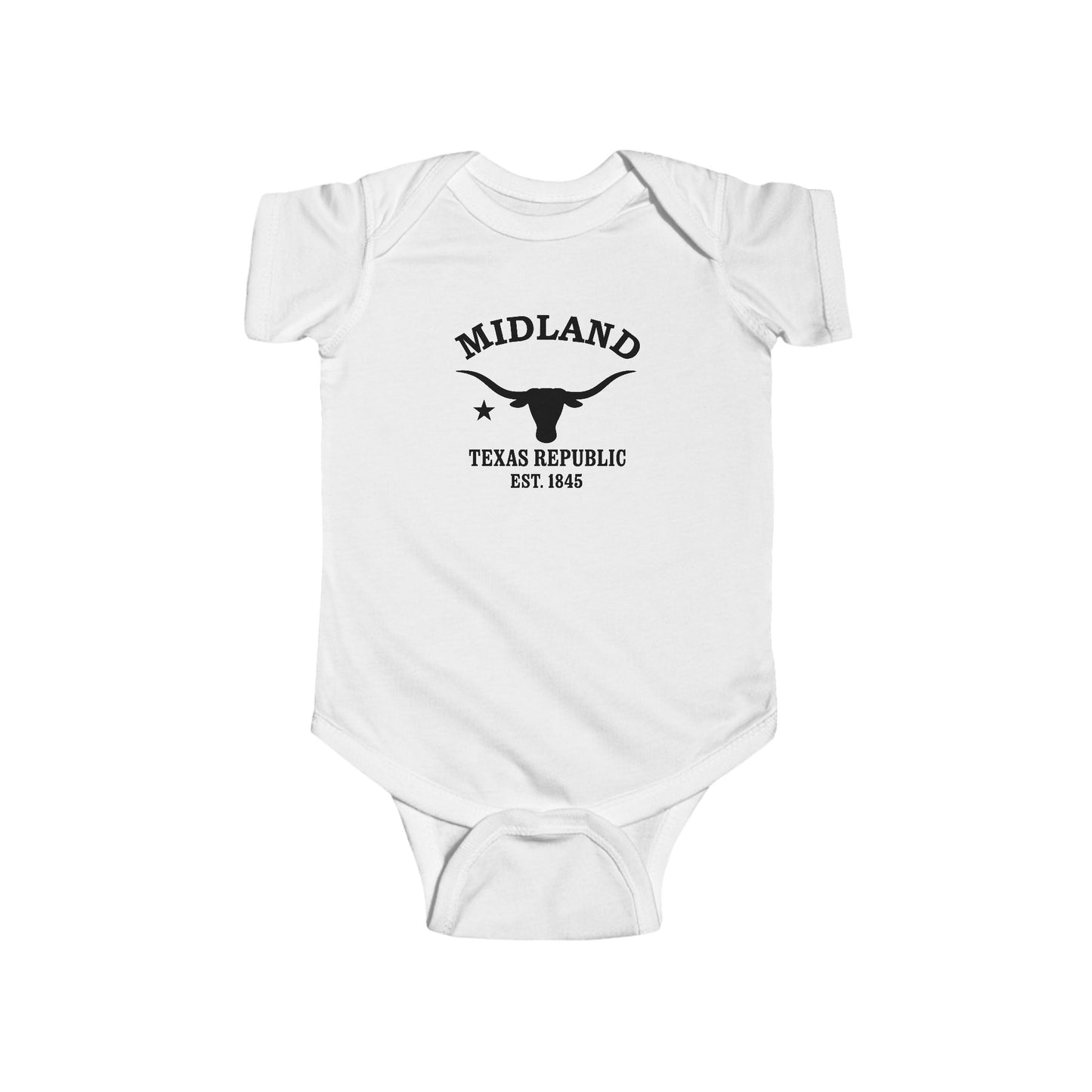
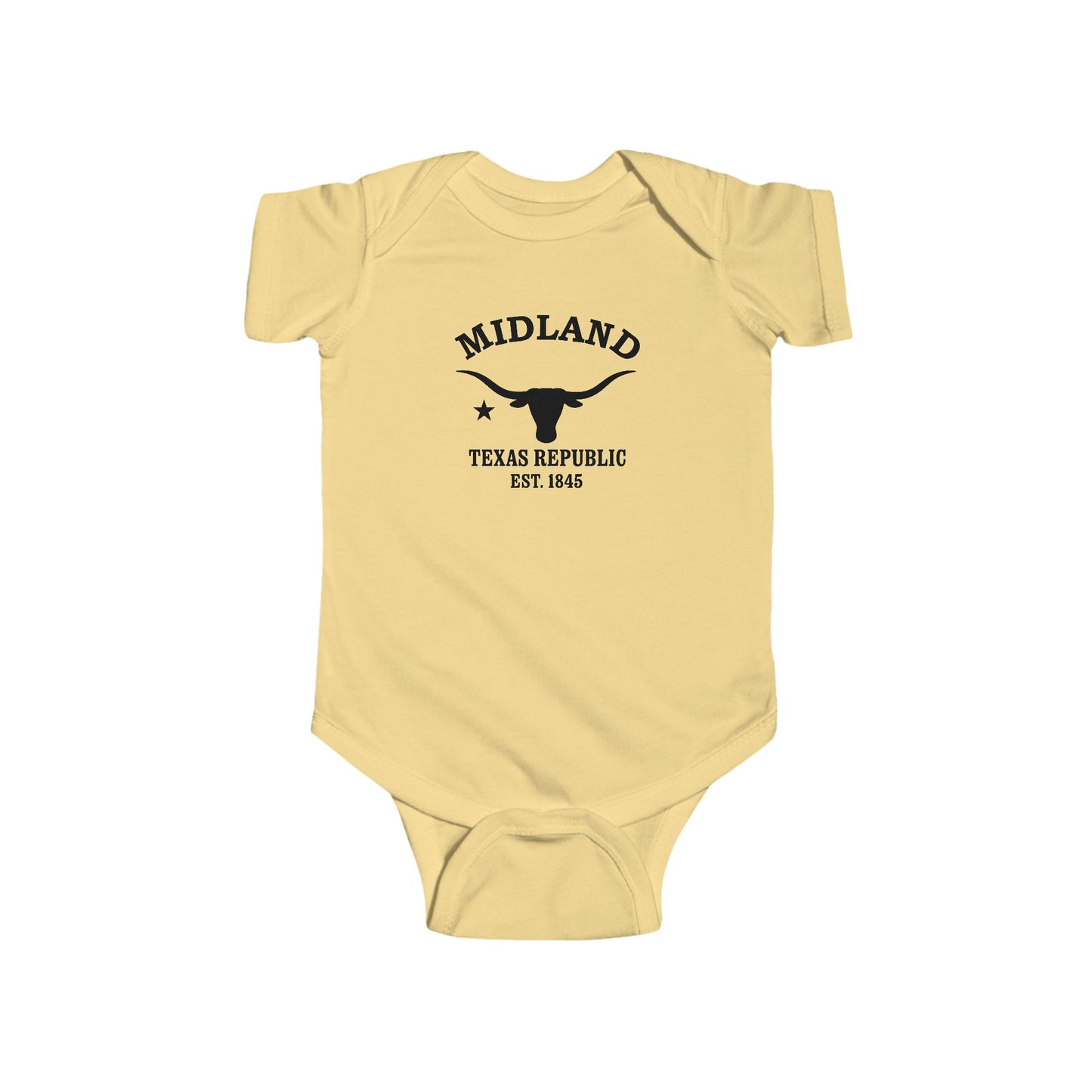
Midland began as a dot on a timetable. In 1881 the Texas & Pacific Railway laid track across the Llano Estacado — the high, flat, semi-arid "staked plains" of West Texas — and a townsite went up at the midway point between Fort Worth and El Paso, first called Midway Station and renamed Midland in 1884. Herman Garrett, a sheep rancher, was among the first permanent residents, and Midland County was organized in 1885. For its first decades the town was ranching country: cattle and sheep on the wide high plains at nearly 2,800 feet.
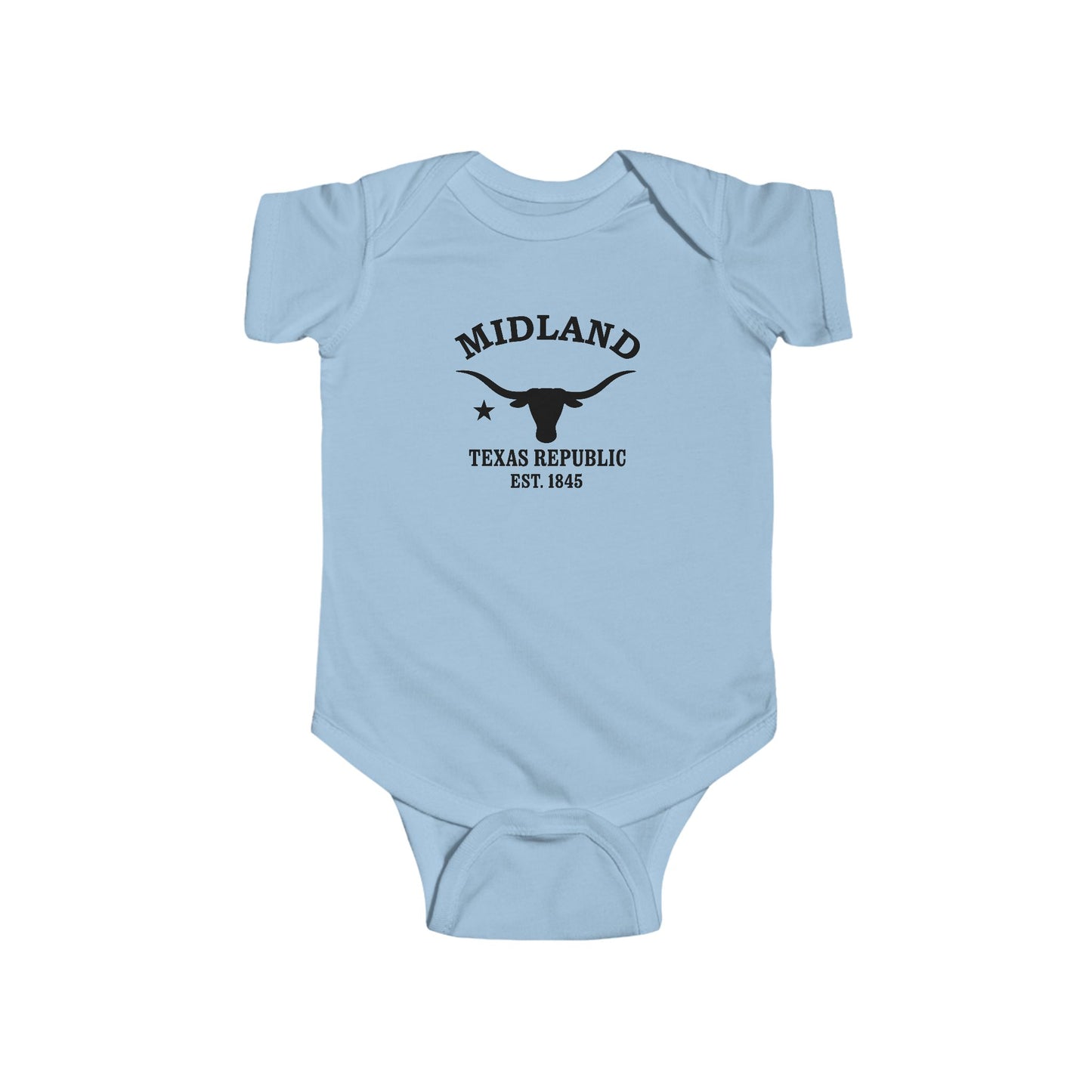
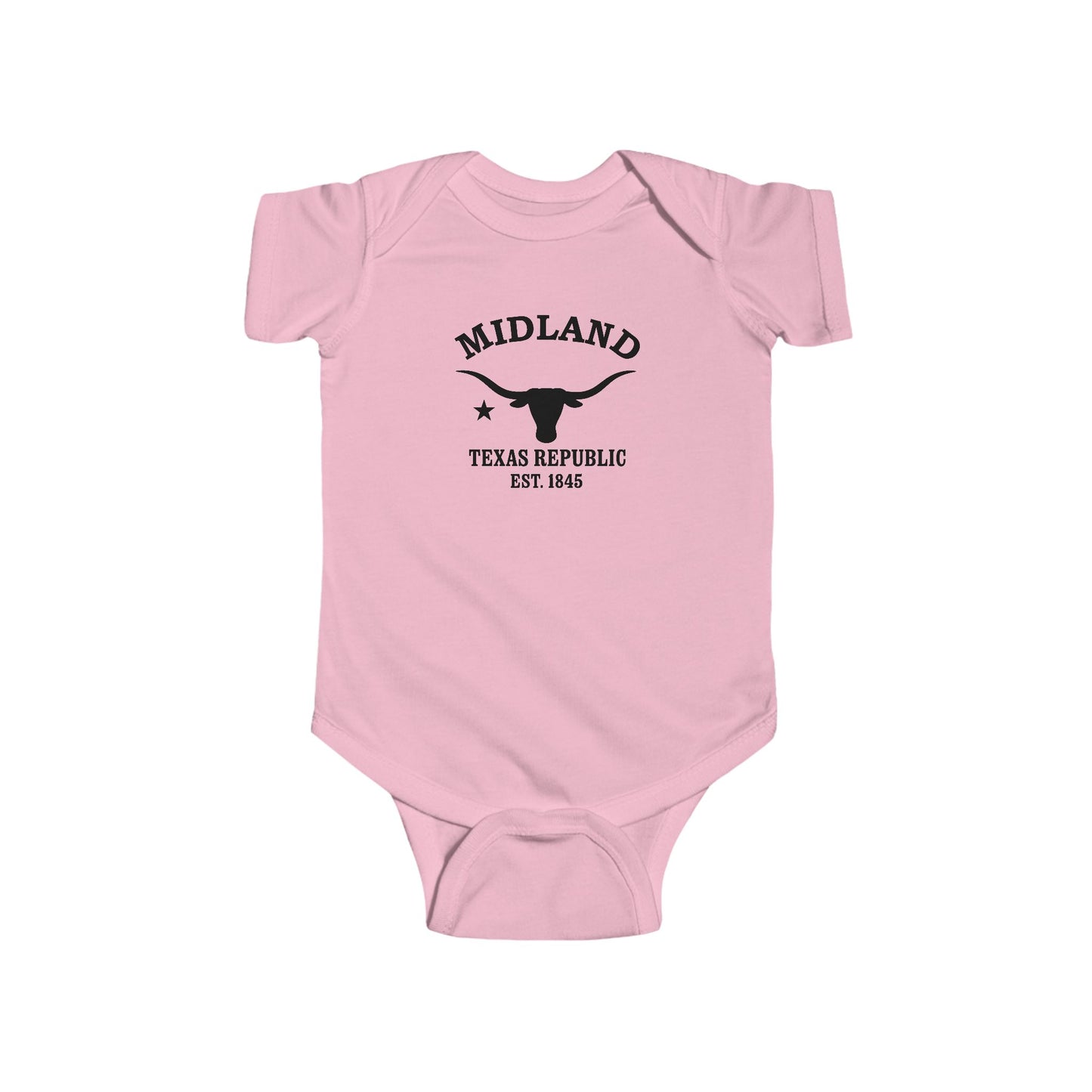
Our Midland logo carries a Texas longhorn — the breed that worked this range before the derricks — and a Lone Star over "1845," the year of statehood and the shared emblem of every Merlin Classics Texas place. Printed black-and-white with the worn look of a branding iron or a stockyard sign, the longhorn and star read as Texas in shorthand: cattle country, the Lone Star, the open West Texas horizon. What makes this one Midland is the place behind it — the Tall City, the Permian Basin, the wildcatter's gamble, and the skyline standing up off the plains.
Why People Visit Midland Texas
- Tour the Permian Basin Petroleum Museum, with interactive galleries on the geology and engineering of the oil boom and a replica 1930s Boom Town.
- Visit the Museum of the Southwest, combining art, science, and a children's museum on a historic estate.
- Walk the downtown Tall City core to see the high-rise skyline that rises straight off the plains.
- See the Bush Family Home, a Texas Historical Commission state historic site in a 1940s neighborhood.
- Catch a performance at the Wagner Noël Performing Arts Center, the region's marquee venue.
