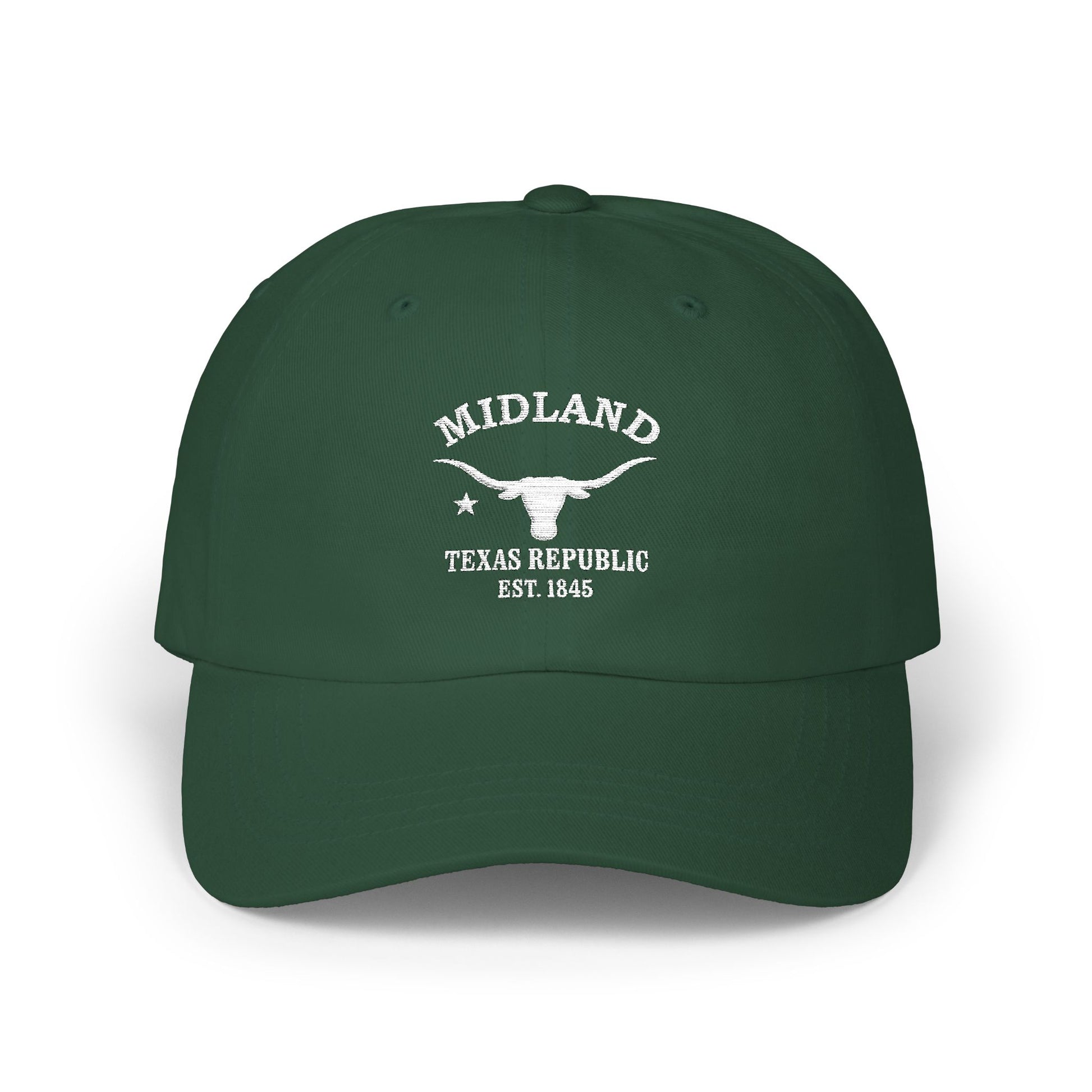
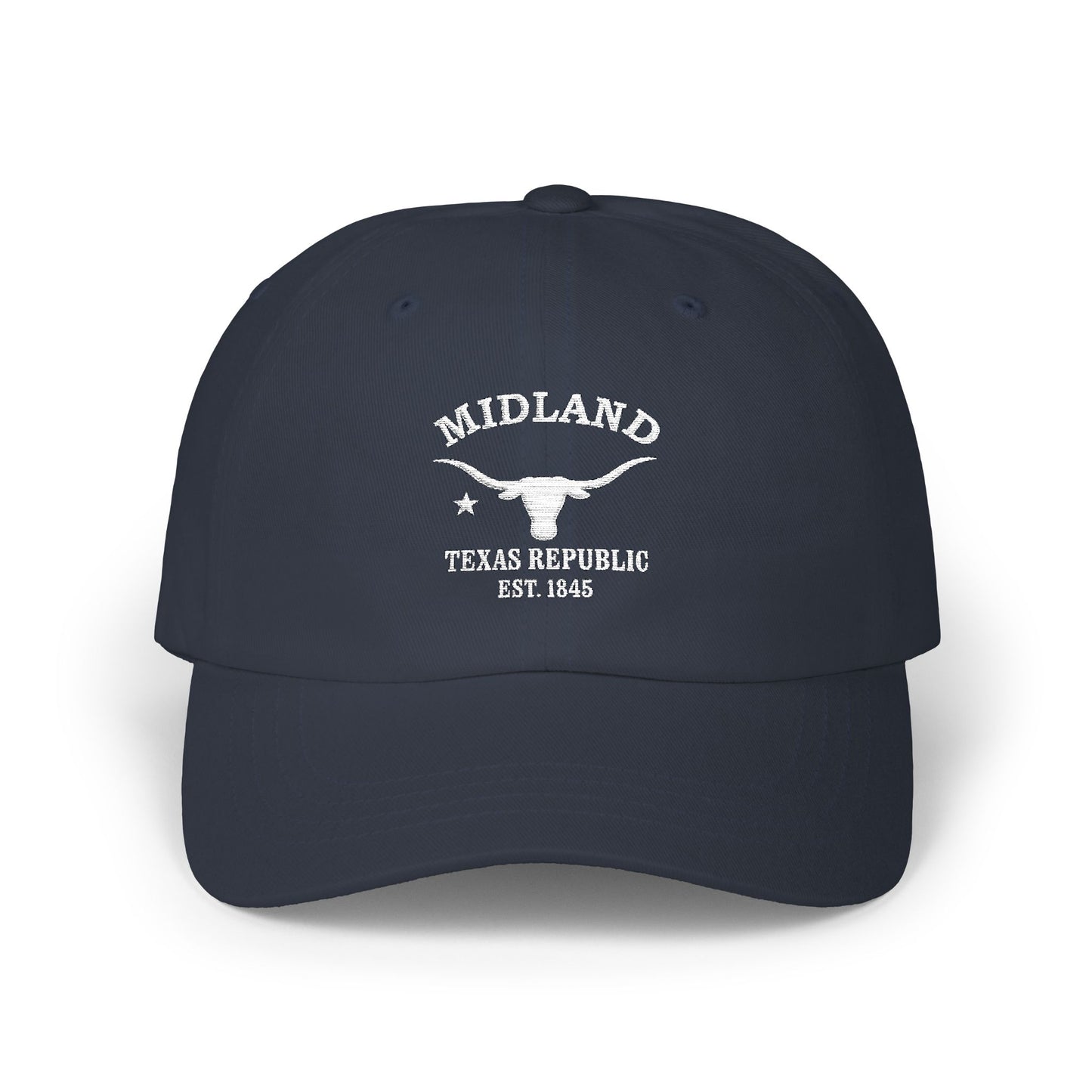
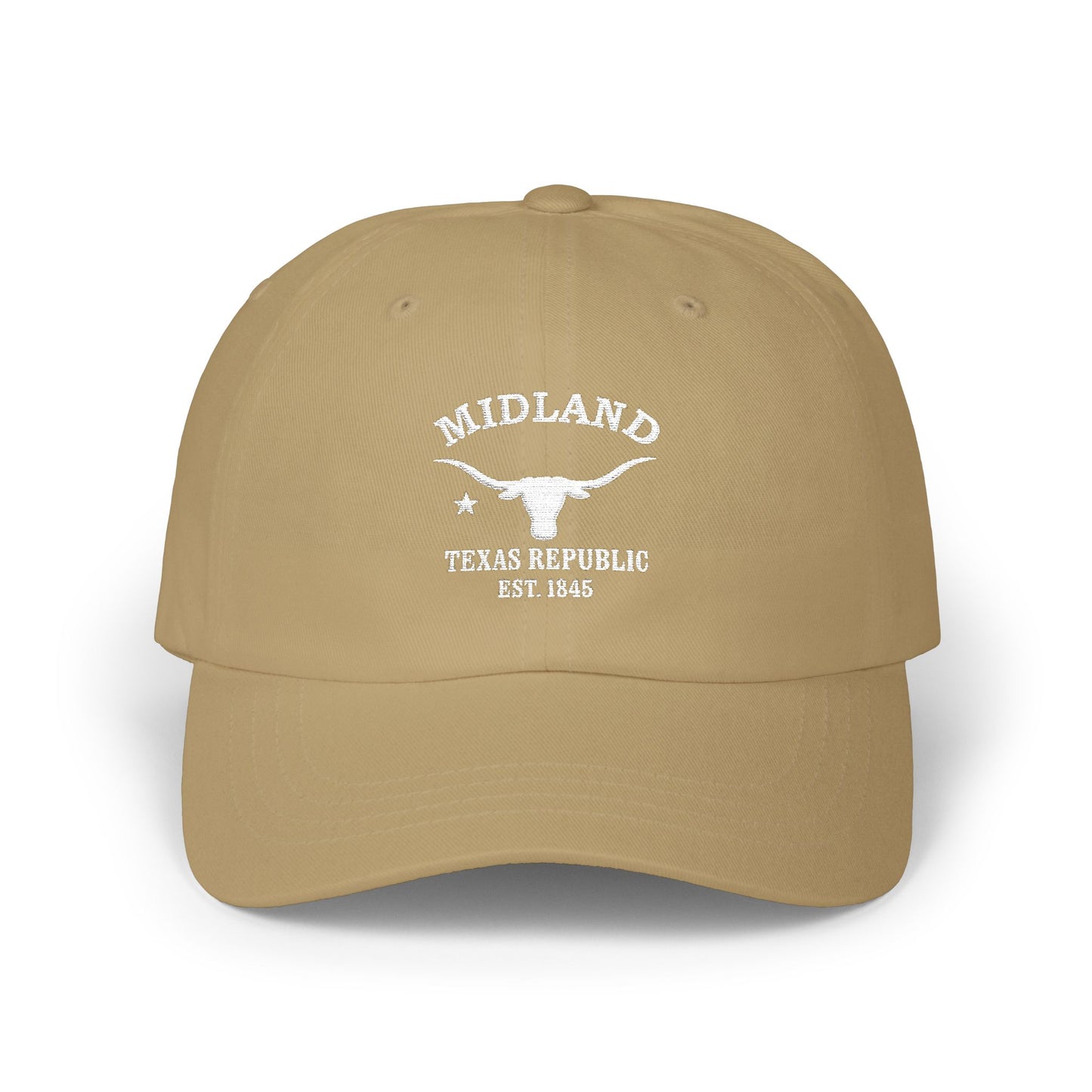
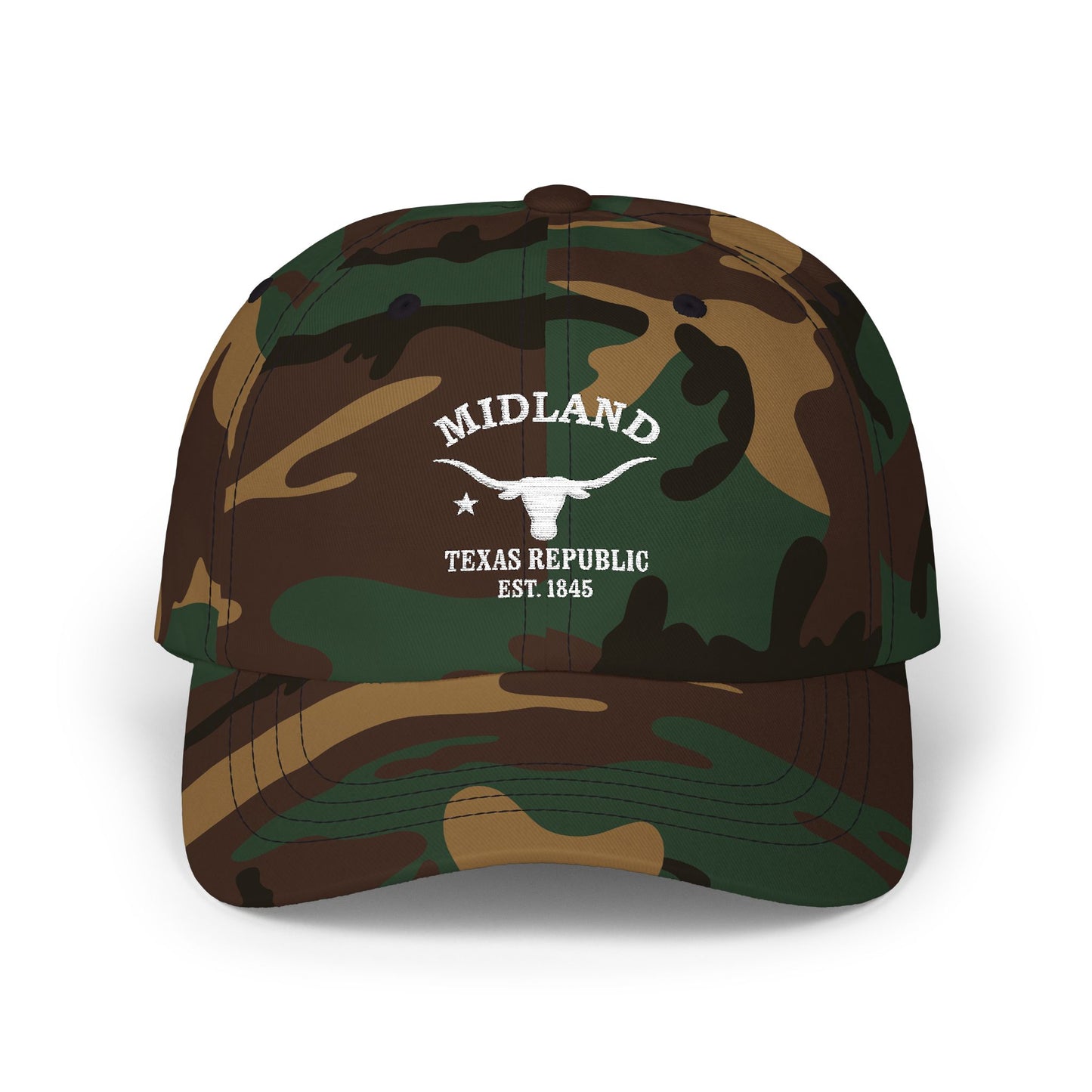
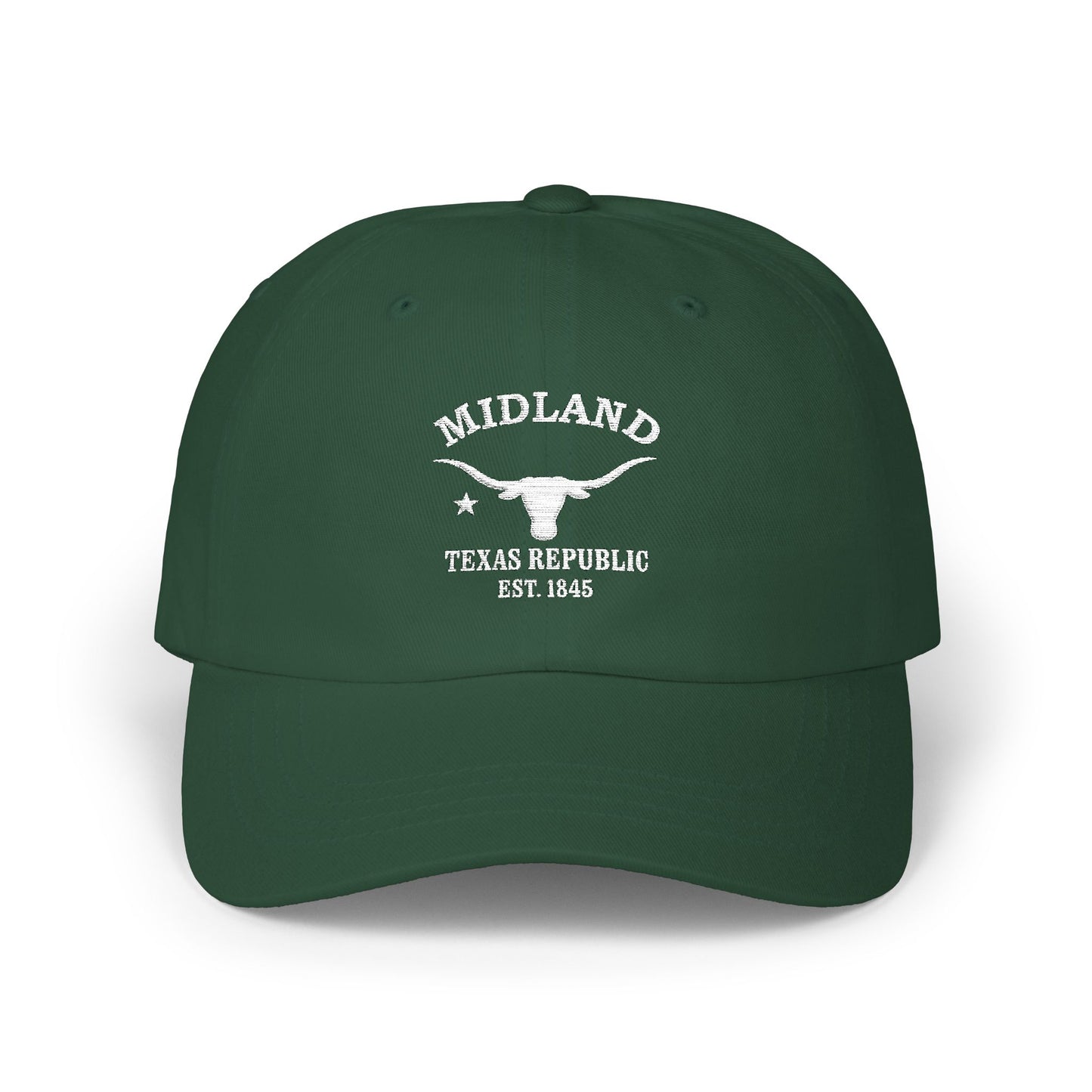
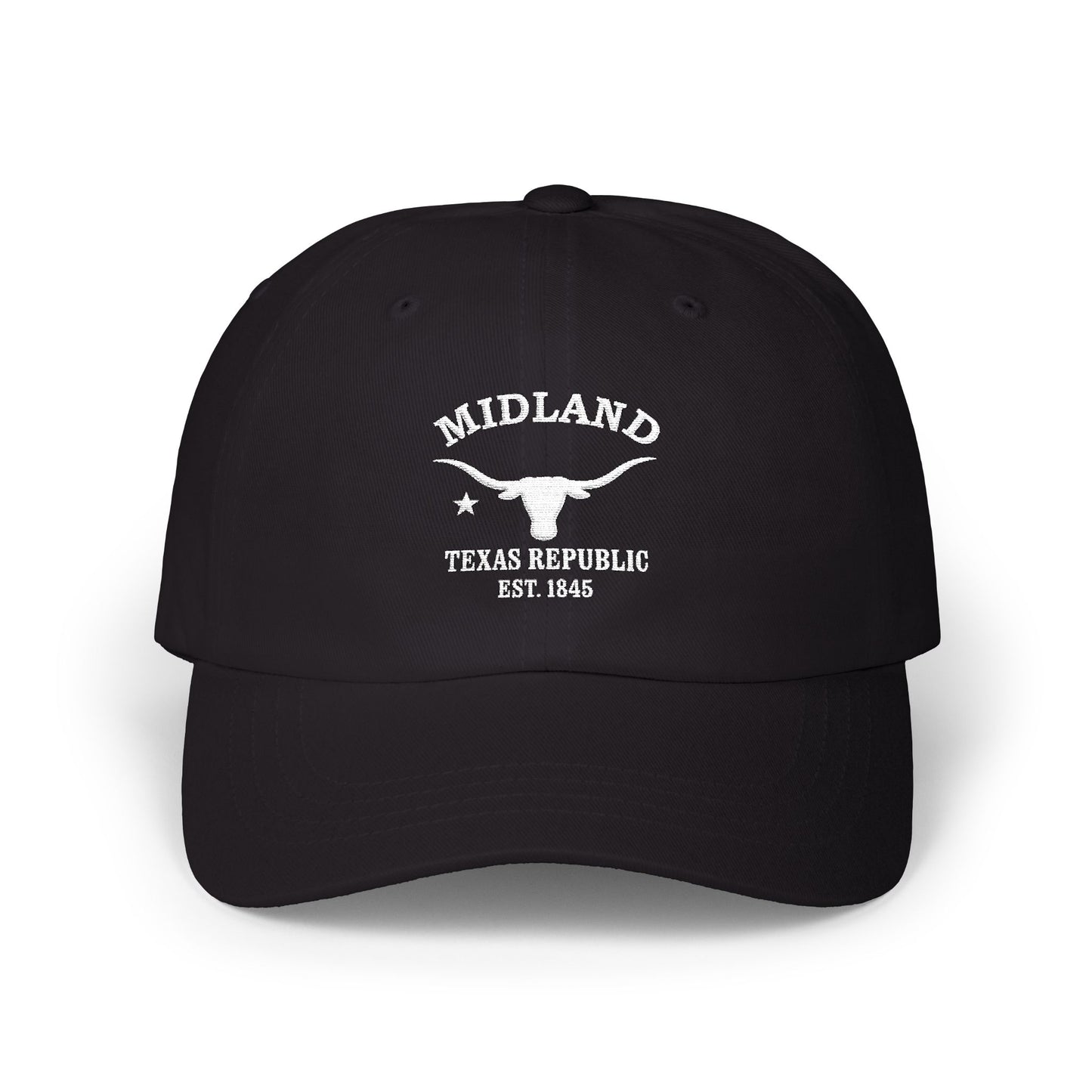
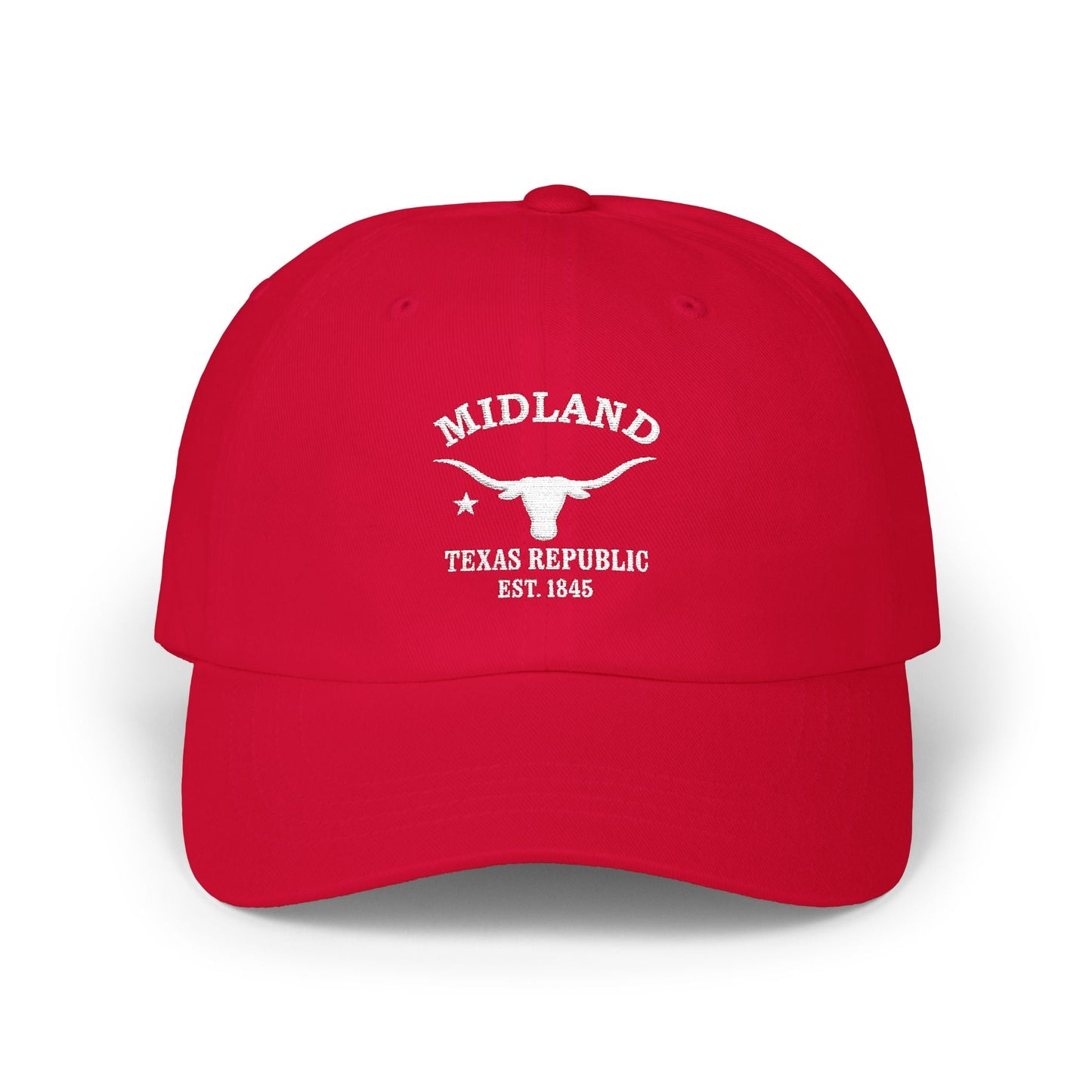
Our Midland logo carries a Texas longhorn — the breed that worked this range before the derricks — and a Lone Star over "1845," the year of statehood and the shared emblem of every Merlin Classics Texas place. Printed black-and-white with the worn look of a branding iron or a stockyard sign, the longhorn and star read as Texas in shorthand: cattle country, the Lone Star, the open West Texas horizon. What makes this one Midland is the place behind it — the Tall City, the Permian Basin, the wildcatter's gamble, and the skyline standing up off the plains.
The oil came in 1923. The Santa Rita No. 1 well, drilled out in the Permian Basin, struck a field of staggering size and set off a boom that remade West Texas — and Midland made itself its capital. Rather than the rigs and roughnecks of the field, Midland drew the offices, the geologists, the landmen, and the executives; by 1929 dozens of oil companies ran their Permian operations from downtown. Where blue-collar Odessa worked the field a few miles west, white-collar Midland ran the business. The boom has come and gone in waves ever since, and the horizontal-drilling resurgence after 2010 set the whole cycle spinning again.
Why People Visit Midland Texas
Midland draws visitors with a mix of oil-country heritage, museums, and that unmistakable skyline standing up off the West Texas plains. Travelers find it both the business capital of the Permian Basin and a proud, practical high-plains city with deep boom-and-bust history. It is ambitious, plainspoken, and unmistakably West Texan.
