


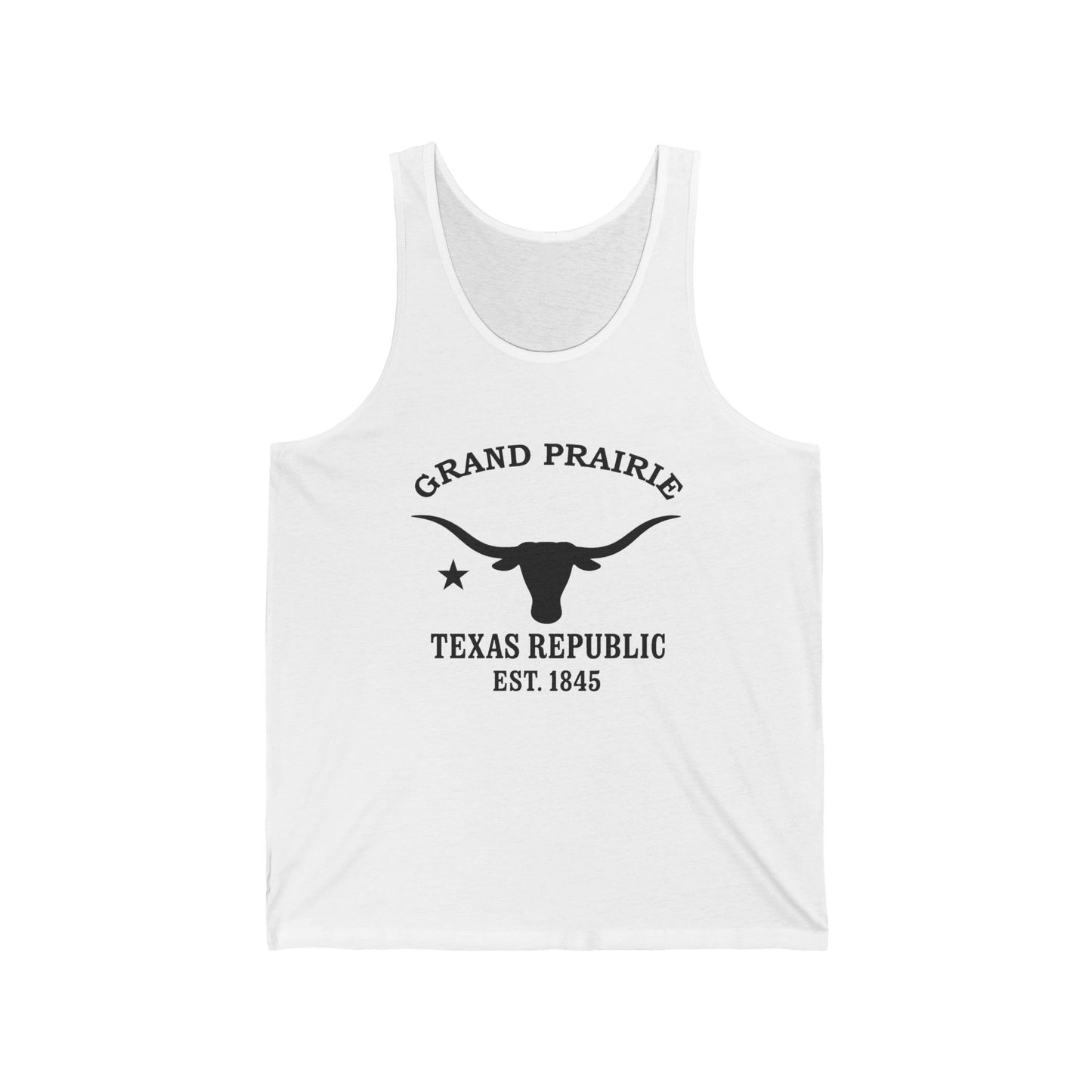
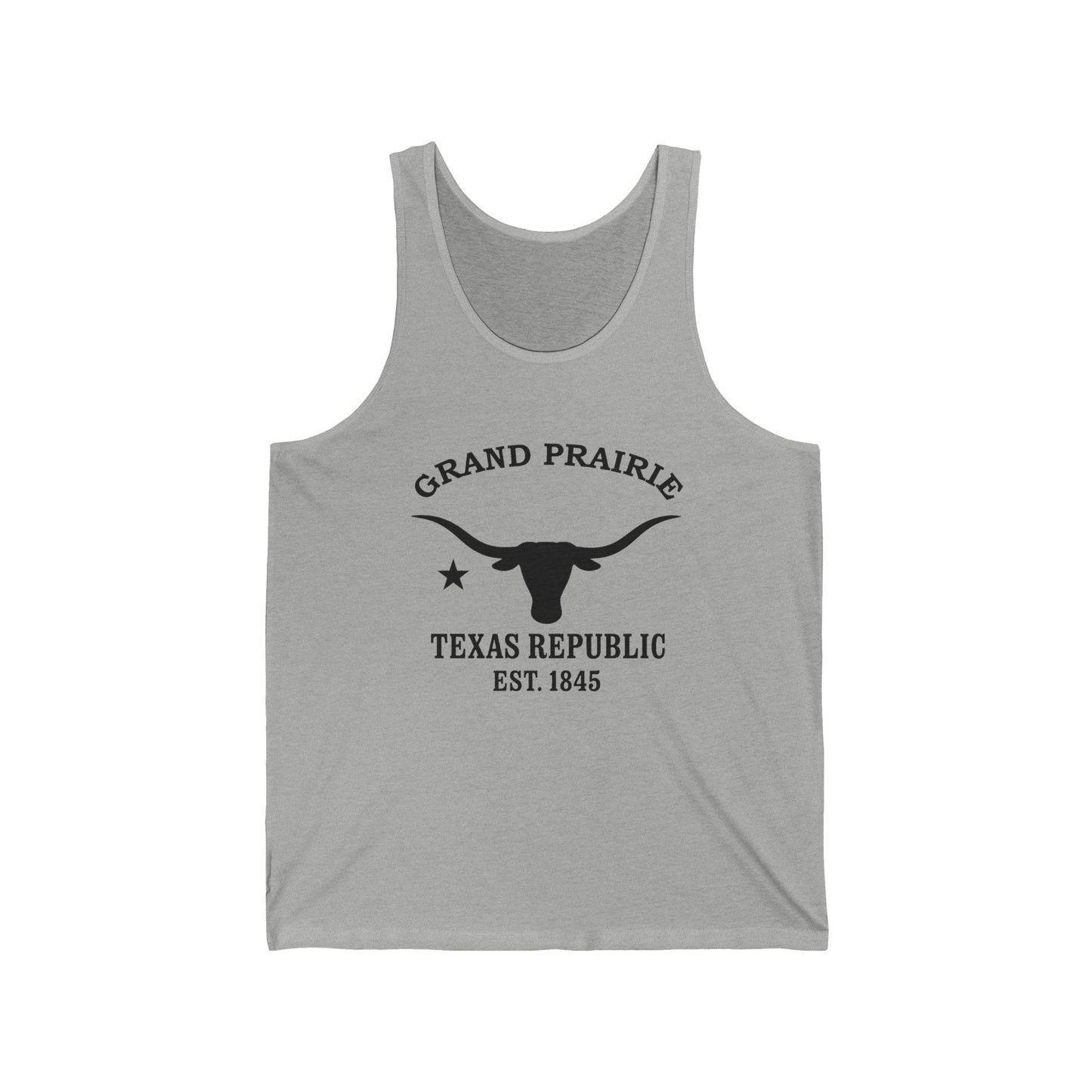
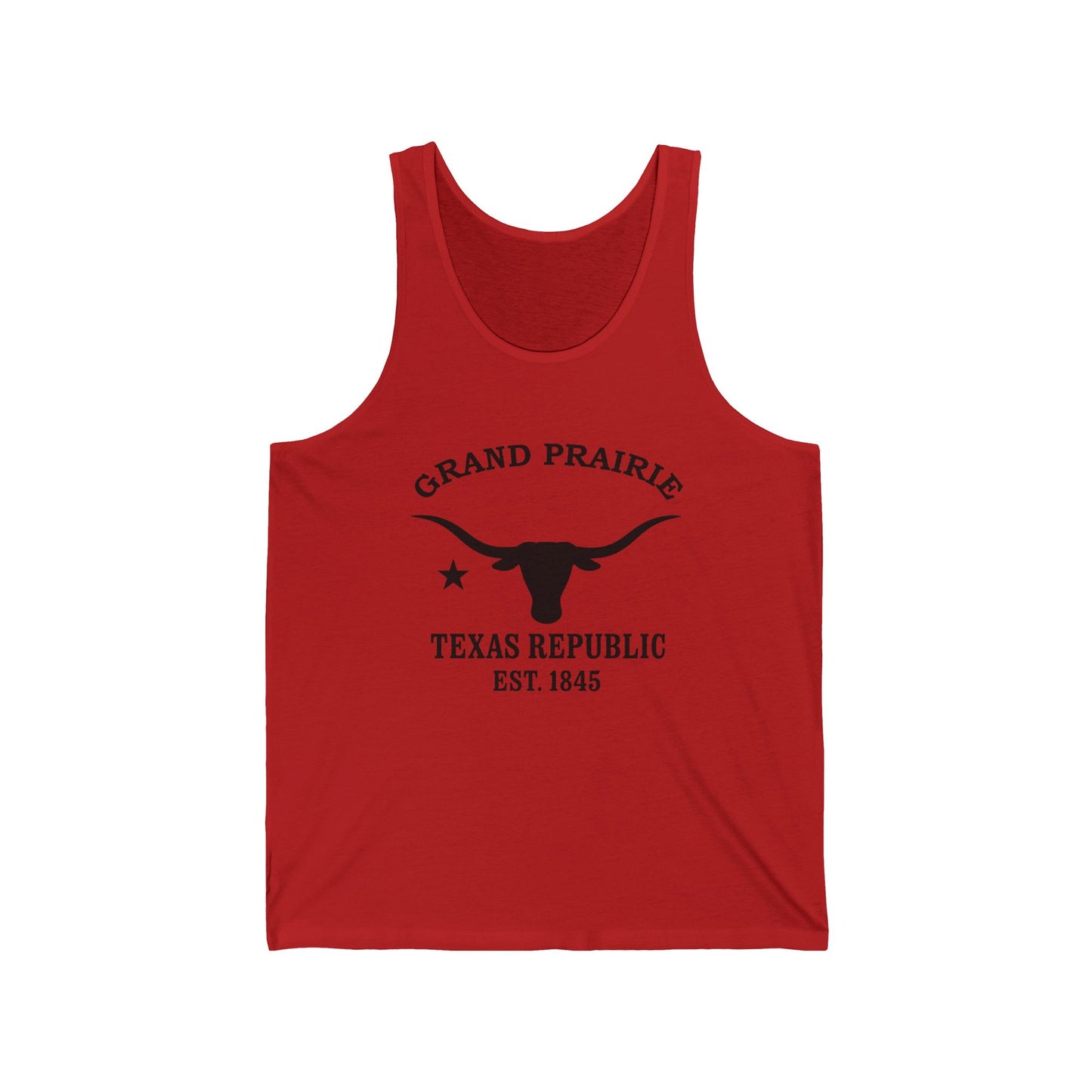
Our Grand Prairie logo carries the Texas longhorn and Lone Star, the emblem every Merlin Classics Texas place wears, set over “Texas Republic, Est. 1845.” The longhorn and the star are the state’s shorthand — endurance, independence, the open range — printed black-and-white with the worn look of an old barn brand or a rodeo bill. What makes this one Grand Prairie is what stands behind it: the grassland that named the town, the horses that ran it, and the aircraft that borrowed their name. On a tee or a cap it reads less like a souvenir than like a piece of North Texas, worn plain.
What’s with the Mustangs of Grand Prairie? The answer is two answers, and the second one borrowed its name from the first. Wild horses ran the North Texas prairies here into the 1850s, plentiful enough that the settlers who arrived didn’t bother inventing names for the creeks — they called one spring-fed branch Mustang Branch because Spanish horses ranged along it, and there is still a Mustang Creek running northeast into Tarrant County. Ninety years later, on that same grassland, a factory was turning out fighter planes called Mustangs at better than one aircraft an hour. Two kinds of Mustang, one prairie, and a word that crossed an ocean twice to get here.
Why People Visit Grand Prairie, Texas
People come for the central Metroplex location and the mix of prairie, lakes, and live racing — and stay curious about an aviation heritage most visitors never expect from a city between Dallas and Fort Worth. It is flat, friendly, and in the middle of everything, with a long horizon and a longer memory than its suburbs suggest.
