


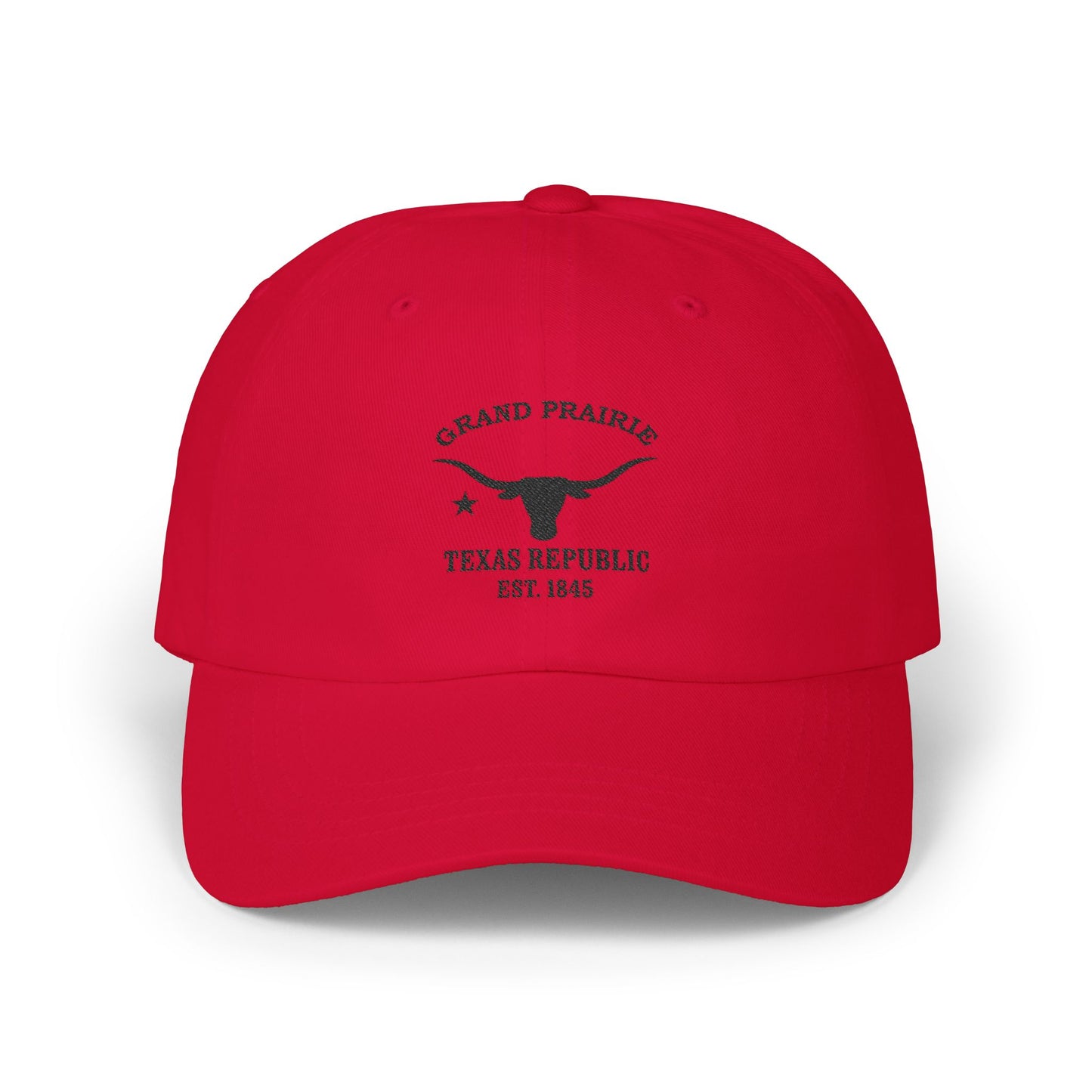
Today Grand Prairie stretches long and narrow across Dallas and Tarrant counties, from Mountain Creek Lake down toward Joe Pool, a Metroplex city that kept its prairie name. The runway is still there, now the Armed Forces Reserve Complex; the racing is still there; the grass is still the thing underneath all of it. Wild horses, fighter planes, and a grandstand — same ground, three centuries. Wear the history, and carry a little of it home.
The town arrived later, and it arrived for the railroad. This ground was Peters Colony prairie in the 1840s, open grass crossed by trading paths between the forks of the Trinity long before anyone platted a street. In 1863 a Nova Scotia-born settler named Alexander McRae Dechman founded the community first known as Dechman. When the Texas and Pacific reached the depot in 1876 the place became a rail town, and in 1877 the line renamed it for the grassland it stood on. Grand Prairie incorporated in 1909 as a farming and ranching crossroads and stayed one for thirty years — a name taken from the land, and a founder’s name taken off the map.
Why People Visit Grand Prairie, Texas
People come for the central Metroplex location and the mix of prairie, lakes, and live racing — and stay curious about an aviation heritage most visitors never expect from a city between Dallas and Fort Worth. It is flat, friendly, and in the middle of everything, with a long horizon and a longer memory than its suburbs suggest.
