


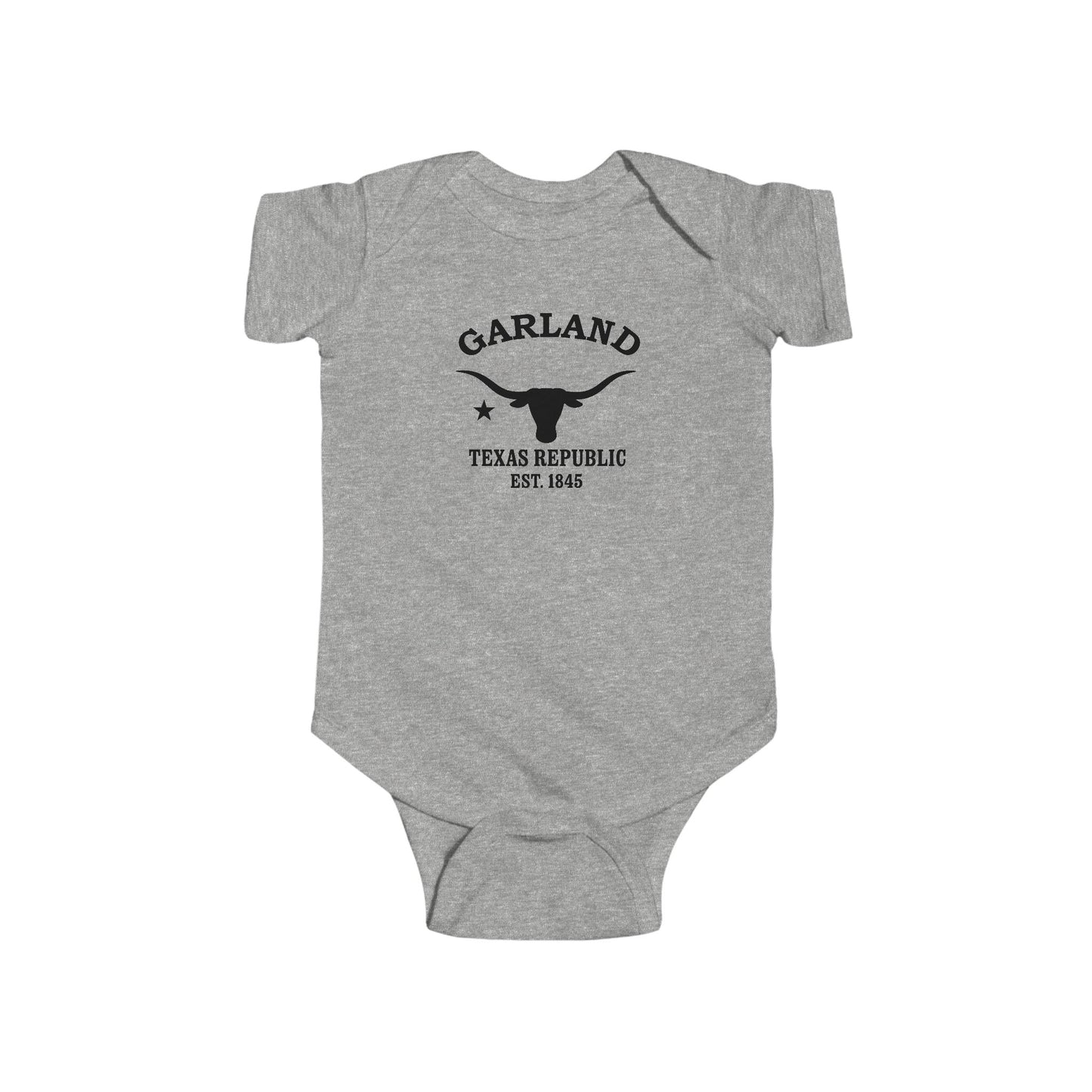
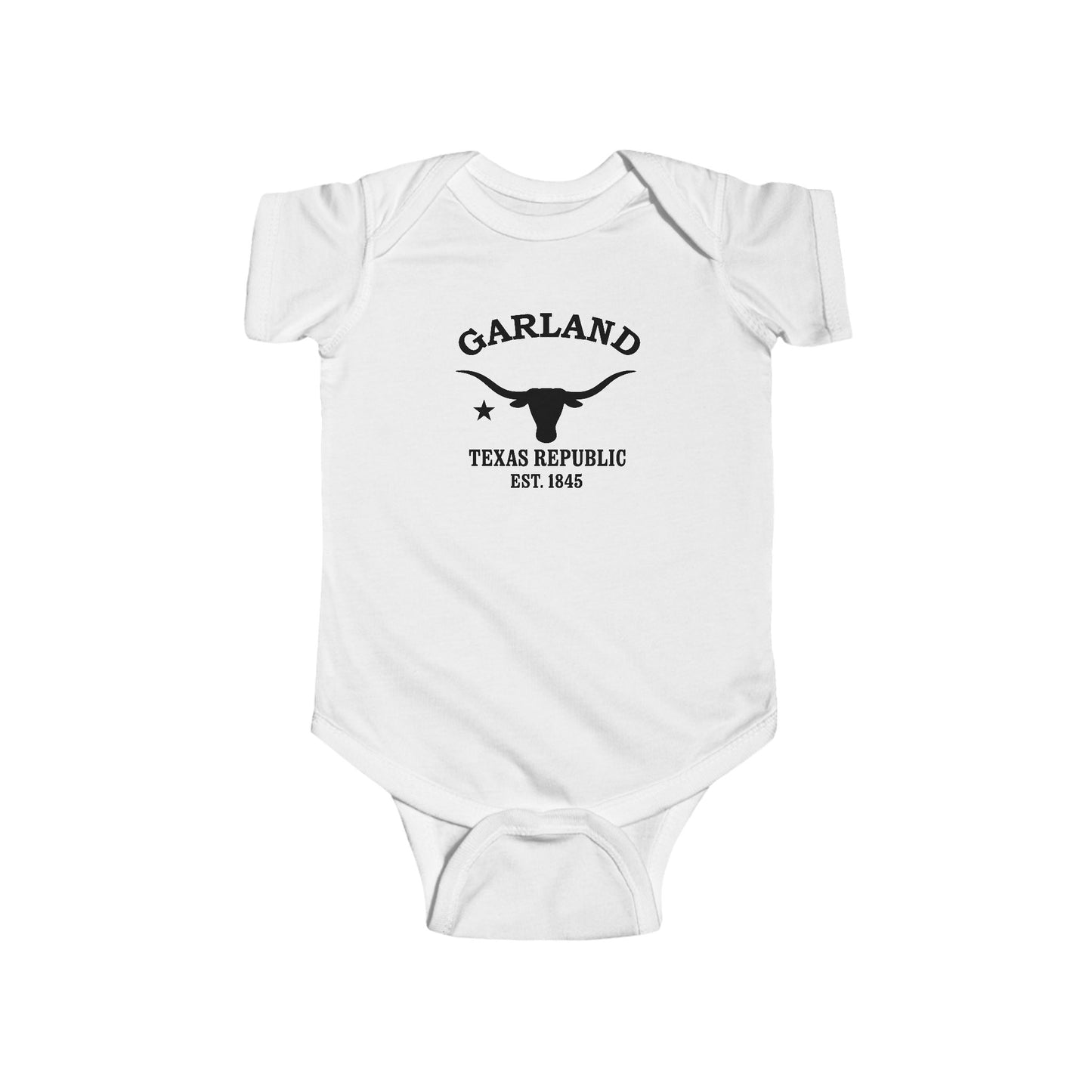
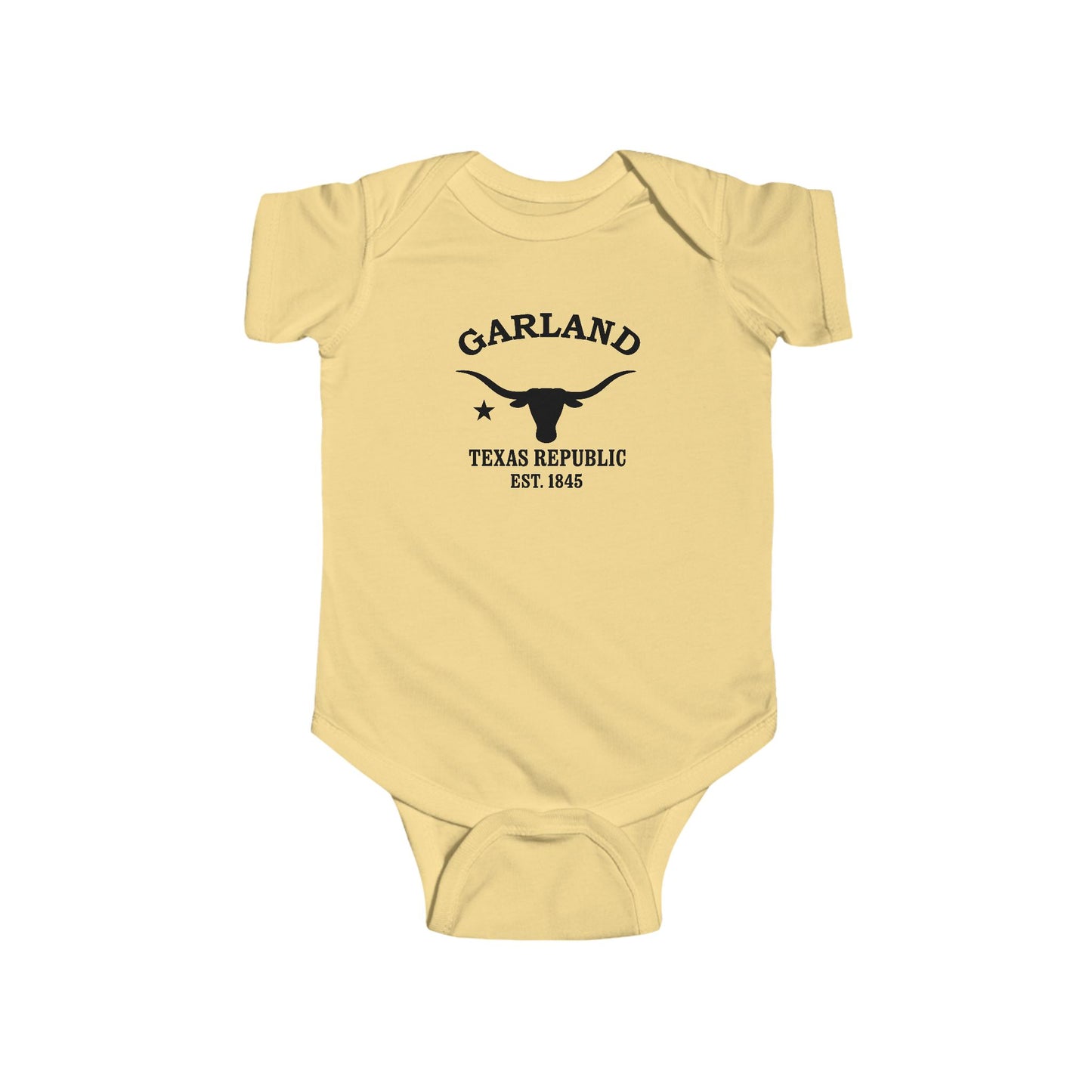
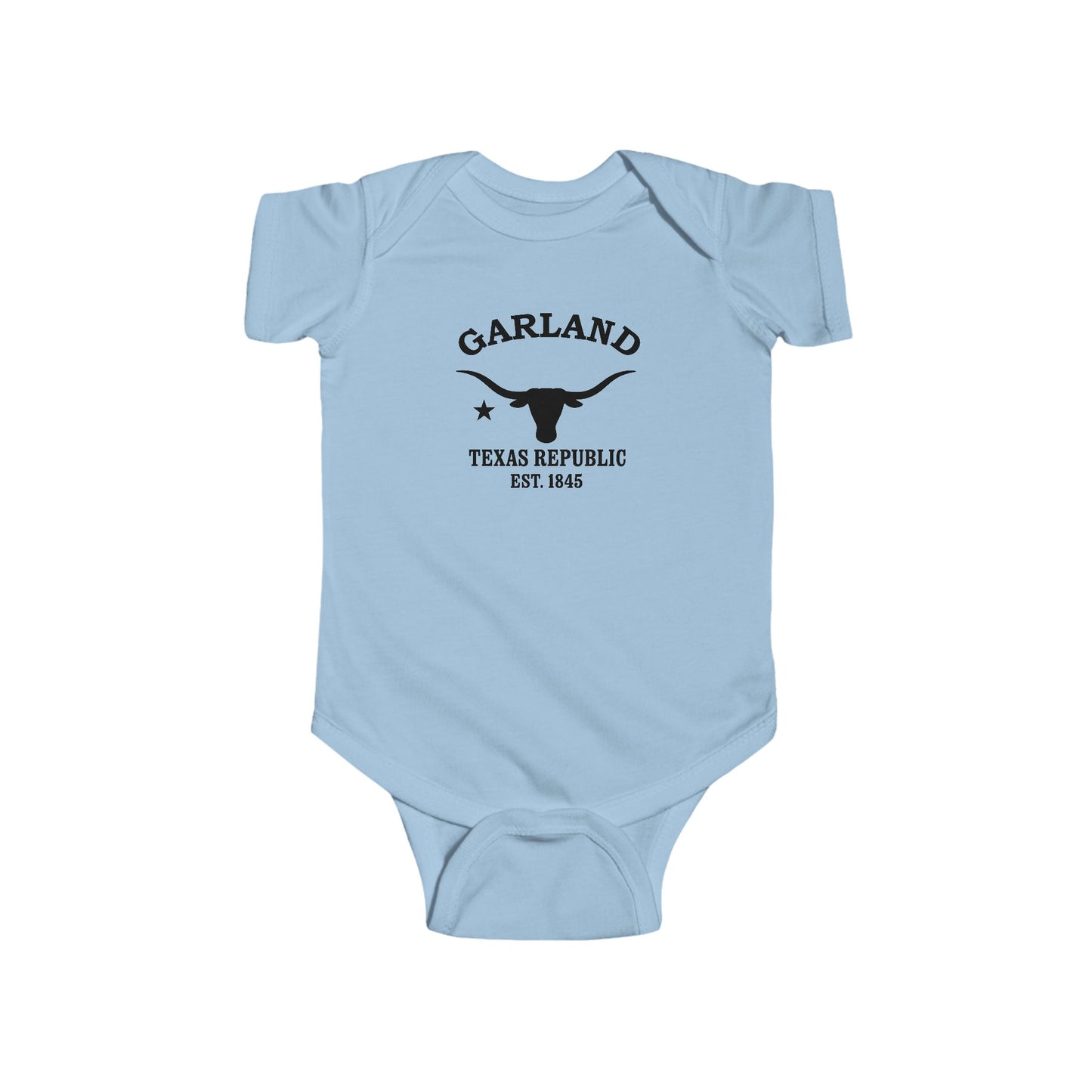
United, the town grew on the rich black soil of the Blackland Belt. Cotton came first — gins, a roller flour mill, and the rail lines carrying the crop to market — and by the 1940s Garland had become a major onion-shipping point on the railroad. Industry followed: a cotton mill, then manufacturing, and a Texas cowboy-hat trade that made the city part of the state's hat-making story. Through the mid-twentieth century the Dallas boom rolled northeast and Garland turned from a farm-and-rail town into one of the largest cities in Texas — but the downtown square, the Plaza Theatre of 1941, and Duck Creek itself still mark where it began.
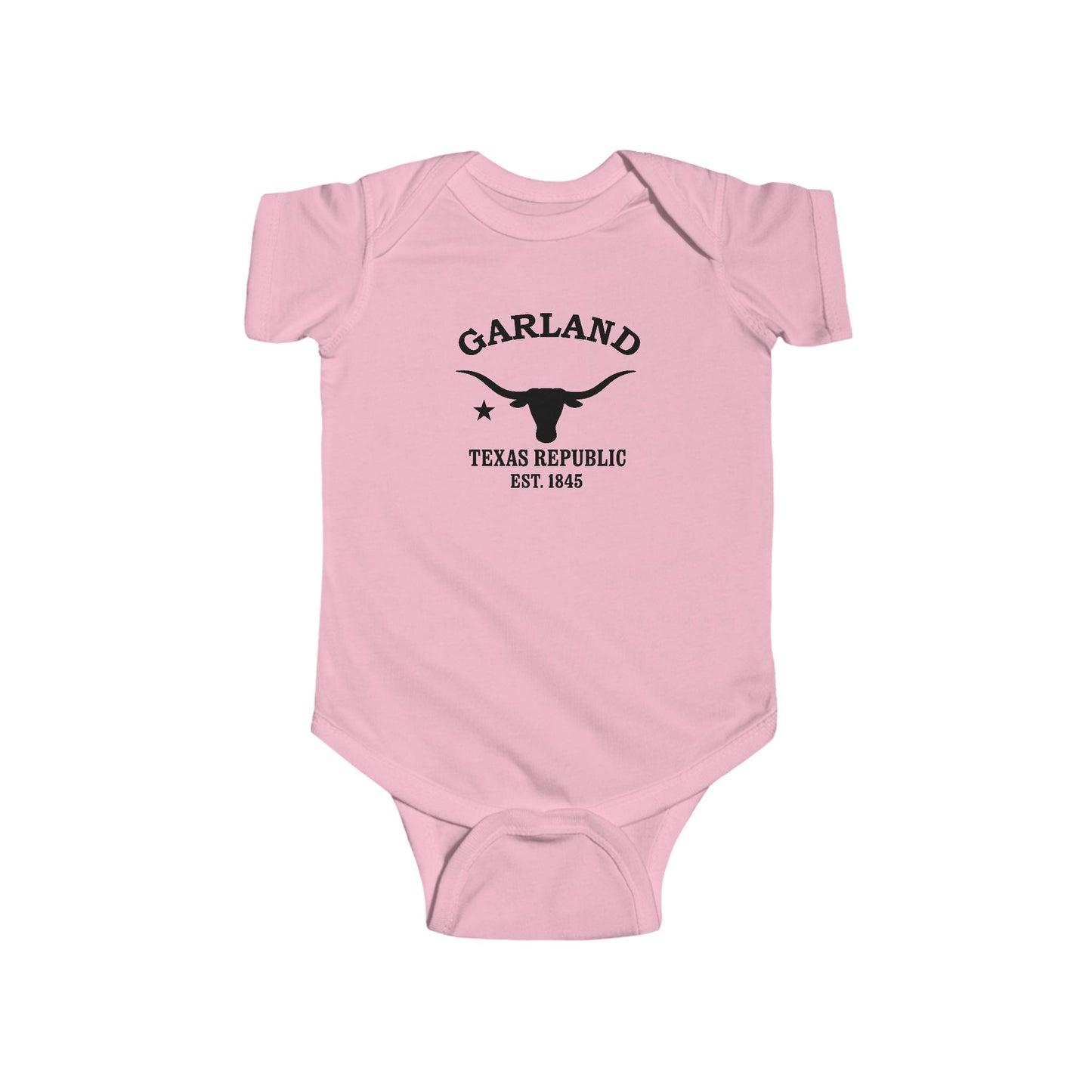
Our Garland logo carries the Texas longhorn and Lone Star over "Texas Republic, Est. 1845," the same emblem every Merlin Classics Texas place wears. The longhorn and star are the Lone Star State's shorthand — toughness, independence, the open range — printed black-and-white with the worn look of an old barn brand or a rodeo poster. What makes this one Garland is the place behind it: the two railroad towns, the Blackland cotton, the Texas hats. On a tee or a cap it reads less like a souvenir and more like a piece of North Texas — Est. 1845, worn plain.
Why People Visit Garland Texas
- Stroll the historic downtown square and the restored Plaza Theatre (1941).
- Get out on Lake Ray Hubbard for boating, sailing, and shoreline parks.
- Walk the old-growth bottomland of Spring Creek Forest Preserve.
- Ride the wooded singletrack at Rowlett Creek Preserve.
- Shop and gather at Firewheel Town Center and the downtown events on the square.
