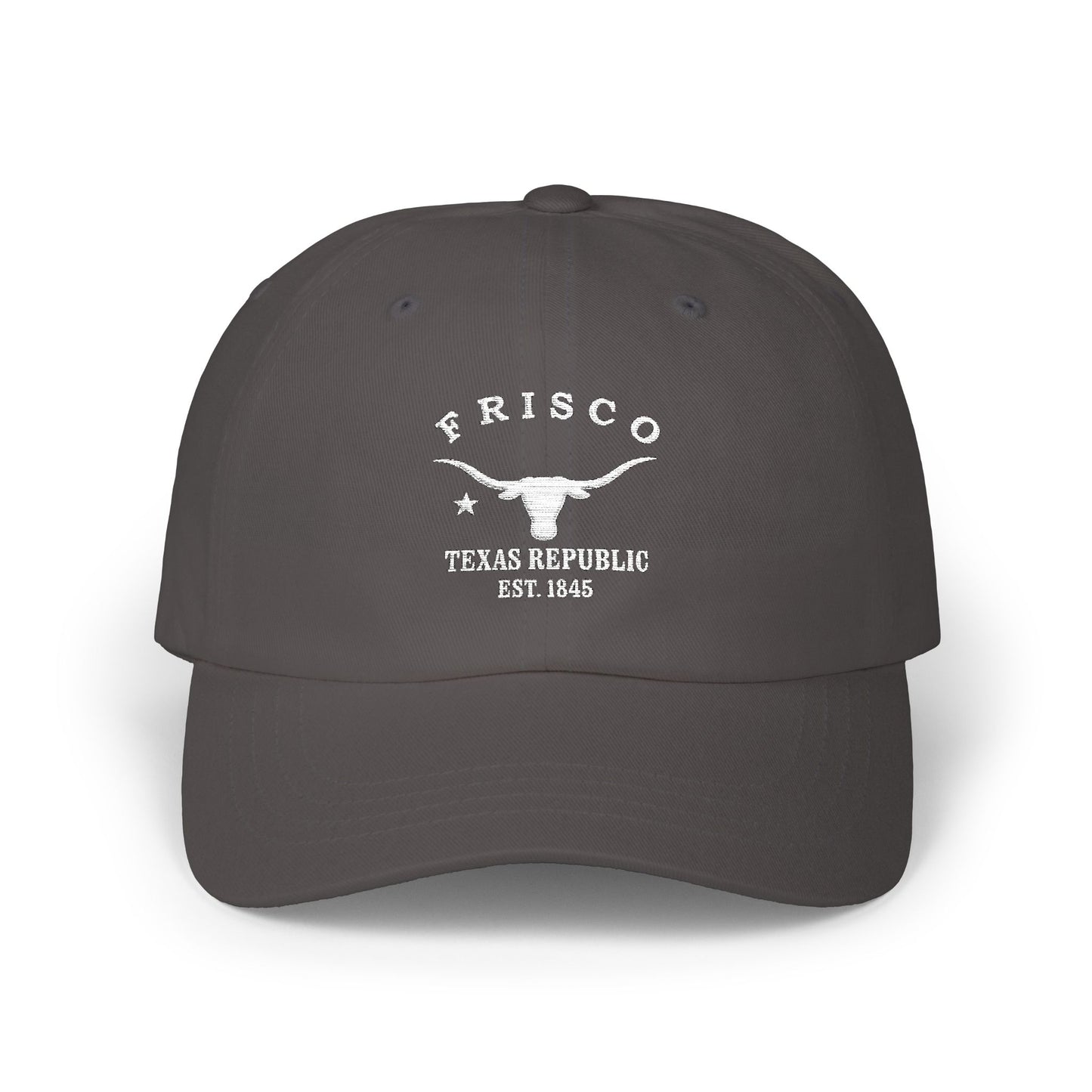
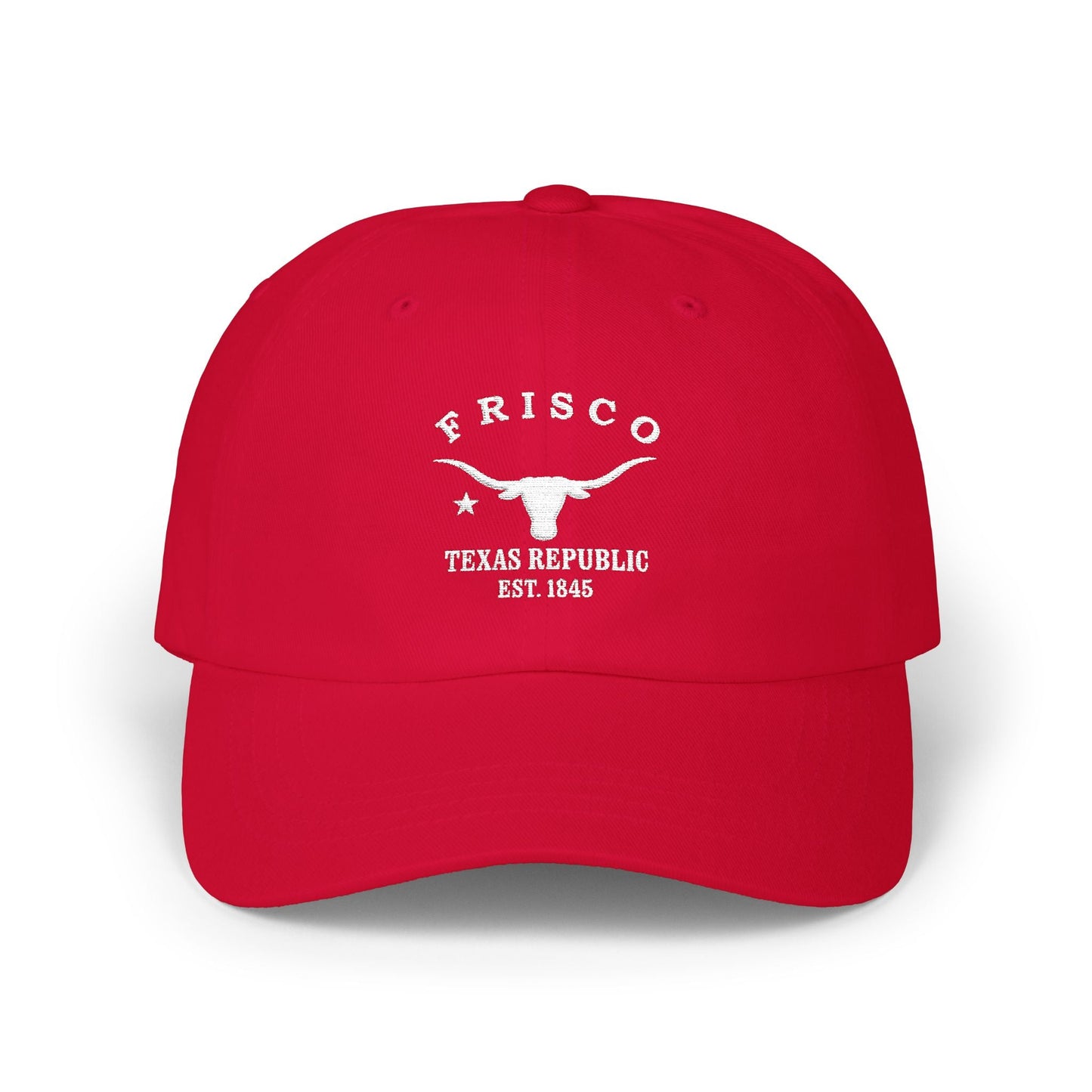
The land Frisco sits on was a route long before it was a town. The Shawnee Trail — later the Preston Trail, and today Preston Road — ran north out of Texas along a ridge of white rock: an old Indigenous footpath that became the earliest of the great cattle-driving roads, with longhorns moved up it by the millions toward the railheads of the north. A trailside community called Lebanon grew up along it and got its post office in 1860. For decades this was cattle-and-cotton country, prairie crossed by drovers, with the markets always somewhere else.
Then Dallas came north. Through the 1980s and '90s the metroplex's suburban tide rolled up through Plano and over Frisco's southern edge, and farmland turned to subdivisions almost overnight. Frisco became one of the fastest-growing cities in America — first across the 2000s, then again, outright number one, in 2017 — its population leaping from about six thousand in 1990 to more than two hundred thousand a generation later. Schools, highways, and whole neighborhoods appeared where cotton had grown, and the prairie filled in block by block.
Why People Visit Frisco
Frisco offers a rare mix — a brand-new big city with deep-Texas roots: a railroad-heritage downtown, the old cattle trail underfoot, and a skyline of stadiums and corporate campuses that went up in a single generation. It's polished, easy to navigate, and unmistakably North Texas.
